Customer Service Skills That Lead to Career Success


You want to stand out in your career. Developing the right skills for customer service gives you a real edge. Employers often look for critical thinking, emotional intelligence, adaptability, and effective communication. These skills help you solve problems, connect with people, and handle new challenges. When you master customer service skills, you set yourself up for growth in any industry. Sobot shows how investing in skill development opens doors to new opportunities.
- Critical thinking is cited by 95% of employers as crucial for professional growth.
- Emotional intelligence, adaptability, and communication are also vital for career development.
Essential Skills for Customer Service

Empathy and Understanding
Empathy sits at the heart of great customer service skills. When you put yourself in your customer’s shoes, you show that you care about their feelings and needs. This approach creates a service-oriented culture where everyone feels valued. You can see the impact of empathy in the table below:
| Finding | Description |
|---|---|
| Employee Empathy | Positively influences customer-oriented behavior. |
| Customer-Oriented Behavior | Enhances customer satisfaction with frontline employees (FLEs). |
| Moderating Role of Customer Empathy | The effect of employee empathy is stronger when customers are empathetic. |
| Supportive Environment | Emotional and cognitive support from customers increases effectiveness. |
Empathy leads to happier customers and a more positive workplace for you.
Listening Skills
Listening is one of the most important skills for customer service. You need to hear what your customer says and what they do not say. Active listening techniques help you catch the real problem and make your customer feel heard. Here’s how listening helps:
| Aspect of Active Listening | Description |
|---|---|
| Identifying Underlying Issues | Helps you understand deeper concerns for accurate solutions. |
| Building Emotional Connections | Makes customers feel valued and loyal. |
| Facilitating Collaborative Problem Solving | Involves customers in finding solutions, boosting satisfaction. |
When you use listening skills, you increase first-call resolution and create a service-oriented culture. You also make your workday smoother.
Adaptability
Every day brings new challenges. Adaptability means you can handle surprises and changes. You solve problems by thinking in new ways. You stay calm and keep your customer informed. This skill helps you build trust and keeps customers happy, even when things get tough.
Clear Communication
Clear communication is a must for all customer service skills. You need to explain things simply and avoid confusion. Good communication boosts sales and keeps customers coming back. Companies with strong communication see higher conversion rates and better customer retention.
Product Knowledge
You cannot help customers if you do not know your product. Product knowledge lets you answer questions with confidence. Customers trust you more when you give clear, accurate answers. This skill also helps you solve problems on the first try, which saves time and builds loyalty.
Improving Customer Service Skills
You can always get better at customer service. The best part? Every day gives you a new chance to practice and grow. Let’s break down some practical ways you can boost your skills and see real improvement in your work.
Practical Development Tips
You don’t need to wait for a big training session to start improving. Try these simple steps:
- Practice empathy by role-playing with teammates. Pretend you’re the customer and see how it feels when someone listens and cares.
- Use active listening. Repeat back what the customer says in your own words. Ask open-ended questions to dig deeper.
- Build adaptability by learning about different communication styles. Share tips with your team on how to handle surprises.
- Keep your communication clear. Use short sentences and simple words when you explain things.
- Take ownership of customer cases. Give updates on time and show you care about solving the problem.
- Stay sharp on product knowledge. Read updates and ask questions so you can answer quickly and accurately.
When you use these strategies, you build a strong foundation for handling any conversation with confidence. Regular skill-building and short training sessions on topics like empathy, active listening, and adaptability can make a big difference. These skills help you handle tough situations, show emotional intelligence, and improve customer service performance.

Sobot’s unified workspace makes it easy to practice these skills. You can see all your customer messages in one place, so you never miss a detail. The AI-powered voicebot helps you handle routine questions, giving you more time to focus on complex issues that need your problem solving skills. Real-time monitoring lets you see how you’re doing and where you can improve.
Tip: Try setting a weekly goal to practice one new skill, like de-escalation or proactive communication. Small steps add up to big growth.
Leveraging Feedback
Feedback is your best friend when it comes to customer service improvement. You can learn a lot from what customers say about your service. Companies that respond well to complaints see 83% of customers become more loyal. That’s huge!
You can use customer feedback systems and customer satisfaction surveys to find out what’s working and what needs improvement. Creating accessible feedback channels, like live chat or a quick survey after a call, helps you gather honest opinions.
Here’s how feedback can help you:
| Evidence | Implication |
|---|---|
| 25% reduction in average resolution times | Feedback helps you solve problems faster. |
| 20% increase in customer satisfaction | Listening to feedback makes customers happier. |
You can also track key metrics to see your progress:
| Metric | Importance |
|---|---|
| Customer satisfaction scores | Shows how happy customers are with your service. |
| Response times | Tells you how fast you answer questions. |
| Resolution rates | Measures how often you solve problems on the first try. |
| Net Promoter Scores (NPS) | Shows how likely customers are to recommend you. |
Sobot’s real-time monitoring tools make it easy to collect and review feedback. You can listen to call recordings, check chat transcripts, and see analytics that highlight where you shine and where you can improve. This helps you spot trends and act fast to fix issues.
Workplace Practices
Great customer service teams don’t just happen—they grow through good habits and teamwork. Here are some workplace practices that help everyone improve:
- Set clear goals for improvement. Decide what you want to get better at, like faster response times or better de-escalation.
- Hold regular team meetings. Talk about what’s working and share ideas for improvement.
- Leaders should show the way. When managers model good customer service, everyone follows.
- Build trust by being open and honest. Share responsibilities and support each other.
- Encourage everyone to suggest changes. When you feel empowered, you take more ownership.
- Use feedback loops. Check in often to see if new ideas are working.
Sobot’s omnichannel solution supports these practices by bringing all your communication channels together. You can see every customer interaction, whether it’s a call, chat, or email, in one place. This makes it easier to spot patterns, share insights, and work as a team. The platform’s advanced analytics help you set and track improvement goals, making customer service improvement a daily habit.
Note: When you work together and support each other, you create a culture of continuous improvement. Everyone wins—your team, your customers, and you.
Training and Confidence
Training is the secret sauce for building confidence and mastering new skills. When you know what to do, you feel ready for anything. Here’s how training helps:
| Benefit | Impact on Confidence and Skill Development |
|---|---|
| Higher employee motivation | You learn new skills and feel more successful in your role. |
| Improved customer service skills | Training boosts your communication, listening, and problem solving skills. |
| Increased customer satisfaction | You solve issues faster, which makes customers happier and builds your confidence. |
Short, focused training sessions on topics like de-escalation, adaptability, and proactive communication can make a big difference. Sobot’s platform offers tools like AI-powered voicebots and scenario-based AI training, so you can practice real-life situations in a safe space. The system’s real-time monitoring and analytics let you see your progress and celebrate your wins.
You can also use Sobot’s ticketing system to track your cases and see how you handle different types of customer issues. This helps you spot areas for improvement and build your confidence over time.
Remember: Every skill you learn is a step toward career growth. Keep practicing, stay curious, and use the tools around you to get better every day.
Applying Skills in Real Life

Handling Difficult Conversations
You will face tough conversations in any customer service role. The best way to handle these moments is to use active listening and show empathy. When a customer feels upset, listen to their words and echo their concerns. This helps you build rapport and shows you care. Stay calm and focus on clarity. Speak in a steady voice and use simple words. If you need to solve a problem, break it down step by step. This approach gives both you and the customer clarity about what happens next.
You can also learn from OPPO’s experience with Sobot. During busy shopping seasons, OPPO’s team used Sobot’s omnichannel solution to manage a flood of questions. The system brought all messages into one place, so agents could respond quickly and with clarity. OPPO’s chatbot handled routine issues, letting agents focus on difficult cases. This teamwork led to a 94% positive feedback rate and a 57% increase in repurchase rates (source).
Building Rapport
Building rapport makes every conversation smoother. Start with a friendly greeting and use the customer’s name. Match their style and echo their words to show you are listening. Personalize your responses by mentioning their product or recent order. These small touches help you connect and create trust.
Sobot’s omnichannel platform helps you see all customer details in one dashboard. You can switch between chat, email, and social media without losing clarity. This makes it easy to keep the conversation personal and consistent. Companies using Sobot report a 94% boost in agent productivity and faster issue resolution.
| Technique | Description |
|---|---|
| Personalization | Use customer info to tailor your conversation. |
| Greeting | Start with a warm hello and ask for their name. |
| Name Usage | Use their name to keep them engaged. |
| Mirroring | Match their style for comfort. |
| Echoing | Repeat their words for clarity and connection. |
Turning Challenges into Opportunities
Every challenge is a chance to grow. When you solve a tough problem, you earn trust and loyalty. Use clarity in your answers and stay positive. If you make a mistake, own it and fix it fast. This shows you care about the customer’s experience.
Sobot’s tools help you turn problems into wins. The platform lets you track feedback and spot trends. You can use this data to improve your customer service skills and create better experiences. Over time, you will see more happy customers and stronger relationships.
Tip: Stay flexible and open-minded. Each challenge helps you build new skills and become a stronger customer service professional.
Continuous Growth in Customer Service
Ongoing Learning
You never stop growing when you work in customer service. Products change. Customer needs shift. New tools appear every year. If you keep learning, you stay ahead. You can handle complex questions with confidence. You also build stronger customer service skills. Many top agents join workshops, try short training sessions, and ask questions every day. This habit helps you stay sharp and ready for anything.
Sobot makes ongoing learning easier. With Sobot’s analytics, you can see what works and what needs improvement. The platform gives you real-time feedback on your calls and chats. You can review transcripts, spot trends, and learn from every interaction. This helps you deliver better personalization and adapt to new challenges. Learn more about Sobot’s analytics here.
- Stay updated with new tools and trends.
- Pursue certifications to boost your career.
- Seek feedback from customers and teammates.
Setting Goals
Setting goals gives you direction. You can start small, like improving your response time or learning a new feature. You can also set long-term goals, such as leading a team or mastering personalization at scale. When you set clear goals, you know what to focus on each day.
Try these methods to set and reach your goals:
- Join mentorship programs or shadow experienced agents.
- Take part in workshops that mix online and in-person learning.
- Use workplace challenges as learning moments.
- Encourage curiosity—ask questions and seek answers.
Sobot’s performance dashboards help you track your progress. You can see how your customer service skills improve over time. This keeps you motivated and focused.
Measuring Progress
You need to measure your growth to see real results. Sobot’s analytics let you track key metrics like customer satisfaction scores, net promoter scores, and operational efficiency. You can also check how well you deliver personalization in each interaction. Companies like Agilent saw a sixfold boost in support efficiency and a 95% CSAT after using Sobot’s insights (source).
| Key Elements of Effective Reviews | Description |
|---|---|
| Clear performance criteria | Aligns with company goals |
| 360-degree feedback | Includes managers, peers, and customers |
| Self-assessment | Lets you reflect on your own growth |
| Goal-setting | Focuses your efforts for the next review |
Mix formal reviews with casual feedback. Ask for input from your team and customers. Use Sobot’s real-time monitoring to spot strengths and areas to improve. This approach helps you build customer service skills and deliver better personalization every day.
Tip: Celebrate your wins, learn from feedback, and keep moving forward. Growth never stops in customer service.
You can unlock career success by mastering customer support skills. When you focus on customer support, you boost satisfaction, increase retention, and help your company grow. Check out how these skills make a difference:
| Metric | Evidence |
|---|---|
| Profitability | Companies that implement cross-selling techniques properly are up to 30% more profitable. |
| Customer Retention | Companies with strong omnichannel engagement strategies retain an average of 91% of customers. |
| Customer Satisfaction (CSAT) | Evaluating CSAT scores provides a direct measure of customer feelings post-interaction. |
| First-Contact Resolution (FCR) | High FCR rates indicate effective troubleshooting and product knowledge. |
| Average Handling Time (AHT) | Shorter handling times reflect proficiency with CRM systems and digital tools. |
| Error and Escalation Rates | Low error rates suggest strong technical accuracy and problem-solving ability. |
Continuous improvement in customer support helps you deliver better satisfaction and adapt to new challenges. You learn to understand customer needs, use technology, and create strong customer service every day. Sobot’s tools make it easy to track your progress and boost satisfaction with every interaction.
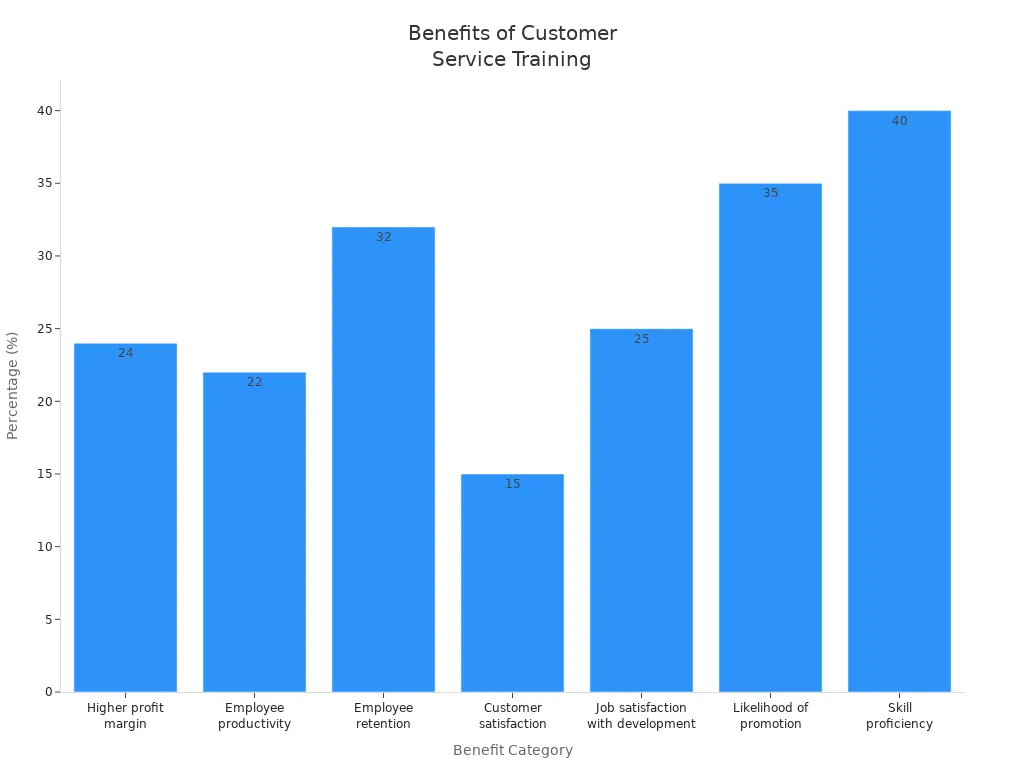
When you invest in customer support training, you see higher satisfaction, more productivity, and better chances for promotion. Sobot gives you the tools to reach your goals and deliver great customer support. Start building your skills today and watch your satisfaction and career soar!
FAQ
What are the most important customer service skills for career growth?
You need strong communication, empathy, and adaptability. These skills help you improve customer experience and build trust. When you show engagement, you stand out and create more opportunities for advancement.
How does Sobot help improve customer experience?
Sobot gives you tools like unified workspaces and AI-powered voicebots. You can manage calls, chats, and emails in one place. This makes your engagement with customers smoother and boosts satisfaction.
Why is engagement so important in customer service?
Engagement helps you connect with customers. When you listen and respond quickly, you create a positive customer experience. High engagement leads to better feedback and stronger relationships.
Can training really make a difference in customer experience?
Yes! Training helps you learn new customer service skills. You gain confidence and solve problems faster. Sobot’s platform offers real-time analytics so you can track your progress and improve engagement.
How do I measure my impact on customer experience?
You can check customer satisfaction scores, feedback, and response times. Sobot’s analytics let you see how your engagement affects results. Look for higher ratings and repeat customers as signs of success.
See Also
Essential Strategies for Effective Call Center Quality Management
Transforming Customer Support with AI-Powered Service Agents
Ten Strategies to Enhance Customer Satisfaction in Live Chat
Enhancing Operational Efficiency with AI Customer Service Tools

