Customer Service Vendors for E-commerce 2026


This guide ranks the best ecommerce customer service platforms for 2026, helping startups find the right ecommerce customer service software. Many startups need this support for their ecommerce customer service.
Top Customer Service Platforms for Ecommerce Startups
- Gorgias: Best for Shopify Automation
- Sobot: Best for All-in-One Ecommerce Support
- Zendesk: Best for Scaling and Omnichannel
- Intercom: Best for Proactive AI Engagement
- Help Scout: Best for Simplicity and Small Teams
This review of the best ecommerce customer service platforms helps startups choose the best customer service software. Our guide on saas customer service vendors ecommerce support will help your startups find the best customer support software. The right customer support software provides the ecommerce customer support and customer support that helps startups grow. This ecommerce customer service platform review will guide startups. This support is vital for startups.
Best Ecommerce Customer Service Platforms Ranked
Choosing the right software is a big step for your business. The best ecommerce customer service platforms offer unique strengths. This ranking helps you see which ecommerce customer service platform fits your needs. Your choice will shape your customer support experience.
Gorgias: Best for Deep Shopify Integration
Gorgias is a top choice for Shopify stores. It provides powerful automation tools made just for ecommerce. This customer service software pulls customer data directly from Shopify. Your team can see order details right next to a support ticket. This integration helps you provide fast and personalized ecommerce customer service. Users give it high marks, with a customer satisfaction rating of 4.6 stars on G2.
Sobot: Best for All-in-One E-commerce Support
Sobot offers a complete solution for your support needs. It combines live chat, ticketing, and voice support in one place. This all-in-one approach simplifies your multichannel support strategy. You can manage conversations from your website, social media, and email without switching tools. This unified software helps your team deliver consistent ecommerce customer service.
Zendesk: Best for Scaling and Omnichannel
Zendesk is built for growth. This ecommerce customer service platform is perfect if you plan to expand your team or sales channels. It offers robust multichannel support for your growing ecommerce brand. You can manage a large volume of tickets across many platforms. Zendesk's powerful features ensure your support quality stays high as your business scales.
Tip: When evaluating customer service platforms, consider your future needs. A platform that scales with you prevents difficult migrations later on.
Intercom: Best for Proactive AI Engagement
Intercom uses AI to start conversations with customers. Its automation features help you engage visitors before they even ask for help. This proactive support can guide shoppers and increase sales. The software is great for ecommerce businesses that want to turn website visitors into loyal customers. It helps you build relationships through smart, automated interactions.
Help Scout: Best for Simplicity and Small Teams
Help Scout provides a simple and clean customer service software solution. It is ideal for small teams that need an easy-to-use tool. The software focuses on core features without overwhelming you. Your team can quickly learn the system and start providing excellent support. It is one of the best ecommerce customer service platforms for startups prioritizing ease of use.
Detailed E-commerce Vendor Reviews

Now you can dive deeper into each platform. This section breaks down the features, pricing, and best use cases for our top picks. Use these reviews to see which customer service software truly aligns with your startup's goals.
Gorgias: Review, Pricing, and Use Case
Gorgias is a customer service software built specifically for ecommerce brands, especially those on Shopify. Its main strength is how it pulls all your customer data into one view, helping your team deliver fast, personalized support.
Key E-commerce Features Gorgias shines with its powerful automation and macros that work directly with your Shopify store. This allows you to automate responses to common questions. Your team can work more efficiently with these tools.
- Macros with Shopify Data: You can create templated responses that automatically pull a customer's order status or tracking number from Shopify. This saves your agents time.
- Self-Serve Order Management: Your customers can track their own orders or initiate returns right from your chat widget. This frees up your team from handling simple requests.
- Automated Ticket Tagging: You can set up rules that use Shopify data to organize tickets. For example, a rule can tag a ticket as 'VIP' if the customer has a high lifetime value, ensuring they get priority support.
Pricing Gorgias uses a unique pricing model based on your monthly ticket volume, not the number of agents you have. This is great for startups because you only pay for what you use. Pricing starts at just $10 per month for 50 tickets. You can also add on channels like Voice or SMS for an additional per-ticket fee. This structure allows you to scale your support as your business grows.
Ideal Use Case Gorgias is the perfect fit for Shopify-based startups that want to automate their ecommerce customer service. If you get many repetitive questions about order status, shipping, and returns, the automation features will save you a massive amount of time. It helps small teams act like big ones.
Sobot Live Chat: Review, Pricing, and Use Case
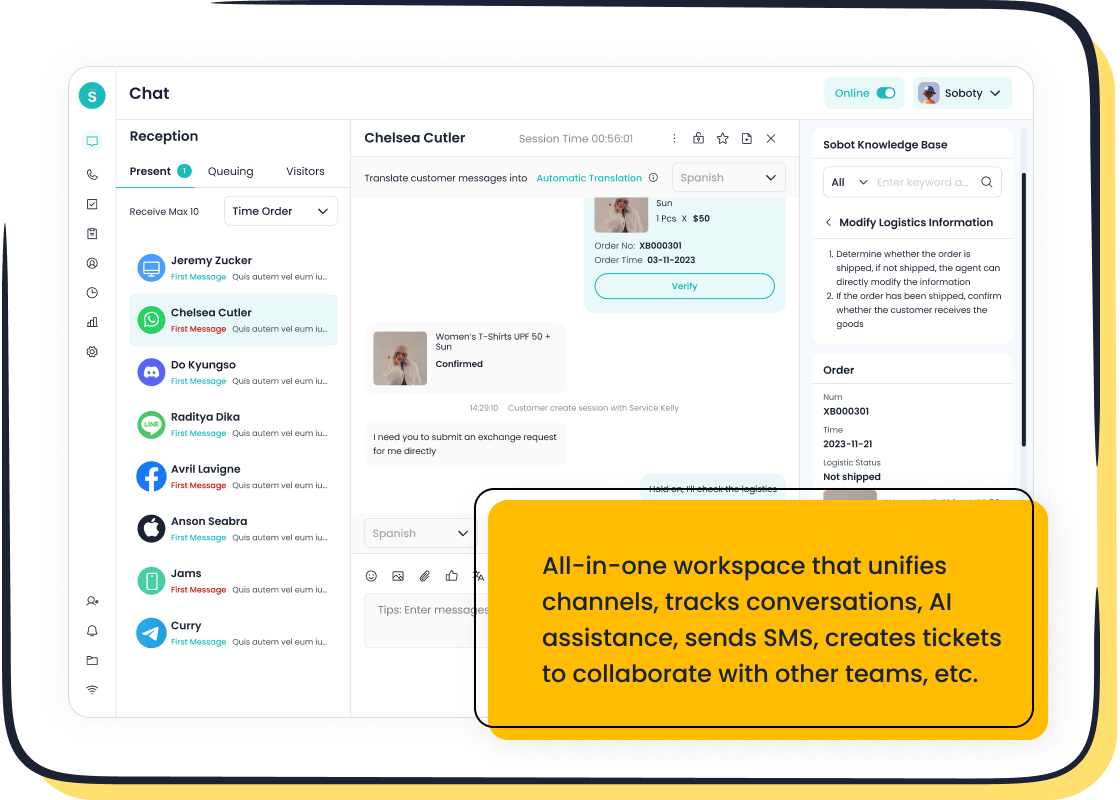
Sobot offers a true all-in-one contact center solution designed to unify your sales, marketing, and support. It combines a powerful Live Chat, Ticketing System, and Voice Call Center into a single, AI-enhanced workspace. This approach simplifies your operations and provides a seamless experience for your customers.
Key E-commerce Features Sobot is built for complete omnichannel management. You can handle conversations from your website, email, and social media channels like WhatsApp, Facebook, and Instagram all in one place. As an official WhatsApp Business Solution Provider (BSP), Sobot enables powerful marketing and support campaigns directly through WhatsApp.
Its features are optimized for ecommerce:
- Unified Omnichannel Inbox: Manage all customer messages from every channel in one dashboard. This gives your agents a complete view of the customer's history.
- AI-Powered Automation: Sobot uses a "Five-AI" system. This includes an AI Chatbot for 24/7 self-service, an AI Copilot that assists human agents with suggestions, and AI Insight for powerful analytics.
- E-commerce Optimization: The software integrates with your shopping cart to automate order tracking, recover abandoned carts, and even recommend products to customers during a chat.
Luxury brand Michael Kors used Sobot to transform its customer experience. They achieved a 95% customer satisfaction rate and saw a 20% increase in conversion rates. You can read more about their success here.
Pricing Sobot provides pricing through a custom-quote model. You need to contact their team to get a personalized price based on your specific needs. This approach ensures that you get a plan tailored to your business size, ticket volume, and the features you require, making it a flexible option for growing ecommerce brands.
Ideal Use Case Sobot is ideal for startups and growing ecommerce brands that need a powerful, all-in-one solution. If you want to manage multichannel support, leverage AI automation, and integrate your customer service with marketing efforts on channels like WhatsApp, Sobot provides a comprehensive platform to do it all.
Zendesk: Review, Pricing, and Use Case
Zendesk is a giant in the customer service world, known for its scalability and integration capabilities. It is one of the best ecommerce customer service platforms for businesses with plans for major growth. With over 1,000 apps and integrations, you can connect Zendesk to almost any tool in your tech stack.
Key E-commerce Features Zendesk's power lies in its ability to handle high volumes of tickets across many channels. It provides a robust foundation for your ecommerce customer support operations. Large ecommerce companies trust Zendesk to manage their complex needs. For example, Shopify used Zendesk to help grow its support team to hundreds of agents while maintaining a 92% CSAT score.
| Feature | Suite Enterprise |
|---|---|
| Price (Billed Annually) | $169/agent/month |
| Key Features | Custom roles, sandbox environment, advanced AI options. |
| Ideal For | Large organizations with sophisticated, multi-brand operations. |
Pricing Zendesk is priced per agent, per month. Its plans are designed for teams that are scaling up. The Suite Enterprise plan costs $169 per agent/month when billed annually. For very large teams, custom pricing is often negotiated. While it's a significant investment, the platform's power and flexibility justify the cost for large-scale operations.
Ideal Use Case Zendesk is best for fast-growing or large-scale ecommerce businesses that need a highly customizable and powerful customer support software. If you operate in multiple countries, manage several brands, or have a large support team, Zendesk provides the enterprise-level tools you need to succeed.
Intercom: Review, Pricing, and Use Case
Intercom focuses on proactive customer engagement using AI. Instead of just waiting for customers to ask for help, Intercom's platform starts conversations to guide shoppers and drive sales. Its AI chatbot, Fin, is a core part of this strategy.
Key E-commerce Features Intercom's AI is designed to act like a helpful sales associate in a physical store. It can engage visitors at the perfect moment to prevent cart abandonment or suggest products.
"Fin scales effortlessly 24/7 across channels to handle surging inquiries."
Here’s how Fin helps your ecommerce business:
- Reduces Cart Abandonment: If a user is about to leave your site with items in their cart, Fin can trigger a message with a discount offer.
- Upsells Products: Based on a customer's browsing history, Fin can suggest related products or premium upgrades.
- Provides Instant Answers: Fin can answer questions about product availability, track orders, and even process refunds by integrating with Shopify and Stripe.
Pricing Intercom offers three main plans: Essential, Advanced, and Expert. Pricing is based on the number of seats you need. All plans include access to the Fin AI Agent, which costs $0.99 per successful resolution. This means you only pay when the AI actually solves a customer's problem. For startups, Intercom also offers a basic "Starter" plan to help you get going with essential chat features.
Ideal Use Case Intercom is the right choice for ecommerce startups focused on converting website visitors into customers. If your goal is to proactively engage shoppers, reduce cart abandonment, and use AI to drive sales, Intercom's platform is built for you.
Help Scout: Review, Pricing, and Use Case
Help Scout is known for its simplicity and human-centric design. It provides all the essential tools you need for great ecommerce customer service without the complexity of larger platforms. It is an excellent ecommerce customer service platform for small teams that value ease of use.
Key E-commerce Features Help Scout focuses on features that promote teamwork and efficiency. Its clean interface means your team can get started with minimal training.
- Collaborative Inboxes: Shared inboxes let your team manage emails together without stepping on each other's toes.
- Built-in Knowledge Base: You can easily create a help center with articles and FAQs. This empowers customers to find answers on their own, reducing your ticket volume.
- Beacon Widget: This helpful widget embeds your knowledge base and live chat right on your website, giving customers instant access to support.
Pricing Help Scout offers straightforward, per-user pricing that is affordable for startups. The plans provide great value, with even the basic plan supporting up to 25 users.
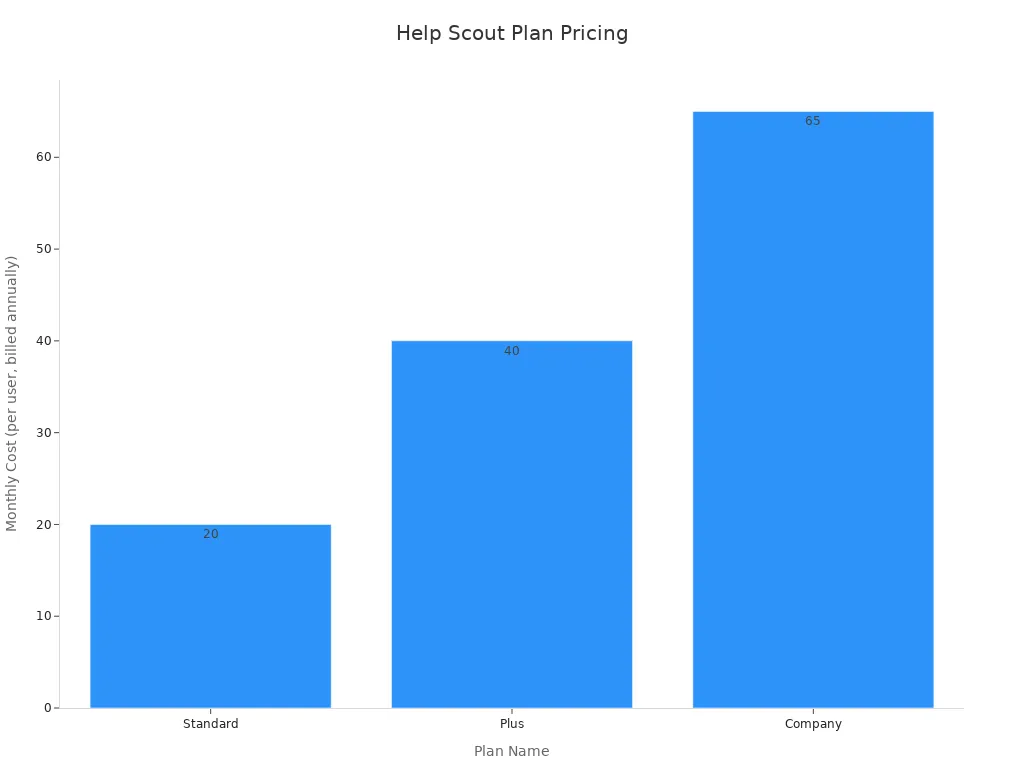
The Standard plan starts at $20 per user/month and includes live chat, email, and a knowledge base. This makes it one of the most accessible customer service platforms for new businesses.
Ideal Use Case Help Scout is perfect for small ecommerce startups that need a simple, no-fuss customer support tool. If you prioritize a clean user experience and collaborative features for a small team, Help Scout is an outstanding choice.
Must-Have Features for Ecommerce Customer Service

Choosing from the best ecommerce customer service platforms requires knowing what features matter most. The right software gives your team the tools for excellent commerce-focused support. Look for these five essential features to ensure you can provide fast, personal, and effective customer support.
Deep Ecommerce Platform Integration
Your customer service software should connect directly with your ecommerce platform, like Shopify or BigCommerce. This connection is vital for effective ecommerce customer service. It pulls customer data, order history, and shipping information right into your support dashboard. This integration allows your agents to personalize communication using macros with customer details. Your team gets all the context they need in one place, helping them resolve issues much faster.
AI-Powered Automation and Self-Service
Automation is a game-changer for busy ecommerce teams. AI-powered tools and self-service portals can handle a large volume of common questions. This approach can automate up to 80% of routine questions, such as "Where is my order?". Implementing automation can reduce your team's ticket volume by 20-30% in the first month. This frees up your agents to focus on more complex problems that require a human touch.
Unified Omnichannel Inbox
Your customers contact you through many channels, including email, live chat, and social media. An omnichannel support software brings all these conversations into a single, unified inbox. This multi-channel support setup improves the customer experience because shoppers never have to repeat themselves.
Customers who engage across multiple channels have a 30% higher lifetime value. A unified view helps you build these valuable relationships by providing seamless support.
Proactive Customer Engagement
Modern customer service platforms do more than just react to problems. They help you engage customers proactively. You can use your software to welcome new visitors with a special offer or use gamification like a 'spin the wheel' feature to make shopping more fun. This type of multichannel support turns your customer service into a sales and marketing tool for your ecommerce brand.
Robust Analytics and Reporting
You cannot improve what you do not measure. Your ecommerce customer service platform must have strong reporting features. This allows you to track key metrics like first-response time, resolution time, and customer satisfaction scores. Good analytics help you understand your team's performance, identify common issues, and make data-driven decisions to improve your ecommerce customer support and overall multichannel support strategy.
Choosing Your SaaS Customer Service Vendors for Ecommerce Support
Selecting the right tools is a critical step for all startups. This guide helps you choose from the many saas customer service vendors ecommerce support options. A clear plan will help you find the best customer service software for your ecommerce business.
Step 1: Assess Ticket Volume and Team Size
First, you should understand your support needs. How many customer questions do you get each day? How many people are on your support team? Some customer service software is built for small teams. Other customer service platforms are better for large, growing startups. Knowing your numbers helps you find a solution that fits your current size and can grow with you. This assessment is the foundation for your search for saas customer service vendors ecommerce support.
Step 2: Define Key Sales Channels
Your customers contact you on different platforms. You must know which channels are most important for your ecommerce brand. This knowledge guides your choice of an ecommerce customer service platform. Younger shoppers have clear preferences for multichannel support.
- Social Media: Social media is the top channel for Gen Z and Millennials. Startups must have a presence on platforms like Instagram, Facebook, and TikTok.
- Messaging Apps: Younger customers like using SMS and messaging apps for quick questions.
- Phone Calls: The phone is still the top choice for urgent issues for both Gen Z (67%) and Millennials (70%).
Your chosen software must support these key channels to deliver a great customer experience. A good multichannel strategy is vital for startups.
Step 3: Evaluate the Best Customer Service Software on a Trial
A free trial lets you test a customer support software before you buy it. Many startups find that trials have limits. You should watch for these common issues.
- Key features are often locked, so you cannot see the software's full power.
- Poor onboarding can leave you unsure of what to do next.
- You might not get help quickly if you run into problems.
To get the most from a trial, have a clear list of tasks you want to test. This ensures the ecommerce customer service software meets your team's needs. A successful trial gives startups confidence in their choice.
Step 4: Set a Realistic Budget
Your budget will shape your decision. The cost of saas customer service vendors ecommerce support can vary a lot. You should set a realistic budget for your ecommerce customer service needs.
- Basic plans for very small startups can cost around $10-$15 per month.
- Mid-tier solutions for growing startups often range from $15-$89 per agent per month.
This budget helps you focus on options you can afford. It prevents you from paying for features your support team will not use. Good financial planning helps startups succeed with their new multichannel support system.
Choosing the right software is a big decision for all startups. Your choice depends on your startup's unique needs for integration, scale, and budget. The best customer service software for your ecommerce business is one that solves today's problems and provides support for future growth. This support is vital for startups.
Next Steps for Startups 🚀 Use the "How to Choose" guide in this article to start your evaluation. This support helps startups find the right saas customer service vendors ecommerce support. Pick your top one or two contenders. Then, sign up for a free trial to test the customer service software. This support helps startups make a confident choice for their ecommerce customer service and future support needs. Many startups find this support invaluable.
FAQ
What is the most important feature for a new ecommerce store?
You should prioritize deep integration with your ecommerce platform (like Shopify). This feature puts customer order data directly into your support dashboard. It allows your team to provide fast, personalized, and accurate ecommerce customer service from the very beginning.
Why is AI important in customer service software?
AI automates repetitive questions, such as "Where is my order?". This frees your agents to handle more complex problems. Using AI helps you offer 24/7 support, reduces ticket volume, and improves your team's overall efficiency.
How much should a startup budget for customer service software?
Your budget depends on your team size and ticket volume.
Tip: Basic plans can start around $10-$20 per month. More advanced plans for growing teams often range from $20-$89 per agent, per month. Start with what you need now to avoid overspending.
What is omnichannel support and why do I need it?
Omnichannel support unifies all customer conversations from email, chat, and social media into one inbox. You need it to create a seamless customer journey. This approach builds trust and loyalty because customers never have to repeat their issues.
See Also
Best Live Chat Platforms for Online Stores This Year
Leading Customer Support Solutions: A 2024 Software Review
Evaluating Premier Cloud Contact Center Services for Businesses in 2024
Your Comprehensive Guide to Omnichannel Call Center Solutions
Discovering the Best Voice of Customer Software for Businesses in 2024

