Omnichannel Customer Service Explained


Omnichannel customer service is a single, unified system. It connects all customer touchpoints into one seamless experience. Today, 74% of customers use multiple channels for one service request. The omnichannel approach ensures a customer's context travels with them. A customer can move from a chatbot to a live agent without repeating information. This creates one continuous conversation. It avoids the poor customer experience many people face. This is the power of a true omnichannel experience. Sobot provides omnichannel customer service solutions. These solutions transform a frustrating process into a smooth service journey for every customer. True omnichannel customer service makes every interaction count.
What is Omnichannel?

Omnichannel is an approach that puts the customer at the center of the service strategy. It breaks down the walls between different communication channels. The goal is to create a single, continuous customer journey. In a true omnichannel system, interactions are synced in real-time. This gives agents the full context when a conversation moves from one channel to another. It is a fully integrated experience.
The Single Customer View
The foundation of omnichannel is the single customer view. This means your business has one complete profile for each customer. This profile gathers information from every touchpoint into one place. It creates a holistic picture of the customer's relationship with your brand.
A single customer view typically includes:
- Contact details like email addresses and phone numbers.
- Complete purchase history and order data.
- Previous support interactions across all channels.
- Customer loyalty status and program details.
This unified view is powerful. It allows your service team to understand a customer's history instantly. They do not need to ask the customer to repeat information. This level of personalization builds trust and makes the customer feel valued. Companies with strong omnichannel strategies retain 89% of their customers. This is much higher than the 33% for companies with weak engagement. A better experience leads to greater loyalty.
How Context Travels Across Channels
Context is the story of a customer's interaction. In an omnichannel setup, this story travels with the customer. Imagine a customer starts a conversation with a chatbot on your website. They then switch to live chat on their phone. Finally, they send a follow-up email. With omnichannel, this is all one conversation.
An omnichannel messaging platform ensures that chat history and context move with the conversation. This creates a continuous, cross-channel thread. It unifies the customer's identity within the company's software.
This seamless transfer of information is made possible by technology that connects all channels. When a customer moves from email to a phone call, the agent already has the email transcript. They know what the issue is and what has been tried. This eliminates customer frustration and speeds up resolution times. The customer has a smooth journey, and the agent is empowered to provide excellent service. This is the core of effective omnichannel communication.
Components of Omnichannel Customer Service Solutions
Effective omnichannel customer service relies on a set of integrated tools working together. These components form a unified platform that empowers agents and delights customers. Key components include:
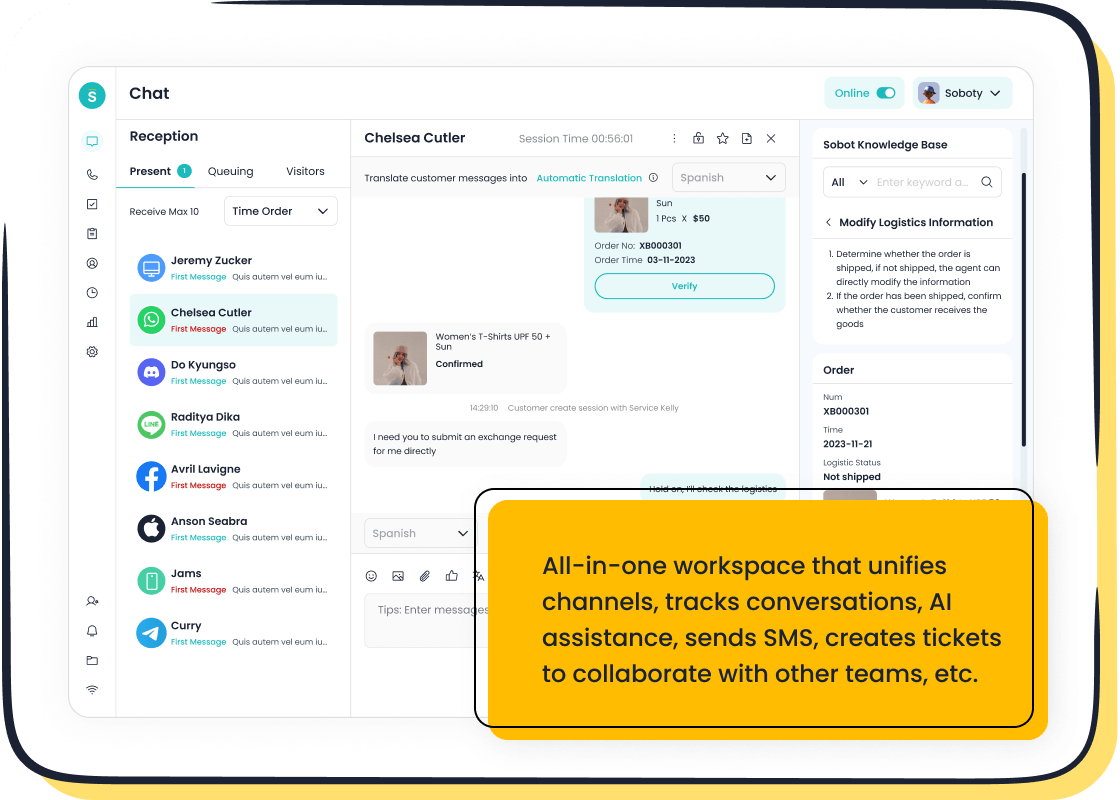
- A Unified Agent Workspace: This is a single dashboard where agents manage all conversations. Sobot's Live Chat provides a unified inbox that brings together messages from your website, app, and social media channels like WhatsApp and Facebook. Agents can see the entire customer journey without switching between different tools.
- AI and Automation: Artificial intelligence handles simple, repetitive tasks. This frees up human agents for more complex issues. Sobot’s AI-powered Chatbot can provide 24/7 self-service, answer common questions, and gather initial information before handing off the conversation to a live agent.
- CRM Integration: Connecting your service platform to a Customer Relationship Management (CRM) system is vital. This syncs all customer data, providing that essential single customer view.
- Intelligent Routing: This feature automatically directs inquiries to the right agent or department. Routing can be based on agent skills, customer priority, or the channel the customer is using.
- A Robust Ticketing System: For issues that require follow-up, a ticketing system is essential. Sobot’s Ticketing System automates workflows by converting emails and other requests into tickets, ensuring no customer issue gets lost.
- Analytics and Reporting: To improve your service, you need data. Omnichannel platforms provide dashboards that track key metrics like response times, customer satisfaction, and agent performance across all digital channels.
Together, these components create powerful omnichannel customer service solutions that improve efficiency and elevate the customer experience.
Real-World Omnichannel Examples
Many leading brands use an omnichannel strategy to create exceptional customer experiences. Their success shows the power of a unified approach.
1. Amazon Amazon is a master of the omnichannel experience. A customer can browse on the mobile app, add an item to their cart on a laptop, and complete the purchase using Alexa. The experience is consistent across every device. Amazon also integrates its online and offline worlds. Customers can order online and pick up their package at a physical Amazon Hub Locker, giving them control over their post-purchase journey.
2. Starbucks Starbucks uses its rewards program to create a seamless omnichannel journey. A customer can reload their rewards card on the website, pay with the mobile app in-store, and check their balance from any device. All updates happen in real-time across the system. This strategy encourages repeat purchases and builds a strong digital relationship with millions of customers.
3. Disney Disney creates a magical experience by connecting every part of a customer's vacation. The "My Disney Experience" tool lets visitors plan their entire trip online, from booking hotels to making dinner reservations. Once at the park, the mobile app acts as a guide, providing attraction wait times and a park map. This integration of digital planning and physical experience makes the customer journey effortless and memorable.
These examples show that omnichannel customer service is more than a trend. It is a proven strategy for building lasting customer relationships.
Omnichannel vs. Multichannel
Many businesses use multiple channels to talk to customers. However, being on many channels is not the same as being omnichannel. The key difference is how these channels connect. Multichannel offers many separate paths. The omnichannel approach builds a single, unified highway for the customer journey.
Multichannel: Channels in Silos
Multichannel service means a business offers support on several platforms. A customer might reach out through email, phone, or social media. The problem is that these channels work independently. They are like separate rooms with no doors connecting them.
- Channels operate independently of one another.
- There is no shared history for the customer across channels.
- Agents work in different systems for each support channel.
- This creates a fragmented and often frustrating customer experience.
In this model, the conversation history stays locked within the channel where it started. This separation puts the burden on the customer to repeat their story.
Omnichannel: Channels in Sync
The omnichannel approach connects every channel into one system. It creates a seamless service experience. When a customer contacts your business, their entire history is available to the agent in real-time. This is possible because an omnichannel system centralizes all customer data. Agents use a single dashboard to see interactions from every platform. This gives them a complete picture of the customer's journey. An omnichannel system ensures the conversation flows smoothly, no matter how the customer chooses to connect.
A Practical Customer Journey Comparison
Let's compare how a customer gets help in each system. The difference in the customer experience is significant. An omnichannel setup is designed to be seamless and context-aware.
| Feature | Multichannel Service | Omnichannel Service |
|---|---|---|
| Channel Integration | Channels are siloed and separate. | Channels are fully synchronized. |
| Conversation Flow | Conversations are broken and repetitive. | One continuous conversation thread. |
| Customer Experience | The customer must repeat information. | The agent has full context instantly. |
Imagine a customer emails support about a broken product. Later, they call for an update. With multichannel, the phone agent has no record of the email. The customer must explain everything again. With an omnichannel system, the agent sees the email instantly and can pick up the conversation right where it left off.
Why Multichannel Falls Short
Multichannel service fails to meet modern customer expectations. Today, customers want fast and easy solutions. They do not want to repeat themselves. A disconnected system creates friction and frustration for both customers and agents. This poor experience can damage customer loyalty. True omnichannel customer service solves this problem. The omnichannel approach makes the service process smooth and efficient, showing customers you value their time.
Benefits of Omnichannel Customer Service
Adopting an omnichannel approach does more than just connect your communication channels. It fundamentally transforms your business operations and customer relationships. The benefits extend from happier customers to more empowered agents and smarter business decisions. This shift creates a powerful cycle of improvement.
Boost Customer Satisfaction and Loyalty
Happy customers are loyal customers. An omnichannel strategy is one of the most effective ways to boost satisfaction. It removes the biggest point of frustration in modern service: repeating information. When context follows the customer across every channel, the experience becomes smooth and effortless. This shows customers you value their time.
A consistent experience builds trust and strengthens the customer-brand relationship. Research shows that companies with strong omnichannel customer engagement retain up to 89% of their customers. This is a huge jump compared to the 33% retention rate for companies with weak engagement. Higher satisfaction directly translates to greater loyalty.
Success Story: Financial service platform Opay used Sobot's omnichannel solution to transform its service. By unifying its channels, Opay increased its customer satisfaction rate from 60% to 90%. This demonstrates the direct impact of a seamless service journey on customer happiness.
The data clearly shows the positive impact of omnichannel support on key metrics.
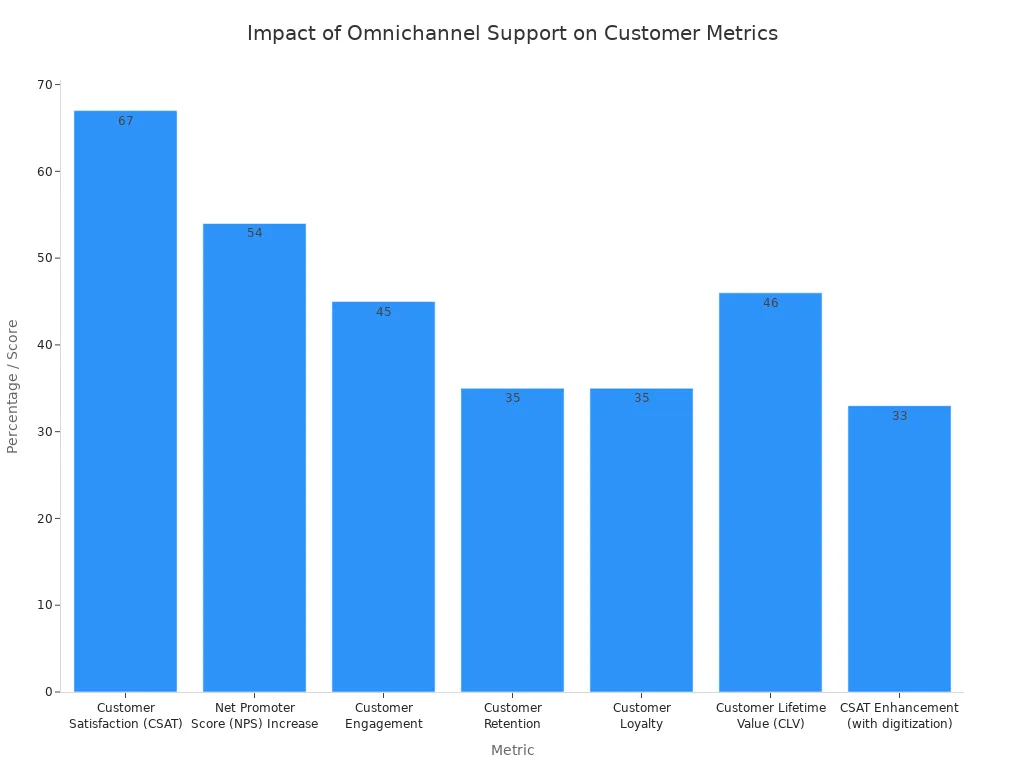
This enhanced customer satisfaction is the foundation for long-term loyalty and business growth.
Increase Agent Efficiency and Morale
Your agents are at the heart of your customer service. An omnichannel system empowers them to do their best work. It eliminates the chaos of managing multiple, disconnected systems. Instead, it provides a single, organized workspace.
A unified agent desktop is a core feature of omnichannel customer service solutions. For example, Sobot's Live Chat consolidates all customer data and conversations into one interface. This means agents do not have to switch between platforms to find information. They have the full customer history at their fingertips. This streamlined access to information directly reduces Average Handle Time (AHT).
This efficiency has a profound effect on agent morale.
- Reduced Frustration: Agents can focus on solving problems instead of searching for context.
- Increased Empowerment: Having all the right information allows agents to provide better, faster service.
- Lower Burnout: Automating routine tasks and simplifying workflows reduces repetitive work and stress.
When agents feel effective and supported by their tools, their job satisfaction increases. This leads to lower turnover and a more experienced, motivated service team.
Improve Data and Business Insights
Siloed channels create fragmented data. You might know how a customer interacts on email, but you lose that insight when they call. Omnichannel customer service breaks down these data silos. It integrates all customer touchpoints to create a single, unified view of the customer journey.
This holistic data provides much deeper business insights. You can track a customer's path from initial awareness to purchase and support. This allows you to understand which channels are most effective at each stage. An integrated analytics platform helps you make smarter decisions about where to invest your resources.
For instance, the analytics from Sobot's platform gave Opay a complete view of its operations. This visibility helped them achieve remarkable results:
- A 17% increase in conversion rates.
- A 20% reduction in overall costs.
By analyzing the complete customer journey, you can identify friction points, optimize processes, and uncover new opportunities for growth. This data-driven approach is a key advantage of a true omnichannel strategy.
Drive Higher Customer Lifetime Value
Customer Lifetime Value (CLV) is a measure of the total revenue a business can expect from a single customer account. An omnichannel approach is proven to increase this critical metric. Loyal customers buy more often and are more likely to try new products.
Studies show that shoppers who engage with a brand across multiple channels have a 30% higher CLV than single-channel shoppers. The seamless and personalized experience created by omnichannel support encourages repeat purchases.
- Higher Retention: It is 5 to 25 times more expensive to acquire a new customer than to retain an existing one. Omnichannel customer service boosts retention, saving you money.
- Increased Sales: The success rate of selling to an existing customer is 60-70%, compared to just 5-20% for a new customer. A positive service experience makes customers more receptive to upsell and cross-sell opportunities.
Ultimately, omnichannel is an investment in the long-term health of your business. By creating a superior customer experience, you build lasting relationships that drive sustainable revenue and growth.
Why You Need an Omnichannel Customer Experience
Adopting an omnichannel strategy is no longer a choice. It is a requirement for modern business success. An omnichannel customer experience meets customers where they are. It uses technology to create efficiency. This approach gives you a significant edge over competitors and prepares your business for the future.
Meeting Modern Customer Expectations
Today's customers have high expectations. They want to connect with businesses on their preferred channels, easily and without friction. Many customers prefer messaging apps like WhatsApp for their convenience. Your business must be there to meet them. This is a core part of modern customer engagement.
Note: Sobot is an official WhatsApp Business Solution Provider (BSP). This allows businesses to use our omnichannel support platform to connect with customers directly on WhatsApp, meeting modern customer expectations for personalized, accessible service.
Providing this level of personalized omnichannel communication shows customers you value their time and preferences.
The Impact of AI and Automation
Artificial intelligence and automation are key drivers of a successful omnichannel experience. These technologies work behind the scenes to make your service faster and more consistent. AI helps your team by:
- Suggesting smart replies to speed up responses.
- Providing instant data lookups so agents have full context.
- Automating repetitive tasks to free up agents for complex issues.
This level of automation ensures a smooth experience for every customer. It empowers agents to deliver high-quality, personalized service with greater efficiency.
Gaining a Competitive Advantage
In a crowded market, customer experience is a powerful differentiator. A seamless omnichannel journey builds strong customer loyalty. Companies with a robust omnichannel customer experience strategy retain 89% of their customers. This is a massive advantage compared to the 33% retention rate for companies with weak engagement. A superior service experience makes customers feel valued. This positive feeling translates directly into higher retention and a stronger brand reputation.
Future-Proofing Your Business
Customer behaviors and technologies are always evolving. An omnichannel framework makes your business adaptable. It creates a flexible foundation that allows you to add new channels and technologies as they emerge. This ensures your customer service can grow with future demands. Investing in omnichannel customer service solutions like Sobot's is an investment in agility. It positions your business to handle future trends in customer communication, making your omnichannel support strategy resilient and effective for years to come.
The omnichannel approach is about unifying channels into one seamless experience. This level of integrated service is no longer a luxury. It is a fundamental requirement for meeting modern customer expectations. A true omnichannel system provides every customer with consistent, personalized service. For today's customers, this is essential. Investing in an omnichannel customer service solution with a partner like Sobot is a critical step. This omnichannel investment builds customer loyalty and secures long-term business success.
FAQ
What is the main goal of omnichannel customer service?
The main goal is to create one seamless conversation for the customer. It connects all service channels. This ensures a consistent and unified experience for every customer, no matter how they contact your business.
How does omnichannel help a customer?
Omnichannel service saves the customer time and reduces frustration. A customer does not need to repeat their issue. The agent already has the customer's full history, which leads to faster and better support for the customer.
Is omnichannel the same as multichannel?
No, they are different. Multichannel means a business offers many separate channels. Omnichannel connects all channels into one system. This creates a single, continuous journey for the customer, which is a better customer experience.
What technology is important for omnichannel?
A unified platform is essential. This technology brings all customer conversations and data into one place. It allows agents to see the complete customer journey, helping them provide excellent service to every customer.
See Also
Your Comprehensive Guide to Advanced Omnichannel Call Center Software Solutions
Ten Essential Steps for Implementing Effective Omnichannel Contact Center Solutions
How AI Customer Service Agents Are Revolutionizing Modern Support Experiences
Mastering Live Chat: Elevating Customer Support Through Instant Communication
Comparing the Top Voice of Customer Software for Enhanced Insights

