6 Ways to Meet Customer Expectations


Your customers have high expectations for service. For instance, 46% of customers desire a response within four hours. Failing to meet these customer expectations has real costs, as 66% of consumers switch brands after a poor customer experience. To meet the expectations of customers, you need a smart strategy. The best approach blends powerful technology, like Sobot, with skilled human service to exceed your customer service expectations. This helps every customer feel valued.
1. Offer Fast Self-Service Options
Today's customer wants answers now, and they often prefer to find them on their own. This shift toward independence is a key part of the modern digital experience. You can meet the expectations of customers by providing robust self-service tools. Data shows this is not just a minor preference; a significant majority of people want to solve issues themselves.
| Source | Percentage of Customers Preferring Self-Service |
|---|---|
| Harvard Business Review | 81% |
| Zendesk | 67% |
| American Express | 60% |
Empowering your customers with the right resources builds confidence and satisfaction. It is a fundamental way to improve your customer support.
Build a Comprehensive Knowledge Base
A strong knowledge base is the foundation of great self-service. This centralized library of information gives your customers a single place to find detailed guides, tutorials, and solutions. A well-managed knowledge base directly improves first-contact resolution rates by 30-50%. This means more customers find answers on their first try. This powerful resource ensures your support services are consistent and accurate.
Optimize FAQs for Common Questions
Your FAQ page is often the first stop for a customer with a question. You should build this page with real questions from your support tickets and social media channels. Keep the answers direct and simple. Organize the questions into clear categories like "Billing" or "Shipping" so users can find what they need without frustration. A well-structured FAQ page improves the user experience and reduces the number of simple, repetitive questions your agents receive.
Meeting Customer Self-Service Expectations with Chatbots
To truly elevate your digital service, you need to offer help 24/7. This is where technology meets customer service expectations. Sobot’s AI-powered Chatbot provides instant answers around the clock, handling up to 86% of inquiries without human help. This meets your customers' needs for speed and convenience.
Success in Action: OPPO
Leading smart device brand OPPO used Sobot’s chatbot to transform its customer service. They achieved an 83% chatbot resolution rate and automated their knowledge base, reducing maintenance work by 90%. This freed up human agents to focus on more complex problems, improving the entire support experience.
By implementing smart self-service options, you give customers the control they want and create a more efficient service operation.
2. Meet the Expectations of Customers with Omnichannel Support
Your customers are everywhere. They use different digital channels to communicate. You need to be where they are. Many people use messaging apps for everything.
| App | Monthly Active Users (MAUs) |
|---|---|
| 3 billion | |
| Messenger | Over 1 billion |
Meeting your customers on their preferred channel is the first step. The next step is to connect these conversations into one seamless experience. This is what omnichannel support does. It helps you meet the expectations of customers for convenient and connected service.
Unify Live Chat, Social Media, and Email
Customers want to switch between channels without starting over. You can provide this smooth experience with a unified platform. Sobot’s Omnichannel Solution brings all your digital communications into a single workspace. This includes live chat, email, and social media. Your agents can see the entire customer history in one place. This improves their productivity and lets them provide better service.
Pro Tip: As an official WhatsApp Business Solution Provider (BSP), Sobot enables powerful and scalable communication on the world's most popular messaging app. This allows you to manage high volumes of customer chats efficiently.
Set and Communicate Realistic Response Times
Speed is a critical part of modern customer support. Your customers have high support expectations and want fast answers. For live chat, a response in under 30 seconds is a great goal. For email, most people expect a reply within one hour. You should set clear response time goals for your team. Communicating these times to your customers, such as with an automated chat reply, helps manage their expectations and builds trust.
Ensure a Consistent Customer Journey
A consistent experience across all touchpoints is essential. In fact, 76% of customers expect consistent interactions no matter which channel they use. An omnichannel strategy creates a single, unified digital customer journey. The customer never has to repeat their issue. This consistent journey builds strong relationships and loyalty. It shows the customer you value their time. Better support services lead to a better overall experience, which is key to long-term success.
3. Personalize the Customer Experience with a 360-Degree View
A generic customer experience is no longer enough. Today, 71% of customers expect personalized interactions from brands. You can deliver these personalized experiences by creating a 360-degree view of each customer. This complete picture helps you understand their needs and history. It is the key to moving from standard service to exceptional customer experiences.
Unify Data into a Single Customer Profile
You should unify all your customer data into a single, easy-to-read profile. This profile pulls information from your CRM, helpdesk, and messaging tools into one dashboard. This gives your agents more data at their fingertips, improving first-contact resolution. Your team can see past complaints or open cases instantly. This unified digital experience creates a smoother customer journey.
Success in Action: Astrid & Miyu
The omnichannel retailer Astrid & Miyu uses unified customer profiles to deliver a consistent and personal shopping experience across its digital and physical stores. This strategy helps them automate tasks and gain real-time oversight of their operations.
Use Purchase History for Relevant Support
Your customer's purchase history is a valuable tool for personalisation. When an agent knows what a customer has bought, they can offer more relevant support and recommendations. This level of personalization directly impacts your bottom line. Companies that use purchase data to inform their service see sales increases of 20–30%. This approach helps you better meet customer needs and makes every interaction more valuable.
Leverage Past Interactions to Avoid Repetition
Nothing frustrates customers more than repeating themselves. In fact, 70% of customers expect any agent they speak with to have a complete understanding of their situation. A 360-degree view makes this possible. When your agent can see the entire history of an interaction, the customer doesn't have to start over. This context-rich service shows you value their time. It transforms a simple support ticket into a positive experience, building loyalty and creating exceptional customer experiences.
4. Empower Human Agents with Empathy and Expertise

Technology is a powerful tool, but it should assist, not replace, your skilled human agents. While chatbots handle simple queries, complex issues require a human touch. Research shows that 75% of consumers prefer a human for difficult problems, and many customer issues still need escalation. You can meet high customer service expectations by empowering your team with the right training and tools to create exceptional customer experiences.
Train for Soft Skills and Empathetic Communication
Empathetic communication is the core of great customer support. Training your agents in soft skills helps them build trust and connect with customers on an emotional level. When an agent says, "I understand how frustrating this must be," they validate the customer's feelings and de-escalate tension. This approach directly improves customer satisfaction and loyalty, which are key drivers of a higher Net Promoter Score (NPS). An empathetic interaction can turn a negative experience into a positive one, showing each customer you value them as a person, not just a ticket number. This focus on genuine communication helps you better meet customer needs.
Provide Agents with Complete Customer Context
Empathy is most effective when paired with information. Your agents cannot provide great service if they are working in the dark. You must give them a complete view of the customer's journey.
Sobot in Action: A Unified Workspace
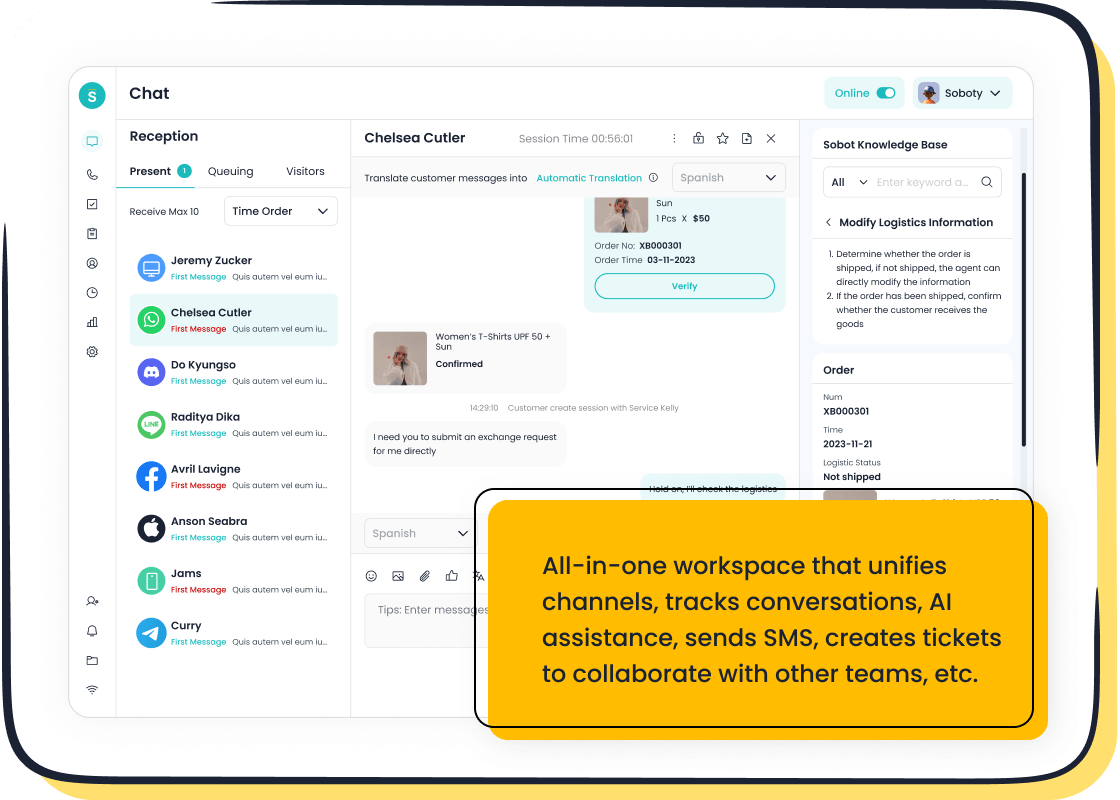
Sobot’s Live Chat provides a unified digital workspace that gives your agents the full picture. They can see past conversations, purchase history, and open tickets in one place. This means the customer never has to repeat their story, creating a seamless and respectful digital experience.
This context allows your agents to offer personalized and efficient solutions, turning every service interaction into an opportunity to build loyalty and deliver exceptional customer experiences.
Know When to Escalate to a Human Expert
A smart system knows its limits. You should define clear triggers for when a chatbot should hand off a conversation to a human agent. This is crucial for complex questions, technical problems, or when a customer shows signs of frustration. The escalation must be smooth. The agent should receive the full chat history to pick up the conversation without interruption. This seamless transition between digital automation and human expertise is vital for a positive experience. It ensures your customers get the right level of support for their specific needs.
5. Exceed Customer Service Expectations with Proactive Communication
Waiting for bad news is worse than receiving it. You can exceed customer service expectations by communicating first. Proactive communication involves anticipating customer needs and addressing issues before they have to ask. This strategy turns a potential negative experience into an opportunity to build trust. When you take the lead, you show every customer you respect their time and business. This approach is fundamental to a modern digital experience.
Be Transparent About Delays or Outages
Honesty is the best policy, especially when things go wrong. You should inform customers immediately about service outages or shipping delays. A simple, honest message reduces anxiety and prevents frustration. Being transparent about wait times can lower customer complaints by up to 30%. This open communication builds credibility. It shows you are in control even when facing challenges. Your customers will appreciate the honesty and are more likely to be patient.
Proactively Inform Customers of Updates
You can eliminate a huge number of support tickets with proactive updates. Sending automated notifications about order status or delivery changes keeps your customers in the loop. This simple service manages their expectations effectively.
Did you know? When customers are proactively informed about a shipping delay, 98% of them do not contact customer service to complain.
This frees up your support team to handle more complex issues. It also gives the customer a better, more confident buying experience. You answer their questions before they even think to ask.
Build Trust Through Honesty and Ownership
Taking ownership of a problem builds powerful, lasting trust. Leading brands like Amazon master this by notifying customers of delays and offering solutions upfront. You should apologize for the issue and clearly state what you are doing to fix it. This honest communication builds a deeper relationship than perfect but silent service. When you own your mistakes, you demonstrate a commitment to your customers. This builds a reputation for reliability and helps you meet the expectations of customers for accountable service, which is key to exceeding long-term customer service expectations.
6. Actively Collect and Implement Customer Feedback

You must listen to your customers. Their feedback is a roadmap to better service and higher satisfaction. To truly meet customer needs, you need a system for collecting, analyzing, and acting on their opinions. This creates a cycle of continuous improvement. It shows every customer that their voice matters to your business. This process is essential for building a loyal customer base.
Use Post-Interaction Surveys for Insights
You should ask for feedback right after a service interaction. This is when the experience is fresh in the customer's mind. Post-interaction surveys are a powerful tool for gathering immediate insights. The average response rate for customer satisfaction surveys is about 33%. You can get higher rates with the right channel. For example, SMS surveys can yield a 40% to 50% response rate, while a link in an email signature often gets around 20%. This direct customer feedback helps you measure satisfaction and identify areas for quick improvement.
Analyze Feedback to Identify Friction Points
Collecting feedback is the first step. The next step is to analyze it to find patterns and problems. This analysis helps you understand the root causes of customer issues.
- Review Support Interactions: Look at support tickets and chat logs to find common questions and complaints.
- Use Thematic Analysis: Group feedback into themes like "billing issues" or "slow shipping" to see major trends.
- Leverage AI Tools: Use technology to automatically detect sentiment and identify patterns in large volumes of feedback.
This process turns raw data into actionable insights. It helps you pinpoint the exact friction points in the customer experience and prioritize what to fix first. This focus ensures your efforts directly address customer needs.
Show Customers How Their Feedback Drives Change
Your customers want to know you are listening. The final step is to close the feedback loop. You must show them how their input leads to real change. For instance, the airline Ryanair used customer feedback from open-ended surveys to find and fix problems on its website. When you make an improvement based on feedback, tell your customers about it. A simple email or blog post saying, "You asked, we listened," builds immense trust. This action proves that you value their opinions and are committed to improving their service experience.
You meet the expectations of customers by connecting these six strategies into one philosophy. This creates a continuous cycle of listening and adapting to customer needs. This approach builds strong customer relationships and exceeds your customer service expectations. Investing in this customer-centric service, powered by solutions like Sobot, creates a huge advantage for every customer.
Mature programs can achieve a 400-600% ROI by year three.
This commitment proves the value of high customer expectations and builds strong customer relationships, showing your customers you can meet their customer service expectations.
FAQ
How can I meet customer service expectations for 24/7 support?
You can meet demands for round-the-clock service with an AI chatbot. A chatbot provides instant answers to common questions at any time. This frees your human agents to handle more complex issues during business hours, ensuring you always meet high customer service expectations.
What is omnichannel support?
Omnichannel support unifies all your customer communication channels. It brings conversations from your website, social media, and email into one place. This gives your team a complete customer history, creating a seamless and consistent service experience for every customer.
Why is a 360-degree customer view important?
A 360-degree view gives your agents complete customer context. They can see past purchases and previous conversations instantly. This helps you personalize interactions and prevents customers from repeating themselves, which is crucial for meeting modern customer service expectations.
How does technology help human agents?
Technology empowers your agents with the right tools and information. A unified workspace gives them full customer context for empathetic support. Automation handles simple tasks, allowing your team to focus on solving complex problems and delivering exceptional customer experiences.
See Also
Elevate Customer Happiness: Ten Strategies for Superior Live Chat Experiences
Selecting the Right Social Media Customer Service Software: A Ten-Step Guide
Seamless Customer Journeys: Implementing Omnichannel Contact Center Solutions in Ten Steps
Discover the Leading Customer Service Software Solutions: Our Top Ten for 2024
Achieving Excellence: Best Practices for Call Center Quality Management

