AI Solutions to Lower Customer Service Costs

Artificial intelligence is now essential to lower customer service costs with AI. The year 2026, 2026, 2026 is the target. Gartner predicts that by 2026, 80% of service interactions will involve AI automation. This marks a major transformation toward an AI-first CX. Businesses must adopt AI for a better customer experience. This guide explores how AI improves customer service and the customer experience, reducing cost. The Sobot AI platform helps businesses prepare for this 2026, 2026, 2026, 2026, 2026, 2026 shift, enhancing CX and the overall customer experience.
How to Lower Customer Service Costs with AI Automation

Businesses can lower customer service costs with AI by strategically implementing automation. This approach directly addresses high-volume, repetitive tasks. It frees human agents to handle more complex customer issues. Customer service automation is not about replacing the human touch. It is about enhancing it. Companies can create a more efficient and cost-effective support ecosystem. This leads to a better customer experience and a healthier bottom line.
Deploying Chatbots and Voicebots for 24/7 Support
One of the most direct ways to reduce costs is through AI-powered chatbots and voicebots. These tools provide immediate, round-the-clock support. Customers no longer need to wait for business hours to get answers. This 24/7 availability captures sales opportunities and resolves issues instantly. It eliminates the need for expensive overtime or overnight staff. The financial impact of this shift is significant.
For example, major companies have seen dramatic results. Vodafone cut its cost-per-chat by 70% with its AI chatbot. Klarna's AI assistant handles two-thirds of its chats, which is the work of 700 full-time agents. This is projected to add $40 million in profit.
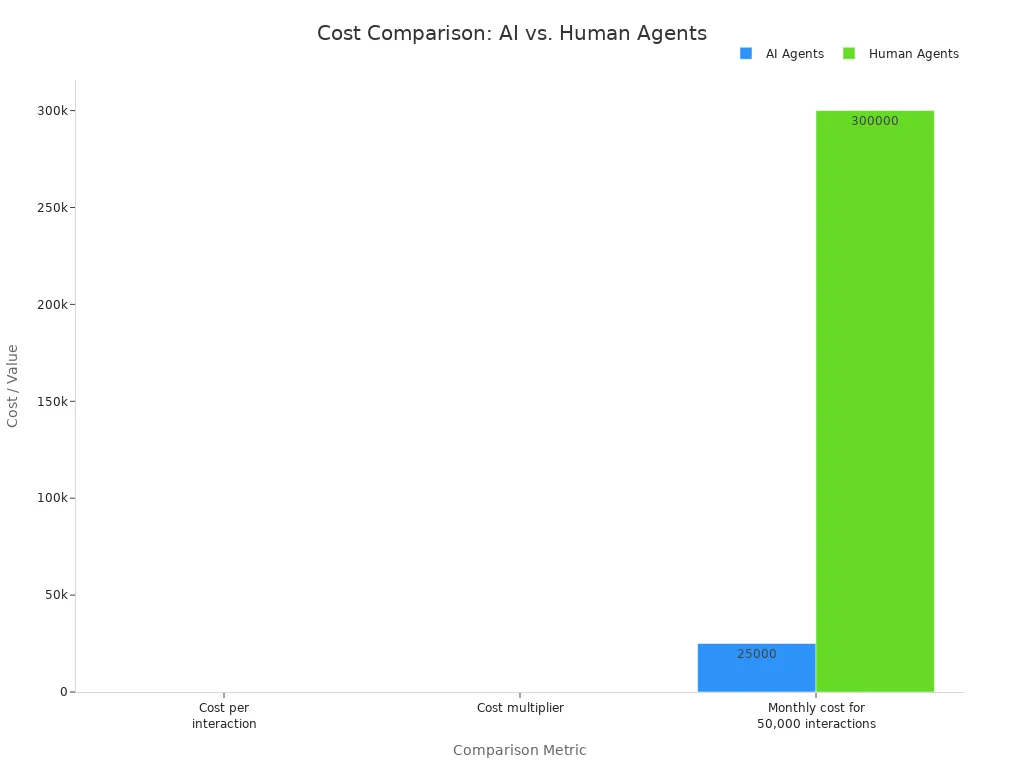
The cost difference between AI agents and human agents is stark. AI handles interactions for a fraction of the price.
| Aspect | AI Agents | Human Agents |
|---|---|---|
| Cost per interaction | $0.50 | $6.00 |
| Cost multiplier | 1x | 12x |
| Monthly cost for 50,000 interactions | $25,000 | $300,000 |
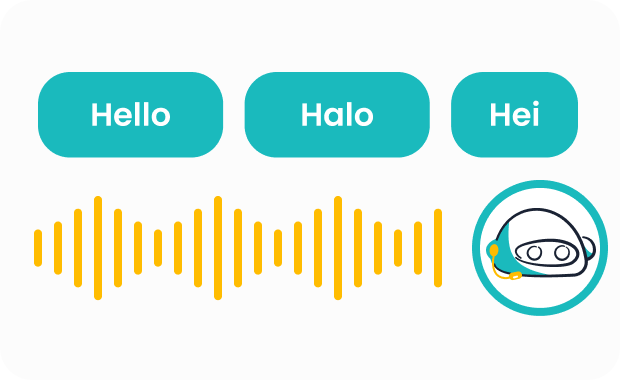
Modern artificial intelligence makes these interactions feel natural. For instance, Sobot's Voicebot uses advanced Natural Language Processing (NLP) to deliver human-like, multilingual support. This technology allows the AI to understand user intent, analyze sentiment, and manage conversation context. It can automate over 90% of routine interactions. This capability drastically cuts the cost-per-contact for any business.
Leading brands already prove the power of this human-machine cooperation. Smart device innovator OPPO integrated Sobot's chatbot to manage high inquiry volumes. The result was an 83% chatbot resolution rate. This automation freed human agents to focus on complex problems, improving the overall customer experience and boosting efficiency.
The Rise of AI-Powered Self-Service
Today's customers are proactive. Many prefer to find answers on their own before contacting a support agent. This trend toward self-service presents a major cost-saving opportunity.
- 81% of all customers try to solve issues themselves before contacting a live representative. (Harvard Business Review)
- 67% of customers prefer self-service over speaking with a company representative. (Zendesk)
- 60% of customers choose self-service tools for simple inquiries. (American Express)
Businesses can meet this demand and lower customer service costs with AI by offering robust self-service options. AI-powered tools transform standard FAQ pages into dynamic, intelligent knowledge bases. These systems use AI to understand a customer's question in natural language. They then deliver the precise answer from a vast library of information. This process deflects a significant number of tickets from the customer support queue.
An effective AI-powered knowledge base can reduce operational costs by 30-55%. It achieves this by improving response times and increasing customer satisfaction. Companies using these AI systems see ticket deflection rates of 40-60%. This is far above the industry average. These self-service interactions empower the customer and reduce the workload on the service team. A better self-service portal improves the CX and builds customer confidence.
Automating Post-Call Work to Reduce Handle Time
An agent's work does not end when a call or chat does. Post-interaction tasks, known as After-Call Work (ACW), consume a significant amount of time. This includes writing call summaries, updating customer records in the CRM, categorizing tickets, and scheduling follow-ups. ACW can account for 20-40% of an agent's total time.
AI offers a powerful solution to this hidden cost. Automation can handle these administrative duties instantly and accurately. Generative AI can create concise, detailed call summaries in seconds. This alone can reduce an agent's after-call time by up to 35%.
Here are key post-call tasks that AI can automate:
- Real-time Transcription and Summarization: The AI transcribes the entire conversation and generates a summary of key points and action items.
- Automated CRM Updates: The AI syncs call notes, outcomes, and customer data directly into the CRM, eliminating manual data entry.
- Action Item Detection: The AI identifies tasks mentioned during the call and can automatically assign them to the correct team member or schedule a follow-up.
- Automated Feedback Collection: The system can trigger a satisfaction survey immediately after an interaction to gather feedback on the customer experience.
By automating these tasks, AI gives agents more time to focus on what they do best: helping customers. This not only reduces the average handle time per interaction but also improves agent morale and the overall quality of customer service. The improved efficiency directly contributes to a lower overall cost of service and a better CX.
Enhancing Agent Productivity with AI Copilots

Automation is not just about deflecting inquiries; it is also about empowering the human agents who handle complex issues. The most effective cost-reduction strategies focus on making agents faster, smarter, and more effective. This is where AI copilots come in. Instead of replacing agents, this form of AI acts as an intelligent assistant, working alongside them in real time. A key feature of Sobot's AI Solution, these copilots provide agents with the information and tools they need to resolve issues correctly on the first try. This enhancement of human capabilities is a direct path to lower customer service costs with AI, a better customer experience, and a more engaged workforce.
Real-Time Assistance to Improve First Call Resolution
Every time a customer has to call back about the same issue, costs multiply. This makes First Call Resolution (FCR) one of the most critical metrics for any customer support team. Improving FCR directly lowers operational costs and boosts customer satisfaction.
For every 1% improvement in FCR, companies can reduce operating costs by 1% while simultaneously increasing customer satisfaction by 1%.
AI copilots are the key to unlocking major FCR improvements. They function as a real-time resource, eliminating the need for agents to put customers on hold while they search for answers. The primary functions of an AI copilot include:
- Information Retrieval & Contextual Assistance: The AI instantly pulls relevant information from knowledge bases, product guides, and company policies.
- Response Suggestions & Recommendations: It generates relevant response suggestions based on the customer's inquiry, ensuring consistency and accuracy.
- Message Autocomplete: The AI predicts and completes agent messages as they type, accelerating response times.
- Style & Tone Adjustments: It can offer revised versions of agent messages to better match customer sentiment or brand guidelines.
During a live interaction, this real-time assistance is invaluable. The AI analyzes the conversation and provides agents with exactly what they need, when they need it.
| Capability | How It Works |
|---|---|
| Instant Knowledge Retrieval | AI analyzes conversation context and automatically surfaces relevant articles, policies, and procedures. |
| Next-Best-Action Intelligence | The system combines conversation context with customer history to recommend optimal actions for the agent to take. |
This technology eliminates a major point of friction in customer service. Agents no longer waste time manually searching through dense databases. The AI understands the customer's question in context and synthesizes a concise, actionable answer. This seamless support empowers agents to resolve issues faster, leading to a superior customer experience and a significant reduction in repeat contacts.
AI-Driven Routing for Efficient Customer Service
Getting a customer to the right agent on the first try is fundamental to an efficient service operation. Traditional routing systems that rely on simple menus are often frustrating for the customer and inefficient for the business. AI-driven routing transforms this process by using intelligence to create the perfect match between a customer and an agent.
This advanced system analyzes multiple data points in real time to make an optimal routing decision. Key criteria include:
- Customer attributes and purchase history
- The specific intent of the inquiry (e.g., billing, technical support)
- Agent skills, performance history, and availability
- The customer's sentiment and urgency
- Desired business outcomes, such as retention or upsell
By using predictive matching algorithms, the AI calculates the probability of a successful outcome for every possible agent-customer pairing. This intelligent assignment of workflows ensures that complex issues are immediately sent to specialized agents, while high-value customers might be routed to top-performing team members. This optimization of routing workflows dramatically reduces call transfers and escalations. When a customer is connected to the right expert from the start, problems are solved faster. This improves FCR, shortens handle times, and delivers a frictionless CX. The result is a more efficient customer support operation and a healthier bottom line.
Automated Quality Management for Targeted Coaching
Ensuring consistent service quality is a major challenge. Traditionally, managers could only manually review a small fraction—often just 1-2%—of all interactions. This left huge blind spots in performance data and made it difficult to provide effective coaching. AI-powered Automated Quality Management (AQM) solves this problem by analyzing 100% of customer interactions across all channels.
AQM automates the entire quality process, from scoring evaluations to assigning coaching. It provides comprehensive insight into agent performance, turning evaluations into personalized learning moments and freeing supervisors to focus on high-impact coaching.
This complete visibility allows managers to move beyond random sampling and adopt a data-driven approach to performance improvement. The AI automatically scores every interaction against predefined criteria, such as script adherence, empathy, and problem resolution. This automation of quality workflows provides unbiased, consistent evaluations for the entire team.
The true value of AQM lies in the actionable insights it generates for targeted coaching. The AI can identify:
- Common failure points where multiple agents are struggling.
- Individual agent strengths and weaknesses across all their interactions.
- Trends in customer sentiment related to specific products or processes.
- Best practices from top-performing agents that can be shared with the team.
By leveraging these insights, managers can create personalized coaching plans that address specific skill gaps. This targeted approach is far more effective than generic training. It helps agents improve faster, boosts morale, and ensures a consistently high-quality customer experience. Ultimately, better-performing agents create a better CX, which in turn reduces operational cost and builds customer loyalty.
Key Customer Service Trends for Proactive Cost Prevention
The best way to lower customer service costs is to prevent issues before they start. Modern customer service trends focus on proactive strategies instead of reactive ones. Using AI, businesses can anticipate customer needs, identify potential problems, and offer solutions in advance. This forward-thinking approach is a core part of today's customer service trends. It not only saves money but also creates a superior customer experience (CX). These trends show how AI is changing the service landscape.
Using Predictive AI to Reduce Customer Churn
Acquiring a new customer costs five times more than keeping an existing one. This makes customer retention a top priority. Predictive AI is a powerful tool for reducing churn. This proactive AI analyzes various data points to identify at-risk customers.
- Interaction frequency
- Purchase history
- Service usage patterns
- Customer feedback
By monitoring this data, the AI builds a risk profile for each customer. It can then alert the service team to intervene before a customer decides to leave. This allows businesses to offer targeted support or special offers, improving satisfaction and loyalty. This is one of the most impactful customer service trends for protecting revenue.
AI for Demand Forecasting and Workforce Optimization
Contact centers often struggle with staffing. Overstaffing wastes money on idle agents, while understaffing leads to long wait times and poor satisfaction. AI solves this by providing accurate demand forecasting. The AI analyzes historical data to predict future contact volumes, identifying seasonal trends and daily patterns.
This allows managers to create optimized schedules. It ensures the right number of agents are available at all times. This data-driven approach can save a contact center up to 10% in costs within a year by minimizing inefficiencies.
Proper workforce optimization improves the customer experience and reduces agent burnout. This is one of the key customer service trends for operational efficiency.
Hyper-Personalization to Prevent Future Issues
Generic service no longer meets customer expectations. Hyper-personalization uses AI to create unique, personalized experiences for every customer. This goes beyond using a customer's name. The AI understands their history and anticipates their needs. For example, AI can power proactive communication. It can send a customer a helpful tip about a product they just bought or warn them about a potential service disruption. These personalized experiences build trust and prevent future support tickets. This focus on personalization improves the overall CX and strengthens customer engagement, leading to higher satisfaction.
Implementing Your AI Strategy with Sobot
Adopting an AI strategy is simpler with the right foundation. A successful implementation focuses on unifying technology, meeting the customer on their preferred channels, and measuring results. This approach transforms customer service delivery from a cost center into a strategic asset for building a better customer experience and a stronger bottom line.
Starting with an All-in-One Contact Center Solution
The most effective way to begin is with an integrated platform. An all-in-one contact center solution like Sobot avoids the complexity of using separate, disjointed tools. It creates a single, interconnected intelligence network where every component enhances the others. This unified approach streamlines processes and ensures a consistent customer experience across all touchpoints.
A cohesive omnichannel platform transforms scattered capabilities into a powerful, seamless system. This consolidation leads to significant cost savings in licensing, training, and maintenance.
Key features of an effective omnichannel solution include:
- Unified Channels: Manages voice, chat, email, and social media in one place.
- Integrated AI: Embeds AI capabilities like chatbots and copilots directly into workflows.
- Intelligent Routing: Directs each customer to the best-qualified agent automatically.
This foundation makes deploying a new AI strategy faster and more efficient, setting the stage for a successful AI-first CX.
Integrating AI with WhatsApp and Social Channels
Modern customer support must exist where customers are most active: on messaging apps and social media. Integrating AI with platforms like WhatsApp provides immediate, 24/7 service. This allows businesses to handle a large volume of inquiries simultaneously, especially during peak periods, without increasing staff. The AI can provide instant, accurate answers, which improves the overall CX. This automation allows human agents to focus on more complex issues, enhancing efficiency and the quality of customer support. This strategy is essential for a modern AI-first CX.
Measuring ROI on Your AI Investment
To justify an AI investment, businesses must measure its impact. Tracking the right Key Performance Indicators (KPIs) demonstrates the return on investment (ROI) and guides future improvements. This data-driven approach proves the value of the new technology.
Key metrics to monitor include:
| Category | KPI Example |
|---|---|
| Cost Efficiency | Reduction in Average Handling Time (AHT) |
| Customer Experience | Improvement in Customer Satisfaction (CSAT) |
| AI Performance | Self-Service / Containment Rate |
By analyzing these metrics, companies can quantify cost reductions and CX improvements. This proves how an AI-powered customer service strategy directly contributes to business growth and profitability.
Businesses can lower customer service costs with AI by using a three-part strategy. This approach involves AI automation for routine tasks, AI copilots to enhance agent service, and proactive AI analytics to prevent customer issues. This improves the overall customer experience and CX. Starting this journey is straightforward with an integrated omnichannel platform. An omnichannel solution unifies every customer service interaction, creating a better customer experience and a superior CX. This can lead to a potential cost efficiency of 35% as a business expands.
Ready to improve your customer service and CX? Embark on Your Contact Journey by exploring an omnichannel solution like Sobot. Unify your customer service and see immediate efficiency gains. Book a demo or contact marketing@sobot.io for a consultation.
FAQ
How quickly can a business implement AI chatbots?
Businesses can deploy AI solutions surprisingly fast. With a platform like Sobot, companies use no-code builders and pre-built templates. This allows for a functional chatbot to go live in a matter of days, not months, accelerating the path to cost savings and improved customer experience.
Will AI completely replace our human support agents?
No, AI enhances human agents rather than replacing them. AI handles repetitive queries, freeing agents for complex problem-solving. AI copilots assist agents in real time, improving their efficiency and job satisfaction. This creates a powerful human-machine partnership that improves the overall CX.
How does AI improve First Call Resolution (FCR)?
AI improves FCR by empowering agents with instant information. AI copilots retrieve knowledge and suggest next steps during live calls. AI-driven routing also connects customers to the best-qualified agent from the start. This reduces transfers and repeat calls, directly lowering operational costs.
Is an AI solution affordable for a small business?
Yes, modern AI solutions offer scalable pricing models. Cloud-based platforms eliminate the need for large upfront hardware investments. By automating tasks and improving efficiency, the AI system provides a clear return on investment, making it a cost-effective choice for businesses of all sizes.
See Also
AI Customer Service Software: Enhancing Efficiency and Streamlining Support Operations
Ten Strategies to Elevate Live Chat Customer Satisfaction and Engagement
Transforming Support: How AI Customer Service Agents Are Revolutionizing Interactions
Optimizing Call Centers: Essential Best Practices for Quality Management Success
A Ten-Step Guide to Implementing Effective Omnichannel Contact Center Solutions

