10 Best Ecommerce Customer Service Ideas


In today's market, a superior customer experience is your key to growth. Did you know that over 59% of consumers value excellent customer service even more than price? A great ecommerce customer experience builds the trust needed to foster customer loyalty. This post gives you 10 actionable ideas to improve your CX. You will find strategies for all key periods of ecommerce customer service, from initial contact to post-purchase support. Implementing these tips, perhaps with a unified tool like Sobot, helps you better serve your customers and drive revenue.
Idea 1: Offer Proactive, Multi-Channel Support

Long gone are the days of a single "Contact Us" page. Today's shoppers want to connect with you on their own terms. A great ecommerce customer experience means being present and responsive wherever your customers are.
Be Available on Your Customer's Preferred Channels
Your customers live on various platforms, and they expect you to be there, too. Research shows that messaging apps are the fastest-growing channel for business communication. People want to interact with brands on platforms like WhatsApp and Facebook just as they do with friends.
Did You Know? According to Sprout Social, 47% of people value a brand's customer service most on social media. They expect quick and helpful answers.
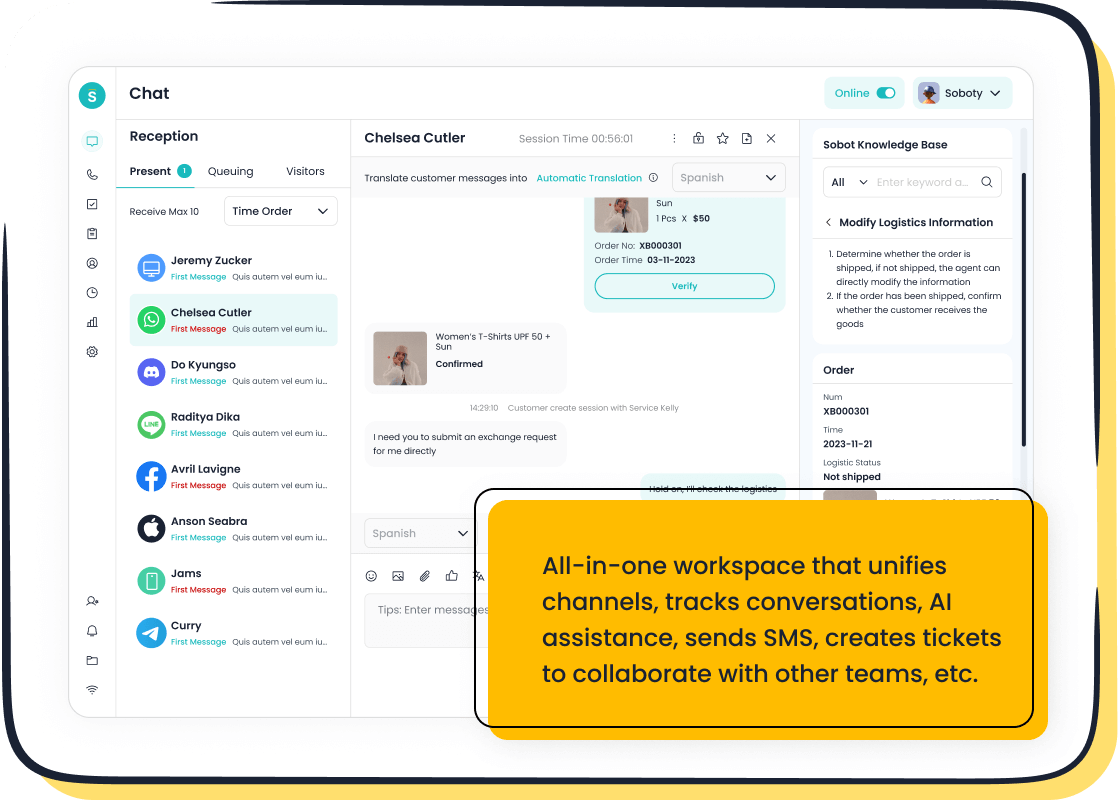
Meeting this expectation across multiple channels can seem daunting. How do you manage conversations from your website, app, and social media without getting overwhelmed? The solution is a unified inbox. A tool like Sobot Live Chat brings all your customer messages into one central workspace. This ensures a faster customer response time and a seamless customer experience.
Implement Proactive Engagement with Live Chat
Don't just wait for customers to reach out. You can actively guide them toward a purchase with proactive live chat. By engaging visitors at the right moment, you can answer questions, resolve doubts, and turn a hesitant browser into a confident buyer.
Implementing live chat can boost conversions by an average of 20%. In fact, shoppers who use live chat are often 2.8 times more likely to complete a purchase. This proactive approach is a game-changer for your CX.
For example, you can set up a chatbot to automatically greet visitors on high-intent pages, like a product comparison or checkout page. This simple interaction can lead to incredible results. By using a unified platform to manage these conversations, you can achieve a significant gain in conversion—some businesses see as much as a 38% increase by turning visitors into clients with tailored service.
Idea 2: Build a Comprehensive Self-Service Hub
You can empower your shoppers and free up your support team by giving customers the tools to find answers on their own. Most people actually prefer it! Did you know that 81% of all customers try to solve issues on their own before reaching out to a live agent? A self-service hub meets this need head-on.
Empower Customers with a 24/7 Knowledge Base
A knowledge base is your digital library, available 24/7 to answer questions. When you build a great one, you create a powerful resource that improves the customer experience. According to Zendesk, 91% of people would use an online knowledge base if it were available and tailored to their needs.
What's the secret to a great knowledge base?
- Helpful Content: Create in-depth product guides, how-to videos, and troubleshooting steps.
- Easy Navigation: Organize articles into logical categories like "Shipping" or "Product Setup."
- Smart Search: Use a system with a powerful search function so users can find answers quickly.
By providing these resources, you show customers you value their time and are committed to helping them succeed with your products.
Reduce Support Tickets with Detailed FAQs
A great FAQ section is one of the fastest ways to improve your support efficiency. It directly answers the most common questions before they ever become a support ticket. This simple tool can have a massive impact. For example, one software company, Saleo, cut down repetitive questions by over 50% just by implementing a better FAQ system.
Pro Tip: Don't just list random questions. Structure your FAQs around the customer journey. Create sections for pre-purchase questions, order issues, and post-purchase care. This makes it easy for users to find relevant information.
Building a robust self-service hub is a win-win. Your customers get instant answers, and your support team can focus on more complex issues. This strategic move is a cornerstone of a modern ecommerce customer experience and a key driver of a better overall CX.
Idea 3: Personalize Every Customer Interaction
Think about your favorite local shop. The owner probably knows your name and remembers what you bought last time. That feeling of being recognized is powerful. You can create that same feeling online. Personalization is no longer a "nice-to-have"; it's a core part of a great ecommerce customer experience. When you use data to create personalized experiences, you show customers you see them as individuals, not just order numbers.
Create a Personalized Shopping Experience
A personalized shopping experience guides your customers to products they'll love. You can do this by offering personalized content based on their behavior. For example, Amazon’s "Frequently bought together" feature uses purchase data to suggest relevant items. Similarly, Sephora shows social proof in search results to help shoppers discover new products. These tactics make shopping easier and more enjoyable. By tailoring recommendations, you help users find what they need faster and increase the chances of a sale.
Use Customer Data for Tailored Support
Personalization is just as crucial in customer support. When a customer reaches out, your agent should have their history at their fingertips. Do they know the customer's name? Their past purchases? Previous support issues? Having this context is key to providing fast, effective, and empathetic service. This is how you truly understand your customers and improve the overall customer experience.
A great example of this in action is the luxury brand Michael Kors. They used Sobot to unify their customer service channels with their internal CRM and order systems. This gave their agents a complete view of every customer's journey. The results were incredible.
Michael Kors Case Study Results:
- 95% customer satisfaction rate
- 20% increase in conversion rates
By equipping their team with the right data, they delivered a superior CX that built loyalty and drove sales. You can achieve similar results by connecting your data sources to give your support team the full story.
Idea 4: Enhance the Ecommerce Customer Experience with a Streamlined Returns Process
Let's talk about something most online stores dread: returns. But what if you saw them not as a loss, but as a golden opportunity to win a customer for life? A difficult or confusing return process can ruin an otherwise great shopping journey. A smooth, easy process, however, builds incredible trust and boosts the overall ecommerce customer experience.
Frame Easy Returns as a Service Win
Think of your return policy as a marketing tool. A staggering 67% of shoppers check your return policy before they even decide to buy. When they see a clear, fair, and simple policy, it removes their hesitation. It’s a safety net that tells them, "Go ahead, try it. We've got your back."
Pro Tip: Don't hide your return policy in the footer of your website. Mention it on product pages and at checkout. Phrases like "Free & Easy 30-Day Returns" can directly increase your conversion rate by reducing purchase anxiety.
Framing returns this way changes the entire dynamic. It’s no longer a cost center; it’s a powerful part of your customer service strategy that shows you stand behind your products and value your customers.
Implement a Self-Service Returns Portal
So, how do you make returns easy without creating chaos for your team? The answer is a self-service returns portal. This empowers people to manage the process on their own, whenever they want. A great portal improves the customer experience by giving users control.
With a self-service portal, your shoppers can:
- Initiate a return or exchange 24/7.
- Print their own shipping labels.
- Track the status of their return in real-time.
This is a huge win for your efficiency. By allowing customers to handle these simple steps themselves, you dramatically reduce the number of support tickets your agents have to manage. This frees them up to handle more complex issues, improving your team's productivity and the overall CX.
Idea 5: Provide Transparent and Timely Order Updates
The moment a customer clicks "buy" is exciting, but it's often followed by a period of silence. This is where post-purchase anxiety can creep in. Did my order go through? When will it ship? Keeping your customers informed after the sale is one of the most crucial parts of a great ecommerce customer experience. It turns a moment of uncertainty into an opportunity to build trust.
Reduce Anxiety with Post-Purchase Communication
You can get ahead of customer worries by filling the post-purchase void with proactive communication. Don't wait for them to ask, "Where's my order?" Instead, show them you care about their purchase as much as they do. This proactive approach reassures customers and reinforces their decision to shop with you.
Pro Tip: Immediately after a purchase, you should engage your customers with helpful information. This builds confidence and improves the customer experience.
- Send a branded confirmation email right away to show the order was successful.
- Provide a link to a tracking page so they can follow their package's journey.
- Share helpful product resources, like how-to guides or care tips, to help them get the most out of their purchase.
Automate Shipping and Delivery Notifications
Manually updating every customer is impossible as your business grows. This is where automation becomes your best friend. Using delivery tracking software, you can automatically send notifications to customers at key moments in the delivery process. These tools sync with your logistics systems and can trigger updates via email or SMS.
You can set up automated alerts for every important milestone:
- When the order is packed
- When the package has shipped
- When it's out for delivery
- When it has been delivered
This level of transparency gives customers peace of mind and control. It significantly reduces the number of support inquiries you receive, freeing up your team to focus on more complex issues. Automating these updates is a simple yet powerful way to elevate your CX.
Idea 6: Create a Customer Loyalty & Rewards Program
A great ecommerce customer experience doesn't end at delivery. How do you turn a one-time buyer into a lifelong fan? The answer is customer loyalty. Thoughtfully designed customer loyalty programs are more than just a marketing gimmick; they are a powerful extension of your customer service strategy, showing appreciation and encouraging repeat business.
Use Rewards as a Customer Service Tool
Think of your loyalty program as a toolkit for your support team. When a customer has a less-than-perfect experience, your agents can do more than just apologize. They can offer loyalty points as a tangible way to make things right. This simple gesture turns a negative interaction into a positive one and shows you value their business.
Pro Tip: Empower your support agents to use rewards to solve problems. A small bonus of 50 loyalty points can de-escalate a complaint and rebuild trust far more effectively than a simple apology. This transforms your program from a passive system into an active tool for improving the customer experience.
Design a Program That Fosters Retention
A successful loyalty program makes your customers feel seen and valued. It's not just about offering discounts; it's about building an emotional connection. Research shows that 70% of consumer decisions are driven by emotion, so a program that creates a real bond will always outperform one based on discounts alone.
To build a program that truly improves your CX, focus on these key areas:
- Personalize Across All Channels: Meet your customers where they are—on your website, in your app, or via email. A strong omnichannel approach can increase revenue by 5% to 15%.
- Create Real Value: Balance rational rewards (like discounts) with emotional ones (like exclusive access to new products). This makes your program feel special, not just transactional.
- Avoid Irrelevance: With 91% of consumers seeing irrelevant ads daily, poor personalization can do more harm than good. Use your data to offer rewards that genuinely match your customers' interests.
By designing customer loyalty programs this way, you create a powerful engine for retention and growth.
Idea 7: Actively Solicit and Act on Customer Feedback
Do you truly know what your customers think? Guessing is risky. Actively asking for and acting on customer feedback is one of the most powerful ways to improve your ecommerce customer experience. It shows you care and gives you a roadmap for what to improve next.
Show Customers Their Opinion Matters
Your customers want to be heard. In fact, 70% of consumers expect brands to understand their needs and expectations. When you ask for their opinion, you show them you're listening. This simple act builds trust and makes people feel valued. A positive brand experience is more impactful than flashy advertising for 65% of consumers.
The key is to make giving customer feedback easy. Don't make them hunt for a contact form.
- Send a personalized post-purchase email asking for a review.
- Use simple pop-up surveys on your website.
- Monitor social media for mentions and comments.
By opening these channels, you gather valuable insights. You also create an opportunity to turn a good experience into a great one.
Apply Effective Customer Experience Tactics
Collecting customer feedback is only half the battle. The real magic happens when you use it. When you act on suggestions, you close the loop and prove that you were actually listening. This is how you truly understand your customers and refine your customer experience tactics.
Think about Apple. When users disliked a new Safari design, Apple didn't ignore the complaints. They quickly analyzed the customer feedback and rolled out an update that gave users a choice. This is one of the most effective customer experience tactics: listen, analyze, and act. You don't need to be a tech giant to do this. If multiple customers say your checkout process is confusing, fix it. If they ask for a new product feature, consider it. Acting on feedback shows respect, builds incredible loyalty, and directly improves your customer experience.
Idea 8: Leverage Social Proof and User-Generated Content
What's more convincing than you saying your product is great? A real customer saying it. Social proof and user-generated content (UGC) are powerful tools that let your happy customers do the selling for you. This approach is fundamental to building an authentic ecommerce customer experience because it provides unbiased validation.
Use Reviews as Passive Customer Service
Reviews are more than just star ratings; they are a form of passive customer service. Before a potential buyer even thinks about contacting you, they look for answers in the experiences of others. Think about these numbers:
- Online reviews influence the purchase decisions of 93% of consumers.
- A significant 72% of customers will not buy until they have read reviews.
When you display reviews, you are proactively answering questions and building credibility. This reduces purchase anxiety and builds confidence. A detailed positive review can explain product features or sizing better than a simple description ever could.
Pro Tip: ✍️ Getting more reviews doesn't have to be hard. Make it easy for people to leave feedback directly on product pages. Send a friendly follow-up email a week after delivery asking for their thoughts. This simple step helps you gather valuable content and improve the customer experience.
Build Trust by Showcasing Customer Photos
You can take social proof a step further with user-generated content like customer photos and videos. This is where you truly build trust and credibility. A report from Nosto shows 59% of consumers find user-generated content the most authentic type of content. It shows your products in real-life situations, not just in perfect studio shots.
Brands like Stanley and Crumbl became cultural phenomena by embracing this. They encouraged customers to share photos and videos, then celebrated that content on their own social channels. This strategy creates a community and provides undeniable proof that people love your products. Showcasing how real people use and enjoy what you sell is one of the fastest ways to build trust and credibility with new shoppers.
Idea 9: Support Key Periods of Ecommerce Customer Service
Peak shopping seasons like Black Friday can make or break your year. These high-stakes moments are the most important key periods of ecommerce customer service. A sudden surge in orders and inquiries can overwhelm even the best teams. Preparing your staff and systems for these rushes is essential for delivering a great ecommerce customer experience when it matters most.
Train Your Team for a Better Customer Experience
Your team is your front line during the busiest times. Proper training turns chaos into a manageable workflow and protects your brand's reputation. Before you enter key periods of ecommerce customer service, you should prepare your agents with targeted training.
Focus your training on these critical areas:
- Proactive Messaging: Teach your team to get ahead of questions. They should inform customers about promotional details, shipping estimates, and expected support response times.
- Handling Delays: Prepare agents to be honest about delays. Train them to pair bad news with a positive gesture, like a discount voucher, to maintain trust.
- Using Technology: Ensure everyone knows how to use AI chatbots for common questions. This frees up human agents to handle more complex issues, improving the overall customer experience.
Empower Agents to Resolve Issues Quickly
Well-trained agents are only half the equation. You must also give them the right tools to succeed during the key periods of ecommerce customer service. When inquiry volume skyrockets, your team needs technology that helps them work smarter, not harder. An omnichannel platform that unifies customer data is a great start.
This is where robust tools become non-negotiable. A powerful call center solution can help manage high call volumes efficiently. When you enhance it with an AI-powered voicebot, you can automate answers to frequent questions like "Where is my order?" This allows your agents to focus on high-value interactions. Giving your team the authority and technology to resolve issues on the first contact is vital during the key periods of ecommerce customer service. This empowerment is what defines the key periods of ecommerce customer service, turning stressful rushes into opportunities to impress your customers.
Idea 10: Offer Post-Sale Follow-Up and Support
Your job isn't over when the package arrives. The post-purchase phase is your chance to turn a happy customer into a loyal advocate. A thoughtful follow-up strategy is a key part of a great ecommerce customer experience. It shows you care about their satisfaction, not just the sale.
Extend the Service Beyond Delivery
You can extend the customer experience far beyond the delivery date. This is where you build a real relationship. Small, thoughtful gestures show your customers you value them as people. This proactive support makes them feel appreciated and encourages them to shop with you again.
Pro Tip: Surprise your buyers! Including a free sample of a new product or a handwritten thank-you note can create a memorable moment that people will want to share.
Here are a few ways you can provide value after the sale:
- Offer helpful resources: Send links to video tutorials or product guides to help them get started.
- Provide technical support: Make it easy for them to get help with setup or troubleshooting.
- Ask for feedback: Show their opinion matters by asking for a review.
- Send personalized recommendations: Suggest other products they might love based on their purchase.
Craft Effective Follow-Up Campaigns
Your follow-up emails are a powerful tool for engagement. You can use them to build loyalty and drive repeat purchases. A great campaign feels personal and helpful, not spammy.
To craft an effective follow-up, start with a compelling subject line that includes their name or the product they bought. Inside the email, focus on how your product improves their life. Use a friendly, customer-centric tone. Make sure your design is mobile-friendly, with a single-column layout and large, clear call-to-action buttons. For example, a button that says "Leave a Review" should be easy to spot and tap. By personalizing your messages and making them easy to act on, you create a better ecommerce customer experience and strengthen your connection with your audience.
Creating a great ecommerce customer experience is a journey, not a single action. From proactive support to post-sale follow-ups, every step matters. Investing in your customer experience is a direct investment in your growth. Improving customer satisfaction builds loyalty, and even a 5% increase in retention can boost profits by up to 95%. Your customers will notice the difference.
Ready to start? Pick one or two ideas to implement this week. To see an immediate impact, explore a solution like Sobot to unify your support channels and elevate your customer satisfaction.
FAQ
Why is ecommerce customer service so important?
Great ecommerce customer service builds trust and loyalty. Happy customers are more likely to buy from you again and recommend your brand to others. It directly turns your support efforts into business growth and higher revenue.
What is the first step to improve my customer support?
Start by meeting your customers where they are. Offer support on multiple channels like your website, social media, and WhatsApp. Using a unified tool like Sobot Live Chat helps you manage all conversations in one place without feeling overwhelmed.
How can I handle more support tickets during busy seasons?
You can prepare your team with training on common issues. Empower them with tools like an AI-powered chatbot to answer simple questions automatically. This frees up your human agents to focus on more complex problems, improving your overall ecommerce customer service.
Does a good return policy really affect sales?
Yes, absolutely! A clear and easy return policy reduces a shopper's hesitation to buy. Many customers check the policy before making a purchase. Framing it as a service win builds trust and can directly increase your conversion rates.
See Also
Elevating Customer Happiness: Ten Strategies for Superior Live Chat Experiences
Discovering the Premier Customer Service Software Solutions for the Year 2024
Selecting Optimal Social Media Customer Service Software: Ten Essential Guidelines
Comparing Leading Live Chat Tools: Shopify's Performance Against Rivals
Boosting E-commerce Sales: The Impact of Live Chat Software Solutions

