In-House vs Outsourced Support Pros and Cons


Preparing your customer support for peak seasons is a major challenge. With online sales growing over 7% during recent holiday periods, you need a solid plan. The choice between in-house customer support and outsourced customer support is critical. This decision impacts your budget, customer satisfaction, and overall customer experience. You must weigh the pros and cons of in-house development against outsourced development. Finding the right balance of control and flexibility for your support team is key to managing critical customer interactions and ensuring helpful tips to ensure customer satisfaction during peak seasons are effective with Sobot.
Understanding In-House Customer Support

Choosing to build an in-house customer support team gives you direct ownership over one of your most critical assets: your customer relationships. This approach involves hiring, training, and managing your own employees. Let's explore the pros and cons of this model.
Pro: Total Control Over Brand and Quality
You have complete control over your brand's voice and service standards with an in-house team. This consistency is vital. Brands with consistent messaging see an average revenue increase of 23%. Your direct management ensures high-quality support, which builds customer trust.
- You can improve the customer experience by directly analyzing feedback.
- Quality control helps you build a positive brand image.
- Excellent service encourages repeat sales, as 58% of customers will pay more for it.
Pro: Deep Product Knowledge and Expertise
Your in-house team lives and breathes your products. This deep knowledge is crucial for resolving complex issues on the first try. A primary cause of poor first-contact resolution is an agent's lack of product familiarity. Better product ownership from your team leads to faster, more accurate support for every customer. This in-house development of expertise is a significant advantage over outsourcing.
Pro: Stronger Company Culture and Loyalty
In-house employees are fully immersed in your company culture. They feel like part of a group, which reduces turnover and builds loyalty. When employees feel valued and connected, they provide better support. This strong internal collaboration is a hallmark of successful in-house development and is difficult to replicate through outsourcing.
Con: Higher Operational and Infrastructure Costs
The biggest drawback of in-house customer support is the cost. You are responsible for all expenses, from salaries and benefits to technology and office space. The in-house development of a team is a major financial commitment.
For example, an in-house team with just four representatives and a manager can cost over US$259,000 annually. This high cost is a major factor when considering in-house development versus outsourcing.
Con: Limited Scalability for Peak Demand
Scaling an in-house team quickly for holidays or sales events is difficult. The hiring and training process for in-house development takes time. This lack of scalability can lead to long wait times and frustrated customers during your busiest periods. Outsourcing often provides more flexibility.
Con: Challenges in Providing 24/7 Coverage
Offering 24/7 support with an in-house team is complex and expensive. You would need to hire staff for multiple shifts across different time zones. This logistical challenge is a common reason companies explore outsourcing to ensure a customer can always get help.
Exploring Outsourced Customer Support

Outsourcing your customer support means partnering with a specialized company to handle customer interactions. This model offers a different set of pros and cons compared to an in-house team. It focuses on cost efficiency and flexibility. Let's look at what outsourced customer support can offer your business.
Pro: Significant Cost Reduction
Outsourcing turns your support costs from a fixed investment into a variable expense. You avoid the high overhead of salaries, benefits, and infrastructure associated with an in-house team. Businesses often see operational cost savings between 30% and 40%. This cost efficiency allows you to allocate resources to other core areas of your business.
Pro: Instant Scalability for Fluctuating Volume
Outsourcing provides easy scalability and flexibility. An experienced partner can increase support capacity by 30-50% in just a few weeks to handle sudden demand. This scalability is crucial during peak seasons.
For example, the electronics giant OPPO used Sobot's chatbot and ticketing system to manage high customer volume. This strategy resulted in an 83% chatbot resolution rate and a 94% positive feedback rate, showcasing incredible efficiency. This level of flexibility is difficult to achieve with an in-house team.
Pro: Access to 24/7/365 Coverage
Outsourcing gives you immediate access to around-the-clock coverage. This is a major benefit for improving customer satisfaction and your overall customer experience. With 24/7 support, you can:
- Serve customers in different time zones.
- Improve response times significantly.
- Free your in-house team to focus on core duties.
Con: Less Direct Control Over Operations
When you choose outsourcing, you give up some direct control. Managing a third-party team can present challenges. You must establish clear processes for quality control. Communication and cultural differences can also impact the quality of customer support if not managed carefully.
Con: Potential for Brand and Culture Disconnect
An outsourced team may not fully grasp your company's unique brand voice. This can create an inconsistent customer experience. However, modern solutions help prevent this. For instance, Sobot's Omnichannel platform integrates channels like Voice, Chat, and WhatsApp into one unified workspace. This ensures every agent delivers consistent, on-brand support.
Con: Risks to Data Security and Privacy
Sharing customer data with a third party introduces security risks. The outsourcing provider may have different security standards, creating potential vulnerabilities. It is vital to partner with a provider that has strong security protocols to protect sensitive customer information and maintain trust.
In-House vs. Outsourced: A Direct Comparison
Choosing the right support model requires a direct look at how each approach impacts your business. You need to compare them across key areas like cost, control, and technology. This comparison will help you decide between in-house development and outsourced development for your customer support needs.
Cost: Fixed Investment vs. Variable Expense
Your budget is a major factor in this decision. In-house customer support represents a fixed investment. You pay for salaries, benefits, office space, and equipment regardless of your support volume. This in-house development of a team can be a significant and ongoing financial commitment.
Outsourcing, on the other hand, is a variable expense. You pay for the services you use, which provides greater cost efficiency. This model eliminates many fixed costs associated with in-house development. The cost efficiency of outsourced development allows you to redirect funds to other business priorities.
A Closer Look at the Numbers The financial difference between in-house development and outsourced development is clear when you break down the expenses. An in-house team carries many hidden costs that an outsourcing partner absorbs.
| Cost Category | In-House Support (Fixed Costs) | Outsourced Support (Variable Costs) |
|---|---|---|
| Salaries & Benefits | $52,000+ per agent, plus 20-30% for benefits | Included in service fee |
| Recruitment & Onboarding | ~$4,700 per employee | Handled by provider |
| Infrastructure & Overhead | $3,000 - $6,000 per employee annually | Handled by provider |
| Training & Retention | Ongoing costs for staff development | Included in service fee |
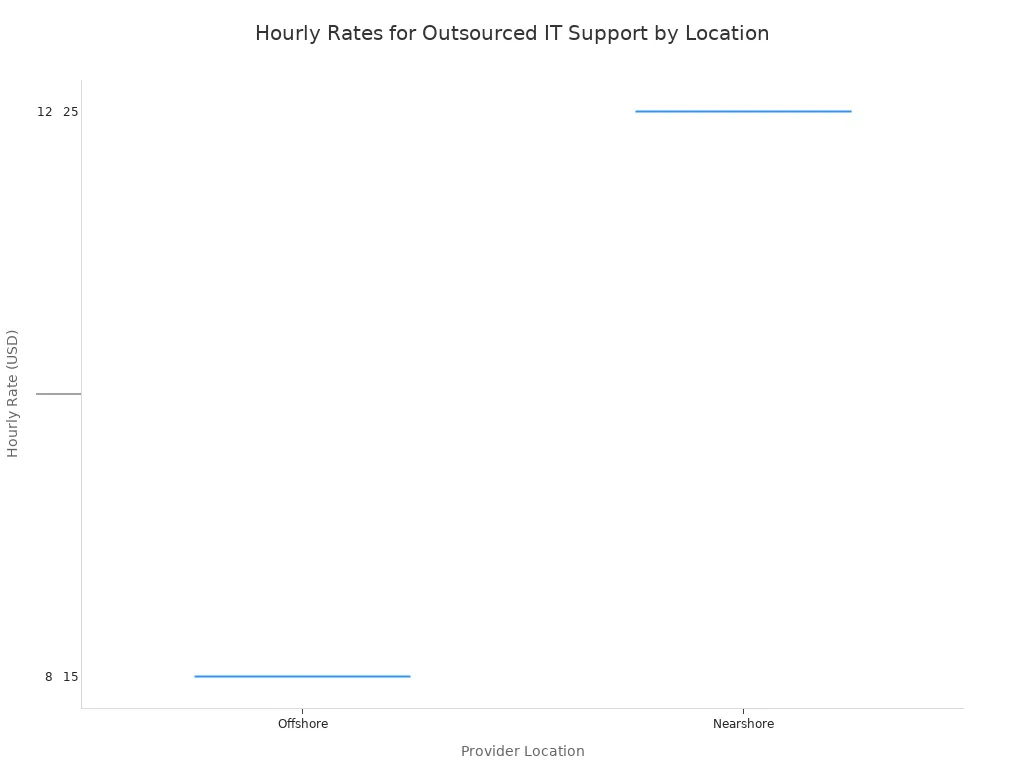
Hourly rates for outsourced development also vary by location, giving you more options to manage your budget.
Control: Direct Management vs. Partner Oversight
Complete control is a primary benefit of in-house development. You directly manage your team, set the standards, and oversee daily operations. This direct ownership ensures your support team perfectly reflects your brand values. You have immediate access to your support resources, which allows for quick changes.
When you choose outsourced development, you shift from direct management to partner oversight. You rely on a third-party provider, which requires clear communication and trust. You set expectations through a service-level agreement (SLA). Success depends on monitoring key performance indicators (KPIs) like customer satisfaction scores and first-contact resolution rates.
| Feature | In-House Management | Third-Party Support Partner Management |
|---|---|---|
| Control | High, with full ownership of all aspects. | Varies based on the service agreement. |
| Communication | Immediate and direct. | Requires coordination, sometimes across time zones. |
| Skill Access | Limited to your existing team's skills. | Access to a global pool of specialized talent. |
| Flexibility | Changes can be slow and resource-intensive. | Partners can scale operations up or down quickly. |
Losing some control can feel risky, especially regarding data security. However, a reputable outsourcing partner mitigates these risks. For example, providers like Sobot offer robust security features, including encrypted data transfer and a 99.99% SLA, to protect your customer data and ensure service reliability. This makes outsourced development a secure option.
Scalability: In-House Development of a Team vs. Partnering with Outsourced Development
Your business needs will change. Scalability is your ability to adapt. The in-house development of a team is often slow and expensive. The average time to hire a new employee was 44 days in 2023, and it can take up to a year for them to reach full productivity. This makes it difficult to respond to sudden spikes in customer demand.
Partnering with an outsourced development provider offers superior scalability. These partners are built to find and train personnel with great efficiency. They can increase or decrease team size based on your needs, ensuring you are always prepared for peak seasons or slow periods. This flexibility is a core advantage of outsourced development. When you need to scale, outsourced development is often the faster and more efficient path. This is a key factor when considering when to use outsourced development. In contrast, when to use in-house development often depends on having predictable, stable support needs.
Quality: Deep In-House Knowledge vs. Broad Outsourced Expertise
The quality of your customer support is non-negotiable. An in-house team develops deep knowledge of your products and company culture. This expertise allows them to handle complex customer issues with confidence. This level of ownership often leads to high-quality, personal interactions that build brand loyalty.
An outsourced development team brings broad expertise in customer service. They have experience across industries and access to best practices for efficiency and quality. Top-tier outsourcing partners are experts in managing support metrics and delivering excellent customer experiences. You can ensure quality by using the same tools, like Customer Satisfaction (CSAT) surveys, for both your in-house and outsourced teams. This provides a unified view of your customer experience and helps maintain high standards of quality and quality control. The in-house development approach builds deep knowledge, while the outsourced development approach provides broad expertise.
Technology: Building vs. Renting a Tech Stack
A modern support operation relies on advanced technology. With in-house development, you are responsible for building, buying, and maintaining your entire tech stack. This includes your phone system, ticketing platform, and any AI tools. The upfront investment and ongoing maintenance for in-house development can be very high.
Outsourcing is like renting a state-of-the-art tech stack. Top-tier partners like Sobot provide access to powerful tools without the high cost of ownership. This gives you an immediate technological advantage.
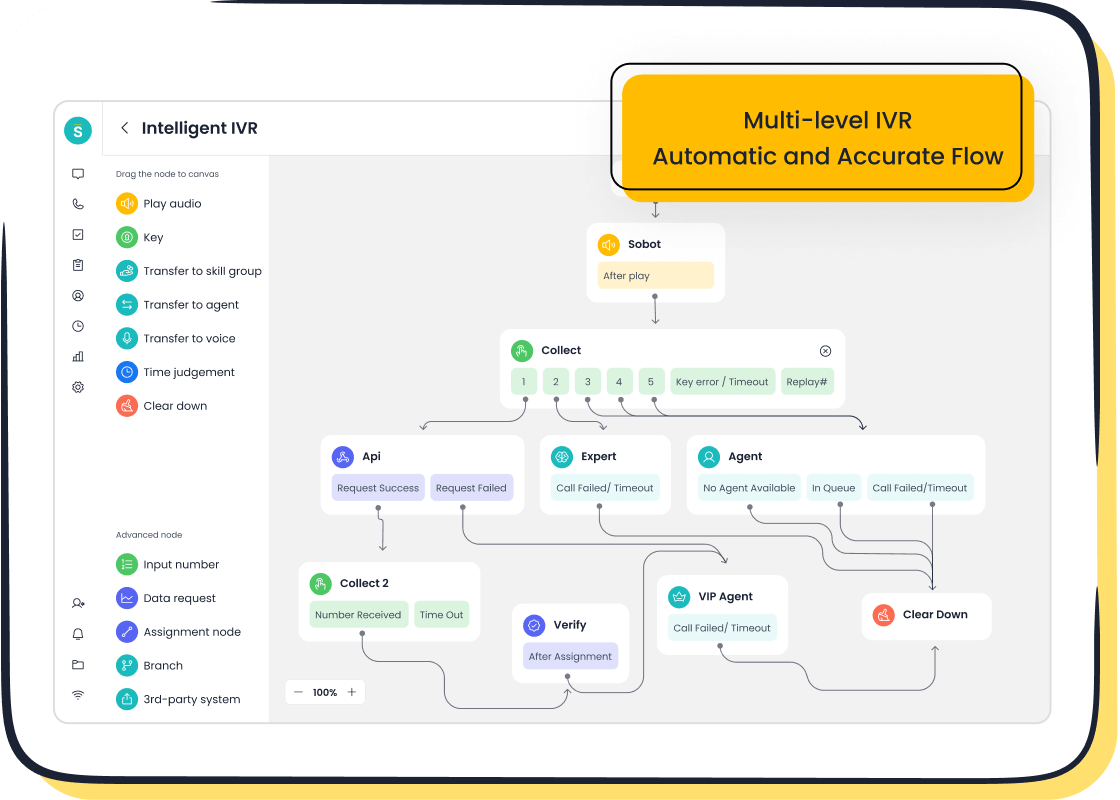
- AI-powered Voicebots can handle common inquiries and route calls intelligently.
- Drag-and-drop IVR systems let you build custom call flows without needing a developer.
- Unified omnichannel platforms bring all customer conversations into one workspace for maximum efficiency.
This approach not only improves efficiency but also enhances security. Reputable providers offer a stable system with a guaranteed 99.99% uptime and secure, encrypted data transfer. Choosing outsourced development means you get enterprise-level technology and security from day one.
The Hybrid Model: A Balanced Approach
You do not have to choose between in-house development and outsourced development. A hybrid model offers a balanced approach. It combines the strengths of both your in-house team and an outsourced development partner. This strategy gives you flexibility and control.
What is a Hybrid Support Model?
A hybrid support model blends in-house development with outsourced development. Your in-house team handles specific tasks while a partner manages others. This creates a powerful and efficient system. Many top companies use this approach for customer support.
- Amazon uses AI and outsourced development for basic inquiries. Its in-house teams manage complex customer issues.
- Microsoft uses AI to automate processes. Human experts in its in-house team make the final decisions.
This model lets you use outsourced development for volume and in-house development for expertise. You get the best of both worlds for customer support.
Structuring a Hybrid Team with Sobot
You can structure your hybrid customer support team effectively with Sobot. A common strategy is using outsourced development for Tier 1 support. This team handles high-volume, simple questions. Your in-house team then focuses on Tier 2 or VIP issues. These are the critical customer interactions that need deep knowledge. This in-house development of expertise is protected. Sobot's unified platform connects your in-house and outsourced development teams, ensuring seamless customer support. This structure balances cost from outsourced development with the quality of in-house development.
Helpful Tips to Ensure Customer Satisfaction During Peak Seasons
During busy times, a hybrid model shines. Here are helpful tips to ensure customer satisfaction during peak seasons. First, empower your customer with self-service options to reduce simple inquiries. Second, establish clear rules for when an issue moves from outsourced development to your in-house team. These are helpful tips to ensure customer satisfaction during peak seasons. Proactive communication about delays also improves customer satisfaction. Following these helpful tips to ensure customer satisfaction during peak seasons is vital. These helpful tips to ensure customer satisfaction during peak seasons will prepare your support for high volume. Always use helpful tips to ensure customer satisfaction during peak seasons.
When a Hybrid Approach is the Right Choice
A hybrid approach is right when you need both scalability and control. It works well for businesses facing fluctuating demand during peak seasons. If you want the cost savings of outsourced development but must keep your in-house team for complex problems, this model is for you. It allows your in-house development to focus on high-value work. You can maintain high customer satisfaction without the full cost of a large in-house support team.
You must decide between in-house development and outsourcing for your customer support. Choose in-house development for complete control and brand ownership. Choose outsourcing for cost efficiency and rapid scalability. Your decision on when to use in-house development or when to use outsourced development depends on your main business driver. Evaluate your primary goal to improve customer satisfaction:
- Budget: Do you need cost efficiency and flexibility in your spending?
- Brand: Is a perfect customer experience your top priority?
- Flexibility: Do you need to scale your support team quickly?
A hybrid model offers a powerful compromise. Your in-house team handles complex issues, while outsourcing partners like Sobot manage high-volume support. This approach balances quality and efficiency. Embark on your contact journey and build the ideal support team with Sobot to boost customer satisfaction and your customer experience.
FAQ
How do I choose the right model for my small business?
You should first review your budget and support needs. An in-house team offers control but costs more. Outsourcing saves money and provides flexibility. A hybrid model can balance the needs of your in-house staff and your budget.
Can an outsourced team match my in-house team's quality?
Yes, a good partner can meet your quality standards. You set clear expectations in your service agreement. Modern tools also help outsourced agents deliver a consistent customer experience that feels like it comes from your own in-house team.
Is an in-house team always more secure?
Not necessarily. A dedicated in-house team can be very secure. However, top outsourcing providers like Sobot offer enterprise-grade security. They use encrypted data transfer and have a 99.99% SLA, which may exceed the security of a small in-house setup.
What is the biggest advantage of keeping support in-house?
The main benefit of an in-house team is total control. You directly manage your brand's voice and quality. This deep connection to your company culture helps your team build strong customer relationships and product knowledge.
See Also
Exploring the Advantages and Disadvantages of Remote Call Center Operations
Demystifying the Financial Implications of Outsourcing Live Chat Services
Elevating SaaS Customer Support Through Effective Live Chat Implementation Strategies
A Comprehensive Guide to Comparing Live Chat Support Service Expenses
An In-depth Review of Artificial Intelligence for Enterprise Call Centers

