Top Strategies to Improve Ecommerce Customer Service

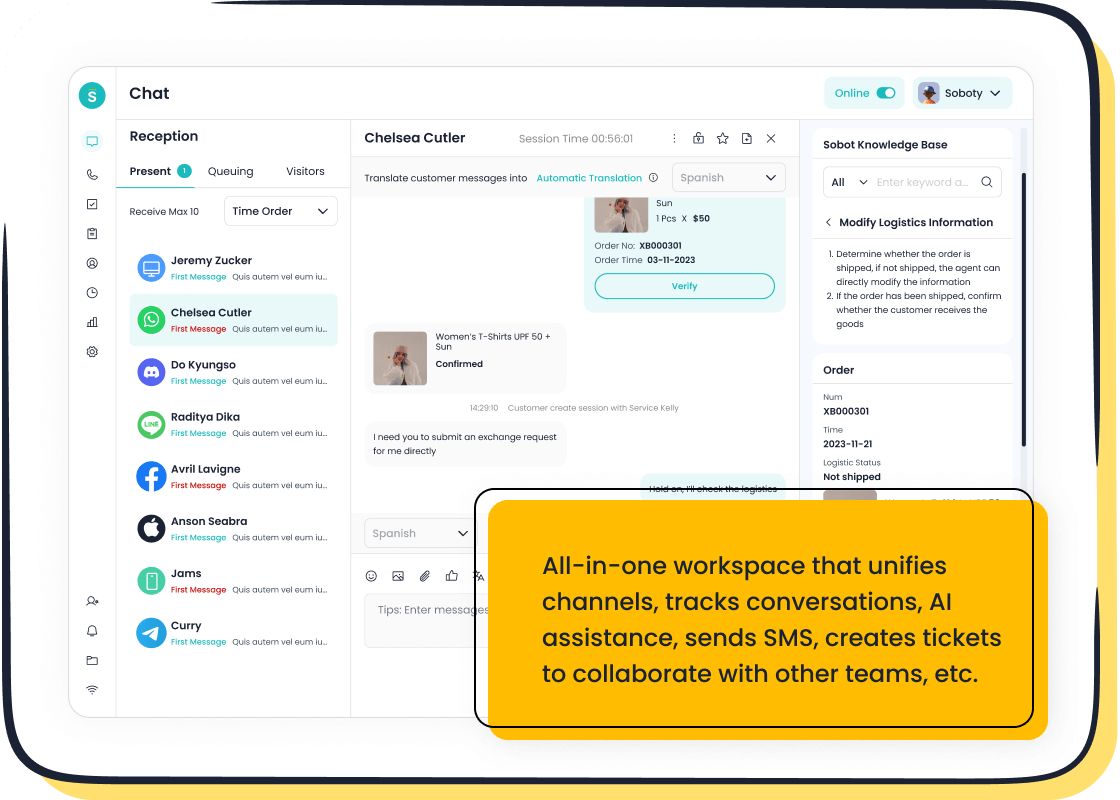
Customer service is the backbone of ecommerce and customer service success. It shapes how customers perceive your brand and influences their loyalty. Did you know 89% of customers return after a great service experience? Businesses offering omnichannel support see retention rates soar by 26%. Tools like Sobot can help you deliver exceptional service that keeps customers coming back.
Empower Customers with Self-Service Tools in Ecommerce

Self-service tools are transforming ecommerce customer service by giving customers the power to solve problems on their own. These tools not only save time but also improve satisfaction. Let’s explore why self-service is a game-changer, the tools that make it work, and how you can implement them effectively.
Benefits of Self-Service for Ecommerce Customer Service
Self-service tools offer a win-win for both businesses and customers. They reduce the workload on your customer support team while giving customers the freedom to find answers quickly. Here’s why they’re essential:
- Faster Resolutions: Studies show that customer issues are resolved 52% faster with automation. This means less waiting and more happy customers.
- Cost Efficiency: By handling repetitive queries, self-service tools free up your team to focus on complex issues, saving time and resources.
- Improved Customer Satisfaction: Research highlights that shorter waiting times significantly enhance the customer experience. For example, Safaeimanesh et al. (2021) found that faster resolutions lead to higher satisfaction levels.
| Study | Findings |
|---|---|
| Safaeimanesh et al. (2021) | Shorter waiting times significantly enhance overall customer experience. |
| Orel & Kara (2020) | Reducing transaction time improves satisfaction, especially for younger customers. |
| Dabholkar et al. (2021) | Positive self-checkout experiences boost satisfaction and loyalty. |
When customers feel empowered, they’re more likely to trust your brand and return for future purchases.
Effective Tools for Self-Service, Including Sobot Live Chat

The right tools make all the difference in delivering exceptional ecommerce customer service. Sobot Live Chat is a standout solution that combines efficiency with customer-centric features. Here’s how it helps:
- Omnichannel Support: Sobot Live Chat connects with websites, apps, and social media platforms like WhatsApp and Instagram. This ensures customers can reach you wherever they are.
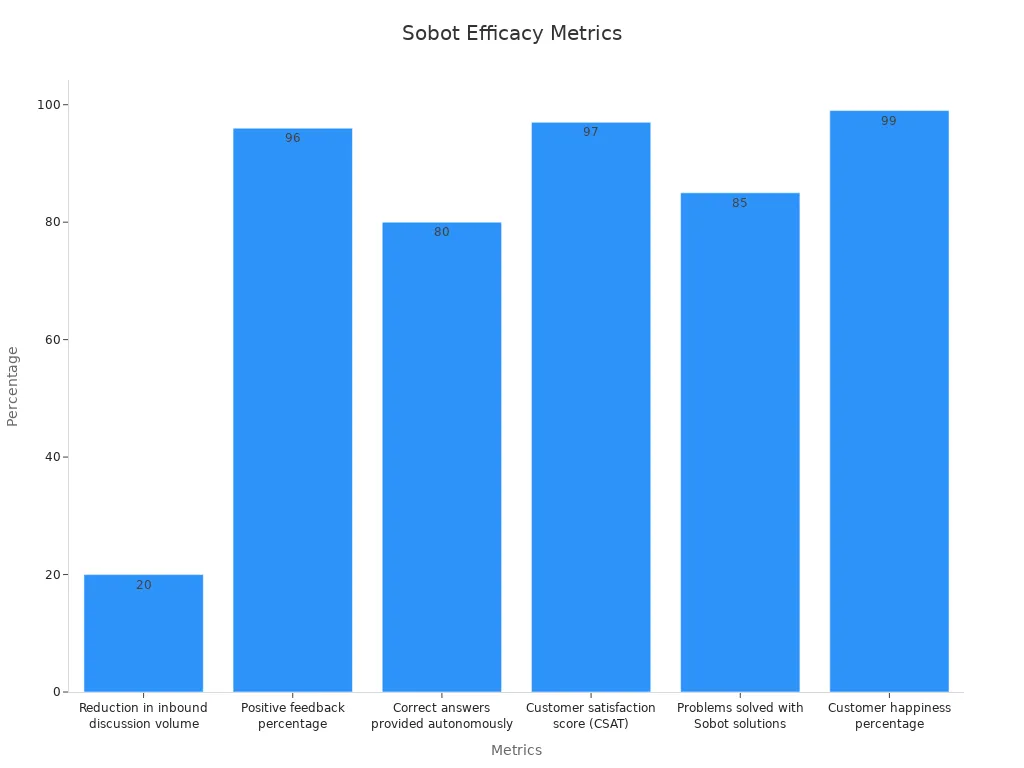
- AI-Powered Assistance: With AI tools, Sobot Live Chat provides accurate answers autonomously, solving 80% of problems without human intervention.
- Customer Satisfaction: Sobot Live Chat boasts a 97% CSAT score and a 96% positive feedback rate, proving its effectiveness in enhancing customer support.
| Metric | Value |
|---|---|
| Reduction in inbound discussion volume | 20% |
| Positive feedback percentage | 96% + |
| Correct answers provided autonomously | 80% |
| Customer satisfaction score (CSAT) | 97% |
| Problems solved with Sobot solutions | 85% |
| Customer happiness percentage | 99% |
Other tools like FAQs, chatbots, and customer portals also play a vital role. For instance, a US-based OEM saw a 20% decrease in call center inquiries and a 15% improvement in NPS after implementing self-service options.
| Case Study | Outcome | Metrics |
|---|---|---|
| US-based OEM | 20% decrease in call center inquiries | 15% improvement in Net Promoter Score (NPS) |
| Global medical device manufacturer | 25% drop in order errors | Surge in repeat purchases due to streamlined workflows |
Tips for Implementing Self-Service Options
Implementing self-service tools doesn’t have to be complicated. Here are some practical tips to get started:
- Start with FAQs: Create a robust FAQ section that answers common customer service challenges. Include detailed product guides to help customers make informed decisions.
- Offer a Customer Portal: Let customers track orders, manage returns, and view purchase history. This enhances their autonomy and builds trust.
- Promote Awareness: Make sure customers know about your self-service tools. Highlight them on your website and in email communications.
- Measure Success: Track self-service resolution rates to see how well your tools are working. Use this data to refine and improve your offerings.
- Leverage Data Analytics: Understand customer behavior to anticipate their needs and develop comprehensive self-service options like interactive tutorials.
By following these strategies, you can empower your customers while streamlining your operations. Tools like Sobot Live Chat make it easier than ever to provide top-notch ecommerce customer service.
Minimize Wait Times with Efficient Systems
In ecommerce, time is everything. Customers expect quick responses, and long wait times can lead to frustration and lost sales. By adopting efficient systems, you can minimize delays, improve satisfaction, and build trust with your customers.
Importance of Reducing Wait Times in Ecommerce and Customer Service
Reducing wait times isn’t just about speed; it’s about creating a better customer experience. When customers get timely responses, they feel valued and are more likely to stick with your brand. On the flip side, slow responses can drive them away. Did you know that 60% of customers find long wait times the most annoying part of customer support? Even worse, 72% of consumers say they’d abandon a brand after a bad service experience.
Quick responses also have practical benefits. For instance:
- They can turn potential refunds into product exchanges, helping you retain revenue.
- Even if an issue isn’t resolved immediately, a fast reply reassures customers that their concerns are being addressed.
Metrics like First Response Time (FRT) and Average Resolution Time (ART) highlight the impact of reducing wait times. Here’s how they measure success:
| Metric | Description |
|---|---|
| First Response Time (FRT) | Measures the time taken for the support team to respond to the initial customer contact. Quick responses enhance customer trust and satisfaction. |
| Average Resolution Time (ART) | Indicates the average time taken to resolve a customer query. Faster resolutions lead to happier customers. |
| Customer Satisfaction (CSAT) | Reflects the overall satisfaction of customers with the service received. Quick responses can significantly boost CSAT scores. |
When you prioritize speed, you’re not just solving problems—you’re building loyalty.
Leveraging Automation Tools to Speed Up Responses
Automation tools are game-changers for ecommerce customer service. They handle repetitive tasks, freeing up your team to focus on complex issues. For example, Kai USA saw a 92% drop in customer inquiries after implementing automation. That’s a massive improvement in efficiency!
Here’s how automation can help:
- Streamline Processes: Automation tools simplify workflows, saving time and reducing errors.
- Enable Self-Service: Customers love quick answers. Automated workflows and AI-driven chatbots provide instant solutions, which 90% of customers value.
- Boost Productivity: By automating routine tasks, your team can handle more queries in less time.
Sobot’s AI-powered tools are a perfect example. They integrate seamlessly with your ecommerce platform, providing instant responses and reducing wait times. With features like intelligent assignment and automated workflows, Sobot ensures your customers get the help they need—fast.
Streamlining Processes for Faster Resolutions
Efficiency doesn’t stop at automation. Streamlining your processes is equally important. When your workflows are smooth, your team can resolve issues faster and more effectively. Here’s what you can do:
- Centralize Communication: Consolidate messages from all platforms into one dashboard. Companies like MyBoatStore have done this and seen significant reductions in response times.
- Train Your Team: Well-trained agents with deep product knowledge can resolve issues quickly. This not only improves resolution rates but also enhances customer satisfaction.
- Foster Collaboration: Strong communication between departments ensures that customer issues are addressed promptly.
Take Cymax Group, for example. By centralizing messages and using AI tools to prioritize tickets, they reduced response times and boosted team productivity. Similarly, CarParts.com implemented automated workflows to streamline operations, cutting response times and improving customer satisfaction.
When you combine automation with streamlined processes, you create a customer service strategy that’s both efficient and effective. Your customers will notice the difference—and they’ll keep coming back.
Ensure Seamless Communication to Avoid Repetition
Repetition in customer interactions can frustrate customers and waste valuable time. By ensuring seamless communication, you can create a smoother customer experience and improve the efficiency of your ecommerce customer service.
Challenges of Repetitive Customer Interactions in Ecommerce
Repetitive interactions often stem from fragmented communication channels. Customers may need to repeat their issues when switching between platforms or agents. This not only wastes time but also diminishes trust in your brand. Common challenges include:
- Fragmented Communication: When messages are scattered across platforms, agents struggle to access complete customer histories.
- Delayed Resolutions: Without centralized data, resolving issues takes longer, leading to customer dissatisfaction.
- Increased Workload: Repetition adds unnecessary tasks for your customer support team, reducing overall productivity.
Proactive communication can help address these challenges. For example:
- Order confirmations and shipping updates reduce inquiries.
- Real-time tracking minimizes "Where Is My Order" (WISMO) questions.
- Automated post-purchase emails keep customers informed and engaged.
Using Sobot’s Omnichannel Solution for Centralized Communication
Sobot’s Omnichannel Solution is a game-changer for ecommerce customer service. It centralizes all customer interactions into one platform, ensuring agents have a complete view of each customer’s journey. Here’s how it enhances communication:
- Streamlined Processes: Agents manage messages without switching between platforms, saving time and resources.
- Improved Efficiency: Users report significant improvements in handling customer interactions, allowing them to focus on complex issues.
- Enhanced Accessibility: Customers can reach you through their preferred channels, building trust and loyalty.
With Sobot, businesses have seen increased efficiency and stronger customer relationships. By consolidating communication, you can reduce repetitive inquiries and provide a seamless customer experience.
Training Support Teams for Consistent and Clear Communication
Even with the best tools, your team’s skills are crucial. Training ensures your customer support team communicates clearly and consistently. Effective training programs include:
| Component | Description |
|---|---|
| Company philosophy | Outlines core values and principles guiding customer interactions. |
| Customer service standards | Lists expected behaviors and actions for customer service representatives. |
| Role-specific responsibilities | Clearly defines roles and responsibilities at different levels within the organization. |
| Training resources | Provides structured modules covering product knowledge and effective communication techniques. |
| Performance metrics and feedback | Establishes measurable metrics to evaluate training effectiveness and encourages continuous improvement. |
Training should be an ongoing process. Regular updates help your team adapt to changing customer needs, ensuring they deliver consistent and clear communication. This approach not only improves customer satisfaction but also boosts team confidence and efficiency.
Expand Support Channels for Accessibility

Expanding your customer support channels is essential for meeting the diverse needs of your customers. By offering multiple ways to connect, you make your ecommerce business more accessible and improve the overall customer experience.
Benefits of Multi-Channel Support in Ecommerce Customer Service
Multi-channel support isn’t just a convenience—it’s a necessity. Customers today expect to interact with your brand on their terms, whether through social media, live chat, or email. Here’s how it benefits your ecommerce customer service:
| Benefit | Description |
|---|---|
| Brand Awareness | Multi-channel support enhances customer engagement and allows for empathetic interactions with the brand. |
| Visibility | Engaging on multiple platforms helps businesses reach a wider audience and tap into new customer pools. |
| Ease of Use | Customers appreciate the convenience of communicating through their preferred platforms, improving satisfaction. |
When you’re available on multiple platforms, you’re not just solving problems—you’re building trust and loyalty.
Popular Support Channels, Including Sobot Live Chat
Some support channels stand out for their effectiveness in ecommerce. Sobot Live Chat is a prime example. It offers features like omnichannel support, AI-driven insights, and customizable widgets, making it a favorite among ecommerce businesses. Here’s why:
| Feature | Benefit |
|---|---|
| Multi-channel support | Engages customers across various platforms like WhatsApp, Facebook, and Instagram. |
| AI data analysis | Helps in understanding customer behavior and tailoring services accordingly. |
| Conversion rate increase | Reports a 38% increase in conversion rates through effective customer interactions. |
| Automatic translation | Facilitates communication with a diverse customer base. |
| Customizable widgets | Allows businesses to tailor the chat interface to their branding and user experience needs. |
| Smart matching functions | Enhances efficiency in connecting customers with the right support resources. |
By integrating tools like Sobot Live Chat, you can meet customers where they are and provide seamless support.
Tips for Managing Multiple Channels Effectively
Managing multiple customer support channels can feel overwhelming, but with the right strategies, it becomes manageable. Here’s how you can do it:
- Optimize inventory practices to maintain optimal stock levels across all channels.
- Use data analytics to track customer behavior and identify high-performing platforms.
- Implement Customer Relationship Management (CRM) systems to centralize customer data.
- Train your team to handle inquiries across different platforms with consistency.
- Monitor key performance indicators (KPIs) to evaluate the effectiveness of each channel.
By following these tips, you can streamline your operations and ensure that your customers receive consistent, high-quality support across all platforms.
Offer Proactive Solutions to Anticipate Customer Needs
Importance of Proactive Customer Service in Ecommerce
Proactive customer service is a game-changer in ecommerce. Instead of waiting for customers to report issues, you can anticipate their needs and address potential problems before they arise. This approach not only improves the customer experience but also builds trust and loyalty.
Why does this matter? Customers appreciate when you go the extra mile to make their journey smoother. For example:
- Proactive support prevents complaints by resolving issues early.
- Personalized communication, like tailored product recommendations, fosters loyalty.
- Positive post-purchase experiences, such as follow-up emails, encourage repeat business.
| Strategy | Description |
|---|---|
| Proactive Support | Resolves potential issues before they escalate, boosting satisfaction. |
| Personalized Communication | Engages customers with tailored messages based on their preferences. |
| Positive Post-Purchase | Ensures customers feel valued, leading to higher retention rates. |
By adopting proactive strategies, you can transform customer support into a loyalty-building tool.
Using Data Analytics to Predict and Prevent Issues
Data analytics is your secret weapon for predicting and preventing customer issues. By analyzing customer behavior, browsing patterns, and transactional history, you can identify potential pain points and address them proactively.
For instance, predictive analytics can help you:
- Spot trends in product quality issues before they affect customers.
- Detect fraud by combining machine learning with behavioral analysis.
- Optimize ecommerce strategies to increase sales and improve customer satisfaction.
Sobot’s AI tools take this a step further. They use real-time analytics to identify bottlenecks and provide actionable insights. This ensures your team can resolve issues efficiently, creating a seamless experience for your customers.
Examples of Proactive Strategies, Including Sobot’s AI Tools
Proactive strategies powered by AI are reshaping ecommerce customer service. Here are some examples:
- Delta Airlines’ chatbot, "Ask Delta," reduced wait times by streamlining interactions.
- Maruti Suzuki’s AI chatbot handled millions of queries, showcasing the efficiency of automation.
- Sephora’s hyper-personalized experiences increased revenue by up to 40%.
Sobot’s AI tools offer similar benefits. They combine predictive analytics with automated workflows to anticipate customer needs. For example, Sobot’s chatbots can handle repetitive queries, freeing up your team to focus on complex issues. Real-time analytics also help identify trends, ensuring your customers receive timely and meaningful support.
By leveraging these tools, you can enhance efficiency, boost satisfaction, and build lasting relationships with your customers.
Improving ecommerce customer service isn’t just about solving problems—it’s about creating memorable experiences. By empowering customers with self-service tools, minimizing wait times, ensuring seamless communication, expanding support channels, and offering proactive solutions, you can transform your customer interactions. These strategies lead to happier customers, stronger loyalty, and a thriving business.
To see real results, focus on the details. Deliver orders on time, monitor your website’s performance, and safeguard customer data. Engaged employees also play a huge role in creating positive interactions. Regularly track customer satisfaction scores to identify areas for growth. Remember, even small improvements can make a big difference in how customers perceive your brand.
Now’s the time to act. Start prioritizing customer service improvements today, and watch your ecommerce business flourish. Your customers will thank you, and your bottom line will too!
FAQ
How can self-service tools reduce high return rates in ecommerce?
Self-service tools help customers make informed decisions by providing detailed product information, reducing misunderstandings, and lowering high return rates.
What makes Sobot Live Chat effective for ecommerce customer service?
Sobot Live Chat offers omnichannel support, AI-powered tools, and real-time analytics. It ensures faster resolutions, happier customers, and fewer returns.
Why is proactive customer service important for reducing returns?
Proactive service anticipates customer needs, resolves issues early, and prevents dissatisfaction. This approach minimizes returns and builds trust with your brand.
See Also
Enhance Customer Satisfaction With These Live Chat Tips
Increase Sales Through Effective Ecommerce Live Chat Tools
Elevate E-commerce Satisfaction Using Chatbots Effectively
Improve SaaS Customer Support With Live Chat Techniques
A Guide to Implementing Omnichannel Contact Center Strategies

