Faster Support Starts with FRT


First response time, or first reply time, measures the time between your initial customer queries and the first human response. This metric is foundational, as 90% of buyers say an immediate response is crucial for support questions. Your first response time acts as a promise that you value the customer's issue. Understanding how to improve first response time in customer support with tools like Sobot is the first step to keeping that promise and building lasting trust.
Why First Response Time is a Critical Metric

A low first response time is more than just a number on a dashboard; it's a powerful driver of customer loyalty and operational efficiency. When you prioritize speed, you directly address core customer needs and prevent small problems from becoming major headaches.
Build Customer Trust and Confidence
Your first interaction sets the tone for the entire customer relationship. A quick reply shows customers you are organized, reliable, and value their time. This initial acknowledgment builds a strong foundation of trust.
- Studies show that 90% of U.S. customers feel an immediate response is important.
- When you reply promptly, customers feel respected, which strengthens their perception of your brand.
- This positive experience pays off, as 94% of customers who have low-effort interactions are likely to make repeat purchases.
A quick first response time is a key way to build customer trust, letting customers know right away that you are taking their inquiry seriously and that you will resolve the issue as fast as possible. — Bri Christiano, Director of Customer Support at Gorgias
Prevent Minor Issues from Escalating
Many customer questions start small. A fast reply can resolve these simple issues before they grow into complex, frustrating problems. Addressing issues quickly at the first point of contact leads to a faster overall resolution. This proactive approach to customer service stops a minor hiccup from turning into a crisis, saving your team time and protecting your brand's reputation. A low first response time is essential for effective issue management.
Meet Modern Expectations for Speed
Today's customers are used to on-demand services, and they expect the same speed from your customer service team. Long waiting times are a major source of frustration for 75% of consumers. In a world where speed is linked to competence, a delay can make your business seem unprofessional. Meeting modern expectations is critical, as 89% of buyers say a fast reply to an initial inquiry influences their purchasing decision. You must deliver the speed customers demand to stay competitive.
FRT Benchmarks for Top Customer Service Channels
Your customers expect different response speeds on different channels. You should set clear first response time goals for your team to meet these expectations. While benchmarks can vary by industry, speed is a universal demand in modern customer service.
Email Support
Email is a traditional channel, but customers still want quick replies. You should aim to answer all emails in under one hour. This speed shows customers you are attentive. However, the average email response time often differs across sectors.
| Sector | Average Email Response Time |
|---|---|
| Finance | 14 hours |
| Retail | 17 hours |
Beating these averages gives you a strong competitive advantage.
Live Chat and Messaging
Live chat demands an immediate response. Top-performing companies answer chats in under 30 seconds. Responding within 10 seconds can even increase customer satisfaction to over 84%. Your goal should be to make the interaction feel instant and conversational.
Social Media
Customers use social media for fast help. Many people expect a reply within 30 to 60 minutes. Yet, companies often take much longer to respond.
On Facebook, the average company response time is nearly two hours. On X (formerly Twitter), it is over 30 minutes. Closing this gap helps you meet customer expectations and build a positive brand image.
Phone Support
For phone support, the key metric is wait time. An acceptable wait time is generally under two minutes. If customers wait longer, their satisfaction drops significantly. Excellent customer service teams strive to answer calls in under 30 seconds. Setting an aggressive goal for your first response time on the phone keeps callers happy and engaged.
How to Calculate and Track FRT
Tracking your first response time helps you understand your team's performance and find areas for improvement. You can calculate this metric manually, but using software makes the process much easier and more accurate.
The Basic FRT Formula
You can calculate your team's average reply time with a simple formula. First, add up the time for all first responses sent during a specific period. Then, divide that total by the number of tickets you responded to.
Average FRT = Total Time to First Response / Total Number of Tickets Responded To
This gives you a clear benchmark. You can use it to see how your team performs over a day, a week, or a month.
Business Hours vs. Calendar Hours
You need to decide whether to measure your FRT using business hours or calendar hours.
- Calendar hours include all 24 hours of the day, seven days a week. This method can be misleading if your team does not offer 24/7 support. A ticket received on Friday night might have a long response time that doesn't reflect your team's actual speed during work hours.
- Business hours only count the time when your team is actively working. This provides a more accurate look at your agents' efficiency. Most companies choose this method to set realistic performance goals.
Using Software to Automate Tracking
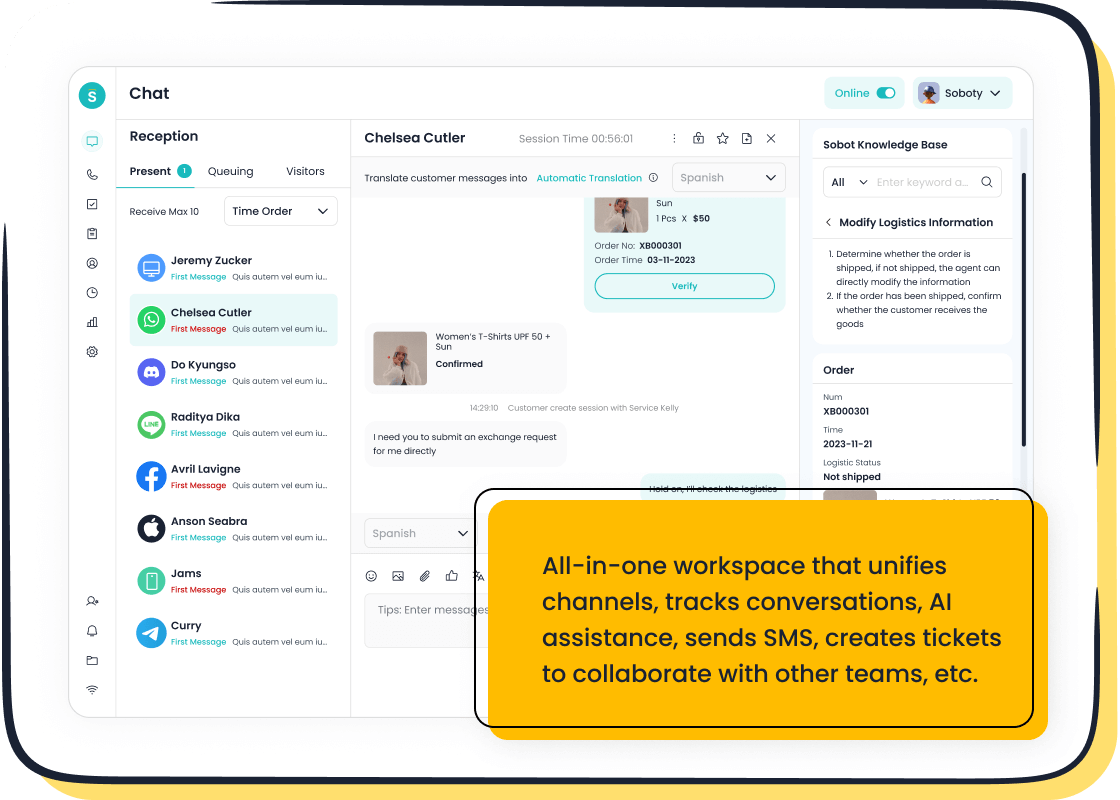
Manually calculating your first response time is time-consuming and prone to errors. Modern help desk platforms automate this entire process. Tools like Sobot's Ticketing System and Live Chat automatically calculate and display FRT on performance dashboards.
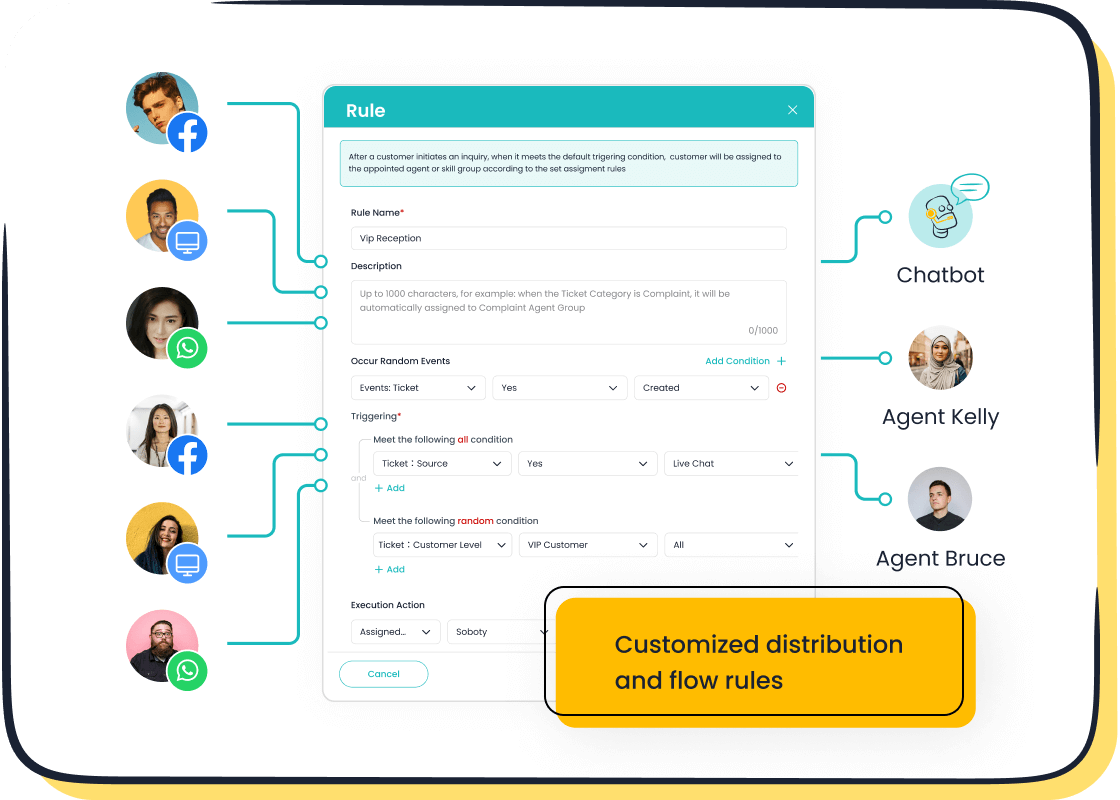
These systems do more than just track numbers. They use automated ticket routing to send new queries directly to the right agent or department based on keywords or priority. This eliminates manual sorting and speeds up the initial reply. With built-in SLA tracking and detailed reports, you can monitor performance in real-time, identify bottlenecks, and ensure your team consistently meets its goals without any manual effort.
How to Improve First Response Time in Customer Support
Knowing your FRT is the first step. The next step is improving it. You can learn how to improve first response time in customer support by implementing smart strategies and leveraging powerful tools. These methods help your team work more efficiently, meet customer expectations, and build stronger relationships.
Use Automation and AI Chatbots
Automation is your best tool for delivering instant responses. AI-powered chatbots can engage customers 24/7, answering common questions without any human involvement. This frees up your agents to focus on more complex issues.
- Companies using AI resolve tickets 52% faster on average. This speed directly impacts your first response time.
- In some cases, AI chatbots can reduce resolution times by as much as 82%. For example, the financial service company Klarna used AI to cut its resolution time from 11 minutes to under 2 minutes.
To make your chatbot effective, you should design its conversations carefully.
- Define a clear persona. Your chatbot should have a personality that matches your brand's voice. This makes the interaction feel more engaging and human.
- Use progressive disclosure. Avoid overwhelming users with too much information at once. Instead, guide them through a logical flow by asking one question at a time. This simplifies the experience and reduces customer effort.
Create Canned Responses and Templates
Not every query needs a unique, handcrafted reply. Many customer questions are repetitive. Creating canned responses, or templates, is a simple way to improve your first response time. These pre-written messages handle common scenarios, like questions about return policies or shipping times.
Your agents can select a relevant template and quickly personalize it with specific details, such as the customer's name or order number. This approach saves them from typing the same message over and over. You can use templates in your email client, help desk software, or messaging apps. Modern platforms even use AI to suggest the right template, making the process even faster. This is a key strategy for how to improve first response time in customer support without sacrificing quality.
Response templates can help your agents provide fast and efficient support while giving them room to personalize the details.
Optimize Ticket Routing with Sobot
A long first response time often happens when a ticket waits to be assigned. Manual sorting creates delays and sends queries to the wrong agents. You can solve this problem with automated ticket routing. This is a core part of how to improve first response time in customer support.
Sobot's platform automates this entire process. It uses AI to ensure every new ticket goes to the right person instantly. Here is how it works:
- Real-Time Categorization: The system analyzes ticket content to understand the issue, its urgency, and the expertise required.
- Smart Agent Matching: It then matches the ticket to the best available agent based on their skills and current workload.
- Automatic Prioritization: High-priority tickets from key customers or with urgent SLAs are flagged and moved to the front of the queue.
This intelligent workflow eliminates manual handoffs and ensures customers get help from the most qualified agent as quickly as possible.
Leverage an Omnichannel Solution
Your customers contact you through many channels, including email, social media, and live chat. Juggling these platforms slows your team down. An omnichannel solution unifies all communications into a single workspace, which is fundamental to how to improve first response time in customer support.
Sobot's Omnichannel Solution brings every channel—from social media and messaging apps to phone and email—into one unified dashboard. This gives your agents a complete view of the customer's journey. They can see past interactions and context without switching between different systems. This streamlined view allows them to provide faster, more consistent customer service.
Luxury fashion brand Michael Kors provides a powerful example. Before using Sobot, the company struggled with long wait times across its call center and live chat. By implementing Sobot's all-in-one platform, Michael Kors unified its customer service channels and automated its workflows. The results were remarkable:
- They reduced their response time by 83%.
- They achieved a 95% customer satisfaction rate.
This story shows how to improve first response time in customer support with the right technology. By unifying channels and automating workflows, you empower your team to deliver the fast, effective service that modern customers expect.
Improving your first response time is a direct path to building stronger customer relationships and loyalty. You can achieve faster replies by setting clear benchmarks and using smart workflows. Tools like Sobot make this goal attainable.
Faster support is not just about speed. It is about showing customers they are your priority. This is the principle that drives successful brands like Michael Kors.
FAQ
What is a good first response time?
A good first response time depends on the channel. You should aim for near-instant replies on live chat. For phone support, answer in under two minutes. For email, try to respond in under one hour. Meeting these goals shows customers you are attentive.
How is first response time different from resolution time?
First response time measures the speed of your first human reply. Resolution time measures the total time to solve a customer's problem. A fast first response time is the first step toward a quick overall resolution and a better customer experience.
Do automated replies count toward first response time?
No, first response time tracks the time until the first human agent replies. You can use automated messages to confirm you received a query. However, these do not count toward your official FRT metric. A quick human follow-up is still essential.
What is the first step to improve my first response time?
You should start by measuring your current performance. Use a platform like Sobot to automatically track your first response time across all channels. This data helps you identify your biggest delays and shows you where to focus your improvement efforts first.
See Also
Unlock Rapid Assistance: Depop Live Chat Mastery for Swift Solutions
Resolve Shopify Live Chat Problems Quickly and Efficiently Now
Become a Pro: Elevating Customer Support Through Live Chat Expertise
Artificial Intelligence Agents: Transforming Customer Service and Support Forever
Elevate Your SaaS Support: Strategic Live Chat for Enhanced Customer Experience

