Improve Agent Efficiency in Your Call Center

Artificial intelligence (AI) is a powerful tool to improve agent efficiency. AI augments your agents by providing real-time support and automating tasks. This support is crucial for your team's performance. High stress plagues the customer service industry.
Did you know that nearly 74% of call center agents report experiencing burnout? This contributes to an average annual turnover rate of 38%.
You can boost productivity and reduce burnout with the right AI tools. This guide explores how comprehensive AI solutions from Sobot, including AI agents, use data to create a more supportive environment for your agents and drive overall efficiency.
Why You Must Improve Agent Efficiency
Understanding the need to improve agent efficiency is the first step toward building a stronger call center. Your agents face growing challenges that directly affect your business. Ignoring these issues hurts your team performance and your bottom line. Let's explore why boosting efficiency is no longer optional.
The Rise of Complex Customer Issues
Customers now solve simple problems themselves using FAQs and chatbots. This means the calls that reach your agents are often more complex and urgent. In fact, recent data shows that 77% of service representatives report an increase in issue complexity. Your agents need advanced support because they are handling the toughest problems. Without the right tools, they struggle to find answers quickly, leading to frustration for everyone involved. This is where AI can provide real-time assistance to your agents.
The Impact on Key Performance Metrics
Low efficiency directly harms your Key Performance Indicators (KPIs). Metrics like Average Handle Time (AHT) and First Call Resolution (FCR) are crucial for measuring performance. When agents lack instant access to information, call times increase and resolution rates drop.
The industry benchmark for FCR is around 70%, but only 5% of call centers achieve a world-class rate of 80% or higher.
Longer call times mean higher costs and fewer customers served. This has a significant business impact. Look at how AHT varies across industries:
| Industry | Average Handle Time (AHT) |
|---|---|
| Retail & Ecommerce | 3 minutes, 29 seconds |
| Financial Services | 4 minutes, 5 seconds |
| Manufacturing | 4 minutes, 13 seconds |
| Hospitality | 3 minutes, 11 seconds |
An effective AI can help your agents beat these benchmarks.
The Toll on Agent Satisfaction and Churn
Constant pressure and difficult calls take a toll on your agents. When agents feel unsupported, their job satisfaction plummets. This leads to burnout and high turnover, with average annual rates between 30-45%. Replacing agents is expensive and disruptive for your business. Low morale also affects customer interactions. Disengaged agents are less likely to provide the empathetic, accurate service that boosts customer satisfaction. An AI assistant can reduce this stress by empowering agents with the right answers, improving both their confidence and your service quality. This is a key part of a modern AI strategy.
How AI Applications Boost Performance

You can transform your call center by using specific AI applications. These tools directly address the biggest drains on agent productivity. A comprehensive platform like Sobot’s AI Solution gives you the tools you need. It combines AI agents, copilots for human support, and insights to measure success. This approach helps you improve agent efficiency and build a stronger customer service operation. Let's explore how these applications boost team performance.
Real-Time Agent Assist and Guidance
Your agents face difficult questions every day. They need answers immediately to keep customers happy. Real-time AI assistance acts as a co-pilot during live calls and chats. This technology listens to conversations and provides instant suggestions, relevant articles, and step-by-step guides. This support is a form of agentic AI that empowers your team.
Early AI programs show that this guidance can reduce average handle time by up to 30%. For example, one telecom company cut its handle time by 20% in just two months by using AI assistance. The AI helps agents find information faster. It also ensures they follow company rules and compliance scripts.
How AI Improves Compliance: An AI system actively monitors conversations for key phrases. It can send quiet alerts to agents if they miss a required disclosure. This improves accuracy and reduces compliance risks. The AI also provides:
- Dynamic Scripting: Scripts change based on the conversation.
- Script Reminders: The AI reminds agents of key steps.
- Automated Alerts: It flags compliance risks in real time.
- Knowledge Surfacing: It shows agents the right documents instantly.
Sobot’s AI Copilot is a perfect example of this technology in action. It assists your human agents by generating smart responses and polishing content. This decision support helps agents feel more confident and resolve issues faster, leading to better overall performance.
Automated Post-Call Summaries
After-call work (ACW) is a hidden drain on productivity. Agents spend valuable time writing call notes, updating customer records, and filling out tickets. This manual data entry is repetitive and takes them away from their main job: helping customers. On average, agents spend 6% to 12% of their shift on ACW.
The time spent on ACW varies by industry.
| Industry | Average ACW Time |
|---|---|
| E-commerce | 5 seconds |
| Retail | 1-3 minutes |
| Telecommunications | 2-5 minutes |
| Banking/Financial Services | 3-6 minutes |
AI-powered automation can eliminate most of this work. An AI can listen to a call, understand the context, and generate a perfect summary automatically. This data entry automation saves agents an average of 40 to 60 seconds per call. For an agent handling 55 calls a day, this adds up to nearly three hours of saved time each week. This allows you to create automated workflows that free up your agents for high-value tasks.
Sobot’s AI Copilot excels at this. It provides conversation summaries and allows for one-click ticket filling. This automation lightens the workload on your agents, reduces burnout, and lets them move to the next customer interaction with focus.
Deploying AI Agents for 24/7 Support
Many customer questions are simple and repetitive. You can use AI agents, like chatbots and voicebots, to handle these inquiries 24/7. This provides instant service to your customers without needing a human agent. Modern AI agents can resolve up to 80% of routine customer inquiries on their own. This frees your human agents to focus on complex problems that require a human touch.
This approach delivers impressive results.
| Company | Key AI Implementation | Results |
|---|---|---|
| Tidio | Implemented Lyro AI agent | Automated 58% of support queries |
| Suitor | Implemented a retail chatbot | Automated 85% of customer service |
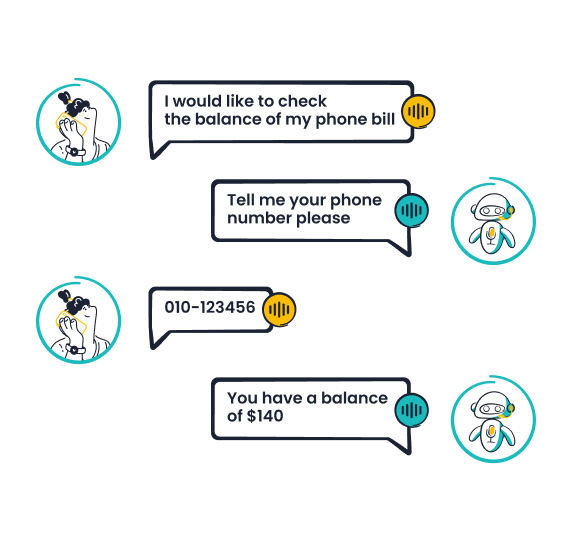
Sobot’s Voicebot and Chatbot are powerful AI agents designed for this purpose. They offer a human-like, multilingual experience and can automate over 90% of interactions. This level of automation provides excellent customer service around the clock. For example, the global electronics brand OPPO used Sobot’s AI to manage high volumes of customer questions. They achieved an 83% chatbot resolution rate, meaning most customers got answers without ever needing to speak to a person. This is the power of agentic AI in action.
Intelligent Knowledge Management
Your agents cannot be effective if they cannot find information. Studies show that employees spend nearly 20% of their workweek, or about 45 minutes per day, just searching for internal data or answers. A messy or outdated knowledge base slows down your entire operation. It leads to longer call times and frustrated agents.
Intelligent knowledge management uses AI to solve this problem. Instead of forcing agents to search through folders and documents, an AI-powered system delivers the right information automatically. The agentic AI understands the customer's question and instantly surfaces the correct article, policy, or troubleshooting guide.
This improves real-time performance and ensures every agent has access to the same accurate data. It creates smarter workflows and a more consistent customer experience. By integrating AI with your knowledge base, you empower your agents to become experts on every call. This is a critical step to boost efficiency and improve your customer service.
A Practical Roadmap for AI Implementation

Implementing AI requires a clear strategy. You can successfully integrate AI into your operations by following a practical roadmap. This approach ensures you build on a solid foundation and achieve measurable results for your business.
Start with a Clean Knowledge Base
Your AI is only as good as your data. A messy knowledge base with outdated or conflicting information will lead to poor AI performance and inaccurate answers. Effective data organization is the first and most critical step. Before you deploy any AI, you must focus on data quality management. This involves a systematic cleanup of your existing content.
Successful data organization includes these key actions:
- Update and Archive: Remove redundant articles and update outdated information to improve accuracy. Strong data organization is essential.
- Create a Customer-Focused Structure: Organize content around customer intent, like "How to Make a Payment," not internal department names. This data organization makes sense to users.
- Format for AI Readability: Break down long documents into smaller, modular pieces with clear headings. This data organization helps the AI find answers faster.
Proper data organization and automated data quality management are foundational for any AI project. Good data organization ensures your AI has the right information. Excellent data organization is your goal. This focus on data organization and data quality management will pay off. Your data organization efforts are key.
Integrate AI with Your Existing CRM
Your AI needs a complete view of the customer journey. This requires seamless data integration with your Customer Relationship Management (CRM) system. Proper integration allows the AI to access customer history, past interactions, and other vital data. This creates smarter, more personalized service. Without this data integration, your AI operates in a silo.
Sobot’s AI Solution simplifies this process. It offers plug-and-play integration options with leading CRM and contact center systems like Salesforce and HubSpot. Through abundant APIs, this integration ensures a smooth flow of data between platforms. This deep data integration empowers your AI to understand context and deliver better outcomes. The right integration strategy is vital for your business. This data integration is the backbone of an effective AI system.
Pilot a Use Case and Iterate
You do not need to automate everything at once. Start with a small, manageable pilot project to prove the value of AI. A great first use case is automated post-call summaries. This is a moderate-complexity task that offers immediate benefits by reducing after-call work. A typical pilot program can be completed in just 4-6 weeks.
During this phase, you can test your workflows and gather performance data. This allows you to make adjustments before a full-scale rollout. Sobot provides support throughout the entire implementation process, from the initial setup of your workflows to continuous optimization. This partnership ensures your AI solution is fine-tuned to meet your specific business goals and improve your service workflows.
Measure Success to Prove ROI
You must measure the impact of your AI implementation to prove its value. Data-backed decision-making is essential for justifying your investment. Track key performance indicators (KPIs) to see how the AI affects your operations. Focus on metrics like First Call Resolution (FCR), Average Handle Time (AHT), and agent satisfaction.
Success is not just about cost savings; it is also about improving the customer experience. For example, after implementing Sobot, OPPO saw a 94% positive feedback rate and a 57% increase in repurchase rate. These metrics show that a well-executed AI strategy directly contributes to customer loyalty and revenue. This kind of data-backed decision-making demonstrates a clear return on investment.
You can improve agent efficiency with targeted AI applications. AI provides your agents with instant support, uses automation to eliminate after-call work, and delivers correct information on demand. This automation boosts team performance and overall efficiency. The true value of AI is not replacing agents, but empowering them. Research shows that when agents feel supported, customer ratings increase by 10%.
AI agents create a less stressful environment for your human agents. This support helps your agents have better customer conversations. This is how you improve agent efficiency.
Explore how Sobot’s comprehensive AI Solution can help you use automation and AI agents to solve your biggest challenges.
FAQ
How does AI improve agent efficiency?
AI boosts your team's performance by handling repetitive tasks. For example, Sobot's AI Copilot automates call summaries. This frees your agents to focus on solving complex customer problems, which is a key way to improve agent efficiency in your call center.
Will AI replace my human agents?
No, AI empowers your agents instead of replacing them. It acts as a supportive partner. AI tools handle simple questions and provide real-time guidance. This allows your team to manage difficult calls with more confidence and less stress, improving job satisfaction.
What is the difference between an AI agent and an AI copilot?
An AI agent, like a chatbot or voicebot, works independently to resolve customer issues 24/7. An AI copilot assists your human agents during live interactions. It provides response suggestions and surfaces knowledge, helping them work faster and more accurately.
How difficult is it to integrate AI with my current systems?
Integration is simpler than you might think. Modern platforms like Sobot offer plug-and-play solutions. They use abundant APIs to connect smoothly with your existing CRM and contact center software, ensuring a seamless flow of data for smarter service.
See Also
Streamlining Operations: The Power of Efficient Call Center Automation
Elevate Performance: Monitoring Strategies for Superior Call Center Results
Achieving Excellence: Top Quality Management Practices for Call Centers
Mastering Live Chat: An Effective Guide for Agent Management