AI Chatbot Accuracy A 2026 Analysis

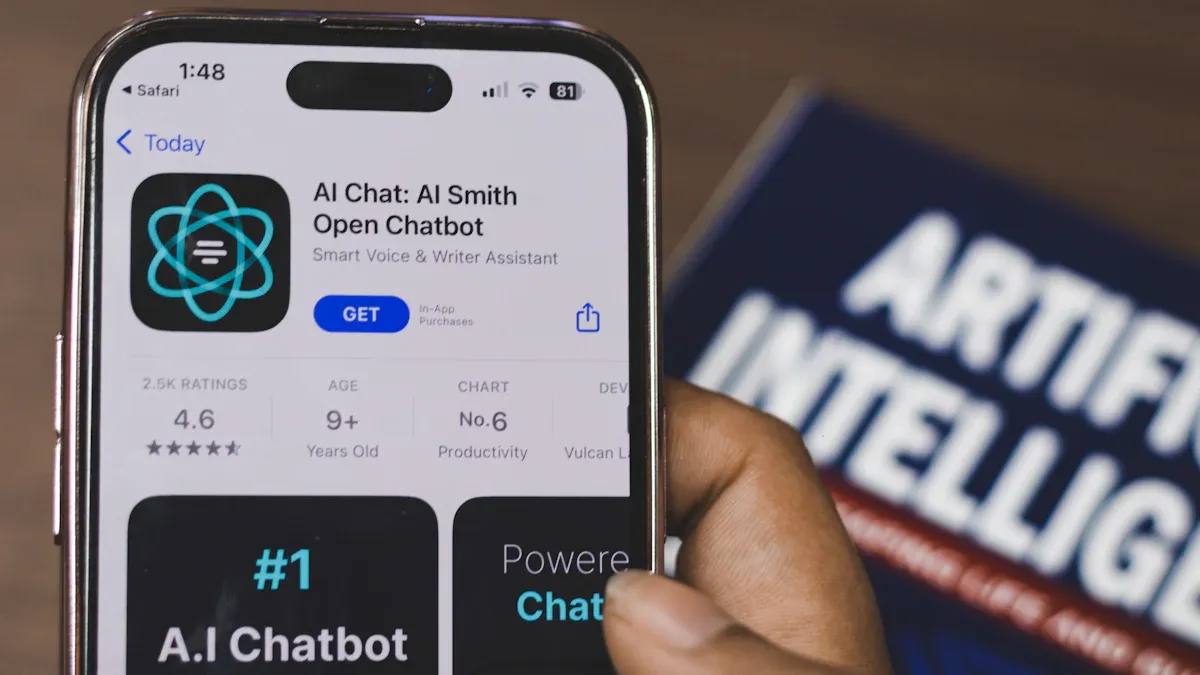
By 2026, the critical factor for customer satisfaction in automated interactions is chatbot accuracy. This boosts loyalty for each customer and lowers costs for your business. The adoption of AI is accelerating, with projections showing:
- 57% of businesses will use chatbots by 2025 or later.
- The number of US voice assistant users will reach 157.1 million by 2026.
The data shows a strong link between satisfaction and loyalty. The model below explains 57.5% of the variance in customer satisfaction, which directly influences loyalty.
| Variable | R-square |
|---|---|
| Customer Loyalty (CL) | 0.249 |
| Customer Satisfaction (CS) | 0.575 |
This focus on results is why leading platforms like Sobot help a business answer the question: how accurate are AI chatbots in customer support?
How Accurate Are AI Chatbots in Customer Support?

The question of how accurate are AI chatbots in customer support depends on the industry and the task. Most businesses aim for an accuracy rate of 85% or higher. Some specialized fields, like financial services, target over 95% accuracy for automated processes. This high standard is why nearly half of all customers report difficulty telling the difference between an AI and a human agent. True accuracy, however, is measured by more than just a single number. It is a combination of several key performance factors.
Intent Recognition and Understanding Customer Needs
The first step in determining how accurate are AI chatbots in customer support is understanding what the customer wants. This is called intent recognition. Poor intent recognition leads to major service failures. It can trap users in frustrating conversation loops or provide mechanical, irrelevant answers. When chatbots cannot grasp the user's goal, they fail to provide helpful support. A chatbot's ability to correctly identify a customer's need is the foundation for a successful interaction.
Entity Recognition for Capturing Key Details
After understanding the user's intent, ai-powered chatbots must capture specific details. This process is called entity recognition. It involves identifying key pieces of information like:
- Names
- Order IDs
- Dates
- Locations
Effective entity recognition allows the chatbot to perform "slot filling," where it automatically extracts and uses these details. This avoids asking the customer for the same information multiple times. It makes the conversation more efficient and significantly boosts accuracy.
Response Relevance and Factual Correctness
Understanding the user and capturing details is only half the battle. The response from ai-powered chatbots must be relevant and factually correct. If a chatbot misunderstands a product name or pulls outdated information from its knowledge base, the answer will be wrong. This erodes customer trust. The accuracy of the final answer is just as important as the chatbot's ability to understand the initial question.
First-Contact Resolution Rate for Chatbots
The ultimate measure of how accurate are AI chatbots in customer support is the first-contact resolution (FCR) rate. This metric shows the percentage of issues that chatbots solve on their own without needing to escalate to a human agent. A high FCR proves that the AI correctly handled intent, entities, and response generation. Achieving high FCR is the goal for any customer service team looking to provide effective, instant support. It is the clearest indicator of how accurate are AI chatbots in customer support.
Linking Chatbot Accuracy to Customer Satisfaction
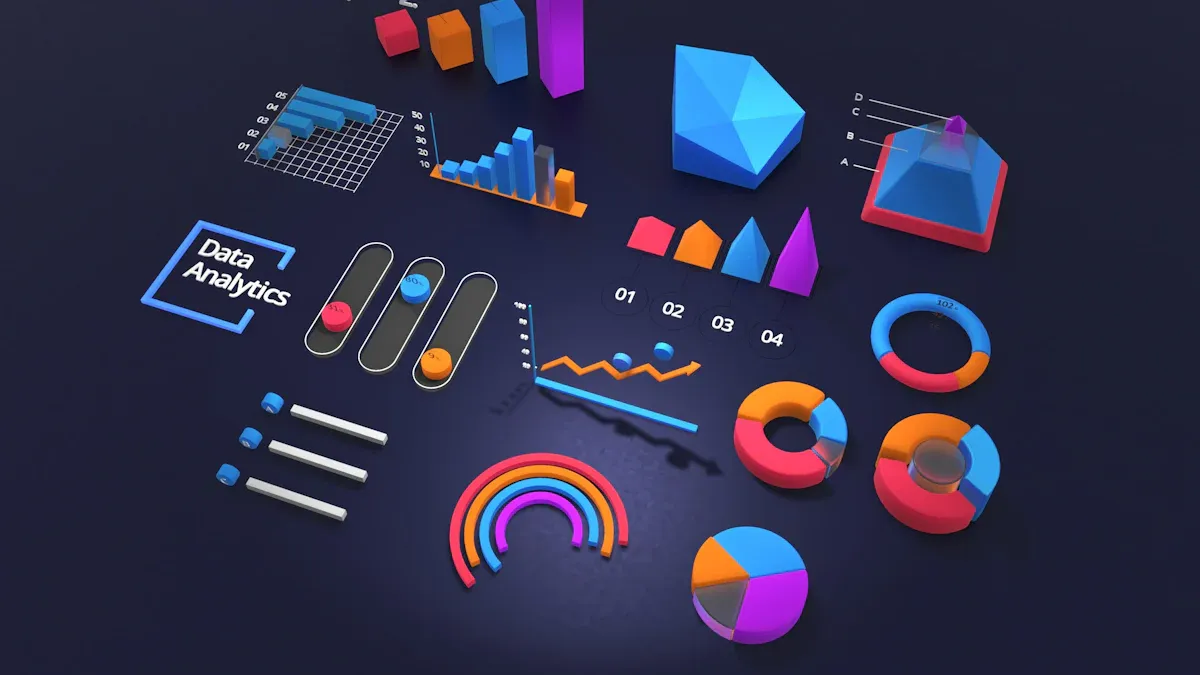
High AI chatbot accuracy is more than a technical achievement. It is the foundation for a positive customer experience. When chatbots provide correct, relevant answers on the first try, they directly influence key business metrics. This link between accuracy and satisfaction is clear. It transforms automated support from a cost-saving tool into a powerful engine for loyalty and growth. A business that masters AI chatbot accuracy gains a significant competitive advantage.
Boosting Customer Satisfaction (CSAT) with Accurate Chatbots
Customer satisfaction (CSAT) measures a customer's happiness with a specific interaction. Accurate chatbots have a direct and positive impact on this score. Customers want fast, correct answers. General industry data shows that chatbot deployment often decreases query resolution times by 50% or more. This speed is a major driver of satisfaction. For example, GrandStay Hotels saw a 22% increase in its CSAT scores after implementing AI. This improvement was tied to resolving queries 10 times faster.
First Contact Resolution (FCR) is the most critical factor. When a chatbot solves an issue on the first attempt, the customer experience is smooth and positive.
- One study showed an 85% FCR rate led to a 40% increase in customer satisfaction.
- Accurate chatbots achieve this by instantly accessing verified knowledge bases.
- They provide consistent answers without delays or transfers to human agents.
Real-World Proof: The OPPO Story Leading smart device innovator OPPO provides a powerful example. By implementing Sobot's chatbot solution, they achieved an incredible 83% chatbot resolution rate. This high level of AI chatbot accuracy led directly to a 94% positive feedback rate from users. This case proves that resolving issues correctly on the first try is the key to exceptional customer satisfaction.
Reducing Customer Effort Score (CES)
Customer Effort Score (CES) asks a simple question: how easy was it to get your issue resolved? A low score is the goal. High-accuracy chatbots are experts at reducing customer effort. They eliminate the friction that causes frustration and drives customers away. An accurate chatbot streamlines interactions in several ways:
- Understands Intent: It correctly interprets what the user wants, even from short or unclear messages.
- Avoids Repetition: It captures key details (like an order number) once and uses them throughout the conversation.
- Prevents Escalations: It resolves the issue independently, so the user does not have to switch channels or repeat their problem to a human agent.
Klarna, a global payments company, found its AI chatbot performed on par with human agents for user satisfaction. More importantly, its accuracy led to a 25% drop in repeat inquiries. Fewer repeat inquiries is a clear sign of reduced customer effort.
Turning Satisfied Users into Promoters (NPS)
Net Promoter Score (NPS) measures long-term loyalty. It asks how likely a customer is to recommend your business to others. Turning a neutral user into an enthusiastic promoter often comes down to a single, positive experience. An effortless and successful chatbot interaction can be that experience.
High resolution rates are crucial for boosting NPS. When chatbots solve problems efficiently, they reduce friction and build trust. This positive feeling encourages advocacy. The data is compelling:
- One B2B SaaS company transformed its bot's NPS from a negative -25 to a positive 50 simply by improving its chatbot support.
- This demonstrates a direct link between AI chatbot accuracy and a customer's willingness to promote a brand.
Other major companies have seen similar results, linking better automated support to higher loyalty and customer retention.
| Company | NPS Improvement / Related Metric |
|---|---|
| Vodafone | 14-point jump in online NPS |
| Alibaba | 25% increase in customer satisfaction |
| Klarna | 25% drop in repeat inquiries (a key driver for NPS) |
Ultimately, an accurate chatbot does more than just answer questions. It builds confidence in your brand, which is essential for improving retention and creating loyal promoters.
How Sobot Enhances Chatbot Accuracy for Better Satisfaction
Achieving high accuracy is not an accident. It requires a deliberate strategy and powerful technology. Leading platforms like Sobot build their systems around a core principle: accuracy drives satisfaction. Sobot's AI Solution combines advanced technology with practical workflows. This approach ensures its ai-powered chatbots do not just answer questions but solve problems effectively.
Leveraging Advanced LLMs and NLP
The foundation of an accurate chatbot is its ability to understand human language. Sobot's AI Solution leverages advanced Large Language Models (LLMs) and Natural Language Processing (NLP) to master this. This technology allows the chatbot to go beyond simple keywords.
LLMs give the chatbot a strong grasp of context. This helps it understand complex sentences, slang, and even incomplete phrases. The AI can figure out what a user means, not just what they type. NLP provides a toolkit for breaking down language. Key NLP techniques include:
- Intent Recognition: Identifies the user's goal (e.g., "track my package").
- Entity Recognition: Captures key details like order numbers or dates.
- Sentiment Analysis: Detects the user's emotional tone, such as frustration or happiness, allowing the AI to adjust its response.
Together, these technologies enable the chatbot to understand nuanced requests and provide relevant, human-like answers.
Continuous Training with Real User Data
A chatbot's knowledge can become outdated. This is known as "model drift." Without regular updates, its accuracy declines. Sobot prevents this by using a continuous training model fueled by real user data.
The system analyzes conversation logs to find where users struggle. It identifies missed intents, confusing questions, and outdated information. This process helps refine the AI model over time.
By regularly updating the AI with fresh data from real interactions, Sobot ensures the chatbot's knowledge stays current. This iterative process helps the model learn new patterns and adapt to changing customer needs, preventing its knowledge from becoming outdated.
This commitment to continuous learning keeps the chatbot sharp, relevant, and consistently accurate.
Implementing a Human-in-the-Loop (HITL) System
Technology alone is not always enough. Sobot enhances its chatbot technology with a Human-in-the-Loop (HITL) system. This creates a powerful partnership between AI and human agents. The system works in a continuous feedback cycle:
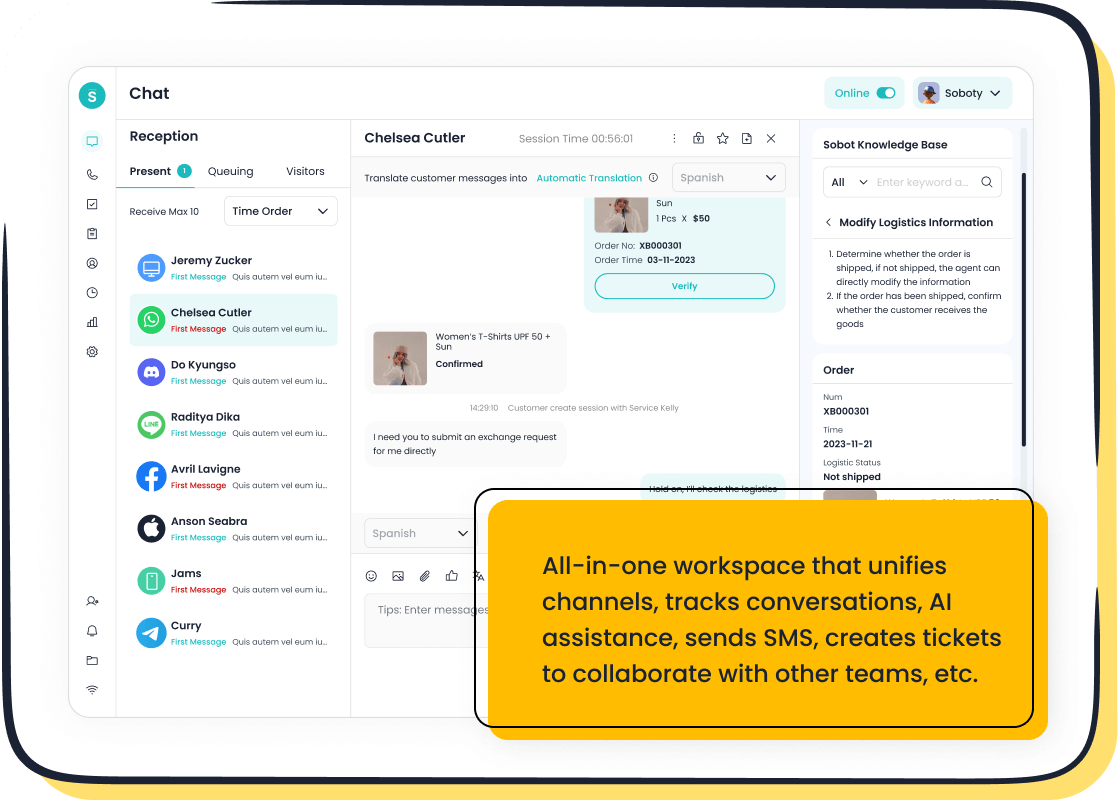
- AI Assists Humans: The AI acts as a copilot for human agents. It suggests responses, summarizes long conversations, and fetches information, helping agents work faster.
- Humans Train the AI: When a chatbot struggles or an agent corrects an AI suggestion, that feedback is captured. This human correction is used to retrain the model.
This collaborative loop ensures the AI learns from expert human knowledge. It is a crucial quality control mechanism that refines the model's accuracy with every interaction, making the entire support system smarter.
Proactive Accuracy Monitoring Workflows
You cannot improve what you do not measure. Sobot implements proactive monitoring workflows to constantly track chatbot performance. This involves watching key metrics that directly reflect accuracy and user happiness.
Important metrics to monitor include:
| Metric | What It Measures | Why It Matters for Accuracy |
|---|---|---|
| Resolution Rate | Percentage of issues solved by the bot alone. | The ultimate test of the bot's ability to understand and resolve a problem. |
| Fallback Rate | How often the bot fails to understand and gives a generic reply. | A high rate signals a need to improve the AI's language understanding. |
| Customer Satisfaction (CSAT) | Direct feedback from users on their experience. | The final verdict on whether the accurate resolution led to a happy customer. |
| Escalation Rate | How often a conversation is handed to a human agent. | A high rate may indicate gaps in the chatbot's knowledge base or capabilities. |
By continuously analyzing these metrics, businesses can spot weaknesses, make data-driven improvements, and ensure their chatbot delivers the highest possible level of accuracy.
Best Practices for Maintaining High Accuracy
Maintaining high AI chatbot accuracy is an ongoing process. It requires more than just a good initial setup. Businesses must adopt a set of best practices. These practices ensure the chatbot remains effective, reliable, and aligned with customer expectations over time. This commitment to maintenance is what separates a helpful tool from a frustrating obstacle.
Robust Knowledge Base Management
A chatbot is only as smart as the information it can access. Robust knowledge base management is the first step to sustained accuracy. This process begins with a content audit. You should list all information sources like FAQs, product manuals, and support tickets. A gap analysis then reveals what common questions are not being answered. This helps you fill in missing information. For ai-powered chatbots to be truly effective, they need to:
- Connect to the right data sources like CRMs for real-time information.
- Understand context, not just keywords, to provide precise answers.
- Dynamically learn from new interactions to keep the knowledge base current.
Automated Testing and Regression Protocols
Every update to your chatbot carries a risk. A new feature could accidentally break an existing one. Automated testing and regression protocols prevent this. Regression testing confirms that core functions still work correctly after a change. For example, it verifies that chatbots can still look up an order after a new integration is added. Automating these tests is vital. It allows your team to:
- Run high-volume test scenarios quickly.
- Integrate testing into your development pipeline (CI/CD).
- Catch errors immediately before they affect users.
Analyzing Conversation Logs for Failure Points
Your chatbot's conversation logs are a valuable source of data. Analyzing these logs helps you find common failure points. You can spot where the ai struggles with ambiguous user language or loses context in a long conversation. Identifying these issues allows you to make targeted improvements. This analysis highlights gaps in the chatbot's domain knowledge. It shows you exactly where to focus your training efforts to improve performance.
Aligning Chatbot KPIs with Service Team Goals
A chatbot should support the goals of your human customer service team. Aligning their Key Performance Indicators (KPIs) ensures everyone is working toward the same objectives. This alignment helps a business measure the bot's true impact on efficiency and satisfaction. Key shared goals include improving resolution rates and customer retention.
| Business Objective | Primary KPI to Track | Success Indicator |
|---|---|---|
| Improve Resolution | First Contact Resolution (FCR) | More issues are solved on the first try. |
| Operational Efficiency | Deflection Rate | More queries are handled without human help. |
| Reduce Churn | Retention Rate / CSAT | High returning user rate and positive feedback. |
Chatbot accuracy is the primary driver of customer satisfaction and loyalty in automated interactions. A business improves satisfaction by focusing on accuracy details like intent recognition and resolution rates for its chatbots. Investing in an advanced AI platform like Sobot is essential. It helps each customer have a leading customer experience by 2026.
FAQ
What is a good AI chatbot accuracy rate?
Most businesses aim for an AI chatbot accuracy rate of 85% or higher. Industries like finance may target over 95% for specific tasks. The right goal depends on your industry and the complexity of customer questions. A higher rate means better performance and happier customers.
How can I measure my chatbot's accuracy?
You can measure accuracy with several key metrics. Track the first-contact resolution rate to see how many issues the bot solves alone. Also, monitor the escalation rate. This shows how often a human agent needs to take over. These numbers give a clear picture of performance.
How does accuracy directly impact customer satisfaction?
High AI chatbot accuracy leads to faster solutions. Customers get correct answers on their first try. This reduces their effort and frustration. Quick, successful interactions directly boost customer satisfaction (CSAT) scores and build trust in your brand.
What is the best way to improve chatbot accuracy?
The best method is continuous improvement. Regularly analyze conversation logs to find failure points. Use a Human-in-the-Loop (HITL) system where human feedback trains the AI. Keeping your knowledge base updated is also essential for maintaining high AI chatbot accuracy.
See Also
Discover the Top 10 Website Chatbots Revolutionizing Online Engagement in 2024
Explore 10 Leading Websites Successfully Implementing Chatbots for Enhanced User Experience
Building a Powerful Chatbot: Your Guide to Website Success and Growth
Elevating E-commerce: Chatbots Significantly Enhance Customer Satisfaction and Loyalty
Your Essential Guide to Selecting the Ideal Chatbot Software for Your Needs