Choosing Omnichannel Customer Service Tools


Your customer messages arrive from everywhere. You manage emails, social media, and phone calls separately. This creates a poor customer experience for your customers.
55% of consumers feel they are talking to separate departments rather than a single company.
An omnichannel contact center from a provider like Sobot unifies every customer interaction. This omnichannel approach provides seamless support. Excellent omnichannel customer service depends on the right tools. Your customer deserves a great service experience. This guide for omnichannel customer service will help. But with so many options, how do you choose the best omnichannel customer service tools for your business?
Understanding Omnichannel Customer Service

To choose the right tools, you first need to understand the strategy behind them. The goal of omnichannel customer service is to create one unified experience for every customer. This approach is vital for modern b2b and b2c companies.
Defining Omnichannel vs. Multichannel
You might hear the terms "multichannel" and "omnichannel" used together, but they mean different things. Multichannel support simply means you offer service on multiple platforms. An omnichannel contact center connects those platforms into a single, seamless system. This is a key difference for any b2b business.
The table below breaks down the core distinctions:
| Feature | Multichannel Customer Service | Omnichannel Customer Service |
|---|---|---|
| Primary Focus | Channels operate independently | Unified customer experience across all channels |
| Channel Integration | Minimal to none; channels are siloed | Complete, real-time, and synchronized |
| Conversation Flow | Channel-specific messages only | Connected conversation threads across channels |
| Customer Experience | Fragmented and repetitive | Seamless, consistent, and context-aware |
| Data Sharing | No shared data; customers repeat themselves | Interactions sync, so agents have full context |
An omnichannel customer service approach ensures your b2b customers never have to repeat their story.
The Core Benefit: A Seamless Customer Journey
The main benefit of an omnichannel contact center is a truly seamless customer journey. Imagine a b2b customer starts a chat on your website and then calls your support line. With an omnichannel customer support system, the phone agent already has the full chat history. This creates seamless interactions. You provide a consistent customer experience because the conversation continues without interruption. This customer service approach builds trust and makes the customer feel valued. For b2b clients, this level of service is often expected.
Boosting Agent Productivity with a Unified Platform
An omnichannel contact center also transforms your team's workflow. When agents have a unified view of all customer interactions, they work more efficiently. They no longer need to switch between multiple systems to find information. This focus can reduce call handling time by 20-50%. Your agents can resolve issues on the first contact, improving your customer service quality. This level of support is critical in a competitive b2b market. The right omnichannel contact center empowers your team to provide excellent service. This is what effective omnichannel customer support looks like.
Impact on Customer Satisfaction and Loyalty
Ultimately, a better agent experience leads to a better customer experience. When you resolve issues quickly and without friction, customer satisfaction rises. A strong omnichannel strategy is proven to increase customer spending and loyalty. Customers are more likely to stay with a brand that provides effortless, personalized support. This is true for both retail customers and complex b2b partnerships. An effective omnichannel customer service plan directly impacts your bottom line by keeping your customers happy. This satisfaction is key for long-term b2b relationships. The omnichannel contact center is the engine for this success. This is the power of omnichannel customer support.
Key Features in Omnichannel Customer Service Tools
The right omnichannel customer service tools give your team the power to deliver exceptional support. You should look for specific features that unify communications and boost efficiency. These features are the foundation of a strong omnichannel contact center. Choosing the right customer service software with these features is critical for your b2b success.
Unified Agent Inbox
A unified agent inbox is one of the most important features. It combines every customer message from every channel into one single view. Platforms like Sobot offer an AI-enhanced workspace that organizes all customer interactions. This eliminates the need for agents to switch between different apps. This single feature dramatically improves response times.
A US retailer used a unified inbox to reduce its average response time from 2 hours to just 15 minutes. This led to a 12% boost in customer satisfaction.
This kind of customer service software uses smart queues and auto-assignment to manage workload. This ensures every customer gets a fast reply. This is a core part of effective omnichannel customer service.
CRM Integration and Customer Context
Great service depends on context. Your omnichannel customer service tools must integrate with your Customer Relationship Management (CRM) system. This connection gives your agents a complete customer history. When a customer calls, agents see screen pops with account details and past support tickets. This is a vital feature for any b2b business. Seamless integration with systems like Salesforce or Shopify means your team has the full story. This allows for personalized and efficient service without making the customer repeat information. This is a key feature of good omnichannel customer support.
Automation and AI-Powered Chatbots
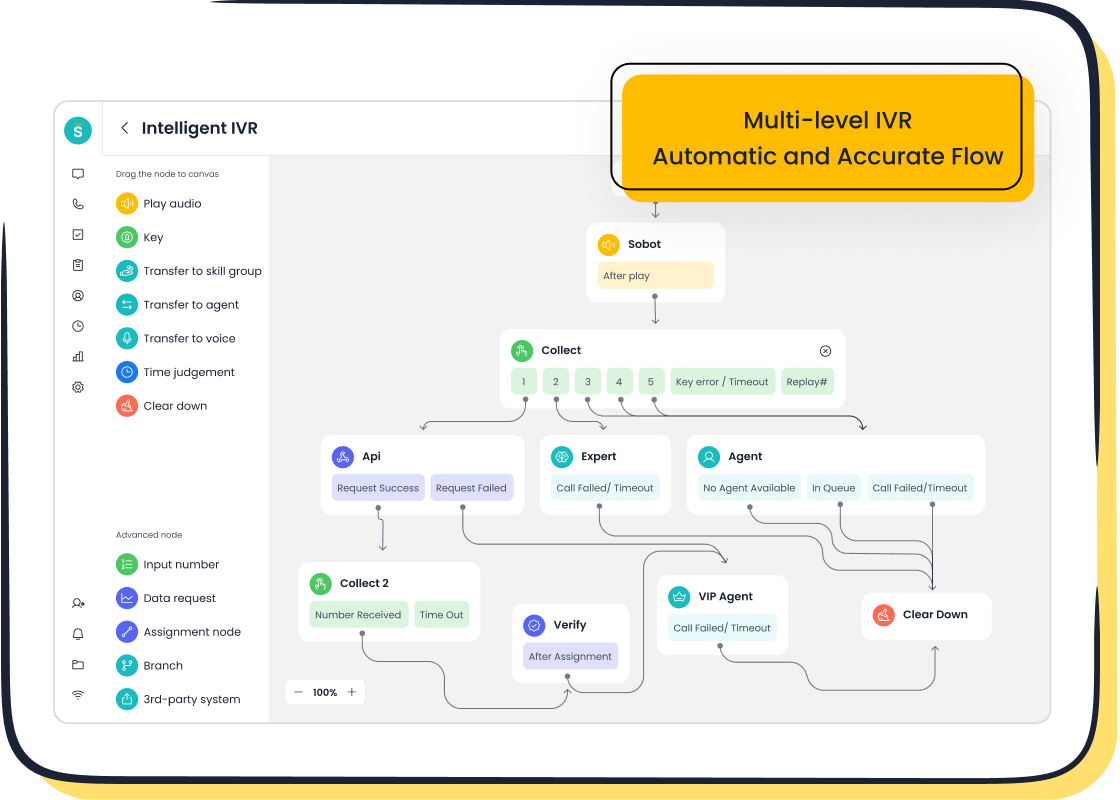
Automation handles routine tasks so your agents can focus on complex problems. The best omnichannel customer service tools use AI to improve the customer experience. For example, Sobot’s AI-powered, multilingual Chatbot provides 24/7 support for common questions. An intelligent IVR in a voice call center can route calls or let customers find answers on their own. These automation features help you provide faster support. This is a must-have for modern b2b omnichannel customer service.
Robust Reporting and Analytics
You cannot improve what you do not measure. Your omnichannel customer service tools must have robust analytics. These features track key performance indicators (KPIs) across all channels. You can monitor metrics like:
- First Contact Resolution (FCR)
- Average Handle Time (AHT)
- Customer Satisfaction (CSAT)
This data helps you understand your team's performance and your customers' happiness. Good customer service software provides the insights you need to optimize your support operations. This is a critical feature for any b2b omnichannel contact center.
Support for Key Communication Channels
Your omnichannel strategy is only as good as the channels you support. Your omnichannel customer service tools must connect with the platforms your customers use. This includes essential channels for b2b and direct-to-customer communication.
- Phone and Voice: Still critical for complex b2b issues.
- Live Chat: Offers quick, real-time assistance on your website.
- Email: A fundamental channel for b2b support and ticketing.
- Social Media: A public space for customer service and brand engagement.
A true omnichannel contact center unifies these channels. This ensures a consistent service experience for every customer. This is the goal of omnichannel customer support. The best omnichannel customer service tools make this possible.
A Step-by-Step Guide to Choosing Your Tool
Selecting the right omnichannel platform is a strategic decision. This step-by-step guide will walk you through the process. You can find the best omnichannel customer service tools for your business. This process ensures you choose a solution that aligns with your goals and empowers your team.
Step 1: Assess Your Business Needs and Goals
You must first understand what you want to achieve. A clear assessment of your needs is the foundation of your search. This step helps you define success for your new omnichannel contact center. Your goals will shape which features and tools you prioritize.
Start with a complete audit of your customer journey. This helps you find pain points in your current process.
- Map every customer interaction. Follow the path from first contact to final resolution.
- Identify inconsistencies. Note where the experience differs between channels.
- Find friction points. Do customers repeat information? Do they face long wait times?
- Empower your agents. Ensure your team has the training to provide consistent support across all channels.
- Use data to optimize. Track metrics to refine your omnichannel strategy over time.
An omnichannel solution can help your b2b company achieve several key business goals. You should identify which of these are most important for your organization.
- Boosting efficiency and team productivity
- Improving customer satisfaction scores
- Driving business growth and customer engagement
- Enhancing issue resolution rates
- Reducing operating costs for your support team
- Making data collection and analytics easier
Defining these goals will help you measure the return on investment (ROI) of your new omnichannel platform.
Step 2: Map Your Customer Communication Channels
Next, you need to map all your communication touchpoints. You must understand where your customers interact with your brand. This map should include both current channels and channels you want to add in the future. A complete map is essential for a successful omnichannel strategy.
The first step is to identify and plot every customer touchpoint. This includes everything from initial awareness to post-purchase support. Modern AI-powered tools can help by integrating digital customer interactions with insights from phone calls.
Create a list of every channel your b2b customers use. This often includes:
- Phone Calls
- Website Live Chat
- Social Media (LinkedIn, Twitter, Facebook)
- SMS/Text Messaging
- Mobile Apps
Your chosen omnichannel contact center must support these channels. This ensures you can create a truly unified experience for every customer. A complete channel map is a critical part of this guide.
Step 3: Evaluate and Compare Key Features
With your goals and channels defined, you can now evaluate features. The right features will empower your agents and delight your customers. When comparing different omnichannel tools, you should look for specific capabilities. This is one of the most important best practices for buying software.
A true omnichannel solution must do more than just offer many channels. It must connect them seamlessly. Look for platforms that are simple and easy to use. Your team should not need extensive training to perform basic tasks. The best platforms use features like drag-and-drop menus and automatic workflows.
Here are some top criteria and features to compare:
- True Omnichannel Integration: The platform must connect all channels into one conversation.
- Simplicity and Ease of Use: The software should be intuitive for agents and admins.
- AI and Automation: Look for features like chatbots, Robotic Process Automation (RPA), and machine learning assistance to boost efficiency.
- Agent Assistance and Coaching: The platform should include tools to help agents improve their performance.
- Analytics and Reporting: You need strong analytics features to track performance and gain insights.
- Knowledge Management: A good system helps agents and customers find answers quickly.
- NLP and Sentiment Analysis: These features help agents understand customer intent and emotion in real time.
These features are the building blocks of an effective omnichannel customer service operation. A strong b2b omnichannel contact center will have robust features in each of these areas.
Step 4: Check for Critical Integrations
Your omnichannel platform does not work in isolation. It must connect with your other business systems. These integrations are the backbone of a 360-degree customer view. Without them, your agents will lack important context. This is especially true for b2b companies that manage complex customer relationships.
The most critical integration is with your Customer Relationship Management (CRM) system.
- A true omnichannel platform needs a native CRM or deep integration with systems like Salesforce.
- Integration with e-commerce platforms like Shopify is also vital for retail and b2b e-commerce businesses.
- These connections provide agents with order history, customer value, and past support interactions.
When you evaluate a platform, ask for a list of its pre-built integrations. Ensure it can connect to the essential tools your business relies on every day. Seamless integration is a non-negotiable feature for any modern omnichannel contact center.
Step 5: Request Demos and Run Free Trials
You should never buy an omnichannel platform without seeing it in action. Request personalized demos from your top vendors. A demo allows you to see how the software handles your specific use cases. After the demo, run a free trial with a small group of agents. A trial is the best way to test the platform's features and usability in a real-world setting.
During the demo, you should ask detailed questions to understand the vendor and the product.
What to ask during a demo:
- How long will our implementation take?
- How does our legacy data move into the new system?
- How will our team be trained on the new platform?
- What makes an organization a good fit for your system?
- What kind of customer support do you provide after we go live?
- Can you provide a full breakdown of costs, including any additional fees?
These questions help you look beyond the marketing and understand the true partnership you are entering. This part of the guide helps you make an informed choice for your b2b service team.
Step 6: Analyze Pricing and Scalability
The final step is to analyze the total cost and future-proofing of the platform. Pricing for omnichannel tools can be complex. You need to understand the total cost of ownership (TCO), not just the price per agent. This is a key part of your omnichannel customer service strategy.
Pricing models can vary widely:
- Per-Agent-Per-Month: A common model where you pay a set fee for each user. Costs can range from $15 to $150+ per agent depending on the features.
- Usage-Based: Some platforms charge per resolution or per interaction, which can be cost-effective for businesses with fluctuating volume.
- Tiered Subscriptions: Many vendors offer different plans (e.g., Small, Medium, Expert) with varying features and price points.
Beyond the license fee, ask about implementation fees, training costs, and charges for specific integrations.
Finally, consider scalability. Your business will grow, and your omnichannel contact center must grow with it. The platform should handle more data, more customers, and new channels without issues. A scalable b2b platform allows you to add new sales or support channels easily. This flexibility ensures your investment continues to provide value for years to come. Your omnichannel customer service depends on a platform that can evolve with your needs.
The Impact of an Omnichannel Solution: A Case Study
Theory is helpful, but seeing a real-world example shows the true power of an omnichannel platform. You can learn from the success of others. Let's look at how Opay, a major financial services platform, transformed its support with the right omnichannel customer service solution. This is a story of true omnichannel support success.
The Challenge: Fragmented Customer Service
Opay serves tens of millions of users. The company faced a huge challenge managing customer interactions. Inquiries came from social media, email, and phone calls. Agents had to jump between different systems. This created a disconnected customer experience and made it hard to provide fast, consistent support. The lack of a unified omnichannel contact center was hurting both efficiency and customer satisfaction. They needed a better way to manage their service operations.
The Solution: Sobot's Unified Platform
Opay chose Sobot's omnichannel platform to solve its problems. This customer service solution integrated all communication channels into a single system. Sobot's omnichannel contact center gave agents a complete view of every customer.
- The email ticketing system turned customer emails into organized support tickets.
- The Voice Call Center used an intelligent IVR to help customers find answers on their own, reducing agent workload.
- This omnichannel approach unified the entire support experience.
This powerful omnichannel contact center allowed Opay to streamline its support and marketing efforts seamlessly.
The Results: Drastic Gains in CSAT and Efficiency
The results of implementing an omnichannel strategy were dramatic. Opay saw massive improvements across its entire support operation. The new omnichannel contact center delivered a better experience for both agents and customers. This led to improved customer satisfaction and a stronger bottom line.
By unifying its support with an omnichannel platform, Opay achieved:
- A jump in customer satisfaction from 60% to 90%.
- A 20% reduction in overall operational costs.
- A 17% increase in conversion rates.
These numbers show the incredible impact of a well-chosen omnichannel solution. The right platform provides a better customer experience and drives real business growth. This level of satisfaction is what every company should aim for with its support.
Finding the Best Omnichannel Customer Service Tools
Finding the right tools depends on your company's size and needs. The best omnichannel customer service tools for a startup are different from those for a large enterprise. You should evaluate options based on your specific goals for omnichannel customer service. This will help you choose the right customer service software for your b2b or direct-to-consumer business.
Tools for Small Businesses and Startups
For small businesses, the best omnichannel customer service tools are often simple and affordable. You need a platform that can grow with you. Look for customer service software that unifies essential channels like email and live chat. These tools provide a starting point for your omnichannel strategy. An omnichannel contact center does not have to be complex. Your focus should be on creating a consistent service experience with the resources you have. This initial support setup is crucial for building a strong foundation for omnichannel customer support.
Solutions for Growing Mid-Sized Companies
Growing companies need scalable omnichannel solutions. Your customer service software must handle increasing volume without issues. You need tools that offer flexibility and powerful features.
- Nextiva helps businesses scale their omnichannel operations. One company saw a 471% increase in call volume and a 40% improvement in efficiency after switching.
- Shopify Plus and BigCommerce offer strong omnichannel capabilities for e-commerce, allowing you to manage support across a vast app ecosystem.
These platforms provide the robust support needed for a growing omnichannel contact center. They are excellent choices for effective b2b omnichannel support.
Platforms for Omnichannel B2B Support
Omnichannel b2b support has unique requirements. Your b2b customers expect expert service and seamless communication. Platforms like Pylon are designed for omnichannel b2b support, offering native integrations with tools like Slack and Microsoft Teams. However, a more comprehensive omnichannel contact center provides even greater value. For example, Sobot offers comprehensive all-in-one contact center solutions that unify every b2b interaction. This type of customer service software is essential for managing complex b2b relationships. It provides the deep integration needed for excellent omnichannel b2b support. This is what makes for great omnichannel customer support.
Options for Enterprise-Level Operations
Enterprises require a powerful and secure omnichannel contact center. These large-scale operations need an all-in-one solution to manage global support. An enterprise-grade omnichannel platform integrates every channel into one AI-powered system. Sobot is a leading example, centralizing support channels and customer conversations. Its platform includes advanced AI, proactive marketing automation, and deep integration with systems like Salesforce. As an official WhatsApp Business Solution Provider (BSP), Sobot also ensures credible and scalable communication. This level of omnichannel customer service is vital for large b2b organizations. The best omnichannel customer service tools provide this comprehensive support. This is the pinnacle of omnichannel customer support and omnichannel b2b support.
Choosing your omnichannel contact center follows a clear path. You assess needs, evaluate tools, run trials, and decide. The best omnichannel platform fits your unique customer needs. Opay’s success shows how the right omnichannel contact center improves the customer experience. Your omnichannel support must align with your team's workflow to provide excellent customer support. A great omnichannel experience starts with the right omnichannel contact center. This omnichannel support tool will define your customer support.
Your ideal omnichannel contact center provides the best support for every customer. Embark on your contact journey and begin your assessment today.
FAQ
What is the main difference between omnichannel and multichannel?
Multichannel means you use many separate channels. Omnichannel connects those channels. This gives your customers one seamless conversation. Your agents see the full history, creating a better experience. Omnichannel customer service tools make this connection possible.
How long does it take to set up omnichannel customer service tools?
Implementation time varies. Simple setups can take just a few days. More complex projects might take several weeks. Many modern platforms, like Sobot, offer fast deployment to get your team running quickly.
Can small businesses afford these tools?
Yes. Many providers offer plans for businesses of all sizes. You can find affordable omnichannel customer service tools with tiered pricing. This allows you to pay only for the features you need and scale up as you grow.
Do I need to support every single channel?
No. You should focus on the channels your customers use most. A good strategy starts with your most popular touchpoints, like email and live chat. The best omnichannel customer service tools let you add more channels later.
See Also
Your Essential Guide to Omnichannel Call Center Software Solutions
Ten Steps for Successful Omnichannel Contact Center Solution Implementation
Smart Tips for Selecting Your Social Media Customer Service Software
Comparing the Leading Voice of Customer Software Platforms Today

