Gorgias vs Zendesk vs Sobot: Which Platform Fits Ecommerce Support?

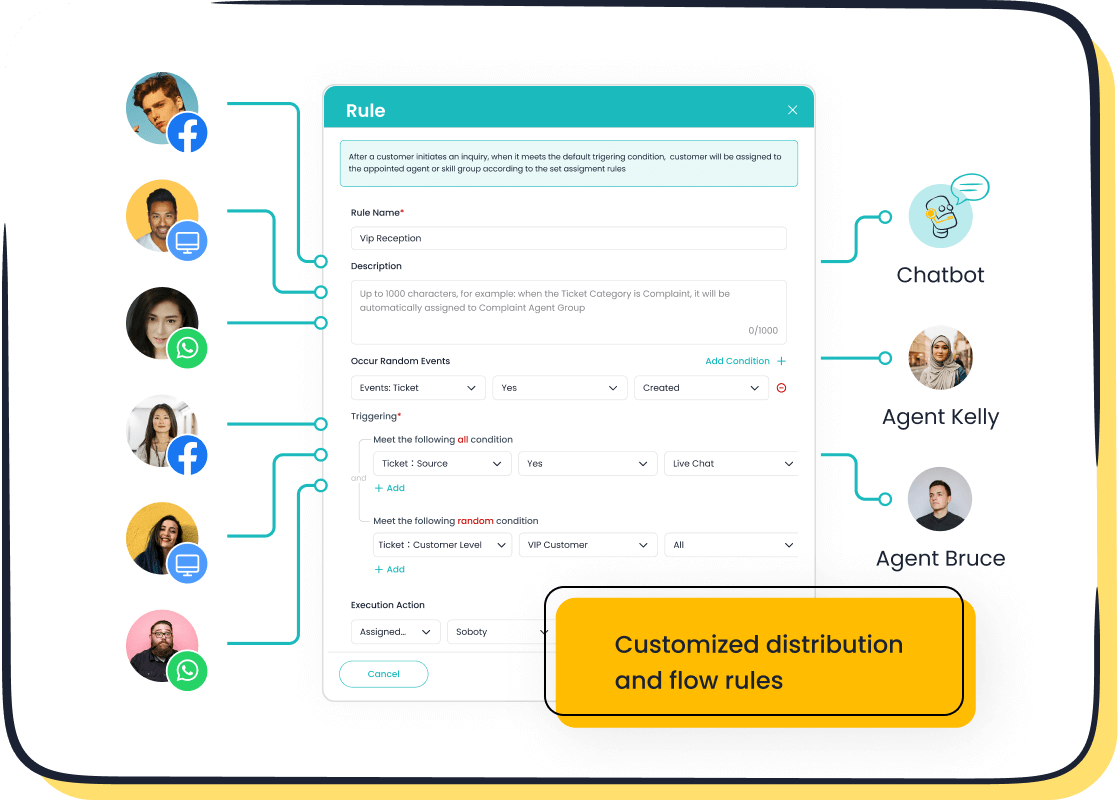
Gorgias is often the clearest shortlist for a Shopify-first brand whose support team spends most of its day inside commerce workflows. Zendesk deserves a close look when ecommerce service must fit a broader, configurable support operation. Sobot is worth piloting when order context must remain usable as a customer moves among WhatsApp, chat, and voice. No platform wins every ecommerce support environment: the decisive question is whether a routine order inquiry can become an exception without losing context, control, or a human owner.
Choose by the Workflow You Cannot Afford to Break
The hardest customer workflow should determine the first shortlist condition: choose Gorgias first when Shopify order work dominates, Zendesk first when a broader configurable service operation is needed, and Sobot first when a single case must stay usable across messaging, chat, and voice.
Choose Gorgias first when Shopify data and agent-side order actions are central to the support desk.
Choose Zendesk first when routing design, queues, skills, and a wider service operation matter more than a narrow commerce workflow.
Pilot Sobot first when one ecommerce issue must continue across messaging, web chat, and phone without becoming a fresh case at every handoff.
Do not buy on a headline plan alone. Confirm current packaging, usage components, implementation work, and channel availability against the exact workflows you will run.
That decision frame is more useful than asking which platform has “the most features.” An ecommerce team can tolerate a simple status inquiry being automated. It cannot afford an exchange, cancellation, damaged parcel, duplicate charge, or delivery dispute to reach a human agent with no order state, no prior conversation, and no clear authority to act.
What Is an Ecommerce Support Platform? A Clear Definition
An ecommerce support platform centralizes customer conversations while connecting the details needed to resolve a purchase problem: customer identity, order status, payment and fulfillment state, return eligibility, prior messages, and the policy that governs the next action. Order context means the order details and prior contact needed to resolve a request. Omnichannel means support across channels rather than a separate case every time a customer changes channel. Shopify’s documentation illustrates why this matters: order, payment, fulfillment, and return statuses are separate operational states, not one generic “order” field. See Shopify’s explanation of order-status states.
Modern platforms extend beyond a shared inbox. They can route work, support self-service, present customer data to agents, trigger rules, and introduce AI. But the category should be judged by whether those capabilities make a customer’s next step safer and clearer. A fast answer that cannot recognize an exception is not a complete resolution.
Quick Comparison Table
Platform | Best fit | Order and exception focus | AI and handoff question | Channels and workflow | Cost signal and main limitation |
|---|---|---|---|---|---|
Sobot | Ecommerce teams that need one operating model across messaging, chat, and voice | Validate order-data mapping and exception ownership in the pilot | Test when AI collects context and when a human takes responsibility | Assess continuity across the channels your customers actually use | Custom evaluation; confirm scope, channels, and implementation needs directly |
Gorgias | Shopify-first teams whose agents work primarily in commerce support | Test the actual order actions, policies, and edge cases your team handles | Configure and test handoff topics before AI handles exceptions | Strongest case when the commerce workflow is the operating center | Public plans and usage components require current confirmation; narrow fit can be a trade-off |
Zendesk | Teams that need configurable service operations around ecommerce | Validate how commerce data reaches the chosen agent workflow | Test routing, capacity, and agent ownership for complex contacts | Useful where email, messaging, and voice need a managed routing model | Current package and implementation scope need confirmation; configuration depth needs operating ownership |
The table deliberately avoids exact pricing, savings estimates, review scores, and “included” labels. Those are time-sensitive procurement facts. Ask each vendor to show the configuration that matches your channels, stores, identities, order actions, AI usage, and service hours; then compare the full commercial proposal, not only an entry plan.
How We Evaluated the Three Platforms
This is a workflow comparison, not a category scorecard. It uses the same dimensions for every platform: order context, exceptions, handoff, continuity, administration, and commercial clarity. First, can an agent see the relevant order and customer history without rebuilding the case? Second, can the platform safely distinguish a routine question from a return, refund, cancellation, delivery, or account exception? Third, does AI have a defined human handoff: a transfer to a person with the reason and relevant history, rather than a vague promise that someone will reply?
Fourth, can a customer begin in WhatsApp or web chat and continue by phone while the new owner can understand the issue? Fifth, can the team administer the routing, policies, roles, and change process that the design requires? Finally, can procurement see the actual commercial scope before signing? Third-party comparison material can add useful buyer-feedback context, but it should inform a shortlist rather than replace a workflow test. Use third-party comparison feedback as one input, then verify the behavior in your own environment.
Gorgias: Best When Shopify Workflows Drive Support
Gorgias makes the most sense when the support desk is fundamentally a Shopify operation: agents spend their time tracking shipments, checking items, managing cancellations, handling refunds, responding to returns, and resolving the related conversation. In that setting, a commerce-oriented workspace can reduce the distance between the ticket and the information or action an agent needs. That is a meaningful advantage when the majority of work follows repeatable post-purchase patterns.
Order Context Is the Main Advantage to Test

For a Shopify-first team, the right test is not “does the integration exist?” It is whether the agent can find the relevant order, understand the current state, see enough purchase history, and complete the permitted action for a real exception. Gorgias documents Shopify-linked customer and order information in the helpdesk context, including order-related actions. That supports its commerce-led positioning, but it does not remove the need to test permissions, multiple stores, unusual policies, and the cases that need a second system.
The trade-off is fit. If most of your service work is commerce-centered, the focused workflow can be a virtue. If ecommerce is only one part of a larger support organization with many unrelated queues, a platform optimized around the store may not be the full operating model you need.
Handoff Rules Matter More Than an AI Label
Gorgias documents handoff controls for situations where an AI Agent cannot answer reliably, encounters a configured topic, or detects a sensitive situation. That is the feature to inspect before any automation goes live. A useful handoff policy names the issues that AI may answer, the issues it may collect context for but not decide, and the issues that should bypass automation entirely. Returns with financial consequences, high-value orders, legal complaints, chargeback language, and exceptions to policy are common examples to define locally.
Gorgias can therefore be a strong choice when Shopify support is the center of gravity and the team is prepared to own those handoff boundaries. It is not automatically the right choice simply because a company sells online. The buyer should test the complete order path and the channel mix it expects to support.
Zendesk: Best for Configurable Service Operations
Zendesk fits a different operating condition. It is worth prioritizing when ecommerce support must coexist with a broader service environment: multiple queues, regional teams, specialist groups, policy-driven routing, service-level commitments, or support motions that go well beyond a storefront. In that situation, a buyer may value the ability to design the routing and operating model as much as the commerce-specific desk experience.
Cross-Channel Routing Is a Strength When It Matches the Operating Model

Zendesk documentation describes omnichannel routing for email, messaging, and voice, including routing by availability and other configured conditions. That can be valuable when an ecommerce exception needs to land with a particular team, language group, or specialist rather than simply the next available agent. The correct pilot case is a real order problem that begins as a message, has a priority or skill condition, and requires a human owner to make a decision.
That flexibility is a strength only when it matches the team’s operating model. A lean store with a small, highly standardized support process may not need a more configurable routing design. A company with several service groups may find that the control is precisely what keeps ecommerce work from becoming an unmanaged side queue.
Configuration Depth Is Useful Only When Teams Will Operate It
The buying question is therefore administrative as well as functional. Who will own routing rules, changes to policy, channel configuration, data fields, quality review, and agent training? If the answer is clear, a configurable platform can support a disciplined service operation. If no one owns it, the same flexibility can create drift between the storefront, the support desk, and the actual exception policy.
For ecommerce teams evaluating Zendesk, insist on a live build that uses your own order context. Do not accept a generic demo as proof that an exchange, late delivery, or duplicate shipment will reach the right owner with enough information to act.
Sobot: Best When Ecommerce Support Spans Messaging and Voice

Sobot merits a pilot when ecommerce support is not confined to a single desk channel. Its published omnichannel positioning covers customer conversations across commerce-oriented support channels, including messaging, web chat, and phone. That can be relevant for teams whose customers may start with WhatsApp, clarify a shipment issue in chat, and ask for a call when the issue becomes sensitive or complicated. Review Sobot's retail customer service approach to see the retail solution context behind that evaluation.
The important boundary is that an omnichannel claim must become a working configuration. A buyer should validate identity matching, order-data mapping, agent permissions, channel rules, and the transition between AI and a human before treating channel coverage as continuity. Sobot is not the default winner for every Shopify-only support desk; a small team with a narrow commerce workflow may reasonably prefer a more focused operating model.
The Real Test Is Context Continuity at the Channel Change

Consider an illustrative apparel retailer running Shopify, WhatsApp, web chat, and phone support. A customer with a 2-item order asks on WhatsApp about a delayed shipment, then requests a size exchange during a call. The 3 contact events span WhatsApp, web chat, and voice. The team has documented exchange eligibility, a small pilot group, and a named escalation owner.
The message contains an order reference but not the earlier web-chat conversation. The requested size is low in stock, and the exchange could change the financial outcome. Shopify’s returns documentation shows why this kind of request is context-sensitive: return and exchange processing can affect fulfillment and whether money is refunded or collected. Review Shopify’s return and exchange workflow.
Channel continuity should be tested through visible customer identity, history, handoff reason, and ownership. The safe pattern is not to let automation make a promise from incomplete context. Automation can acknowledge the request and gather the reference; a human agent should receive the identity, order state, conversation history, handoff reason, and authority needed to decide. Explore Sobot's omnichannel support workflow as the product context to test, then verify the behavior with your own data and channels.
The pilot should require a handoff rule for delay-and-exchange combinations, a visible owner, and a resolution note. It passes only when the agent can continue the case without asking the customer to restate the problem. This illustrative example is a composite test scenario, not a Sobot customer story or a claim about any platform’s default configuration.
Use the Platform That Fits Your Operating Model
Returns and exchanges can affect eligibility, financial outcome, and fulfillment handling, which is why the riskiest post-purchase journey should set the evaluation standard. A platform earns a place on the shortlist only when it can preserve the relevant context and give an accountable owner authority to resolve that journey.
Choose Gorgias when Shopify order work is the dominant support job and your primary evaluation is how cleanly the desk supports that commerce workflow. Choose Zendesk when the business needs configurable routing and a broader service operating model around ecommerce. Pilot Sobot when the critical question is whether the same customer issue can stay coherent across messaging, chat, and voice while AI hands off to the right person at the right time.
Identify the exception that creates the highest customer-trust risk for your business: a lost parcel, a split shipment, a return with a price difference, a cancellation during fulfillment, an account problem, or a payment dispute. Then make each shortlisted platform run that one journey with your rules. The decisive evidence remains your own workflow test; for useful service context, review Sobot customer stories.
A 30-Day Pilot That Tests Outcomes, Not Demos
A 30-day pilot can test exceptions, handoff, continuity, administration, and commercial clarity before a contract decision. It is long enough to expose workflow assumptions while keeping the shortlist disciplined, but it is not a deployment guarantee. The objective is comparable evidence before procurement locks in a data, process, and channel model.
Days 1–7: Map Workflows and Lock the Boundaries
Choose four repeatable test cases: order status, damaged or delayed delivery, return or exchange, and a policy-sensitive escalation.
List the fields a human agent must see: identity, order state, previous messages, policy boundary, handoff reason, and current owner.
Define what AI may answer, what it may collect but must escalate, and what it must not touch.
Assign one operational owner who can change routing, policy prompts, roles, and test data during the pilot.
Pilot setup should lock AI boundaries and required order context before live testing. Shopify’s customer-service guidance emphasizes the operational role of multiple channels and customer profiles with order history. Use Shopify’s customer-service guidance as a workflow reference, then adapt the pilot to your actual commerce stack and policy.
Days 8–30: Score the Exceptions That Change Customer Trust
Pilot scoring should observe end-to-end exception resolution rather than feature demonstrations. For every test case, record whether the system identified the customer, surfaced the usable order context, followed the automation boundary, transferred a clear reason to the human agent, assigned an accountable owner, and recorded an outcome. Also log the administration required to correct a routing or policy issue. That gives procurement a meaningful comparison of operating effort as well as agent experience.
Use the commercial week to request a like-for-like proposal. Ask each vendor to state the package, included channels, AI or usage components, implementation scope, data migration responsibilities, support model, and contract conditions required for the pilot design. Do not turn a public price page into a total-cost conclusion. Industry research on service teams can support the case for evaluating automation within an operating model, but it cannot decide your configuration. Read Salesforce’s State of Service research.
Bring the order cases, escalation rules, and channel transitions you need to prove; a generic tour cannot answer the operational question. If cross-channel continuity is the deciding factor, request a Sobot demo built around your pilot workflows.
Frequently Asked Questions
Which platform is best for Shopify-first ecommerce support teams?
Gorgias is often the most natural shortlist choice when Shopify order workflows are the center of the support operation. Its strongest case is a team that wants order information and related actions close to the ticket. It should still be tested against the store’s actual return, cancellation, permission, channel, and escalation rules. A Shopify-first fit does not automatically mean it is the best platform for a broader, multi-team service operation.
Does Zendesk fit ecommerce support beyond basic ticketing?
Zendesk can fit ecommerce support when the team needs configurable routing and broader service operations around the commerce workflow. It is especially worth considering when different groups, queues, skills, or service policies must be managed consistently. Ecommerce leaders should validate the route from order context to the intended agent workspace, plus the ownership and administration required to keep that design reliable.
When should an ecommerce team pilot Sobot instead?
An ecommerce team should pilot Sobot when customer context must stay useful as conversations move across messaging, chat, and voice. The pilot should prove identity matching, order-data visibility, AI-to-human handoff, agent ownership, and resolution notes for the team’s own exception cases. Sobot is a conditional fit for that operating model, not a claim that every small or Shopify-only team should replace a narrower helpdesk.
What should a 30-day support platform pilot measure?
A useful 30-day pilot measures whether real order exceptions reach the right person with the right context and an auditable outcome. Test routine requests and the exceptions that change customer trust, including delayed delivery, returns, exchanges, cancellations, and sensitive policy questions. Compare the required administration and full commercial scope as well as the agent experience. The result should be an evidence-backed shortlist decision, not a collection of polished demo impressions.
