Choosing AI for Multilingual Customer Support

You need to deliver quality customer support to a global audience. Over 60% of your customer base expects service in their native language. Many standard AI tools fail because they only translate, a common issue among companies offering ai solutions for multi-lingual customer support. You need true multilingual AI platforms that use advanced AI. A partner like Sobot transforms your AI customer service. This AI for customer service uses powerful AI to understand each customer. This AI is the future of AI customer service. This AI ensures every customer feels heard. This AI is smart AI.
Why Standard AI Fails at Global Support
You may think any AI can handle multiple languages. This is a common mistake. Standard AI often relies on simple translation tools. These tools create poor experiences for your global customer base. A successful global ai customer service strategy requires more than just translation. It demands an ai that truly understands language and culture.
The Limits of Direct Translation
Direct translation is the biggest pitfall of basic ai for customer service. These systems simply swap words from one language to another. This process misses critical details.
- AI translation models can be wrong up to 60% of the time, sometimes adding or removing content.
- They struggle with names, slang, and industry-specific terms.
- A single language like Arabic has many regional dialects that a simple ai cannot understand.
This flawed approach leads to confusing and frustrating interactions. It damages the customer relationship you work hard to build.
Missing Cultural Context and Sentiment
Language is more than words. It carries cultural context and emotion. A standard ai customer service model cannot grasp these nuances. Your customer might use sarcasm, like saying, "Great, another problem." An ai might take this literally and miss the frustration. This ai also fails to understand different cultural styles of politeness or indirect complaints. This can make your service feel cold or disrespectful, harming your brand's reputation.
The Challenge of Managing Multiple Models
Using a separate, basic ai model for each language creates a management nightmare. You have to train, update, and monitor dozens of different systems. This approach is inefficient and expensive. It also leads to an inconsistent customer service experience across regions. You need a single, unified ai platform to deliver consistent quality.
The Strategic Value of AI for Customer Service
Choosing the right ai for customer service has huge benefits. Companies that localize their support see much higher engagement and retention. For example, some businesses report a 40% boost in customer retention with multilingual ai. This is because speaking a customer's language builds trust.
"Personalized service begins with understanding: Hearing their own language makes customers feel seen and respected. This emotional connection fosters trust, which is key to long-term loyalty." - Maeve Sekulovski
A powerful ai solution turns your service center from a cost center into a growth engine.
Core Features of the Best AI for Customer Service
An exceptional AI for customer service does more than just translate; it truly understands. This requires a specific set of advanced features that separate the best platforms from the rest. When you evaluate potential partners, look for these core capabilities to ensure you are choosing a solution that can deliver a genuinely localized and effective customer experience.
Native Language Processing vs. Translation
The most significant difference between standard and superior AI for customer service lies in how it handles language. Basic systems use a simple translate-analyze-translate model, which often loses meaning. The best AI for customer service uses native language processing. This means the AI understands and processes the customer's query directly in their own language without an intermediate translation step.
Generative AI, like the technology powering Sobot's solutions, takes this a step further. Instead of just analyzing existing text, it can generate new, contextually relevant responses. This AI learns the underlying patterns of a language to create human-like conversations.
Let's compare these approaches:
| Feature | Native Language Processing (NLP) | Generative AI |
|---|---|---|
| Primary Goal | To understand and interpret human language. | To create new, original content that resembles human work. |
| Core Function | Analyzes text for sentiment, entities, and intent. | Generates text, summarizes conversations, and creates content. |
| Input | Existing text or speech data. | A prompt or a set of parameters. |
| Output | Insights, classifications, or answers from the input. | New, original content that is coherent and relevant. |
| Example | A basic chatbot identifying a keyword like "refund". | An advanced AI chatbot, like Sobot's, discussing refund options. |
A platform built on native processing and generative AI provides a much richer and more accurate interaction. For example, Sobot's AI Solution is designed to process inquiries in their original language, ensuring that no nuance is lost. This advanced AI capability is fundamental to providing high-quality global support.
Dialect and Idiom Recognition
Language is full of regional flavors. A customer in Mexico might use different slang than a customer in Spain. Idioms also pose a major challenge for simple translation tools.
For example, the French phrase "That's the last straw." literally translates to "It's the end of the beans." However, its real meaning is "That's the last straw." A basic AI would miss this completely, leading to a nonsensical response.
Similarly, English idioms like "spill the beans" or "it's a piece of cake" lose their meaning when translated word-for-word. The best AI for customer service is trained on vast, diverse datasets that include these linguistic variations. This allows the AI to understand the intent behind the words, not just their literal definition.
An advanced AI, like the one used in Sobot's ChatGPT-enabled chatbot, leverages Neural Machine Translation (NMT) and large language models. This technology helps the AI grasp context, tone, and cultural references. It can correctly interpret regional dialects and idiomatic expressions, ensuring your customer feels understood no matter how they express themselves. This level of understanding is crucial for building trust and providing effective service.
Cross-Cultural Sentiment Analysis
Understanding a customer's emotional state is key to providing great service. However, sentiment is expressed differently across cultures. A direct, complaint-based style might be common in one culture, while another might use more indirect or polite language to express dissatisfaction.
Standard AI often fails at this. It might flag a direct complaint as "negative" but miss the subtle frustration in a polite message. This is where cross-cultural sentiment analysis becomes vital. A sophisticated AI for customer service is trained to recognize these cultural differences. It can detect sarcasm, frustration, and delight, even when they are not stated explicitly.
This capability allows your support system to react appropriately.
- It can prioritize an unhappy customer for human intervention.
- It can adjust its tone to match the customer's cultural expectations.
- It provides your team with deeper insights into customer satisfaction across different regions.
This intelligent analysis ensures your AI customer service is not just responsive but also empathetic, strengthening your brand's global reputation.
Seamless Omnichannel Integration
Today's customer journey is not linear. A customer might start a conversation on your website's live chat, follow up via WhatsApp, and later call your support center. A fragmented experience, where the customer has to repeat their issue on each channel, is a major source of frustration. The best AI for customer service unifies these interactions into a single, seamless conversation.
Seamless omnichannel integration means your AI platform can:
- Maintain Context: The AI knows the customer's history, regardless of the channel they use.
- Unify Channels: It brings messages from your website, social media, email, and phone into one workspace for your agents. Sobot's platform excels here, creating a unified inbox for all customer communications.
- Integrate with Your Systems: It connects with your CRM and other business tools to provide a complete view of the customer.
As an official WhatsApp Business Solution Provider (BSP), Sobot demonstrates its strength in this area. This partnership allows businesses to leverage WhatsApp for scalable, automated, and personalized customer engagement. Integrating a powerful AI with a popular channel like WhatsApp helps you meet your customers where they are.
Ultimately, a reliable platform is the foundation of great global service. With 99.99% system stability, Sobot ensures your AI customer service is always available, providing consistent and dependable support to your customers around the clock, anywhere in the world. This reliability, combined with true omnichannel capabilities, makes for a powerful combination in any global customer service strategy.
How to Evaluate Companies Offering AI Solutions for Multi-lingual Customer Support
Choosing the right partner is the most critical step in your global support strategy. Many companies offering ai solutions for multi-lingual customer support promise the world, but only a few deliver true, native-level understanding. You need a clear framework to cut through the noise and find a solution that fits your unique needs. This structured evaluation process helps you select an AI partner that will drive growth and customer loyalty.
Step 1: Define Your Language Tiers
You cannot support every language at once. A strategic approach is essential. Start by organizing languages into tiers based on their importance to your business. This tiered model aligns your service capabilities with your strategic goals.
- Tier 1 Languages: These are your top priorities. They represent markets with high demand, strong online sales potential, and a clear path to a quick return on investment. You should start with 2-4 Tier 1 languages to see immediate results. This tier receives full service across all channels.
- Tier 2 Languages: These are your medium-term expansion markets. They show strong potential but might require more preparation or investment. You can provide comprehensive service through your most important channels for this group.
- Tier 3 Languages: These are long-term strategic languages. They may not offer immediate profit but hold future value. You can offer essential service or scheduled support for these languages.
To build these tiers, you should analyze your own data first. Look at your website analytics and current customer support inquiries to see where demand already exists. Apply the 80/20 rule. Focus your resources on the few languages that drive the majority of your international opportunity. This ensures you invest where it matters most.
Step 2: Create a Vendor Scorecard
Once you know which languages to target, you can start evaluating vendors. A vendor scorecard helps you compare companies offering ai solutions for multi-lingual customer support objectively. It ensures you focus on the features that truly matter for a global ai customer service platform. Your scorecard should rate vendors on several key criteria.
| Category | What to Look For |
|---|---|
| Business Needs Alignment | Does the AI solution fit your business model and address your specific use cases for multilingual queries? |
| Advanced AI Capabilities | Does the AI offer native intent and sentiment understanding? Does it provide context continuity across conversations? |
| Scalability and Reliability | Can the platform scale instantly across channels? Does it offer reliable uptime and global load balancing? |
| Security and Compliance | Does the vendor hold key certifications like ISO 27001, SOC 2, and GDPR? Is your customer data protected with strong encryption? |
| Seamless Integration | Can the AI connect easily with your existing tech stack, including your CRM and ticketing systems? |
Leading ai customer service companies will score highly in all these areas. The right AI for customer service must be more than a chatbot; it must be a secure, scalable, and intelligent part of your technology ecosystem. This scorecard will help you identify the few companies offering ai solutions for multi-lingual customer support that can truly meet your standards.
Step 3: Run a Real-World Pilot Program
You should never buy an enterprise AI solution without testing it first. A real-world pilot program is the best way to see how an AI performs with your actual customers. This step is non-negotiable when evaluating companies offering ai solutions for multi-lingual customer support.
Follow these steps to design an effective pilot:
- Define Your Goals: Clearly identify what you want the AI to achieve. For example, you might want to reduce response times or increase first-contact resolution. Choose one or two of your Tier 1 languages for the test.
- Gather Your Training Data: Provide the AI with your existing knowledge base and conversation logs. High-quality, language-specific data is crucial for training an effective AI.
- Design and Localize Conversations: Structure the AI's knowledge base with local tags. Plan for how the AI will handle slang, regional phrases, and language-specific formatting for things like dates and currency.
- Test Thoroughly: Before going live, have native speakers test the AI. They can catch awkward phrasing and cultural missteps that automated testing would miss.
- Launch and Monitor: Once live, continuously monitor key metrics. Use a dashboard to track performance in real time.
During the pilot, you should track metrics that measure both efficiency and customer satisfaction. Look at resolution rates, self-service adoption, and average resolution time. More importantly, measure the impact on your customer with surveys for Net Promoter Score (NPS) and Customer Effort Score. This data will give you a clear picture of the AI's real-world value.
Step 4: Analyze Vendor Pricing Models
The final piece of the puzzle is cost. The pricing for AI solutions can vary widely, so you need to understand what you are paying for. Most companies offering ai solutions for multi-lingual customer support use one of a few common models.
| Pricing Model | How It Works |
|---|---|
| Subscription (SaaS) | You pay a fixed monthly or annual fee, often with usage caps. |
| Usage-Based | You pay per conversation, resolution, or message. |
| Custom Development | You pay a large one-time fee for a custom build, plus ongoing maintenance costs. |
Enterprise AI customer service pricing often starts at a few thousand dollars per month and can go much higher depending on your needs. To calculate your potential return on investment (ROI), you must identify all costs, including hidden ones like employee training and data preparation. Then, measure the financial benefits. An effective AI for customer service can deliver ROI in several ways:
- Cost Efficiency: You will see savings from reduced agent hours and increased productivity within 3-6 months.
- Revenue Optimization: You can expect higher customer lifetime value and lower churn rates within 6-12 months.
By analyzing both the pricing structure and the potential ROI, you can make a financially sound decision.
Putting It All Together: A Real-World Success Story
Evaluating vendors on paper is one thing, but seeing results is what matters. A vendor's track record provides powerful proof of their capabilities.
Consider the partnership between OPPO, a leading global smart device brand, and Sobot. OPPO faced a massive surge in customer inquiries during peak shopping seasons, which strained their human support teams. They needed an AI customer service solution that could handle high volumes without sacrificing quality.
By implementing Sobot's AI chatbot and ticketing system, OPPO created a powerful human-machine team. The AI handled repetitive questions, freeing human agents to focus on complex issues. The results speak for themselves. OPPO achieved an 83% chatbot resolution rate and a 94% positive feedback rate. This exceptional service experience directly contributed to a 57% increase in their repurchase rate.
This success story shows what a top-tier AI for customer service can deliver. When you evaluate vendors, look for this kind of proven performance. Leading ai customer service companies like Sobot don't just sell software; they deliver measurable business outcomes.
Implementing Your Multilingual AI Strategy
You have chosen your AI partner. Now you must implement your strategy. A successful rollout requires a thoughtful approach. You need to blend technology with human expertise. This ensures your AI customer service feels both efficient and personal.
The Human-in-the-Loop Model
Even the best AI needs human guidance. A human-in-the-loop model creates a continuous feedback cycle. The AI handles initial queries. Human agents then review complex interactions. This process helps the AI learn and improve.
- AI Limitations: An AI often misses cultural context or ethical nuances. It may not understand sarcasm or regional slang.
- Human Strengths: Your team provides the contextual intelligence the AI lacks. They understand complex social situations and can spot errors in AI responses.
This partnership makes your AI smarter over time. Human feedback refines the AI's performance. This leads to more accurate and trustworthy ai agents.
Maintaining Brand Voice with AI Customer Service
Your brand has a unique voice. You must maintain this voice across all languages. The AI for customer service should adapt its tone and style for each market. You can achieve this by localizing everything. This goes beyond simple translation. You should adjust date formats, currencies, and cultural references. Train your AI with native speakers to catch awkward phrasing. This ensures your customer service feels authentic everywhere.
Measuring Success with Multilingual KPIs
You need to track your performance in each language. Standard metrics are not enough. You must use multilingual Key Performance Indicators (KPIs). These KPIs segment your data by language and region. This gives you a clear view of your service quality. Track metrics like customer satisfaction (CSAT) and resolution times for each language. This data helps you find language-specific weaknesses. You can then improve the customer experience where it matters most.
Scaling Support with an AI Voice Center
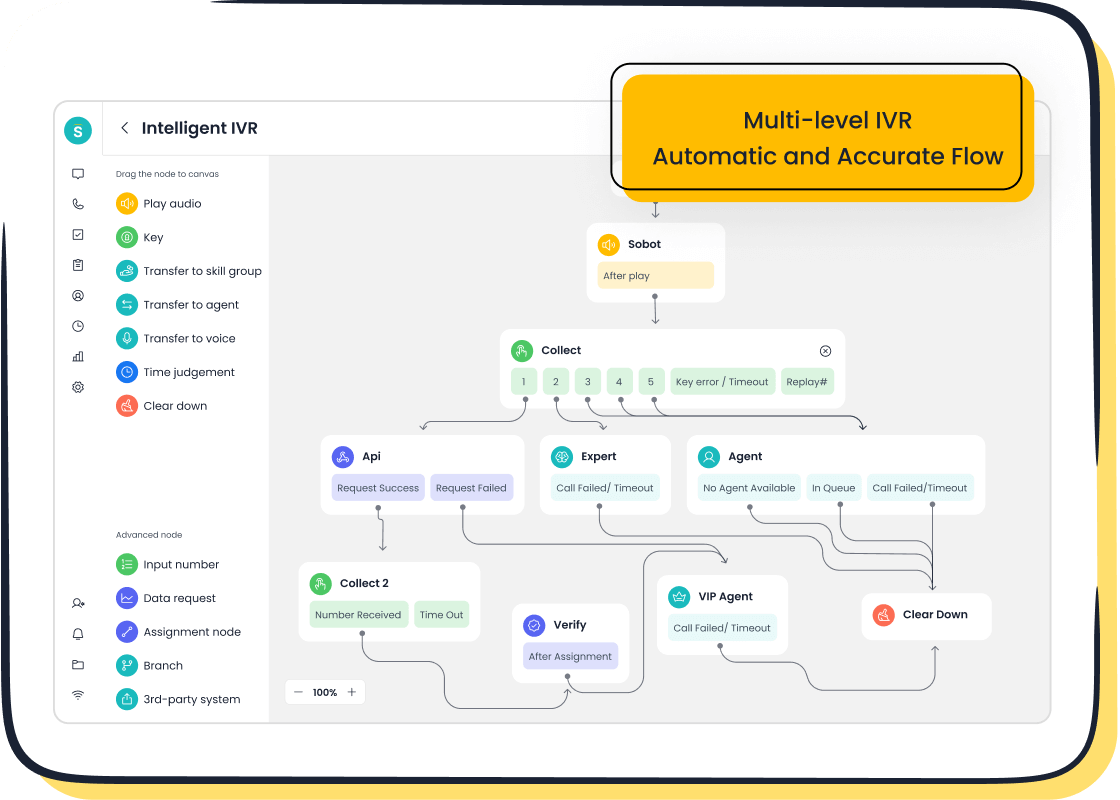
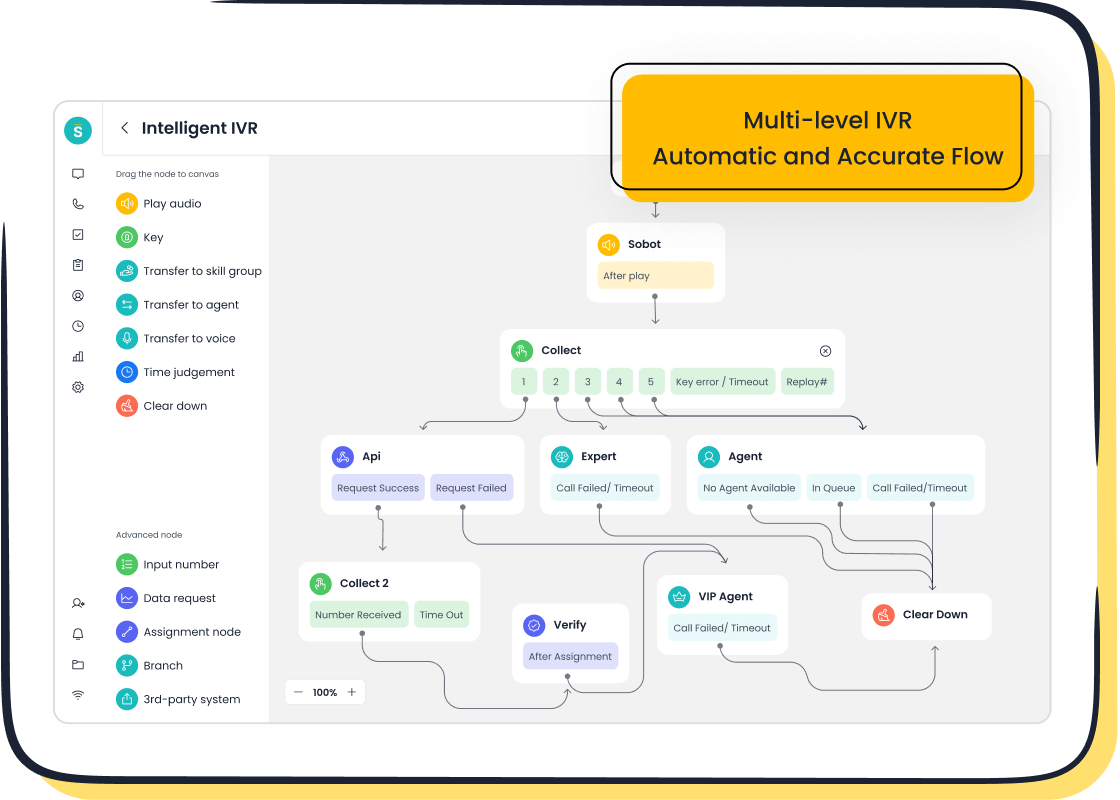
An AI voice center can transform your global support. This technology allows you to handle thousands of calls at once. The AI can provide 24/7 service in multiple languages. For example, Sobot's Voice Center uses an AI-powered Voicebot for intelligent interactions. These AI agents can understand different accents and dialects. They automate routine tasks, which frees your human team for more complex problems. This powerful AI for customer service helps you scale your support operations efficiently. You can expand into new markets without a large investment in infrastructure.
You now have a clear path. Define your global needs, evaluate vendors on true multilingual AI capabilities, and implement a human-centric AI strategy. The goal of this AI is to create an exceptional customer experience, not just automate service. This advanced AI helps you build a quality connection with each customer. The right AI customer service partner helps you provide a better service for every customer. An AI partner like Sobot helps you embark on your contact journey, building strong customer relationships in any language with its powerful AI service.
FAQ
How long does it take to set up a multilingual AI?
You can deploy a powerful AI solution in a few weeks. The timeline depends on your specific needs. A good AI partner helps you integrate the system with your existing tools. This process ensures a smooth launch for your customer support team.
Can AI completely replace my human customer support agents?
No, the best strategy combines AI with human expertise. The AI handles common questions, which frees your agents for complex customer issues. This human-in-the-loop model uses AI to improve efficiency, not to eliminate your team. This approach creates a better customer experience.
How do I ensure the quality of responses from the AI?
You can maintain high quality by using a human-in-the-loop model. Your team reviews AI interactions and provides feedback. This continuous training improves the AI's performance and accuracy over time. It ensures the AI delivers excellent service.
What makes an AI good for a small business?
A great AI for small businesses is scalable and easy to use. It should offer a unified platform for all customer channels. The AI must also provide reliable service without requiring a large technical team to manage it.
See Also
Elevating Customer Service Efficiency with Advanced AI Software Solutions
An In-Depth Look at Enterprise AI Call Center Solutions
Your Essential Guide to Artificial Intelligence Software in Call Centers
Achieving Excellence in Customer Support Through Live Chat Mastery
Transforming Customer Support with Revolutionary AI Service Agents

