Essential Ecommerce Website Support Services

Running a successful ecommerce business presents a dual challenge. You must maintain a flawless website and also deliver excellent ecommerce customer service. Your success rests on two pillars: strong technical support and great customer communication. A poor customer support experience can be costly. In fact, 96% of consumers will leave a brand after a bad experience. Essential ecommerce website support services, combined with a tool like Sobot, provide the comprehensive support you need to create a positive customer experience for your ecommerce brand.
1. 24/7 Website Monitoring
Your ecommerce website is your digital storefront. It must be open and functional around the clock. 24/7 website monitoring provides constant surveillance of your site's health. This essential support service acts as your first line of defense against downtime and performance issues. It ensures your online business remains available to customers at all times.
Proactive Issue Detection
You need to find problems before your customers do. Proactive monitoring helps you achieve this. Advanced systems use analytics to spot unusual patterns and predict failures before they happen. This gives your technical support team crucial time to fix issues, often preventing a full-blown outage. Many factors can bring your ecommerce site down.
Common causes of website downtime include:
- Server failures or hosting issues
- Sudden traffic spikes that overload your system
- Cyberattacks like DDoS that flood your site with traffic
- Human errors during website updates
- Software bugs or faulty plugin updates
A good monitoring service watches for all these threats, helping you stay ahead of trouble.
Protecting the Sales Funnel
Every minute your website is down, you lose money. Downtime directly breaks your sales funnel. Customers cannot browse products, add items to their cart, or complete a purchase. The financial impact can be huge. For a major retailer like Amazon, just 40 minutes of downtime resulted in an estimated loss of $5 million. While your numbers may differ, any amount of lost revenue hurts your business. Continuous monitoring protects your income stream by keeping your site online and ready to make sales.
Your website's uptime is directly tied to your revenue. A monitoring service is an investment in protecting your ability to sell.
Minimizing Customer-Facing Errors
Technical problems often create a poor customer experience. A slow site can cause your live chat to lag, frustrating shoppers who need real-time support. Monitoring helps prevent common customer-facing errors. These include broken checkout pages, poor site navigation, or missing payment options. By catching backend issues early, you ensure your customer support tools function correctly. This allows your team to provide excellent service without technical interruptions. A stable ecommerce website is the foundation for both sales and great customer support. These ecommerce website support services are critical for your success.
2. Emergency Support & Troubleshooting

While monitoring helps prevent disasters, some issues are unavoidable. When your ecommerce site breaks, you need more than a standard help desk. You need emergency support. This service provides a dedicated team to fix major problems the moment they happen, protecting your business from extended downtime.
Immediate Access to Experts
When your site goes down, every second counts. You need a direct line to specialists who understand your ecommerce platform inside and out. Emergency support gives you this immediate access. Instead of waiting in a queue, you connect with an expert ready to diagnose the problem. This rapid response is crucial. It allows your technical team to focus on the fix while your customer support team manages communication with shoppers, providing them with clear updates.
Resolving Critical Site Failures
Critical failures can bring your entire operation to a halt. Your expert support team resolves these critical failures to get you back online. Many issues can cripple an ecommerce store, especially on platforms like Magento or Shopify.
Common critical failures include:
- Slow page loading and checkout processes that cause cart abandonment.
- Backend errors like "503 Service Unavailable" that make your site inaccessible.
- Security issues such as "Access Denied" errors that lock out admins.
- SEO problems like duplicate content that harm your search rankings.
Minimizing Revenue Loss
A broken website is a closed-for-business sign. Emergency troubleshooting directly minimizes revenue loss by drastically reducing downtime. The faster an issue is resolved, the faster customers can resume shopping. This swift action also preserves customer trust. Shoppers who encounter a quickly fixed glitch are more likely to return than those who find a broken site with no resolution in sight.
A fast, functional website is the backbone of your customer support. It ensures tools that provide real-time support operate without lag, preventing customer frustration.
Investing in ecommerce website support services for emergencies is an investment in business continuity.
3. Backups & Data Recovery
Data loss can happen for many reasons. Hardware can fail, or updates can go wrong. Studies show that human error is a leading cause of data loss, accounting for up to 40% of incidents. A reliable backup and recovery plan is your ultimate safety net. It protects your ecommerce business from disaster and provides peace of mind. This type of technical support is non-negotiable for a modern online store.
Automated Data Protection
You should automate your backup process. Manual backups are easy to forget and prone to mistakes. Automation ensures your data is saved consistently without you lifting a finger. For a busy ecommerce site, frequent backups are critical. You cannot afford to lose hours of order data.
A good backup schedule depends on your site's activity.
| Website Type | Suggested Backup Schedule |
|---|---|
| E-commerce | Hourly |
| News/Media | Daily |
| Business Sites | Weekly |
Scheduling these automated backups during off-peak hours minimizes any impact on your site's performance. This proactive support ensures you always have a recent copy of your data ready.
Securing Customer & Order Information
Your backups contain your most valuable assets: customer and order data. You have a legal and ethical duty to protect this information. Regulations like GDPR and CCPA require you to implement strong security measures to safeguard personal data.
Your backup strategy is a key part of your data security plan. Encrypting your backup files and storing them in a secure, off-site location protects sensitive information from unauthorized access. This protects your customers and your business from costly data breaches.
Losing this data can destroy customer trust and lead to significant legal penalties. Secure backups are essential for any ecommerce operation.
Rapid Restoration Process
When your site goes down, you need to get it back online fast. A good backup is useless without a quick way to restore it. Your support service should offer a rapid restoration process. This allows you to roll back your website to its last working state in minutes, not hours. A streamlined process minimizes downtime, reduces revenue loss, and gets customers back to shopping. Testing your restoration process regularly ensures it will work when you need it most.
4. Security Audits & Malware Removal
Your ecommerce store is a prime target for cybercriminals. They want your customer data. Regular security audits and malware removal are crucial ecommerce website support services. This proactive support protects your business, your customers, and your reputation from constant threats.
Protecting Sensitive Customer Data
You have a responsibility to protect your customers' sensitive information. A data breach can destroy trust and lead to massive fines. For example, failing to comply with regulations like GDPR can result in penalties of up to 4% of your company's annual global revenue. Protecting data is not just about compliance; it is about maintaining your customers' confidence in your ecommerce brand. A strong security posture shows customers you value their privacy.
Proactive Vulnerability Scanning
You must find security weaknesses before hackers do. Proactive scanning regularly checks your ecommerce website for vulnerabilities. Many attacks exploit outdated software or poorly configured plugins. For instance, nearly 3,000 Magento stores were compromised by attacks after their security support ended. Your support team should scan for common threats.
Common malware attacks include:
- SQL Injections: Attackers use malicious code to access or manipulate your database.
- Cross-Site Scripting (XSS): Criminals inject harmful scripts to steal user data.
- Brute-force Attacks: Automated bots try to guess your passwords.
- DDoS Attacks: Your site is flooded with traffic until it crashes.
Regular scans help you patch these holes and keep your store secure.
SSL & Firewall Management
An SSL certificate is a basic but essential security tool. It encrypts data sent between your customer's browser and your server. This process scrambles sensitive information like credit card numbers, making it unreadable to thieves.
An SSL certificate does two things. It secures data in transit and verifies your website's identity. This helps prevent attackers from impersonating your site to steal information.
A Web Application Firewall (WAF) adds another layer of protection. It monitors and filters traffic to your ecommerce site, blocking malicious requests before they reach your server. Proper management of your SSL and firewall is a fundamental part of your security support strategy.
5. Performance & Speed Optimization
A fast website is essential for your ecommerce business. Speed impacts more than just SEO; it directly affects the performance of your customer-facing tools. A slow site creates a poor customer experience and can cost you sales. This makes performance optimization a critical form of technical support.
Improving Page Load Times
Every second counts in ecommerce. A 1-second delay in page load time can cause a 7% drop in conversions. For a store making $100,000 per day, that delay could lead to $2.5 million in lost sales over a year. Customers have high expectations and will not wait for a slow page to load.
- Ecommerce sites that load in 1 second see conversion rates 2.5 times higher than sites that take 5 seconds.
- Pages loading in 2 seconds have a 9% bounce rate, but this jumps to 38% for pages loading in 5 seconds.
Fast load times keep shoppers engaged and moving through your sales funnel.
Enhancing Core Web Vitals for SEO
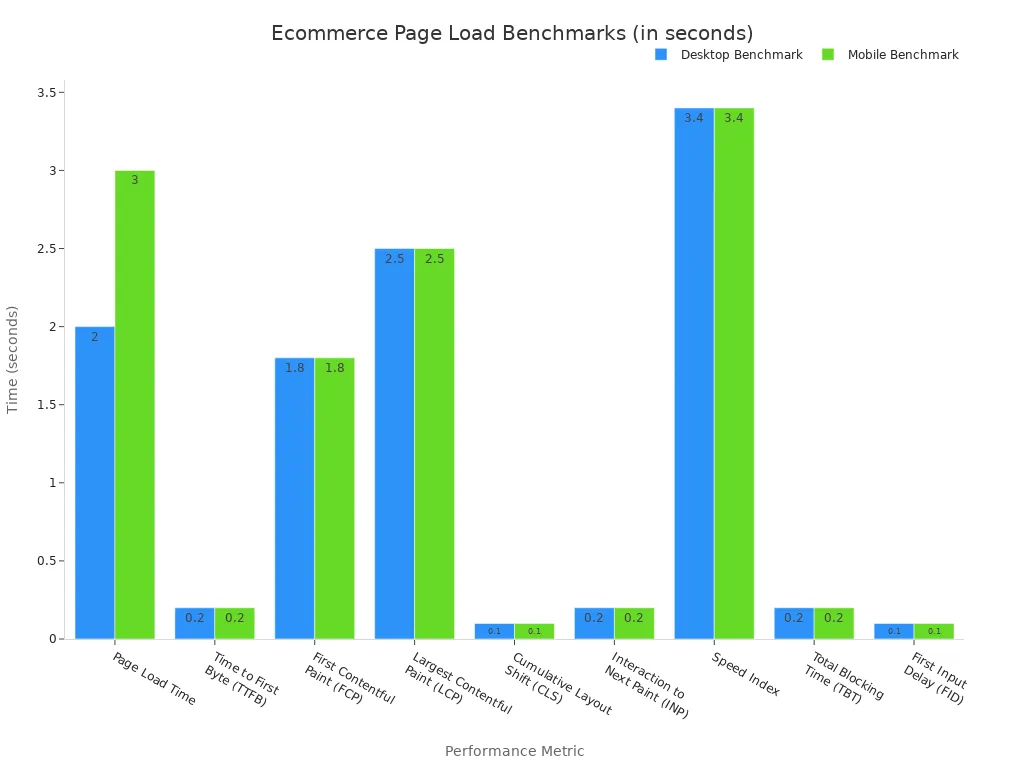
Google uses Core Web Vitals to measure a website's user experience. These metrics are a key ranking factor. A good score can boost your visibility in search results, while a poor score can hide you from potential customers. Your support team should optimize for these benchmarks.
| Metric | Desktop & Mobile Benchmark |
|---|---|
| Largest Contentful Paint (LCP) | Under 2.5 seconds |
| Interaction to Next Paint (INP) | Under 200 ms |
| Cumulative Layout Shift (CLS) | Under 0.1 |
Meeting these standards tells search engines that your site offers a quality experience, helping you attract more organic traffic.
Optimizing for a Better User Experience
A fast website delivers a better customer experience. Slow performance creates frustration, especially when customers need help. A lagging site can cause delays in your live chat responses, turning a helpful tool into a source of annoyance. A fast site ensures your ecommerce customer service tools, like Sobot Live Chat, provide the instant engagement shoppers expect. This seamless experience builds trust and loyalty. Optimizing your site's speed is a direct investment in customer satisfaction and a core part of your ecommerce support strategy.
6. Software & Patch Management
Your ecommerce website relies on a complex ecosystem of software. This includes your main platform, plugins, and various themes. You must keep this software updated. Regular updates are a key part of your technical support strategy. They ensure your site runs smoothly, securely, and efficiently.
Patching Security Vulnerabilities
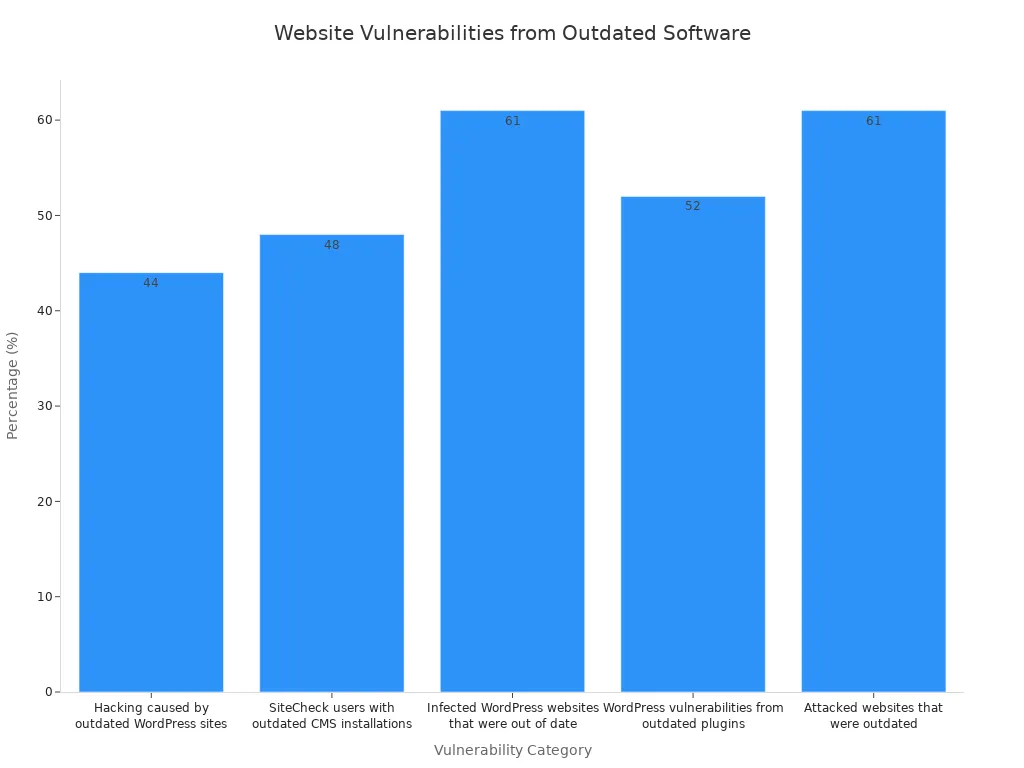
Hackers often exploit outdated software to attack websites. In fact, 61% of attacked websites were outdated. Patches are updates that fix these security holes. Applying them quickly is one of the most effective ways to protect your ecommerce store. Failing to do so can have serious consequences.
Many well-known companies have suffered from security breaches. These incidents show how attackers can exploit different weaknesses.
| Platform | Date of Incident | Type of Attack | Point of Entry |
|---|---|---|---|
| Ticketmaster | June 2018 | Third-party chatbot compromise | Infected customer support script |
| CafePress | February 2019 | Data breach | Exploited application vulnerabilities |
| Newegg | August 2018 | Magecart card-skimming attack | Compromised checkout script |
A dedicated support team manages these patches for you. This keeps your store safe from known threats.
Ensuring Plugin Compatibility
Updates can sometimes cause problems. A new plugin version might conflict with your theme or another plugin. This can break parts of your website. A professional support service tests every update on a staging site first. This is a private copy of your website where changes do not affect live customers.
Before deploying updates, your team should perform several tests to prevent issues. This ensures your ecommerce site remains stable.
- Integration Testing: Checks that all your tools still work together correctly.
- Performance Testing: Measures site speed to ensure the update does not slow things down.
- Security Testing: Scans for any new vulnerabilities introduced by the update.
- Cross-browser Testing: Verifies the site looks and works right on different browsers like Chrome, Firefox, and Safari.
This careful process prevents updates from disrupting your business.
Managing Platform Updates
Your ecommerce platform itself will also have major updates. These updates can offer powerful new features and important security improvements. However, they are more complex than simple plugin patches. Managing a platform update requires careful planning and execution. Your team must ensure that all your custom features and integrations continue to work. A smooth update process is vital for a good ecommerce customer service experience. It prevents downtime and ensures your customers can shop without interruption.
7. Omnichannel Ecommerce Customer Service

Once your technical foundation is solid, you can focus on excelling at customer interaction. A great ecommerce customer service strategy turns shoppers into loyal fans. This involves meeting customers where they are and providing a seamless support experience. This is a key part of the best practices for customer service.
Meeting Customers on Their Preferred Channel
Your customers expect to connect with you on their favorite platforms. More than 85% of shoppers use multiple channels during their buying journey. A modern ecommerce customer service plan must support these diverse options.
Popular communication channels include:
- Live chat
- Social media (Facebook, Instagram, WhatsApp)
- Phone
You need a strategy that manages conversations across all these touchpoints. This approach is essential for building brand loyalty and improving the customer experience.
Unifying Communication with Live Chat
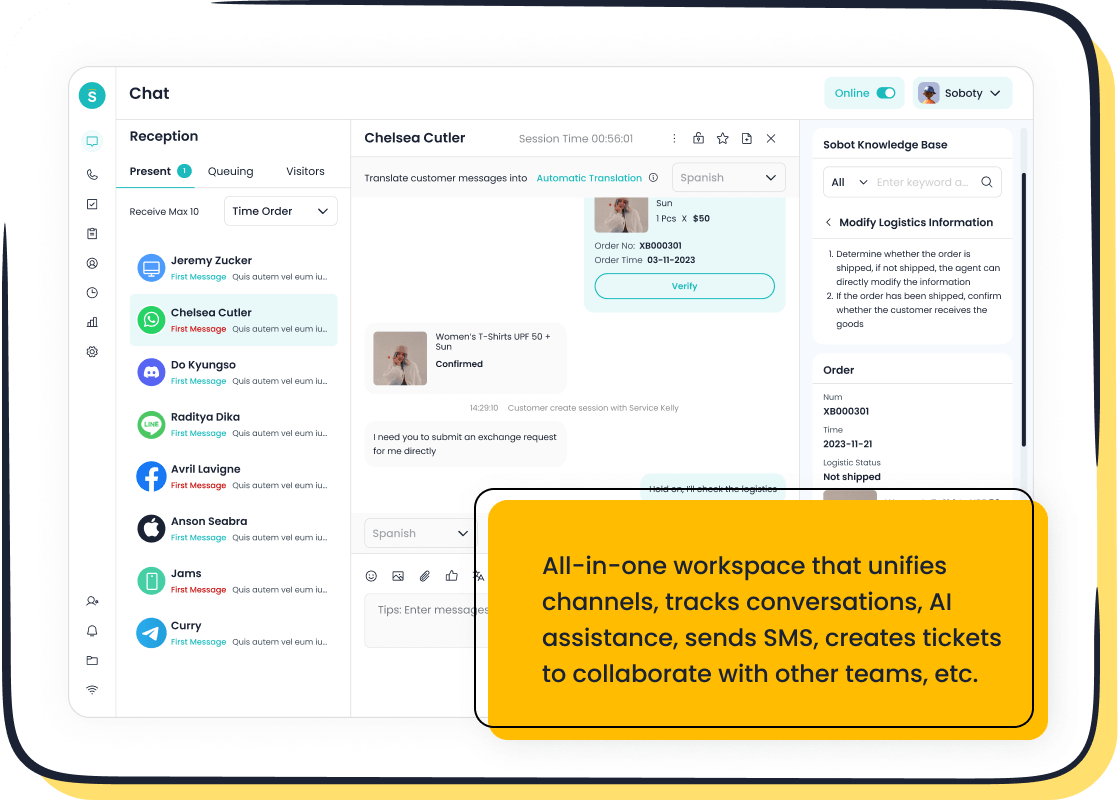
Customers get frustrated when they have to repeat their issues. A unified communication platform prevents this problem. It gives your agents a complete history of every customer interaction. Sobot's Omnichannel Solution brings all your channels, like email and social media, into one single view. This allows for greater personalization in your support.
The luxury brand Michael Kors used Sobot to unify its ecommerce customer service. This change led to an 83% reduction in response time and a 95% customer satisfaction rate. This shows how powerful a unified journey can be for customer retention.
Tools like Sobot Live Chat use AI to help agents work faster. This real-time support ensures a smooth customer journey and boosts brand loyalty. An effective customer service strategy uses live chat to create enhanced experiences and improve customer retention.
Empowering Shoppers with Self-Service
Many customers want to find answers on their own. In fact, 81% of shoppers try to solve issues themselves before contacting a live agent. You can empower them with self-service tools. This is one of the best practices for customer service.
AI-powered chatbots provide 24/7 customer service for common questions. This frees up your human agents to handle more complex problems. This approach improves your overall customer support efficiency. Offering self-service options creates a better customer experience and strengthens your ecommerce business. Good customer service solutions provide a complete support journey with options for personalization.
Your ecommerce success depends on combining technical stability with excellent ecommerce customer service. A complete customer service strategy includes all seven ecommerce website support services. This creates a great customer experience and builds brand loyalty. Investing in this experience boosts customer retention.
- Businesses prioritizing the customer journey see 1.7x higher revenue growth.
- They also achieve a 2.3x greater increase in customer lifetime value.
Evaluate your technical support and customer support tools. Explore how Sobot can help you create a seamless ecommerce journey for better retention and brand loyalty. This support ensures a positive experience from start to finish.
FAQ
What is the most critical support service for an ecommerce site?
All seven services are important for a complete strategy. However, 24/7 monitoring and security audits are foundational. These Essential Ecommerce Website Support Services protect your site from downtime and data breaches, which can cause the most immediate damage to your revenue and reputation.
Why is website speed so important for customer service?
A slow website creates a poor user experience. It can cause delays in customer-facing tools like live chat. This frustrates shoppers who need quick answers. A fast site ensures your support tools work instantly, which helps you provide excellent service and build customer trust.
Can I handle website support on my own?
You can manage some basic tasks. However, professional support provides access to experts for emergencies, security, and performance optimization. A dedicated team ensures your site remains stable and secure, letting you focus on growing your business instead of fixing technical problems.
How does a tool like Sobot help my support strategy?
Sobot enhances your customer-facing support. Its Omnichannel Solution unifies communication channels like email and social media into a single view. This helps your team provide faster, more personalized service, which improves customer satisfaction and boosts retention rates for your brand.
See Also
Elevate Your Sales: The Power of E-commerce Live Chat
Best Live Chat Solutions for E-commerce Success This Year
Comparing Top 10 Live Chat Tools: Shopify and Rivals
Optimizing Retail: Shopify Live Chat's Impact on Customer Engagement

