The Truth About Channel Switching in CX

Is channel switching always bad for customer service? The answer is no. While it can cause friction, it also offers a path to better customer satisfaction. The idea of customer service without channel switching is not always practical. A poor customer service experience often comes from poorly managed switches, not the switch itself.
A great customer experience depends on making these transitions smooth. This article explores how businesses like those using Sobot can turn channel switching into a powerful tool for excellent customer service.
When Channel Switching Improves Customer Service

Channel switching is not a sign of failure. It is a feature of modern customer service. When managed well, it creates a better customer experience by giving people the right tool for the job. This flexibility meets rising customer expectations and builds trust.
Resolving Complex Issues Effectively
Simple questions often need just one channel. A chatbot can provide 24/7 availability for basic inquiries. However, complex problems require a different approach. A customer might start on social media but need more detailed help. Moving them to a live chat allows a support agent to investigate the issue without losing context. This provides a faster response time and a smoother journey.
For example, the roadside assistance provider AAA allows motorists to text a number and receive a web link to request help. This strategic switch improved the customer experience and led to nearly 10,000 inbound texts per month.
This shows how moving to a more suitable channel is a smart strategy for effective customer support.
Meeting Customer Preferences
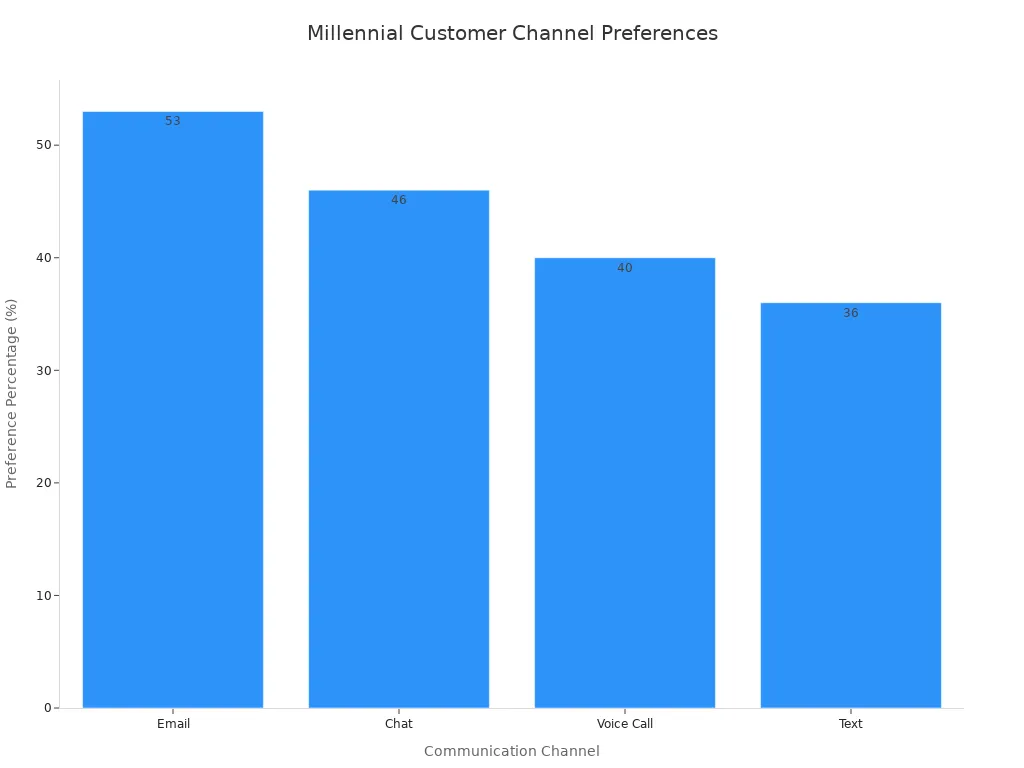
Every customer is different. Forcing everyone into a single channel can hurt customer satisfaction. Offering choices lets people use the channel they prefer, which increases their willingness to engage. This flexibility is key to building customer loyalty. For instance, younger customers often have clear preferences for digital channels.
| Customer Group | Channel Preference | Percentage |
|---|---|---|
| Millennials | 53% | |
| Millennials | Chat | 46% |
| Millennials | Voice Call | 40% |
| Millennials | Text | 36% |
Meeting these customer expectations shows that a brand is listening. It respects how its customers want to communicate.
Capturing Critical Information
Some problems are hard to describe with words alone. A strategic channel switch can help a customer support agent gather the right information. A voice call is good for discussion, but it cannot show a physical product defect. In these cases, switching the customer interaction from a phone call to a video call is very effective.
Video allows the agent to see the problem firsthand. This visual information is crucial for accurate troubleshooting. It helps the agent understand the issue completely and guide the customer to a solution. This improves the quality of the customer service and leads to higher customer satisfaction.
The Disadvantages of Poor Channel Switching
While strategic channel switching is a benefit, unmanaged switching creates significant disadvantages. These problems do not come from the switch itself. They arise when a business fails to connect its customer service channels. Such disruptions make a brand appear disorganized and can damage its reputation. The following disadvantages highlight the risks of a fragmented customer experience.
A Lack of Customer Focus and Journey Gaps
A poor switching process reveals a lack of customer focus. Customers see a brand as one entity; they do not separate a marketing email from a customer support call. When they move between channels and find a disconnection, it creates a jarring customer experience. This brand disconnection suggests the company is not working together.
Negative experiences don’t just frustrate customers—they erode trust, impact reputation and ultimately make it harder to drive future sales.
This inconsistency undermines loyalty. A business that cannot provide a smooth journey across its touchpoints is gambling with its reputation and risks losing customers to competitors who offer a more unified customer experience.
Inefficiency Across Multiple Channels
Poorly managed channel switching causes major business disruptions. When agents lack a unified view of customer interactions across multiple channels, they work inefficiently. This can lead to business goal misalignment, where the customer support team struggles to meet its objectives. The dependence on siloed systems creates chaos. Issues like over-dependence on the external vendor can arise, especially with the instability of the bpo service provider. This environment often has minimal quality control, leading to further disadvantages and operational friction. These internal disruptions directly translate to a poor external customer experience.
Lost Data and Conversation Context
One of the biggest disadvantages of a broken process is lost data. When a customer has to repeat their issue after a transfer, their frustration grows. This repetition erodes trust and leaves a lasting negative impression. In fact, customers who are transferred just once are twice as likely to give negative feedback. The problem is not the agent, but the need to restart the conversation. This creates a potential security risk if sensitive information is handled poorly across multiple channels. A customer support system that loses context fails its primary purpose, creating more work for everyone and leading to dissatisfaction.
The Solution: Unify Your Customer Service Channels
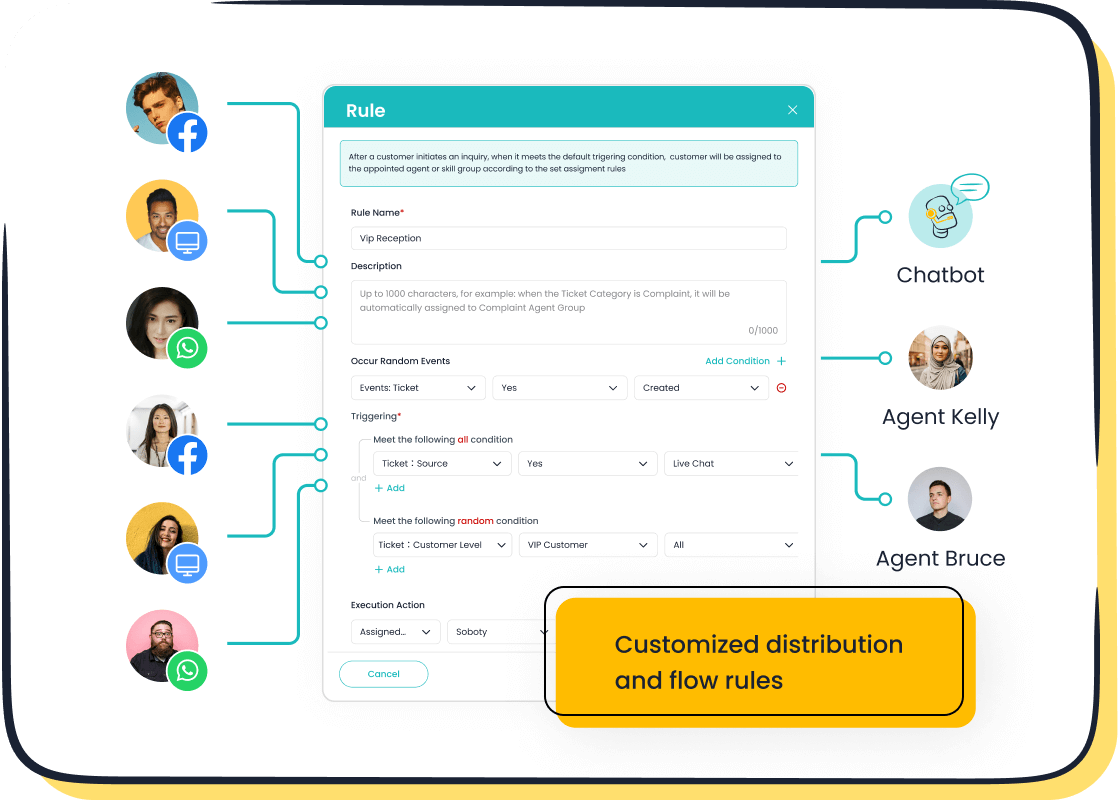
An excellent customer experience is not about preventing channel switches. It's about making them seamless. The solution lies in unifying your customer service channels to create a single, cohesive journey. This approach turns potential friction points into opportunities for exceptional service.
Integrate Channels with a Unified Platform
The foundation of seamless channel switching is a unified platform. Disconnected systems create data silos, forcing customers to repeat themselves and frustrating agents. An omnichannel solution breaks down these barriers. It creates a single source of truth for all customer interactions.
Sobot's Omnichannel Solution is a prime example of how to solve these issues. It consolidates interactions from various touchpoints, including websites, social media, and apps, into one unified workspace. This integration means agents have a complete view of the customer's history. They can see past conversations and data, regardless of the channel.
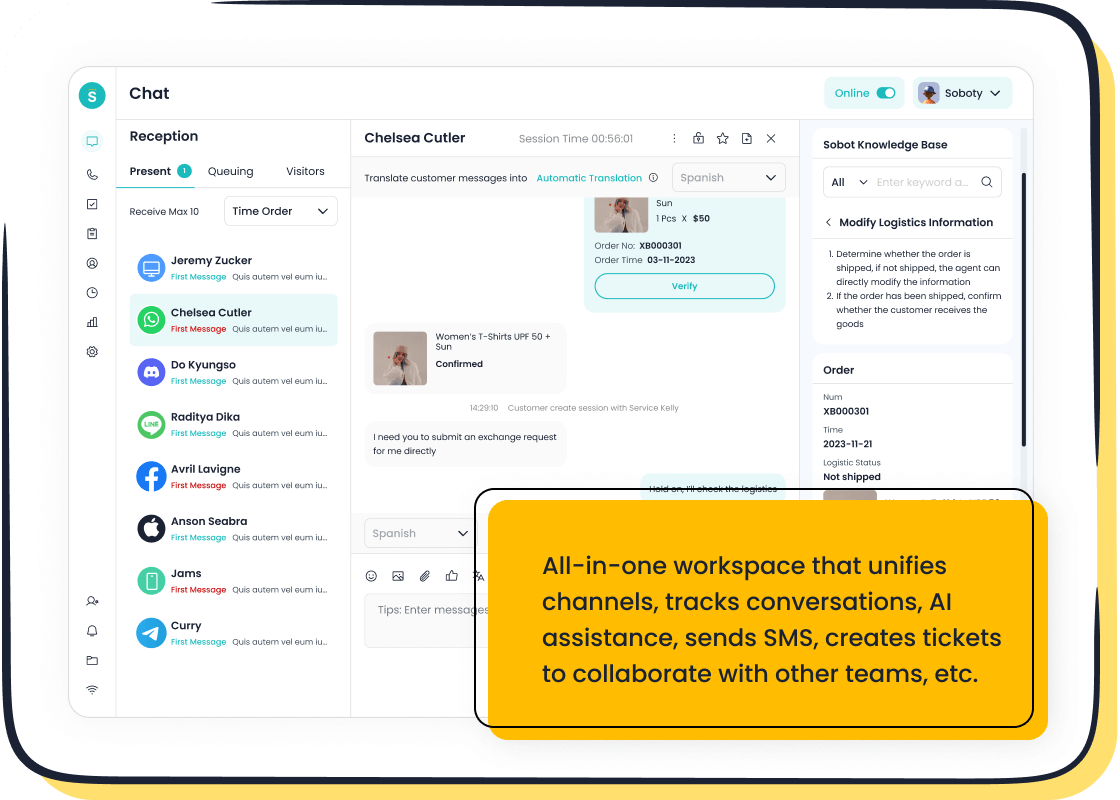
A unified platform like Sobot Live Chat prevents context loss. It ensures that when a customer moves from a chatbot to a live agent, the conversation continues without interruption. This creates a smooth and efficient customer experience.
Many platforms offer features to unify customer service, but the goal is always the same: to create a single, comprehensive view of the customer journey.
| Company Name | Integrated Channels | Single Agent Workspace | Key Features for Integration |
|---|---|---|---|
| Sobot | Website, Apps, Social Media (WhatsApp, Facebook, etc.), Voice, Email | Yes (Unified Workspace) | Omnichannel support, AI-assistance, system integrations, unified inbox |
| Zendesk | Live chat, email, social, phone | Yes (Unified omnichannel workspace) | Unifies conversations, 1,800+ integrations (Shopify, Salesforce, Slack) |
| Freshdesk | Facebook, LinkedIn, WhatsApp, Instagram, X | Yes (Unified dashboard) | Centralized social media management, integrates multiple social media platforms |
By implementing an omnichannel strategy, businesses see significant returns. For example, the financial service platform Opay used Sobot to unify its channels. This move increased their customer satisfaction from 60% to 90%. This success story shows the power of an integrated omnichannel approach. It improves both customer support and overall business performance.
Train Agents for a 'Warm Handoff'
Technology alone is not enough. Your customer support team needs the right training to manage channel switches effectively. A "warm handoff" is crucial. This is when an agent transfers a customer to another channel or agent with all the necessary context. The customer does not have to start over.
A warm handoff requires two key elements:
- Access to Information: Agents must have a unified view of the customer's history. An omnichannel platform provides this, giving them the context needed for a smooth transition.
- Clear Processes: Your team needs established procedures for escalating issues. This includes knowing when to switch channels and how to transfer information seamlessly.
Training should focus on empathy and efficiency. Agents should understand the customer's frustration when they have to repeat information. They should be skilled in using the unified platform to quickly access a customer's history and summarize the issue for the next agent. This makes the customer feel valued and understood, strengthening the overall customer experience.
Guide Customers to the Best Channel
Guiding customers to the right channel from the start can prevent unnecessary switching. This is not about limiting choices. It is about making the customer journey more efficient. You can use technology to triage issues and direct customers to the best channel for their specific problem.
For example, an Interactive Voice Response (IVR) system can be a powerful tool for effective customer service. A well-designed IVR can help customers solve simple issues on their own or quickly connect them to the right department.
Tips for an Effective IVR System:
- Simplify Menus: Keep options clear and limited to avoid confusion.
- Offer Self-Service: Allow customers to handle simple tasks like checking an order status or paying a bill.
- Provide an Agent Option: Always give customers a clear path to speak with a human agent.
- Use AI for Personalization: Integrate with your CRM to offer personalized greetings and options based on the customer's history.
By using tools like IVR and website prompts, you can direct customers to the most effective channel for their needs. This proactive guidance improves first-contact resolution rates and enhances customer satisfaction. It is a key part of a successful omnichannel customer service strategy.
Is Customer Service Without Channel Switching the Goal?
The idea of customer service without channel switching sounds simple and efficient. However, aiming for a complete lack of channel movement is not the right goal. The reality is that a rigid, single-channel approach fails to meet modern customer expectations. The true objective is to create a fluid customer experience where switches are so smooth they feel like a natural part of the conversation.
The Ideal vs. The Reality
The ideal of resolving every issue in one channel is attractive. In reality, customer needs are diverse and complex. A customer might start with a simple question for a chatbot but then realize they need personalized help. Forcing them to stay in a channel that no longer serves their needs leads to frustration. The expectation is not customer service without channel switching; it is service that adapts. A successful customer experience acknowledges that different problems require different tools.
Measuring Success with the Right Metrics
Success should not be measured by the absence of channel switching. Instead, businesses should focus on metrics that reflect the quality of the journey. This shift in focus helps build customer loyalty.
Instead of tracking channel switches as a negative, measure metrics like First Contact Resolution (FCR) and Customer Effort Score (CES). A low effort score, even with a channel switch, indicates a positive customer experience.
This approach provides a more accurate view of customer satisfaction. It shows that a well-managed switch is better than a poorly handled single-channel interaction.
Empowering Agents and Customers
True empowerment comes from giving both agents and customers the right tools and pathways. Technology is key to making this happen. It enables agents to manage transitions without losing context, which is vital for effective customer support. This prevents the need for customer service without channel switching by making each step seamless.
Several technologies empower agents for this task:
- AI-powered tools provide agents with immediate support and reduce manual work.
- Agentic orchestration frameworks turn individual systems into a cohesive unit for managing interactions across channels.
- Platforms that ensure a "mindful handoff" connect different teams and deliver context to the agent before the conversation begins.
Using SMS as a transition mechanism can also guide customers smoothly to the right channel. These tools ensure that when a switch happens, the customer support agent is prepared, and the customer feels understood.
Channel switching is not the enemy of good customer service; unmanaged switching is. The future of customer service is not a rigid system of customer service without channel switching. Instead, it is about creating a fluid and seamless customer experience. Customers expect every interaction to feel like one continuous conversation.
The goal is to make transitions so smooth they feel invisible. Solutions like Sobot's Omnichannel Solution empower businesses to achieve this, unifying channels for a better customer experience.
When managed well, this strategy transforms a potential problem into a powerful asset, leading to a superior customer experience and higher satisfaction.
FAQ
What is the main goal of managing channel switching?
The primary goal is to make transitions seamless for the customer. It is not about stopping switches. A smooth process improves the overall customer experience. It also makes the customer support team more effective.
How does a unified platform help customer support?
A unified platform gives agents a complete view of a customer's history. This tool prevents lost information when a customer changes channels. It empowers the customer support team to provide faster, more consistent help.
Is it bad if a customer uses multiple channels?
No, using multiple channels is not inherently bad. Problems arise from poor management of these switches. A well-managed journey across different channels can lead to better resolutions and higher satisfaction with your customer support.
How can a business improve its channel switching process?
Businesses can improve their process in three key ways:
- Integrate all channels with a unified platform like Sobot.
- Train agents to perform warm handoffs with full context.
- Guide customers to the most effective channel from the start.
See Also
A 10-Step Guide to Deploying Effective Omnichannel Contact Center Solutions
Your Comprehensive Guide to Advanced Omnichannel Call Center Software Solutions
Essential Principles: A Guide to Quality Management Systems in Call Centers
Unlocking Efficiency: Understanding How Call Center Automation Transforms Operations
Implementing Top-Tier Quality Management Best Practices for Call Center Excellence

