Exploring Customer Influence on Service Delivery Outcomes


Customers shape service delivery outcomes through their active involvement and feedback. Their participation directly impacts service quality, satisfaction, and effectiveness. Sobot AI empowers businesses to engage customers across every channel, ensuring no missed interaction. For example, OPPO used Sobot to achieve a 94% positive feedback rate and a 57% increase in repurchase rates by resolving 83% of queries through AI chatbots. The following chart shows the measurable impact on OPPO’s customer service and delivery:
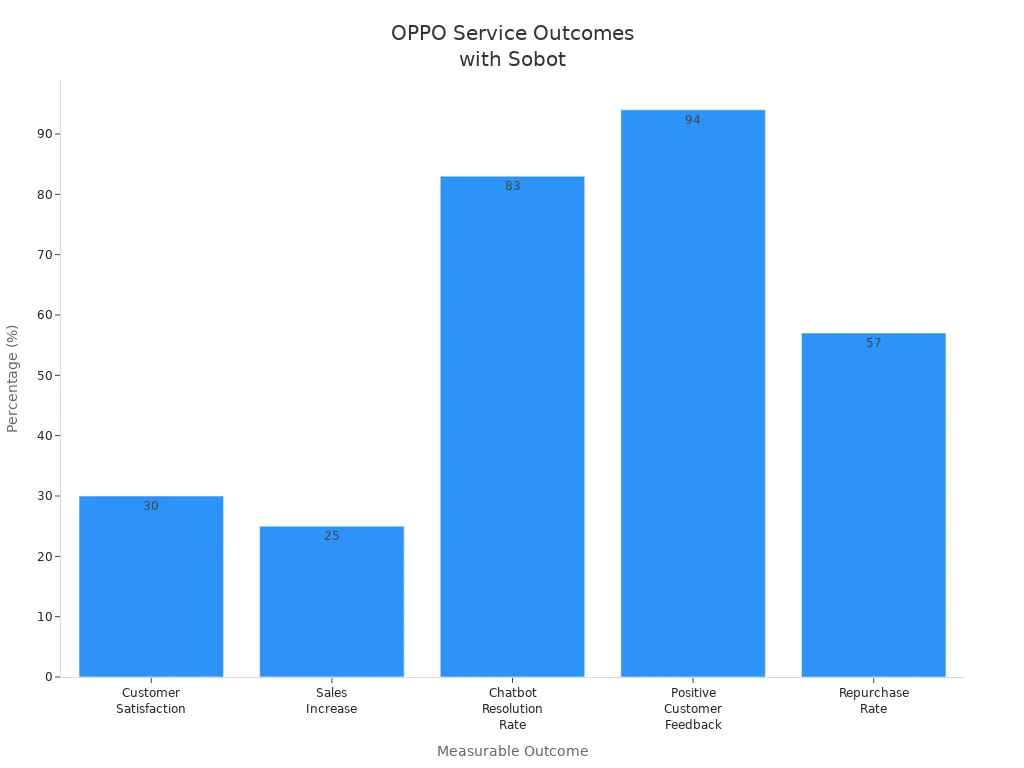
Customer Service and Delivery Impact
Customer Roles in Service Delivery
Customers play many roles in the service delivery process. They can act as suppliers, labor, designers, managers, or even as the product itself. For example, in retail, customers use self-checkout systems, while in healthcare, patients provide information and feedback that shape their care. The table below shows common customer roles across industries:
| Customer Role | Description | Example |
|---|---|---|
| Component Supplier | Provides necessary inputs | Tax preparation |
| Labor | Performs tasks usually done by employees | Self-checkout in retail |
| Design Engineer | Influences or specifies service design | Custom jewelry |
| Production Manager | Directs timing and sequence of service | Restaurant diners |
| Product | Is the object of the service | Healthcare patients |
| Quality Assurance | Evaluates and gives feedback | Customer reviews |
| Inventory | Waits for service | Queues at banks |
| Competitor | Performs the service themselves | DIY home repairs |
Sobot’s omnichannel platform supports these diverse customer roles by allowing seamless communication and feedback across channels. This flexibility helps businesses adapt to different customer needs and preferences, improving overall customer service and delivery.
Influence on Service Quality
Customer actions have a direct effect on service quality. When customers engage with digital platforms like Sobot Live Chat, they help shape the service experience. Recent research shows that customer orientation and engagement drive service innovation and improve outcomes. For example, healthcare providers who listen to patient needs create new services like telemedicine, which leads to better results and higher satisfaction.
Digital service environments benefit from active customer participation. When customers use easy-to-navigate platforms and provide feedback, service quality improves. However, if the complaint process is difficult, satisfaction drops. Sobot’s Live Chat makes it simple for customers to interact, reducing effort and boosting service quality. The platform’s analytics help businesses track over 150 indicators, allowing them to make data-driven improvements.
Customer Satisfaction Drivers
Several behaviors strongly influence customer satisfaction in service delivery. Customers who participate in surveys, post reviews, or join loyalty programs tend to report higher satisfaction. Managerial responses to feedback also increase engagement and satisfaction. Sobot’s solutions encourage these behaviors by offering satisfaction surveys and unified communication channels.
Tip: Businesses can boost customer satisfaction by making it easy for customers to share feedback and by responding quickly to their concerns.
Sobot’s broad industry reach, serving both small businesses and large enterprises, allows it to tailor services to different customer preferences. This diversity helps Sobot deliver hyper-personalized experiences, which are key drivers of customer satisfaction and loyalty.
Importance of Customer Roles
Productive Resources
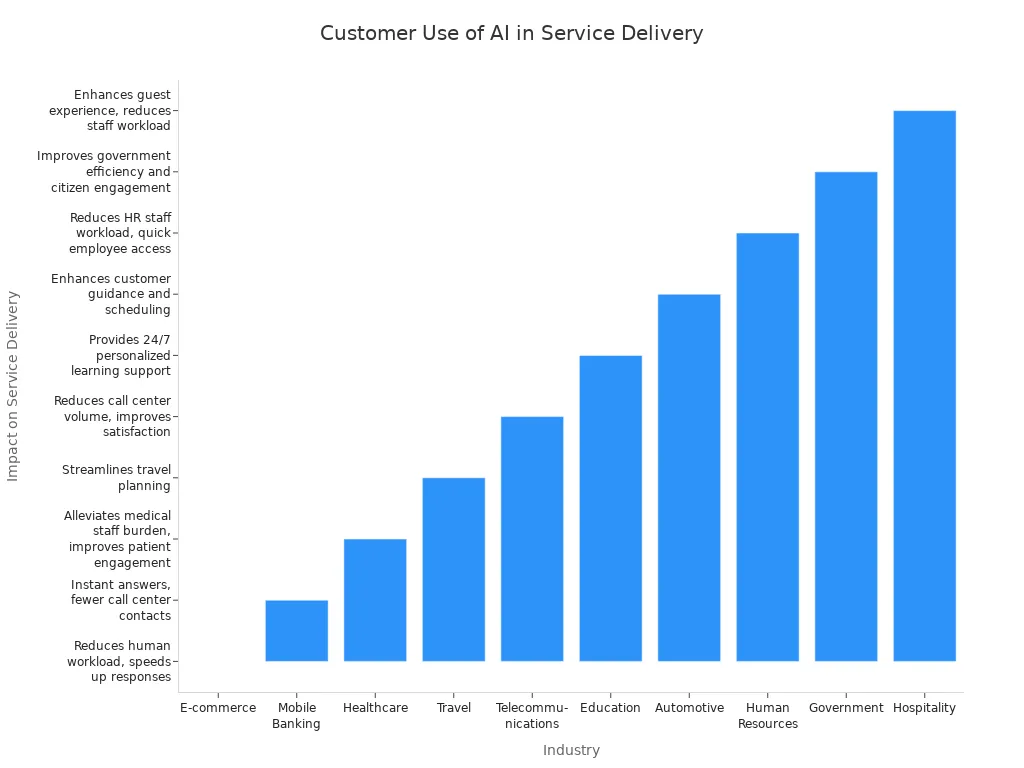
Customers serve as productive resources in service delivery by actively participating in processes that shape outcomes. When customers use Sobot’s AI-powered tools, they become part of the co-production process. For example, in e-commerce, customers interact with chatbots to check product availability, which reduces the workload for human agents and speeds up responses. In healthcare, patients use chatbots to schedule appointments, improving engagement and freeing up staff for more complex needs. The table below highlights how customers in different industries act as productive resources through co-production and customer co-production:
| Industry | Customer Interaction with AI Tools | Impact on Service Delivery |
|---|---|---|
| E-commerce | Customers use chatbots for real-time product info and availability | Reduces human workload, speeds up responses |
| Mobile Banking | Automated assistance for financial queries | Instant answers, fewer call center contacts |
| Healthcare | Chatbots help schedule appointments and answer FAQs | Alleviates medical staff burden, improves patient engagement |
| Travel | AI assists with booking, itinerary changes | Streamlines travel planning |
| Telecommunications | Virtual assistants troubleshoot network issues | Reduces call center volume, improves satisfaction |
| Education | AI tutors support students with questions and resources | Provides 24/7 personalized learning support |
| Automotive | Virtual showrooms guide vehicle inquiries | Enhances customer guidance and scheduling |
| Human Resources | Chatbots assist with HR queries | Reduces HR staff workload, quick employee access |
| Government | Virtual assistants help citizens access services | Improves government efficiency and citizen engagement |
| Hospitality | AI concierges assist hotel guests | Enhances guest experience, reduces staff workload |
Contributors to Value
Customers play a central role in co-creation and customer co-production, directly influencing value in exchange and value in use. In omnichannel environments, customers experience seamless integration across channels, which reduces effort and improves satisfaction. Sobot’s omnichannel solution enables customers to move between chat, email, and social media without losing context, supporting co-production and cocreation. Customers’ actions—such as providing feedback, sharing data, and engaging with multiple touchpoints—help businesses personalize services and create value in use. These behaviors also generate valuable data, which Sobot analyzes to refine offerings and enhance customer needs fulfillment.
- Customers shape value in exchange by interacting with integrated channels.
- Their feedback and engagement drive co-creation, improving service quality.
- Data from customer co-production supports ongoing improvements and trust.
Customer as Competitor
Sometimes, customers act as competitors by choosing self-service or alternative solutions. For example, OPPO’s customers often resolve their own issues using Sobot’s chatbot, demonstrating customer co-production and co-creation. This approach empowers customers to meet their own needs, reducing reliance on traditional support channels. As customers invest time and effort in these systems, they develop habits that reinforce value in use and value in exchange. Sobot’s solutions support this shift by making self-service intuitive and rewarding, ensuring that customer needs remain at the center of service delivery.
Note: Businesses that recognize and support diverse customer roles—especially through platforms like Sobot—can unlock new levels of efficiency and satisfaction.
Levels of Participation in Service Delivery
Customer participation in service delivery can be grouped into three levels: low, moderate, and high. Each level reflects how much a customer engages with the service process, from simply providing information to becoming a co-creator of value. Sobot Live Chat supports all these levels by offering flexible tools that adapt to different customer needs and preferences.
| Level of Participation | Defining Characteristics | Example Scenario |
|---|---|---|
| Low | Minimal information sharing, basic interaction | Browsing products, providing contact details |
| Moderate | Some involvement in service processes, occasional feedback | Choosing product bundles, responding to surveys |
| High | Active participation, co-production, and value creation | Using chatbots for support, giving detailed reviews |
Low Participation
Low participation involves customers who interact with a service at a basic level. They may provide simple information, such as contact details or preferences, but do not engage deeply. For example, a customer browsing an ecommerce site and only entering an email for updates demonstrates low participation. Sobot Live Chat accommodates these users by offering quick, non-intrusive chat prompts and easy access to FAQs. This approach ensures that even minimal engagement can lead to improved service delivery outcomes.
Note: Low participation still matters. Even small actions, like sharing an email, help businesses personalize future interactions.
Moderate Participation
Moderate participation occurs when customers take a more active role in the service process. They might answer surveys, select product bundles, or provide feedback after a purchase. For instance, Tortuga saw a 15% increase in conversion rates when customers chose bundled products, showing higher engagement and value perception. Sobot Live Chat supports moderate participation by enabling satisfaction surveys, personalized recommendations, and seamless follow-up messages. These features encourage customers to share insights, which helps businesses refine their offerings and improve customer engagement.
High Participation
High participation means customers become co-producers in service delivery. They use advanced tools, such as AI chatbots, to resolve issues, give detailed feedback, or even recommend services to others. Companies like Zappos and Apple have built reputations on encouraging this level of involvement, where customers interact deeply with support teams and digital platforms. Sobot Live Chat empowers high participation by providing 24/7 AI-powered assistance, unified communication channels, and instant access to human agents for complex needs. This level of effective customer participation drives innovation, loyalty, and superior service outcomes.
Tip: Encouraging active participation through easy-to-use digital tools can transform customers into valuable partners in service delivery.
Positive and Negative Influence
Constructive Interactions
Constructive customer interactions drive better service quality and long-term loyalty. Companies see the best results when customers show empathy, practice active listening, and use problem-solving skills. These behaviors help build trust and satisfaction. Leading brands like Zappos and Ritz-Carlton have set high standards by personalizing experiences and responding quickly to customer needs. Sobot’s analytics dashboard tracks key metrics such as Customer Satisfaction Score (CSAT) and Net Promoter Score (NPS), helping businesses measure the impact of positive interactions.
Key constructive behaviors include:
- Empathy and understanding during conversations
- Active listening to customer needs
- Timely and personalized responses
- Providing clear and relevant information
- Seeking and acting on customer feedback
These actions support strong customer relationship management and encourage advocacy.
Disruptive Behaviors
Disruptive customer behaviors can harm service delivery and employee morale. Sobot’s analytics reveal that customer incivility, verbal aggression, and injustice often lead to employee burnout and reduced service quality. For example, customer incivility may cause frontline staff to disengage, while verbal aggression increases job stress. The table below summarizes common disruptive behaviors and their impacts:
| Disruptive Behavior | Negative Impact on Service Delivery | Moderating Factors |
|---|---|---|
| Customer Incivility | Employee burnout, lower service quality | Supervisor support, resilience |
| Verbal Aggression | Job burnout, reduced problem-solving | Supervisor support |
| Customer Injustice | Sabotage, poor employee well-being | Emotional stability, attentiveness |
Supervisor support and employee resilience can help reduce these negative effects.
Managing Customer Influence
Businesses use Sobot’s AI-powered sentiment analysis and omnichannel dashboards to manage both positive and negative customer influence. Real-time insights help teams identify negative trends and respond quickly. For example, Agilent improved service efficiency sixfold by using Sobot’s chatbot to handle routine inquiries, freeing agents for complex issues. Sobot’s tools also encourage continuous learning and regular customer feedback, supporting a proactive approach to customer relationship management.
Tip: Encourage honest feedback, set clear service standards, and recognize employee achievements to maintain high service quality and positive customer influence.
Optimizing Service Delivery with Sobot
Enhancing Customer Roles
Businesses can optimize customer involvement by empowering customers as co-producers in the service process. Sobot’s digital tools, such as AI-powered chatbots and self-service platforms, allow customers to resolve issues independently and engage with products at their own pace. This approach reduces support ticket volumes and improves operational efficiency. Companies like OPPO have seen measurable outcomes, including an 83% chatbot resolution rate and a 57% increase in repurchase rates. By embedding AI-driven tools, businesses can automate outcome measurement and predict customer churn. Cross-functional teams can define KPIs that reflect customer success, while AI analyzes user behavior to create dynamic customer health scores. These strategies help build strong customer relationships and support successful delivery.
Note: Digital self-service platforms not only reduce workload for agents but also enhance customer satisfaction and loyalty.
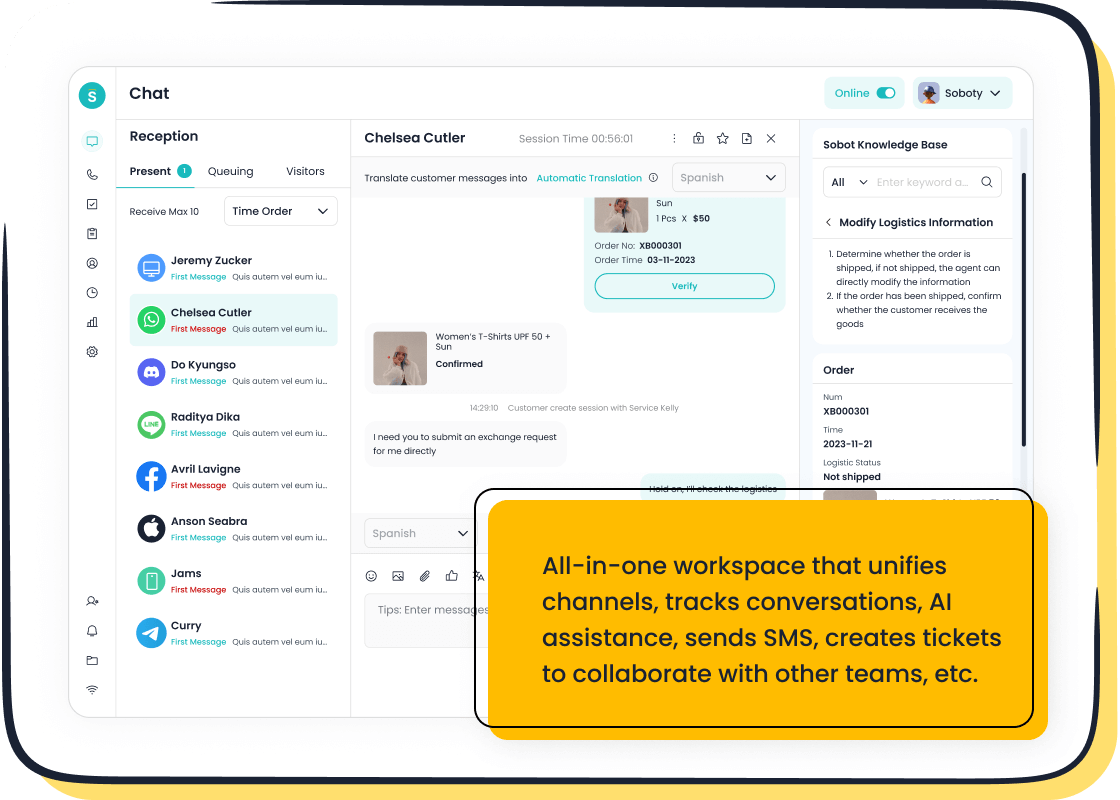
Leveraging Live Chat
Sobot Live Chat transforms customer engagement by providing real-time, omnichannel support. The platform maintains conversation context across channels, ensuring seamless transitions between platforms like WhatsApp, Facebook, and email. Businesses can leverage AI-driven personalization to deliver relevant responses at scale. The table below highlights key benefits of using Live Chat for customer relationship management:
| Benefit Category | Statistic or Outcome |
|---|---|
| 24/7 Support Availability | AI chatbots provide round-the-clock support, freeing agents for complex tasks |
| Productivity Gains | Automation increases productivity by up to 400% |
| Operational Cost Reduction | 44% of AI adopters report lower operational costs |
| Customer Satisfaction | 62% of companies see improved service through enhanced personalization |
| Self-Service Preference | 81% of customers prefer self-service before contacting representatives |
Sobot’s Live Chat enables co-production by allowing customers to interact directly with AI and human agents, improving both efficiency and satisfaction.
Data-Driven Improvements
Data-driven improvements play a crucial role in optimizing service delivery. Sobot’s analytics reveal customer preferences and pain points, enabling businesses to personalize interactions and prevent issues before they arise. Customer journey mapping and predictive analytics help anticipate needs, leading to proactive engagement and higher retention. Companies can segment customers for targeted campaigns and loyalty programs, continuously monitoring feedback and retention metrics. This approach results in improved customer retention, positive brand advocacy, and business growth. Amazon and Starbucks have demonstrated the power of data-driven personalization to increase loyalty and repeat business (source).
Tip: Use analytics to identify at-risk customers and launch proactive retention strategies for successful delivery.
- Customers shape service delivery by co-creating solutions, giving feedback, and driving innovation.
- Their involvement helps remove barriers, builds trust, and ensures services meet real needs.
- Flexible options, like Sobot’s AI-powered chat and automation, improve access and satisfaction for every customer.
To optimize outcomes, businesses should map the customer journey, automate routine tasks, and monitor key metrics. Sobot’s tools make these steps simple. Companies that understand and manage customer roles see higher loyalty and long-term success.
FAQ
What is customer influence in service delivery outcomes?
Customer influence describes how customer actions, feedback, and participation shape service delivery outcomes. For example, Sobot’s omnichannel platform lets customers interact on their preferred channels, which improves satisfaction and drives better results for businesses.
How does Sobot Live Chat support customer influence?
Sobot Live Chat enables real-time conversations across multiple channels. Customers can ask questions, share feedback, and resolve issues instantly. This active participation increases customer influence on service delivery outcomes and helps businesses respond quickly to changing needs.
Why do omnichannel solutions matter for service delivery outcomes?
Omnichannel solutions, like those from Sobot, unify customer interactions across platforms. This seamless experience boosts customer influence by making it easy to give feedback and get support. Companies see higher satisfaction and loyalty as a result (source).
Can customer influence improve business performance?
Yes. Data shows that businesses using Sobot’s omnichannel and Live Chat tools report up to a 38% increase in conversion rates. Customer influence leads to faster problem resolution, better service delivery outcomes, and stronger customer relationships.
How can companies measure customer influence on service delivery outcomes?
Companies can track metrics such as Customer Satisfaction Score (CSAT), Net Promoter Score (NPS), and chatbot resolution rates. Sobot’s analytics dashboard provides over 150 indicators, helping businesses monitor customer influence and optimize service delivery outcomes.
Tip: Regularly review analytics to understand how customer influence shapes service delivery outcomes and identify areas for improvement.
See Also
Best Voice of Customer Solutions Reviewed and Analyzed
Effective Strategies to Improve Live Chat Customer Experience
Ways Artificial Intelligence Enhances Customer Service Productivity
Artificial Intelligence Agents Transform Customer Support Services
Improving Call Center Results Through Effective Performance Tracking

