Customer Satisfaction Metrics Explained and How to Monitor Them


You probably know that customer satisfaction metrics are tools you use to measure how happy your customers feel with your products or services. Tracking customer satisfaction gives you a clear picture of what works well and what needs improvement. Did you know that 88% of customers say their experience matters as much as the product itself? Even one bad moment can make 32% walk away from a brand they love. Take a look at how higher satisfaction impacts business performance:
| Metric | Impact of Higher Customer Satisfaction |
|---|---|
| Retention Rates | Stronger retention rates |
| Churn | Lower churn |
| Renewal Probability | Higher renewal probability |
| Upsell and Cross-sell Success | Increased upsell and cross-sell success |
| Acquisition Costs | Reduced acquisition costs |
Sobot helps you track and improve satisfaction by unifying your contact channels and providing real-time insights, so you can focus on making every customer experience better.
Understanding Customer Satisfaction Metrics

What Are Customer Satisfaction Metrics?
You might wonder what customer satisfaction metrics actually mean. These are tools that help you measure customer satisfaction and understand how your customers feel about your business. Companies use these metrics to see if their products or services meet expectations. Here’s a quick look at some of the most common customer satisfaction metrics:
| Metric | Definition |
|---|---|
| Net Promoter Score (NPS) | Gauges customer loyalty by asking how likely customers are to recommend a product. |
| Customer Satisfaction (CSAT) | Measures customer satisfaction with a specific interaction, often using a scale from 1 to 5. |
| Customer Effort Score (CES) | Assesses how easy it was for customers to resolve their issues, usually on a 5- or 7-point scale. |
| Churn Rate | Shows the percentage of customers who stop using a service over a set time. |
| Retention Rate | Measures the percentage of customers who stay with your business over time. |
| Customer Lifetime Value (CLV) | Predicts the total profit from a customer’s relationship with your business. |
These customer support metrics give you a clear picture of your customer experience and help you spot trends.
Why Measure Customer Satisfaction?
You need to measure customer satisfaction to know what your customers think. When you collect customer feedback, you get real answers about what works and what needs fixing. Here are the main ways to measure customer satisfaction:
- Customer Satisfaction Score (CSAT)
- Net Promoter Score (NPS)
- Customer Effort Score (CES)
Measuring customer satisfaction helps you find out if your service makes things easy or hard for your customers. It also shows you where to improve customer satisfaction and boost customer satisfaction. When you listen to customer feedback, you build trust and loyalty.
Companies like American Airlines used customer satisfaction measurement to make changes, like adding curbside check-in, which made customers happier and more loyal.
Impact on Business Outcomes
Customer satisfaction has a big impact on your business. When you measure customer satisfaction, you can lower churn rates and keep more customers. Satisfied customers stick around, spend more, and tell their friends about your business.
- Customer Satisfaction (CSAT) helps reduce churn and increase loyalty.
- Loyal customers spend more and refer others.
- Losing satisfied customers means losing future value and referrals.
A study by Bain & Company found that raising customer retention by just 5% can increase profits by 25% to 95%. Happy customers are six times more likely to buy again than those who are just satisfied.
If you want to grow your business, focus on customer satisfaction metrics and keep measuring customer satisfaction. That’s how you turn feedback into action and results.
Key Metrics to Measure Customer Satisfaction
You want to know which customer satisfaction metrics matter most. Let’s break down the top ones you should track and see how they help you improve customer satisfaction and customer experience.
Customer Satisfaction Score (CSAT)
CSAT is one of the most popular customer satisfaction metrics. You ask customers to rate their satisfaction with your product, service, or a specific interaction. Usually, you use a scale from 1 to 5 or 1 to 10. The higher the score, the happier your customers feel.
- The average customer satisfaction score for the software industry in 2022 was 78.
- Scores between 75 and 85 are positive in most industries.
- If you score above 80%, you’re doing an excellent job with customer satisfaction.
Sobot helps you collect and analyze CSAT data in real time. For example, Samsung used Sobot’s all-in-one contact center to unify customer feedback from every channel. This led to a 97% customer satisfaction rate and a 30% boost in agent efficiency. When you use Sobot, you can see your CSAT scores improve and spot trends quickly.
Companies that focus on monitoring CSAT often see a 35% improvement in their ratings and a 40% drop in churn rates.
Net Promoter Score (NPS)
NPS measures how likely your customers are to recommend your business to others. You ask, “How likely are you to recommend us to a friend or colleague?” Customers answer on a scale from 0 to 10. You then group them as promoters, passives, or detractors.
- The global average NPS for SaaS companies is 30.
- If your NPS is higher than 30, you’re ahead of many competitors.
Sobot’s analytics tools help you track NPS across all channels. You can see how changes in your service affect customer loyalty. For example, Agilent, a global life sciences company, used Sobot’s AI solution and kept a 95% CSAT score while boosting efficiency sixfold. Sobot’s platform lets you spot promoters and detractors fast, so you can act on customer feedback and improve customer satisfaction.
Customer Effort Score (CES)
CES shows how easy it is for customers to get help or solve a problem. You ask, “How easy was it to resolve your issue today?” Customers answer on a scale, usually from 1 to 7. Lower effort means higher satisfaction.
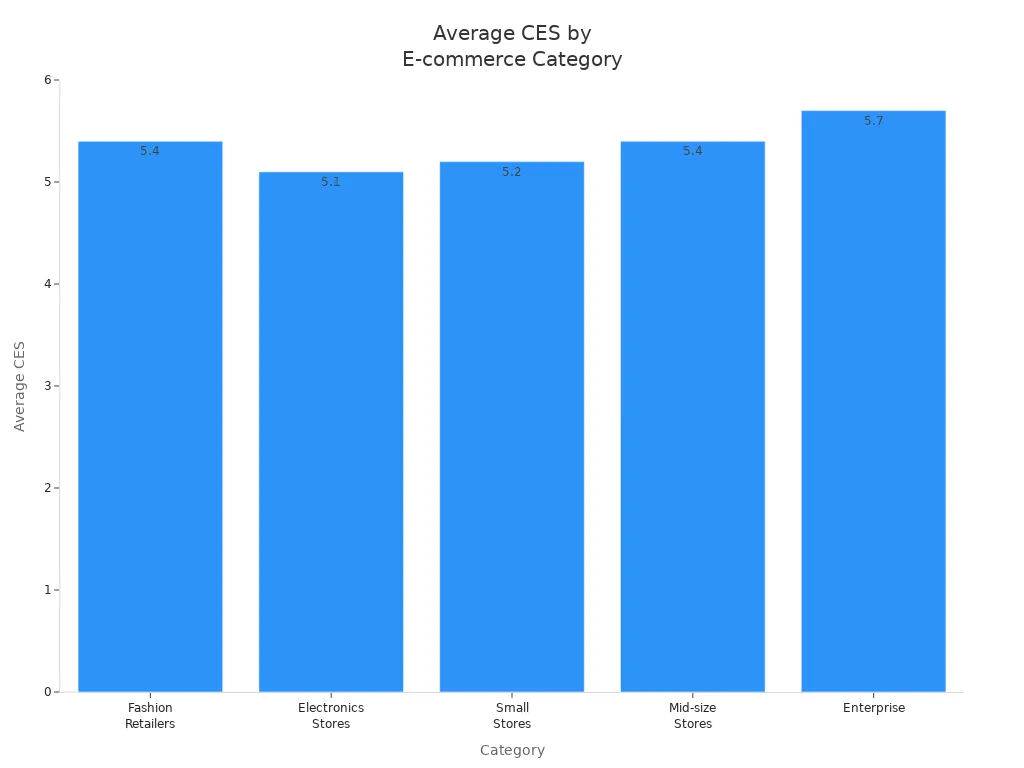
Here’s a look at average CES scores for e-commerce:
| Category | Average CES | High-Performing CES |
|---|---|---|
| Overall eCommerce | 5.0 - 5.5 | 5.8 or higher |
| Fashion Retailers | 5.4 | N/A |
| Electronics Stores | 5.1 | N/A |
| Small Stores (<$1M revenue) | 5.2 | N/A |
| Mid-size Stores ($1M-$10M) | 5.4 | N/A |
| Enterprise ($10M+) | 5.7 | N/A |
| General Industry Average | 4.5 - 5.0 | N/A |
Sobot’s omnichannel platform makes it easy for customers to get support, whether they use chat, phone, or WhatsApp. You can track CES and see where customers struggle, then use that data to improve customer satisfaction.
Retention and Churn Rates
Retention and churn rates tell you how many customers stay with you and how many leave. High retention means customers love your service. High churn means you need to make changes.
Here’s a quick look at industry benchmarks for telecom:
| Industry | Typical Churn Rate | Average Retention Rate |
|---|---|---|
| Telecom | 25% | 75% |
You can use customer satisfaction metrics like CSAT and NPS to predict churn. If your scores drop, churn usually goes up. Sobot’s analytics help you spot these trends early. You can then take action to keep your customers happy.
Churn analysis involves looking at past customer data to predict who might leave. When you understand these patterns, you can use targeted strategies to keep more customers.
| Metric | Implication on Churn Rates |
|---|---|
| Customer Retention Rate | High rates show strong relationships. Drops signal problems. |
| Customer Churn Rate | High churn means customers are unhappy. |
| Net Promoter Score (NPS) | Shows overall customer sentiment and predicts churn. |
| Customer Satisfaction Score | Helps you see satisfaction levels and spot churn risks. |
- A high churn rate can show you where to improve.
- High churn predicts future revenue loss, so you can adjust your strategy.
- Comparing churn with competitors helps you see where you stand.
Additional Metrics for Customer Experience
You can go beyond the basics to get a full picture of your customer experience. Experts recommend tracking these customer support metrics:
| Metric | Description |
|---|---|
| Customer Effort Score (CES) | Measures how easy it is for customers to interact with your company. |
| First Contact Resolution | Shows if you solve customer issues on the first try, which boosts satisfaction and efficiency. |
| Early Cancellation Rate | Tracks how often customers cancel early, giving you clues about satisfaction and retention. |
| Sentiment Analysis | Uses AI to read customer emotions in messages, so you can understand feelings and improve service. |
Sobot’s advanced analytics let you track all these metrics in one place. You can see automation time savings, lead response improvements, conversion rate lifts, and cost reductions. Most importantly, you get a clear view of your customer satisfaction impact.
Without meaningful metrics, you can’t know if your AI or automation is really making a difference for your customers.
Sobot’s platform brings all your customer feedback together, so you can act fast and improve customer satisfaction. You get real-time insights, unified data, and tools to measure everything from average resolution time to first contact resolution. This helps you deliver a better customer experience and keep your customers coming back.
Collecting and Tracking Customer Satisfaction Metrics with Sobot
Surveys and Feedback Channels
You want to know what your customers think. Surveys help you collect customer feedback and measure satisfaction. Sobot makes it easy to run customer satisfaction surveys across many channels. You can use email, social media, and live chat to reach your audience. Each channel has its own benefits:
| Channel | Benefits |
|---|---|
| Direct and effective for timely feedback; allows for automation and personalization. | |
| Social Media | Engages a broader audience; surveys can be shared, increasing participation. |
| Live Chat | Provides immediate feedback opportunities; suitable for real-time customer interactions. |
You can send post-purchase surveys, product satisfaction surveys, and NPS surveys. Sobot’s platform unifies all these channels, so you don’t need to juggle multiple systems. You get a single dashboard to track every survey and feedback response.
Real-Time Analytics and Monitoring
You need to see customer satisfaction trends as they happen. Sobot’s real-time analytics give you instant feedback. You can spot issues and adapt quickly. Real-time data tracking helps you identify customer pain points and personalize your response. This approach improves customer satisfaction and boosts engagement. You can monitor metrics like average resolution time and first contact resolution. Sobot’s AI-powered analytics help you make better decisions and improve customer experience.
Real-time monitoring lets you fix problems fast and meet customer expectations.
Integrating Voice/Call Center Data
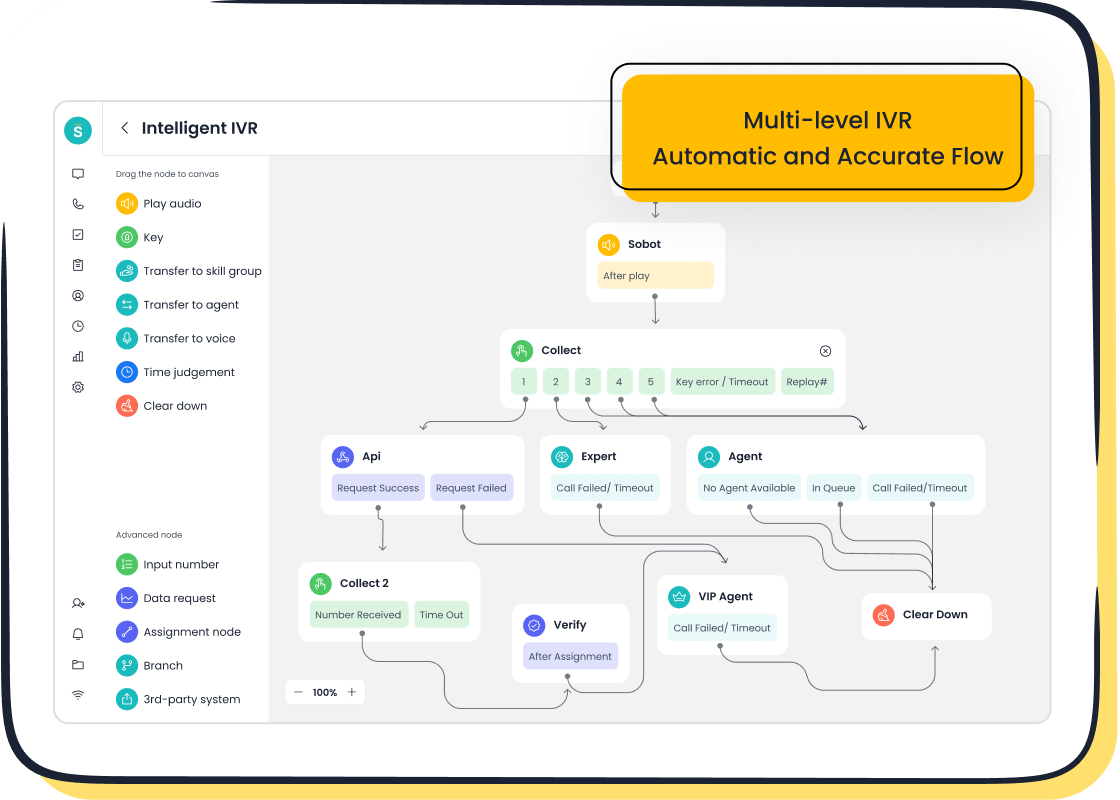
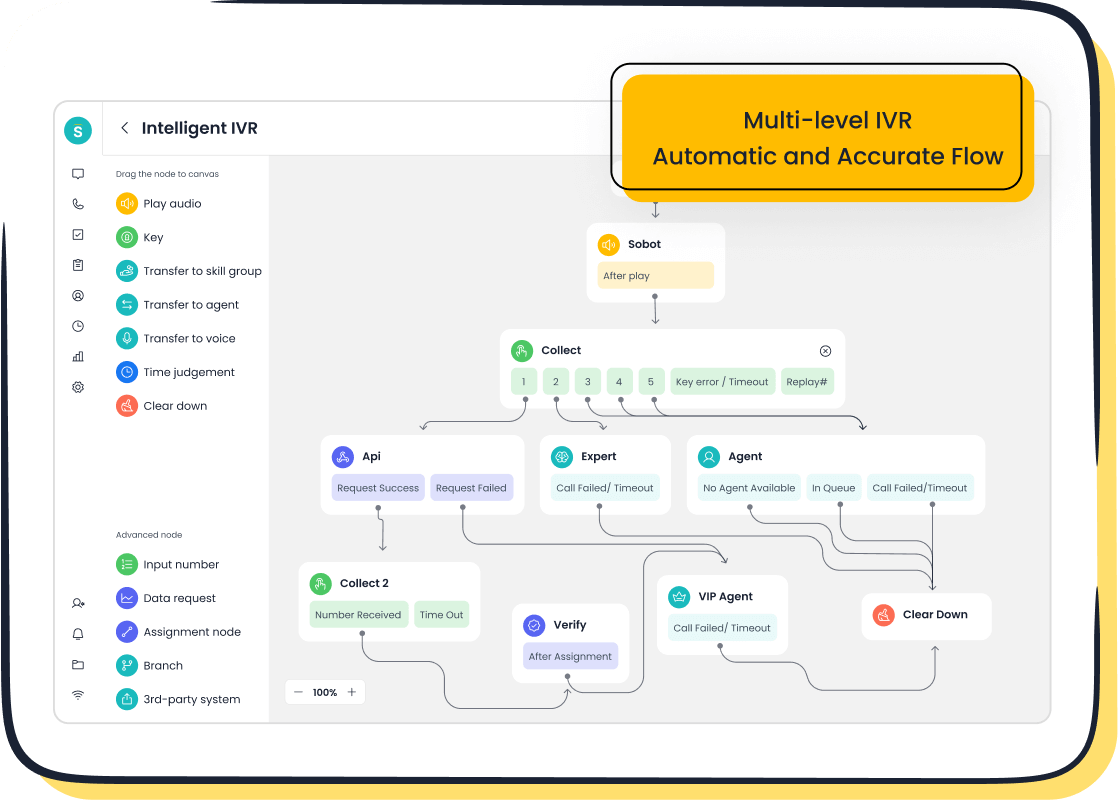
Voice and call center data add depth to your customer satisfaction metrics. Sobot’s call center features include call recording, voice analytics, and sentiment identification. You can analyze language and tone to understand customer feelings. The platform categorizes calls, projects preferences, and monitors interactions in real time. This helps you deliver customized solutions and improve agent efficiency. Sobot’s unified workspace brings together chat, voice, and ticketing, so you get a complete view of customer satisfaction.
| Benefit | Description |
|---|---|
| Customized Solutions | Call Recording and Voice Analytics capture voice messages and analyze pain points. |
| Customer Preferences | Automatic analysis categorizes calls, projecting preferences and topics of interest. |
| Sentiment Identification | Analyzes language and tone to identify customer sentiments and trends during interactions. |
| Real-Time Monitoring | Offers instant solutions by monitoring customer interactions in real-time. |
| Agent Efficiency | Real-Time Voice Analytics during live interactions help assess agent performance and service effectiveness. |
Sobot’s omnichannel support and AI-powered tools help you collect and track customer satisfaction metrics from every channel. You get actionable insights to improve customer satisfaction and deliver a better customer experience.
Setting Goals and Analyzing Customer Satisfaction Results
Defining KPIs and Benchmarks
You need clear goals to measure customer satisfaction. Start by picking the right customer support metrics for your business. In retail, you can track these KPIs:
- Customer Satisfaction Score (CSAT)
- Customer Effort Score (CES)
- Sales per Square Foot
- Customer Retention Rate
- Net Promoter Score (NPS)
- Conversion Rate
- Average Transaction Value
You can use benchmarks to see how your satisfaction compares:
| Customer Satisfaction | Benchmark |
|---|---|
| <70% | Low |
| 73% | Average |
| 86% | Good |
| >86% | Excellent |
Sobot helps you set and track KPIs like first contact resolution, agent productivity, and conversion rate. You get a dashboard that shows your progress and helps you spot trends in customer experience.
Using Data to Drive Improvement
You can use customer feedback and satisfaction data to make smart changes. Sobot’s platform brings together all your customer information, so you see the big picture. Try these strategies:
- Customer profiling lets you tailor your service to each customer.
- Quick issue resolution improves satisfaction and retention.
- Feedback analysis helps you find patterns and fix problems.
You can use predictive analytics to anticipate needs and automated alerts to catch issues early. Sobot’s tools help you prevent recurring problems and improve customer satisfaction scores. When you integrate data across all touchpoints, you create a seamless customer experience.
Sobot’s chatbot and WhatsApp Business API have reduced response times by 3 hours and boosted satisfaction by 25%. Teams now focus on complex tasks, making operations more efficient.
Best Practices for Ongoing Monitoring
You want to keep measuring customer satisfaction to stay ahead. Here are some best practices:
- Take frequent measurements across different metrics.
- Use customer satisfaction surveys for a feedback loop.
- Stay agile and adapt your surveys to customer needs.
- Understand customer sentiment and act fast.
You should review your strategy regularly, at least every quarter. Sobot’s platform makes it easy to gather customer feedback, track average resolution time, and empower your team to improve customer satisfaction. When you follow these steps, you keep your customer experience strong and your satisfaction scores high.
Tracking customer satisfaction helps you grow your business and keep your customers happy. You get clear insights into what drives satisfaction and where you can improve. Sobot gives you tools to unify communication and measure satisfaction across every channel. You should keep monitoring and adapting because:
- Customer expectations change, so you need to adjust to keep satisfaction high.
- Real-time monitoring lets you fix problems fast and create a seamless experience.
- Continuous tracking helps you spot issues and boost customer satisfaction.
When you focus on customer satisfaction, you build loyalty and make every customer feel valued.
FAQ
What are customer satisfaction metrics?
Customer satisfaction metrics are tools you use to measure how happy your customers feel about your service or product. These metrics help you see what works and what needs improvement. You can track them with surveys, feedback, and analytics.
How often should I measure customer satisfaction metrics?
You should measure customer satisfaction metrics regularly. Many businesses check them after every customer interaction or at least once a quarter. Frequent tracking helps you spot trends and fix problems quickly.
Which customer satisfaction metrics matter most for my business?
The most important customer satisfaction metrics include CSAT, NPS, and CES. You can also track retention rates and churn. The right metrics depend on your goals and industry. Sobot helps you monitor all these in one place.
How does Sobot help improve customer satisfaction metrics?
Sobot unifies your communication channels and provides real-time analytics. You can collect feedback, analyze trends, and act fast. For example, Samsung used Sobot to reach a 97% satisfaction rate and boost agent efficiency by 30%.
Can I track customer satisfaction metrics across different channels with Sobot?
Yes! Sobot lets you track customer satisfaction metrics from chat, phone, email, and social media. You get a single dashboard for all your data. This makes it easy to see the full customer journey and improve your service.
See Also
Enhancing Call Center Efficiency Through Effective Monitoring
Ten Strategies to Improve Live Chat Customer Experience
Overview of Quality Assurance Tools for Call Centers
Essential Practices for Effective Call Center Quality Management

