Customer Experience KPI Myths That Might Surprise You


Many contact centers misunderstand which customer experience KPI truly drives results. Brands like Sobot rely on precise KPI selection to align AI investments with business goals. Selecting the right customer experience metrics leads to higher satisfaction, retention, and profits. The table below shows how Sobot AI and similar solutions impact key business outcomes:
| KPI | Improvement (%) | Description |
|---|---|---|
| Customer Satisfaction | 13.3% | Higher CSAT after automation |
| First Response Time | 86.7% | Faster initial replies |
| Resolution Rate | 33.3% | More issues resolved on first contact |
| Customer Lifetime Value | Up to 30% | Longer, more valuable relationships |
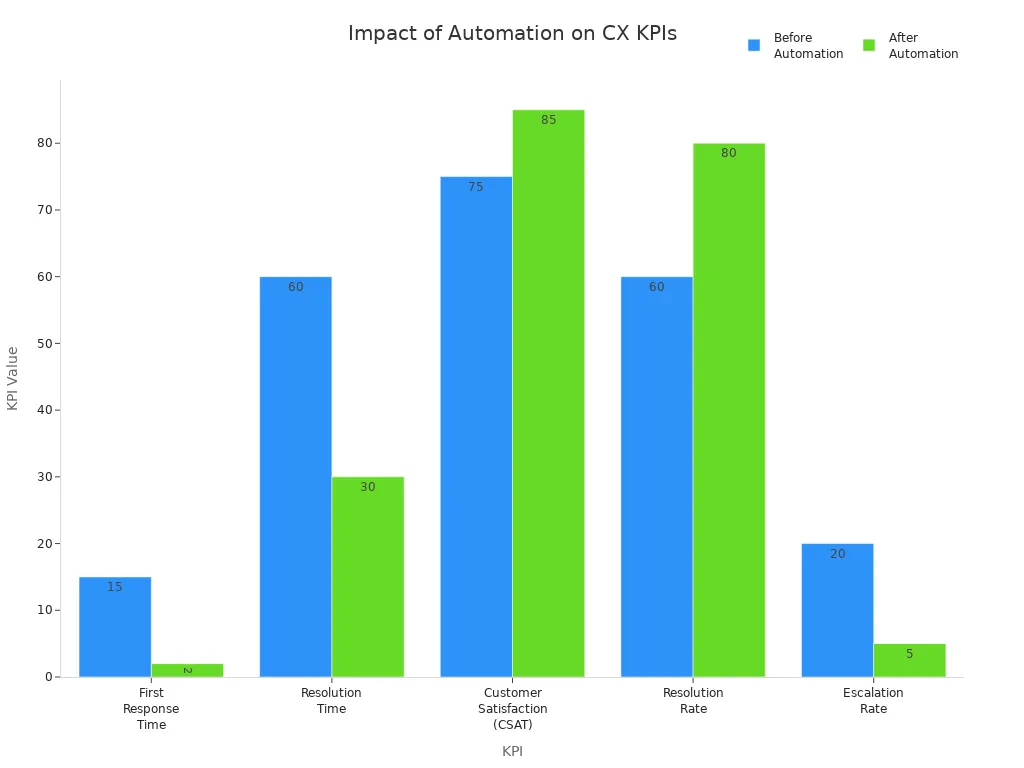
Tracking the right kpi helps companies boost loyalty, reduce churn, and achieve long-term growth.
NPS Myth in Customer Experience KPI

NPS Overview
Many contact centers believe that Net Promoter Score (NPS) is the only customer experience KPI that truly matters. This myth often leads organizations to overlook other valuable customer experience metrics. NPS measures how likely customers are to recommend a brand, providing a snapshot of overall loyalty and brand perception. Some companies treat NPS as a simple score, but this approach misses deeper insights. When teams ignore qualitative feedback or survey customers infrequently, they risk seeing NPS as just a lagging indicator. In reality, NPS can predict future loyalty and revenue growth when used with frequent surveys and follow-up actions. For example, Phillips Electronics linked NPS increases to a 69% rise in revenue, showing its predictive power.
Relying only on NPS can cause companies to miss important signals from other customer experience metrics, such as customer satisfaction or customer effort score.
NPS vs Other Metrics
NPS stands out as a broad, actionable customer experience metric focused on loyalty and growth. However, it is not the only valuable KPI. Customer satisfaction (CSAT) measures how happy customers feel after specific interactions, while customer effort score (CES) tracks how easy it is for customers to resolve issues. Each metric serves a unique purpose. The table below highlights their differences:
| Metric | What it Measures | Focus | Timing/Application | Predictive Value |
|---|---|---|---|---|
| NPS | Overall customer loyalty and brand perception over time | Relational, long-term loyalty | Sent at key moments | Highest predictor of future revenue and growth |
| CSAT | Satisfaction with a specific interaction | Immediate satisfaction | After touchpoints | Reflects short-term satisfaction |
| CES | Effort to complete a task or interaction | Ease of interaction | After interactions | Predicts future behavior and loyalty |
Using these customer experience metrics together gives a more complete view of the customer journey. NPS predicts loyalty, CSAT highlights satisfaction at touchpoints, and CES uncovers friction in support processes.
Sobot Voice/Call Center Use Case

Sobot’s Voice/Call Center demonstrates the value of using multiple customer experience KPIs. The platform tracks call volume, resolution time, customer satisfaction rates, and agent performance. Real-time monitoring and analytics help supervisors spot trends and bottlenecks quickly. This multi-dimensional approach supports better decision-making and improves customer experience. By combining NPS with other customer experience metrics, Sobot helps businesses identify areas for improvement and deliver higher customer satisfaction. This strategy ensures that teams do not rely on a single KPI but instead use a balanced set of customer experience metrics for actionable insights.
All Customer Experience Metrics Are Equal
KPI Differences
Many believe all customer experience metrics offer the same insights, but each metric reveals something unique about the customer journey. Companies often track NPS, CSAT, CES, churn rate, and CLV, but these KPIs measure different aspects of customer experience. For example, NPS measures loyalty and brand perception, while CSAT focuses on satisfaction after specific interactions. CES highlights how easy it is for customers to resolve issues. Churn rate shows the percentage of customers lost over a period, and CLV estimates the total value a customer brings during their relationship.
| Metric | What it Reveals About Customer Experience | Key Insight |
|---|---|---|
| NPS | Measures customer loyalty and brand perception by asking likelihood to recommend; provides broad, long-term view | Correlates with sustainable business growth; captures unbiased, actionable feedback |
| CSAT | Measures satisfaction at specific touchpoints or transactions; provides immediate, short-term insights | Good for evaluating specific interactions but does not reliably predict loyalty |
| CES | Measures ease of customer interactions; reveals friction points and detraction drivers | Strong predictor of future purchase behavior; highlights effort customers expend to resolve issues |
| Churn Rate | Quantifies percentage of customers lost over a period; reflects retention challenges and cost of losing customers | Critical for understanding customer retention and business impact |
| CLV | Estimates net profit from a customer over entire relationship; links experience to financial value and long-term impact | Connects customer experience to revenue and profitability over time |
Focusing on only one customer experience metric can mislead decision-makers. For instance, a company may see high CSAT scores in its call center but still face a rising customer churn rate if other touchpoints fail to deliver.
Unique Strengths
Each customer experience metric brings a unique strength to the table. NPS provides a broad view of loyalty and future growth. CSAT delivers immediate feedback on specific interactions. CES uncovers friction in the customer journey, helping teams reduce effort for customers. Churn rate directly measures customer retention and highlights when customers leave. CLV connects customer experience to long-term revenue, showing the financial impact of loyalty and satisfaction.
- NPS excels in B2B settings, especially when combined with frameworks that link feedback to revenue.
- CSAT works best for evaluating service quality at individual touchpoints.
- CES is ideal for identifying and removing barriers in the support process.
- Churn rate and customer churn rate help companies spot retention issues early.
- CLV offers a financial perspective on the value of improving customer experience.
Omnichannel Solution Example
Sobot’s Omnichannel Solution uses multiple customer experience metrics to give businesses a complete view of every customer interaction. The platform integrates NPS, CSAT, CES, churn rate, and customer churn rate into a unified dashboard. AI-driven analytics and unified customer profiles help teams track first response time, resolution rates, and conversation completion rates across all channels. By monitoring these KPIs together, Sobot enables companies to identify pain points, improve customer retention, and reduce customer churn rate. This holistic approach ensures that no single customer experience metric dominates the strategy, leading to better engagement and higher satisfaction.
High Scores Mean Great Customer Experience
Score Limitations
Many businesses believe that high customer experience KPI scores guarantee strong customer loyalty and satisfaction. This idea can be misleading. High numbers in metrics like NPS or customer satisfaction score may look impressive, but they do not always tell the full story.
- Focusing only on average handle time can push agents to rush calls, leaving issues unresolved and customers feeling undervalued.
- Overemphasis on speed can lower first call resolution rates and damage customer service satisfaction.
- Some KPIs, such as CSAT, measure short-term happiness but do not capture long-term loyalty.
- NPS highlights the likelihood to recommend but misses many details of the customer journey.
- Relying on a few high-level scores can hide specific problems that need attention.
A single customer satisfaction score or a high NPS may act as a "vanity number." These numbers look good in reports but do not always provide actionable insights. Companies need to combine multiple metrics and look at qualitative feedback to understand true customer satisfaction and loyalty.
Real-World Impact
When companies treat high scores as proof of excellent customer service satisfaction, they risk missing deeper issues. Customers value personalized and solution-driven experiences more than just quick interactions. If a business only tracks high-level KPIs, it may overlook pain points that drive customers away.
A holistic approach works best. By combining metrics like CSAT, NPS, customer effort score, and customer lifetime value, companies can see the full picture. Sobot’s unified workspace and analytics help businesses monitor these metrics together, making it easier to spot trends and act quickly. This method leads to better customer satisfaction and stronger customer loyalty.
OPPO Customer Story
OPPO, a global leader in smart devices, faced a surge in customer inquiries during peak shopping seasons. The company partnered with Sobot to improve its customer service satisfaction and efficiency. By using Sobot’s chatbot and ticketing system, OPPO handled repetitive questions with automation and let agents focus on complex issues.
This strategy led to an 83% chatbot resolution rate and a 94% positive feedback rate. More importantly, OPPO saw a 57% increase in repurchase rate, showing real growth in customer loyalty. The results proved that looking beyond high scores and analyzing deeper data can drive better outcomes. OPPO’s experience highlights the value of combining multiple metrics and advanced tools like Sobot to achieve true customer satisfaction and loyalty.
KPIs Alone Improve Customer Experience
Context Matters
Tracking a kpi without context or follow-up does not guarantee better customer experience. Many companies collect customer satisfaction scores or Net Promoter Scores but fail to understand the reasons behind the numbers. For example, a high customer satisfaction score might hide issues if teams do not review negative feedback or investigate why customers gave certain ratings. Relying only on numbers can oversimplify the customer journey and miss important signals about customer loyalty.
Customer experience metrics like CSAT and NPS need context to be meaningful. Without follow-up actions, these scores offer limited value and do not drive real improvement.
Companies should use dashboards, post-interaction surveys, and agent evaluations to add context. This approach helps teams identify specific pain points and areas for improvement, such as reducing average handling time or improving agent training. Regular reviews and trend analysis ensure that kpi tracking leads to actionable results.
Actionable Insights
Turning kpi data into actionable insights requires more than just collecting numbers. Leading organizations select metrics that align with business goals and analyze trends over time. They use AI-driven tools to extract customer sentiment and intent from feedback, going beyond surface-level data. By combining survey results, interviews, and social media monitoring, companies gain a complete view of customer experience.
A best practice is to set specific goals based on data insights and review progress regularly. For example, companies can benchmark their customer satisfaction scores against industry standards and adjust strategies as needed. Empowering employees with access to feedback and kpi data fosters a culture of continuous improvement and strengthens customer loyalty.
Sobot Data Analytics
Sobot’s data analytics platform transforms raw kpi data into meaningful actions. The unified workspace brings together customer feedback, interaction history, and performance metrics in real time. Supervisors can monitor trends, identify root causes of dissatisfaction, and implement targeted improvements. Sobot’s AI-powered analytics help teams understand customer sentiment and intent, making it easier to address pain points and boost customer satisfaction.
By integrating cross-channel insights, Sobot enables businesses to align their customer experience strategy with organizational goals. This approach not only improves customer loyalty but also drives measurable business outcomes. Companies using Sobot see higher customer satisfaction and more effective use of feedback for continuous growth.
Choosing the Right Customer Experience KPI
Selection Steps
Selecting the right customer experience KPI requires a structured approach. Companies should start by defining clear goals that align with their business objectives. For example, a retail brand may focus on reducing churn, while a financial service provider may prioritize increasing customer loyalty. The following steps help guide the process:
- Set specific goals and objectives that reflect the company’s customer experience strategy.
- Identify the most relevant customer experience metrics for each stage of the customer journey.
- Collect baseline data and compare it with industry benchmarks or competitor results.
- Implement robust tracking tools to capture data consistently across all channels.
- Schedule regular reviews—monthly or quarterly—based on business needs and sales cycles.
- Act on insights by making improvements and communicating changes to customers.
Companies that review their customer experience KPI data regularly can quickly adapt to market changes and customer needs.
Combining Metrics
No single metric tells the whole story. Combining multiple customer experience metrics, such as NPS, CSAT, and CES, provides a more complete view of customer needs and behaviors. This approach uncovers patterns, such as high satisfaction despite longer wait times, and highlights areas for improvement. By integrating both emotional insights and operational data, businesses create a synergy that drives actionable improvements.
- Surveys and open-ended feedback reveal customer sentiment.
- Real-time analytics track response times and resolution rates.
- Unified dashboards consolidate data from calls, chats, and social media.
This combined approach supports a stronger customer experience strategy and fosters loyalty.
Sobot Best Practices
Sobot recommends a holistic approach to customer experience KPI management. The Sobot platform unifies data from all channels, enabling teams to monitor and analyze customer experience metrics in real time. Sobot’s AI-powered analytics identify trends and root causes, helping businesses act quickly on insights. For example, Sobot’s Omnichannel Solution consolidates feedback from voice, chat, and email, making it easier to spot pain points and improve service quality. Regular reviews and targeted actions ensure that customer experience strategy remains effective and aligned with business goals.
Sobot’s best practices empower companies to turn data into meaningful improvements, driving higher satisfaction and long-term growth.
Companies often fall for myths about customer experience KPIs. They should remember these lessons:
- Tracking a mix of KPIs like CSAT, NPS, and CES gives a full view of customer experience, not just a snapshot.
- AI-powered platforms such as Sobot help teams spot trends, reduce churn by up to 25%, and boost customer experience with real-time insights.
- Businesses that review and adapt their KPI strategies see higher satisfaction and stronger customer experience outcomes.
Reviewing current metrics and using integrated solutions like Sobot leads to better customer experience and lasting growth.
FAQ
What is the most important customer experience KPI for contact centers?
No single customer experience KPI fits every business. Sobot recommends tracking NPS, CSAT, and CES together. This approach gives a complete view of customer satisfaction, loyalty, and effort. Combining these metrics helps companies identify trends and improve service quality.
How often should companies review customer experience KPIs?
Companies should review customer experience KPIs monthly or quarterly. Sobot’s unified dashboard allows real-time monitoring. Regular reviews help teams spot changes in customer satisfaction and adjust strategies quickly. Frequent analysis leads to better customer experience and higher retention.
Why do high customer experience KPI scores sometimes fail to reflect true satisfaction?
High scores in NPS or CSAT may hide underlying issues. For example, a customer may rate a call highly but still leave due to unresolved problems. Sobot’s analytics reveal deeper insights by combining multiple customer experience KPIs and qualitative feedback.
How does Sobot help businesses improve customer experience KPIs?
Sobot provides an all-in-one platform that tracks customer experience KPIs like NPS, CSAT, and CES. The system uses AI to analyze feedback and monitor trends. Companies using Sobot see improved customer satisfaction, faster response times, and higher loyalty rates.
Can customer experience KPIs predict business growth?
Yes. Studies show that a 12-point increase in NPS can lead to double-digit revenue growth (Bain & Company). Sobot’s clients often see higher customer satisfaction and retention when they focus on the right customer experience KPIs.
See Also
Understanding Quality Management Systems In Call Centers
Comprehensive Overview Of Quality Assurance Tools For Call Centers
Best Call Center Analytics Platforms To Use In 2024
Essential Advice For Selecting Social Media Support Software
Leading Cloud-Based Contact Center Services Reviewed For 2024

