What Are Customer Expectations in 2026?


In 2026, customer expectations demand a new standard powered by proactive, personalized, and ethical AI engagement. Your customer wants a seamless experience that anticipates their needs. This shift presents a major opportunity to build deeper trust.
A full 68% of customers now expect proactive support. While 64% desire personalized interactions, 32% remain wary of data use, highlighting the need for transparency.
Meeting these changing customer expectations is crucial. You can build stronger relationships by effectively handling more and more customer inquiries. All-in-one solutions like Sobot help you master this new customer experience and exceed high expectations.
The New Baseline for Customer Expectations
In 2026, your customer service strategy must move beyond simply reacting to problems. The new baseline for customer expectations is proactive engagement. You need to anticipate issues and solve them before the customer even notices. This shift is no longer a competitive advantage; it is a fundamental necessity for building trust and loyalty.
Moving Beyond Reactive Service
Waiting for a customer to contact you with a problem is an outdated model. Today’s high expectations demand that you identify potential issues first. Proactive support shows you understand your customer’s journey and care about their experience. This approach helps you stand out by demonstrating attentiveness, which builds a stronger relationship from the start.
AI-Powered Predictive Support
You can use AI to make this proactive vision a reality. AI-powered systems analyze customer data to identify patterns, predict future behavior, and anticipate needs. For example, AI can flag a customer who is struggling on your website or predict a potential delivery issue. This allows you to intervene with a solution before frustration builds.
A McKinsey report shows that this proactive approach can boost customer satisfaction scores by 10-15%.
Real-Time Journey Orchestration
Meeting changing customer expectations means managing the entire journey in real time. This means you guide the customer at every step, not just when they ask for help. Imagine a customer’s payment fails. Instead of making them start over, real-time orchestration can instantly trigger a retry link or route them to an agent who already has the context. This turns a moment of failure into a successful save.
The End of One-Size-Fits-All
Generic, one-size-fits-all support no longer meets customer expectations. Your customer wants to feel understood as an individual. In fact, studies show that 76% of consumers get frustrated when they don't receive a personalized experience. The future of customer service is about deep personalization. Every interaction should be tailored to that specific customer’s history and behavior.
A Seamless Customer Experience

In 2026, your customer expects a single, continuous conversation. Research shows that 90% of customers anticipate a consistent experience, no matter which channel they use. They want to switch from your website to WhatsApp without missing a beat. This seamless journey is the new standard for a positive customer experience.
One Conversation, Any Channel
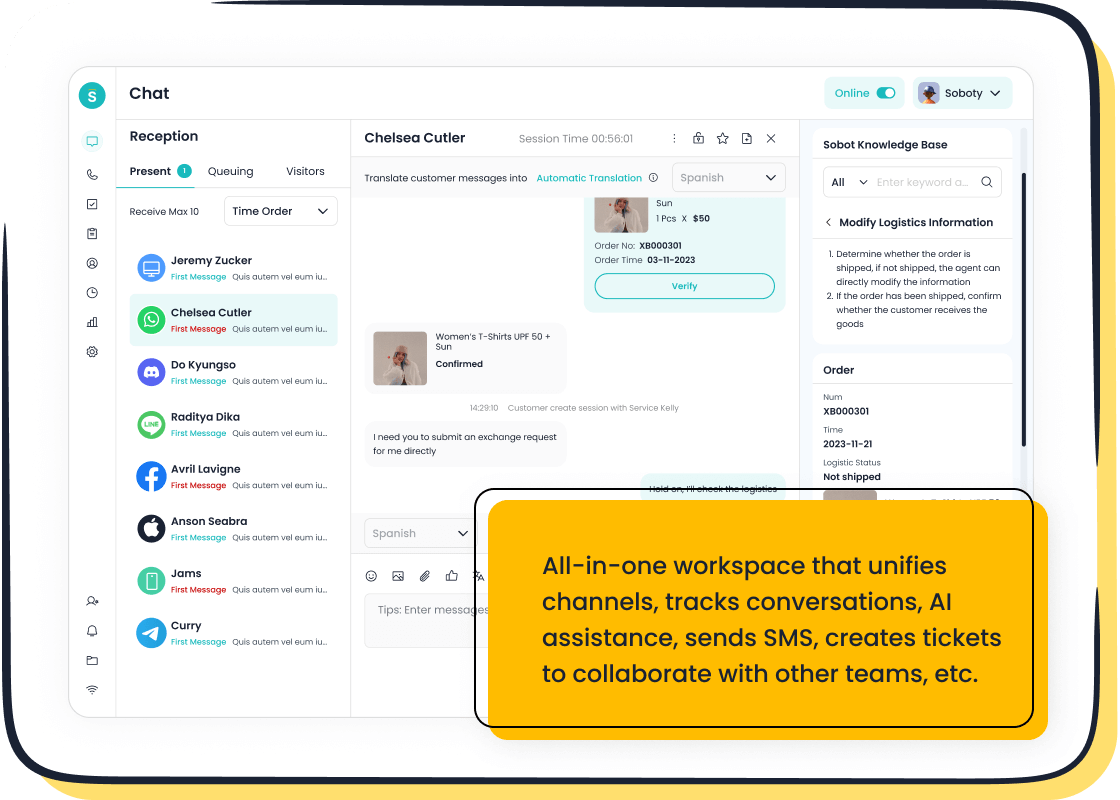
You can no longer treat each communication channel as a separate island. Your customer sees your brand as one entity. To meet this expectation, you need a tool that unifies these touchpoints. Sobot's Live Chat brings all your channels—including your website, app, WhatsApp, and Facebook—into a single agent workspace. This prevents conversations from getting lost and ensures a smooth, uninterrupted experience for every customer.
Context That Follows the Customer
Nothing frustrates a customer more than repeating their problem. When context follows the customer, your agents can pick up the conversation right where it left off. This is crucial for improving first-contact resolution.
Case Study: Samsung Global leader Samsung faced this exact challenge. By implementing Sobot's all-in-one customer contact center solution, they unified their communication and data. This gave agents a complete view of each customer's history. The result? A 30% increase in agent efficiency and an incredible 97% customer satisfaction rate.
Handling More and More Customer Inquiries
As your business grows, you will face more and more customer inquiries. Managing this volume without sacrificing quality is a major challenge. You can use technologies like AI-powered chatbots and intelligent routing to handle the increasing flow of more and more customer inquiries. These tools answer common questions instantly, freeing up your human agents to focus on more complex issues. This is the key to scaling support while managing more and more customer inquiries effectively.
Self-Service That Solves Problems
Today's customer often prefers to find answers on their own. In fact, 81% of people want more self-service options. An effective self-service portal is more than just a FAQ page; it is a comprehensive, searchable knowledge base. It should provide clear answers and offer an easy way to contact a live agent if needed. This empowers your customer and reduces the strain of handling more and more customer inquiries.
Radical Transparency and Ethical Data Use
In 2026, how you handle customer data is as important as your product. Customers are more aware of their digital footprint than ever before. They demand transparency and ethical data use. Building lasting relationships now depends on your ability to earn and maintain their trust. This means moving beyond legal compliance to create a culture of data respect.
Meeting Data Privacy Expectations
Your customers have clear expectations about data privacy. Regulations like GDPR and CCPA have given them specific rights. You must meet these baseline requirements to operate responsibly.
Key customer rights you must honor include:
- Explicit Consent: You need clear permission to collect and use data.
- Data Access: Customers can ask to see the data you have on them.
- The Right to Deletion: You must delete a customer's personal information upon request.
Failing to meet these privacy expectations not only breaks the law but also erodes the foundation of customer trust.
From Data Policies to Data Partnerships
A lengthy privacy policy is no longer enough. Your customer wants to feel like a partner in the data exchange, not a target. With 40% of consumers not trusting companies to use their data ethically, you must be proactive. Clearly explain what data you collect and why. Show them the direct benefit they receive in return. This transparency transforms your data policy from a legal document into a pact of mutual trust.
Proving Trust with Transparent AI
AI can feel like a black box to many people. You can build confidence by using transparent AI. This means you can explain how your AI systems make decisions. For example, if an AI chatbot provides an answer, it should be able to trace that answer back to a specific data source. This accountability is crucial for building trust. It assures users that AI-driven interactions are fair, accurate, and free from hidden biases.
The High Cost of Broken Trust
The consequences of mishandling data are severe. It goes beyond fines and legal trouble. Studies show that 48% of users have stopped buying from a company over privacy concerns. A single breach can destroy years of brand loyalty. In 2026, protecting customer data is essential for survival. The ultimate goal is to build unbreakable customer trust, which becomes your most valuable asset.
Instant, Effortless, and Empathetic Interactions

In 2026, speed and ease are non-negotiable. Your customers expect interactions that are not only fast but also feel effortless and understanding. You must blend automated efficiency with a human touch to meet these high expectations. This balance is the key to creating interactions that feel both instant and personal.
The New Definition of Real-Time
Real-time support no longer means just a quick reply. It means providing the right answer at the exact moment of need. Customers expect you to be available 24/7. They want instant solutions, whether they are browsing your site at midnight or have a question during a holiday. Your support strategy must deliver immediate value around the clock.
AI for Efficiency, Humans for Empathy
You can achieve this balance by using AI for efficiency and humans for empathy. While 83% of people prefer some human interaction, AI can automate up to 30% of support tasks. This frees up your team for issues that require a human touch. Sobot’s Chatbots and Voicebots can instantly handle routine requests like order status updates. This allows your agents to focus on complex problems where empathy is crucial.
The table below shows how you can divide tasks to optimize your support:
| Situation | Best Handler | Why it fits |
|---|---|---|
| Password reset | AI | Predictable, secure, and fast to automate |
| Billing dispute | Human | Requires empathy, negotiation, and flexibility |
| Order status update | AI | Low-risk, repeatable, and time-sensitive |
| Technical troubleshooting | Human | Needs judgment, creativity, and adaptation |
Reducing Customer Effort at Every Touchpoint
Every interaction is an opportunity to make things easier for your customer. Research from Harvard Business Review shows that reducing customer effort is one of the best ways to build loyalty. You can streamline support with tools like Sobot’s Ticketing System, which organizes complex issues and ensures nothing gets lost. This system routes problems to the right agent automatically, so the customer doesn't have to repeat themselves.
Measuring Success with Sentiment Analysis
You need to understand how your customers feel to truly know if your service is effective. Sentiment analysis tools help you measure the emotional tone of interactions. You can use this data to identify areas of frustration and pinpoint what your team is doing right. This information helps you refine agent training, address customer needs more effectively, and ensure every interaction leaves a positive impression.
In 2026, customer expectations are no longer just about good service. Your customer demands an experience where they feel understood, respected, and valued. Building this level of trust depends on meeting their high expectations for personalization and security. Your success rests on a foundation of four non-negotiable pillars:
- Proactive personalization
- A seamless experience
- Radical data transparency
- Effortless interactions
You must start building the technology and teams to meet these future expectations today. All-in-one solutions like Sobot are designed to help you deliver this effective and connected experience.
FAQ
What is the first step to meet future customer expectations?
You should start by mapping your current customer journey. Identify all touchpoints where customers interact with your brand. This helps you find gaps and opportunities to create a more seamless, proactive experience that meets high customer expectations.
Will AI replace human agents by 2026?
No, AI will not replace human agents. Instead, you can use AI to handle simple, repetitive tasks. This frees up your human agents to focus on complex problems that require empathy and critical thinking, improving overall service quality.
How can my business manage conversations across many channels?
You can use a unified platform to manage all channels. Solutions like Sobot's Live Chat bring your website, app, and social media messages into one workspace. This ensures your team can provide a consistent experience everywhere.
How do I know if I am meeting customer expectations?
You can measure success with data. Track metrics like customer satisfaction (CSAT) scores and first-contact resolution rates. You can also use sentiment analysis to understand how customers feel during interactions and make targeted improvements.
See Also
Discover The Leading Voice of Customer Software Solutions For 2024
Exploring The Foremost Cloud Contact Center Platforms Of 2025
Reviewing The Premier Customer Service Software Options For 2024
Detailed Reviews Of Top Cloud Contact Center Services In 2024
Ten Essential Tips To Enhance Live Chat Customer Satisfaction

