Secure Your Customer Contact Center Now

A single security gap invites catastrophic data breaches, a primary target for cyber threats. A cyber breach instantly erodes customer trust. To prevent data breaches, your customer data needs strong protection from these cyber threats.
Effective contact center security is not one tool; it is a multi-layered security defense. This guide is your blueprint to build that security.
You can protect customer data, maintain customer trust, and ensure compliance. It is the principle Sobot uses to build a secure customer contact center and protect every customer from a breach.
Understanding Common Causes of Data Breaches
To build a strong defense, you must first understand the cyber threats you face. Data breaches rarely happen by chance; they exploit specific weaknesses. Recognizing these common causes is the first step to prevent data breaches and protect your customer data.
Social Engineering and Phishing
Cyber criminals often target your employees, who are the human gateway to your systems. Through social engineering and phishing attacks, attackers manipulate staff into revealing credentials or granting access. This is a primary vector for cyber attacks.
Recent data breaches show how effective these tactics are. For example, attackers tricked employees at Air France and KLM through a third-party platform, exposing customer loyalty program data. Similarly, a cyber group posed as IT staff to bypass security at major UK retailers, leading to a massive breach.
Malicious and Accidental Insider Threats
The threat to your data can also come from within. A malicious employee might intentionally steal sensitive information, while a negligent one might accidentally cause a breach. This insider threat is a serious security risk. Common methods for leaking data include:
- Transferring sensitive customer data to personal email or cloud storage.
- Downloading data from a secure work device to an insecure personal laptop or USB drive.
- Sending confidential documents as email attachments from a work account to a personal one.
Unauthorized System and Data Access
Every instance of unauthorized access is a potential breach. This happens when someone gains entry to systems or data without proper permission. Weak or stolen credentials are a frequent cause. Each case of unauthorized access puts your customer data and your company’s reputation at risk. Effective security must block every path to unauthorized access.
Insecure Third-Party Integrations
Your contact center relies on various third-party tools, from CRMs to communication platforms. Each integration is a potential entry point for cyber threats. If a vendor has poor security, it becomes your problem. Vulnerabilities like unpatched software or weak access controls in a partner’s system can grant attackers unauthorized access to your network, leading to devastating data breaches.
Physical Security Weaknesses
Finally, do not overlook physical security. An unlocked server room, an unattended agent workstation, or improperly disposed documents containing sensitive information can all lead to a data breach. A comprehensive security strategy protects data in both the digital and physical realms.
Strengthen Access Control for a Secure Customer Contact Center
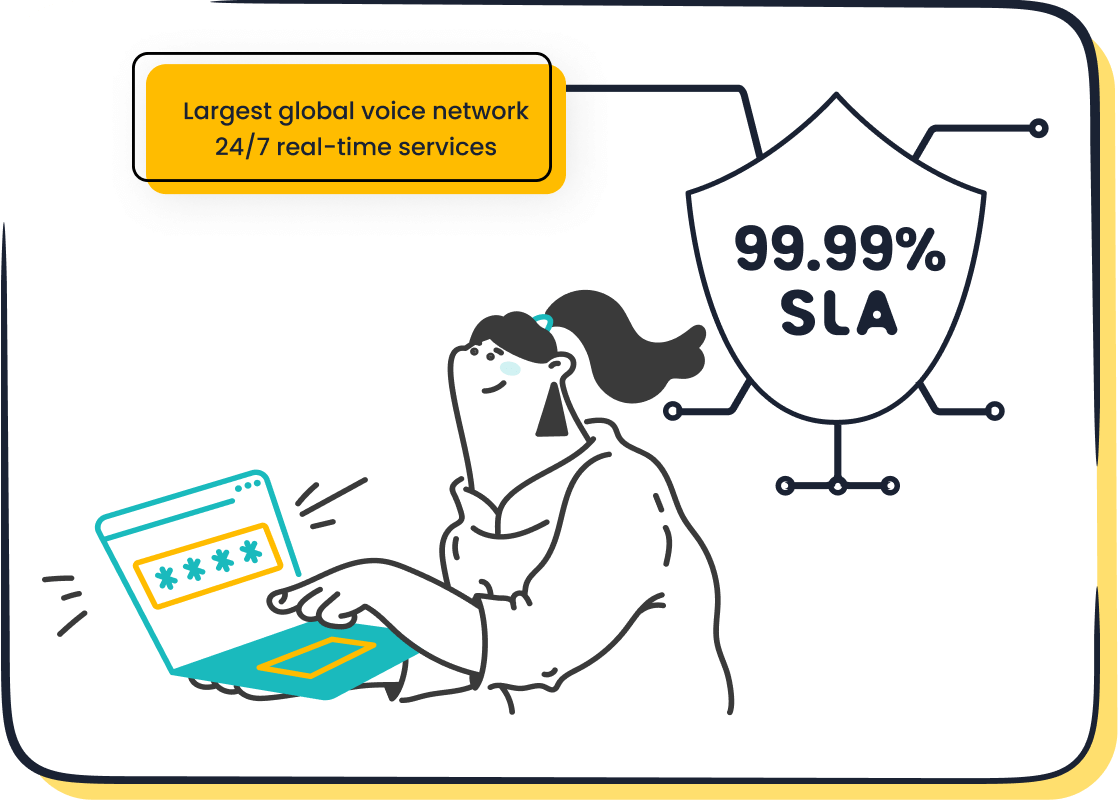
Controlling who can access your data is the foundation of contact center security. Weak access controls create open doors for attackers. You must build a robust framework that grants access only to the right people, for the right reasons, at the right time. This approach minimizes your attack surface and is a critical layer in creating a secure customer contact center.
Enforce Multi-Factor Authentication
Passwords alone are no longer enough to prevent unauthorized access. Multi-Factor Authentication (MFA) is one of the most effective security measures you can implement. It requires users to provide two or more verification factors to gain access, creating a powerful barrier against credential theft.
Pro Tip: A strong MFA strategy is non-negotiable for protecting customer data. Modern security standards demand it.
- Mandate MFA for All: Every user account that accesses customer data, not just administrators, must use MFA. This ensures every login is protected.
- Set Short Session Timeouts: Automatically log users out after 15 minutes of inactivity. This simple step prevents unauthorized access to an unattended workstation.
- Use Continuous Authentication: Advanced systems can analyze user behavior, like typing patterns and mouse movements, to verify identity in real-time. This strengthens security against session hijacking without interrupting agent workflow.
Apply the Principle of Least Privilege
The Principle of Least Privilege (PoLP) is a simple but powerful security concept. You give employees access only to the data and systems they absolutely need to perform their jobs. Nothing more. This strategy drastically limits the potential damage from a compromised account. If an attacker gains access to an agent's credentials, they can only see the limited data that agent was permitted to view, not your entire database. Adopting this principle is a core tenet of a zero-trust security model.
Utilize Role-Based Access Control
Implementing the Principle of Least Privilege across a large team can be complex. This is where role-based access control (RBAC) simplifies everything. Instead of assigning permissions to individuals, you create roles with specific access levels. You then assign employees to the appropriate role. This makes managing permissions efficient and less prone to error.
For example, you can configure distinct roles within your contact center:
- Call Agents: Access customer information to handle inquiries.
- Supervisors: Access call monitoring tools and have escalation privileges.
- QA Staff: Access call recordings and evaluation forms for quality checks.
- IT Support: Access system backends for troubleshooting.
Using role-based access control centralizes your security management and reduces the risk of unauthorized access. Platforms designed for a modern secure customer contact center make this easy. For instance, Sobot's Omnichannel platform provides a unified workspace where all customer interactions and data reside. This single view allows administrators to easily configure and enforce role-based access control across every channel, from voice calls to tickets. This ensures agents only see the specific data required for their assigned role, protecting sensitive information. Effective role-based access control is essential for compliance and robust security.
Conduct Regular Access Audits
Permissions can become outdated as employees change roles or leave the company. Regular access audits are necessary to find and fix these security gaps. An audit is a systematic review of who has access to what. It ensures that all current permissions are still necessary and appropriate.
Your organization should define a review frequency based on risk. While some standards require quarterly reviews, a risk-based approach is often best. High-risk systems holding sensitive data may need monthly reviews, while others can be reviewed annually.
A proper access review follows a clear methodology:
- Identify and Classify Systems: Prioritize systems based on the sensitivity of the data they hold.
- Pull Access Lists: Gather current data on all users, their roles, and their permissions.
- Review Permissions: Check if users still need their current access levels. Look for dormant accounts or permissions that no longer match job duties.
- Revoke or Modify Access: Immediately remove or adjust any unnecessary permissions.
- Verify Changes: Confirm that all access changes were correctly implemented.
- Document the Review: Keep a detailed record of the audit for compliance and future reference.
Secure Remote Agent Endpoints
Your contact center security perimeter now extends to every remote agent's home. Each laptop and network is a potential entry point for attackers. Securing these endpoints is not optional; it is essential for protecting your customer and company data. A zero-trust approach, which assumes no device is automatically trusted, is vital here.
Modern endpoint security tools go far beyond traditional antivirus software. They use AI and real-time behavioral monitoring to detect and block threats, including zero-day exploits that have no known signature. When choosing a solution, consider these factors:
- Security Architecture: Does the tool align with your security model and integrate with your identity providers?
- User Experience: Is it easy for agents to use without disrupting their work?
- Granular Control: Can you set detailed access policies based on roles and context?
- Integration: Does it work with your other security tools, like MFA and event monitoring systems?
By implementing these five access control strategies, you build a formidable defense against unauthorized access and take a massive step toward comprehensive data protection.
Fortify Your Customer Data Protection Strategy
Strong access controls are your first line of defense, but they are not enough. You must also build a fortress around the data itself. A comprehensive data protection strategy makes customer data unusable to attackers, even if they manage to bypass your other defenses. This involves encryption, masking, and disciplined data management from creation to deletion. Fortifying your data is essential to prevent data breaches and maintain customer trust.
Encrypt Data at Rest and in Transit
Encryption is the process of converting data into a secure code to prevent unauthorized access. You must apply encryption to data in two states: at rest (when it is stored on servers or drives) and in transit (as it moves across your network or the internet). Without comprehensive encryption, your sensitive information is vulnerable. A data breach involving unencrypted data is a worst-case scenario.
Your encryption strategy should use industry-standard protocols to ensure robust security.
- For Data in Transit: Use protocols like Transport Layer Security (TLS) and Hypertext Transfer Protocol Secure (HTTPS). These create a secure tunnel for communications between your agents, customers, and systems.
- For Data at Rest: Implement methods like Advanced Encryption Standard (AES) keys and Transparent Data Encryption (TDE) for your databases. This ensures that even if a physical server is compromised, the data on it remains unreadable.
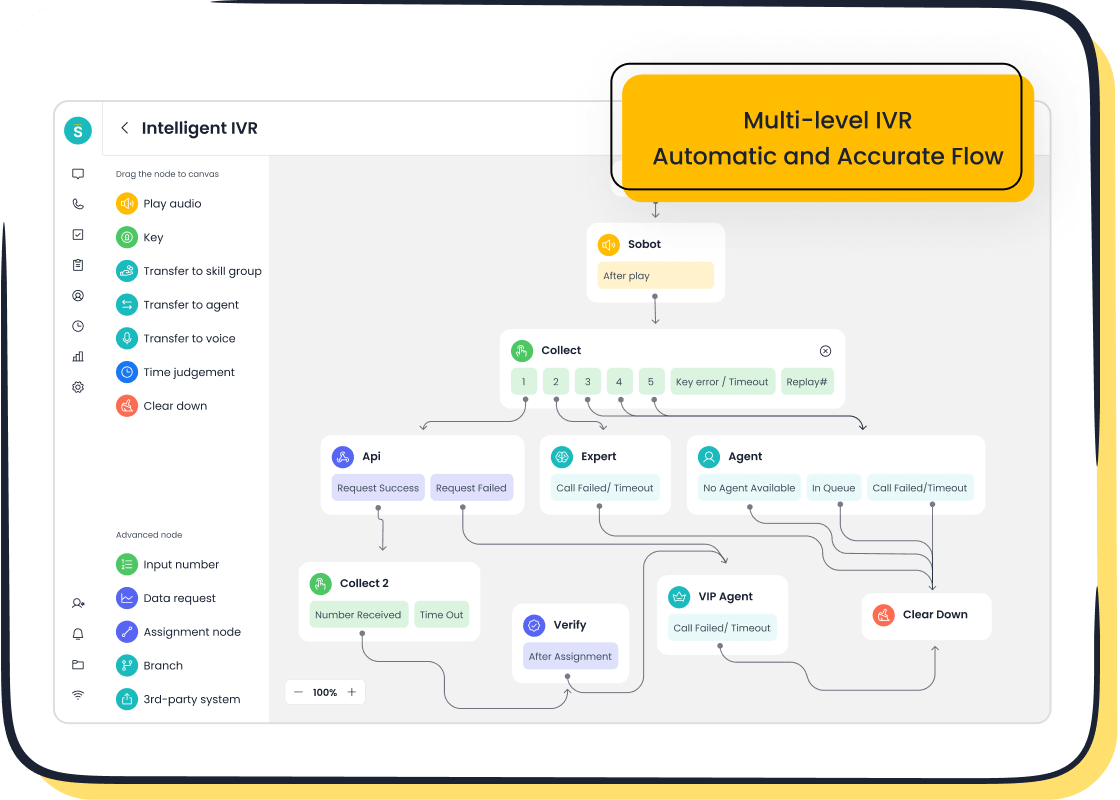
Leading contact center solutions build this security in from the ground up. For example, the Sobot Cloud Call Center ensures all data transfer and dialing are securely encrypted by default. This comprehensive encryption removes the guesswork from protecting communications. Furthermore, Sobot's 99.99% system uptime and stable infrastructure create a consistently secure environment, minimizing risks associated with downtime that can expose systems to a breach.
Implement Data Masking and Redaction
Not every agent needs to see every piece of customer data. Data masking and redaction are security measures that hide or remove sensitive information from view. This is critical for protecting privacy and achieving compliance, especially in call recordings and chat logs where customers might share personal details.
You can implement several effective techniques:
- Pause and Resume Recording: For calls where a customer provides payment details, agents can pause the recording to prevent the data from ever being captured. An audible tone can signal that the recording has stopped and restarted.
- Keyword-Based Redaction: Automatically find and remove specific words or phrases, such as credit card numbers or Social Security numbers, from transcripts and chat logs.
- Named Entity Recognition (NER): Use AI to automatically identify and mask sensitive terms like names, addresses, and dates in chat logs, often replacing them with realistic but fake alternatives to preserve context.
- Tokenization: Replace sensitive data with a non-sensitive equivalent called a "token." The original data is stored in a secure vault and can only be accessed by authorized systems, which is useful for payment processing.
Implementing these techniques drastically reduces the risk of a data breach by limiting the exposure of sensitive data across your organization.
Establish Secure Data Disposal Policies
Data you no longer need for business or legal reasons becomes a liability. A secure data disposal policy is a formal plan that dictates how your organization permanently destroys data. This policy is a critical component of contact center security and data privacy.
Important Distinction: Secure data disposal might mean reselling a laptop, where data could potentially be recovered. Secure data destruction ensures the data is completely unrecoverable. Your policy must focus on destruction for sensitive customer data.
A robust policy should clearly define:
- Personnel: Who is responsible for overseeing data destruction.
- Methods: The approved techniques for destroying data on different media. For hard disk drives (HDDs), this includes degaussing (using magnets) or physical shredding. For solid-state drives (SSDs), physical destruction is the most reliable method.
- Documentation: A process for updating asset inventories to prove that data and devices were destroyed securely.
- Compliance: How the policy adheres to regulations like the General Data Protection Regulation (GDPR) and PCI DSS.
Without a formal policy, old hard drives and forgotten backups become treasure troves for attackers, waiting to cause the next major data breach.
Ensure PCI DSS Compliance
If your contact center handles credit or debit card payments, you must comply with the Payment Card Industry Data Security Standard (PCI DSS). Non-compliance can lead to severe fines, loss of payment processing privileges, and a devastating loss of customer trust after a breach.
Achieving PCI DSS compliance requires a multi-faceted approach to security:
| Area of Focus | Key Actions |
|---|---|
| Technology | Use firewalls, encrypt all cardholder data, and never store the CVV code. |
| People | Train agents to never write down card details. Prohibit personal mobile phones in secure areas. |
| Process | Use role-based access to limit who can view payment information. Redact cardholder data from all call recordings and chat logs. |
| Physical Security | Restrict access to any area where payment data is handled or stored. Use whiteboards that are erased regularly instead of paper. |
Continuously enforcing these rules is vital. PCI DSS compliance is not a one-time audit; it is an ongoing commitment to protecting your customer's financial data.
Manage Data Retention and Minimization
The principle of data minimization is simple: collect only the data you need, and keep it only for as long as you need it. Every piece of stored customer data increases your risk profile. A clear data retention policy helps you manage this risk and comply with privacy regulations like GDPR.
Your retention policy should:
- Define Retention Periods: Specify exactly how long different types of data (e.g., call recordings, chat transcripts, customer records) must be kept for business, legal, or compliance reasons.
- Justify Each Period: Document the business justification for every retention period.
- Automate Deletion: Implement a regular, automated process to securely delete data that has exceeded its retention period.
- Address Privacy Rights: Ensure your policy supports the customer's "right to be forgotten" as mandated by regulations like GDPR. This means you must be able to find and delete a specific customer's data upon request.
By minimizing the data you store, you shrink the potential impact of a breach. This proactive stance on data management is the hallmark of a truly secure customer contact center and a cornerstone of building lasting customer trust.
Build a Human Firewall with Security Training
Your technology is only as strong as the people who use it. Your employees are your first and last line of defense against cyber threats. Effective, ongoing employee training transforms your team from a potential vulnerability into a powerful human firewall. This is a vital layer of your contact center security strategy, turning awareness into action to stop a breach before it starts.
Run Ongoing Security Awareness Programs
One-time training is not enough to combat evolving cyber threats. You must implement an ongoing security awareness program that keeps best practices top of mind. Your program should give your team the knowledge to protect customer data every day.
Your employee training program should cover:
- Data Protection: Explain what constitutes sensitive information and the correct methods for handling, storing, and disposing of it.
- Social Engineering: Teach agents to recognize common red flags and to always verify unusual requests for data.
- Secure Tool Usage: Train agents on the proper, secure use of all company-approved tools, including AI-powered systems like chatbots and voicebots, to prevent accidental data leakage.
- Device and Environmental Security: Reinforce policies for locking workstations, using secure Wi-Fi, and being aware of physical risks like shoulder surfing.
Conduct Simulated Phishing Attacks
The best way to prepare for a real cyber attack is to practice. Simulated phishing attacks are a safe and effective way to test your team’s vigilance. When an employee clicks a simulated phishing link, it becomes a valuable teaching moment. Data shows that this point-of-error training can reduce employee susceptibility to a real breach by an average of 40%. Continuous simulations build resilience and help your team spot a genuine threat.
Train Agents on Secure Identity Verification
Your agents handle sensitive customer data during every interaction. You must train them on secure and compliant methods for verifying a customer's identity. This prevents fraudsters from gaining access to accounts through social engineering. Implement clear, multi-step verification processes.
- Knowledge-Based Questions: Asking for a date of birth or billing address.
- One-Time Passwords (OTP): Sending a unique code to a customer's registered phone or email.
Consistent training ensures every agent follows the same secure procedure, protecting both the customer and your business from a potential breach.
Create a Clear Incident Reporting Protocol
When an agent suspects a security issue, they need to know exactly what to do. A clear incident reporting protocol empowers them to act quickly and confidently. This protocol is a simple set of steps for reporting a potential breach or threat.
- Identify: Recognize a suspicious event, like a strange email or an unusual data request.
- Report: Immediately notify the designated security contact through a clear channel.
- Contain: Provide all necessary details so the security team can quickly limit any potential damage.
A simple, no-blame reporting culture encourages fast action, which is critical for minimizing the impact of any security incident.
Prevent the Use of Shadow IT
Shadow IT refers to employees using unapproved apps and software to do their jobs. While often done with good intentions, it creates massive security holes. These unsanctioned tools operate outside of your security controls, exposing sensitive data to data breaches and compliance violations. Educate your team on the dangers of shadow IT and provide them with approved, effective tools that meet their needs. This closes backdoors to cyber criminals and keeps your customer data within your secure environment.
Enhance Contact Center Security with Monitoring

You cannot protect your data from a threat you cannot see. Continuous monitoring is a non-negotiable part of modern contact center security. It gives you the visibility to detect and respond to cyber threats in real time. Effective security requires advanced threat monitoring to identify suspicious activity before it causes a breach. This proactive approach turns your defense from reactive to preventive.
Use Intrusion Detection Systems
You should deploy intrusion detection systems (IDS) as a core part of your security. These systems act as digital watchdogs for your network. They monitor traffic for signs of malicious activity or policy violations. An IDS provides real-time threat detection, alerting your security team to potential cyber threats instantly. This early warning is crucial for stopping an attack in its tracks.
Monitor for Anomalous Network Activity
Your cybersecurity systems must perform advanced threat monitoring to spot unusual patterns. Attackers often leave digital footprints. Recognizing these red flags is key to a strong security posture. Your team should watch for specific anomalies that signal a cyber attack:
- Volume Changes: Sudden spikes or drops in network traffic can indicate a Distributed Denial-of-Service (DDoS) attack or a system misconfiguration.
- Unusual Connections: An agent's device connecting to a suspicious foreign IP address or using an uncommon port is a major warning sign.
- Behavioral Shifts: A user account attempting to log in from two different countries at once or a server suddenly initiating new types of connections points to a compromised account.
This level of advanced threat monitoring provides the data needed for a swift response.
Develop an Incident Response Plan
When a cyber threat materializes, a panicked response makes things worse. You need clear, pre-defined incident response plans. This plan is your step-by-step guide for managing a security incident. It outlines who to contact, what steps to take, and how to contain the threat. A well-practiced plan ensures a fast and effective response, minimizing damage to your data and reputation.
Log and Analyze Security Events
Every action on your network creates data. You must log these security events and analyze them regularly. These logs provide a detailed record of all activity, which is invaluable for investigating a breach. Analyzing this data also helps you identify vulnerabilities and refine your security measures. Consistent analysis of your data strengthens your overall security and prepares you for future cyber threats. This advanced threat monitoring makes your defense smarter over time.
Building a secure customer contact center rests on five pillars. You must identify risks, control data access, protect customer data, train your people, and monitor your systems. This guide provides your blueprint. Remember, contact center security is an ongoing commitment, not a one-time project. Your dedication to security protects customer data and ensures privacy. Start today to build a resilient operation. Your actions will strengthen customer trust and secure your business's future. This commitment to data security builds lasting customer trust.
FAQ
How does GDPR affect my contact center?
The General Data Protection Regulation (GDPR) gives every customer control over their personal data. You must get clear consent to collect data. You also need to honor requests for data deletion. Compliance with GDPR is mandatory for protecting European customer data.
What is the first step to improve security?
Your first step is to conduct a risk assessment. You need to identify your specific vulnerabilities. Understanding where your weaknesses are allows you to build a targeted and effective security strategy. This proactive approach is fundamental to data protection.
Why is employee training so important for security?
Your employees are your primary defense against social engineering. Regular training turns your team into a human firewall. It teaches them to spot phishing attempts and handle customer data securely, which is a key requirement under regulations like GDPR.
Does GDPR apply if my business is not in the EU?
Yes, GDPR applies. If you offer goods or services to people in the European Union, you must comply with the General Data Protection Regulation. The location of your business does not matter; the location of your customer does.
See Also
Evaluating Leading Contact Center Solutions: A Comprehensive 2024 Review
Exploring Premier Cloud Contact Center Services: In-depth Reviews for 2024
Mastering Omnichannel Contact Centers: A 10-Step Implementation Guide
Discovering the Foremost Cloud Contact Centers: An Exclusive 2025 Insight
Optimizing Call Center Performance: Essential Quality Management Best Practices

