AI vs. Human Agents for Support Calls


Businesses often ask if AI or human agents are better for customer service calls. Recent data shows 94% of customers choose AI when given the option. The market for AI in customer service is also growing rapidly. However, a hybrid approach is often the best strategy. This method helps blend AI with human support for a better customer experience. This article explores the pros and cons of AI. It shows how Sobot's Voicebot is revolutionizing AI call centers and enhancing customer experience, making it one of the best voice AI solutions for automating customer support calls.
The Rise of AI in Customer Service
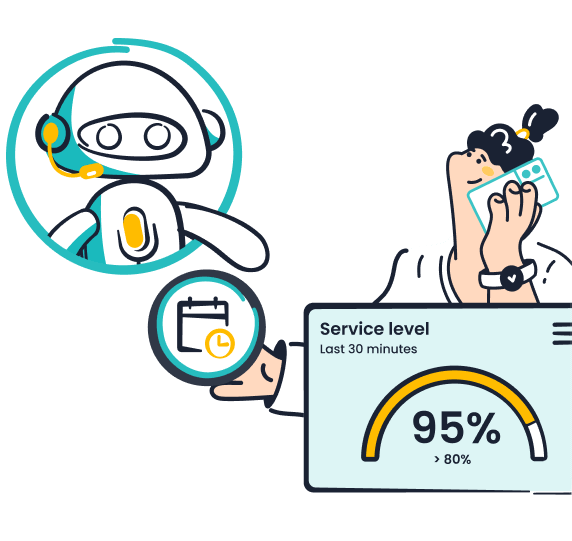
The use of AI in customer service is growing quickly. Businesses are moving from basic AI tools to more advanced systems. This change shows a clear trend in automation in customer service. The adoption of AI in call centers is accelerating, with projections showing a significant increase in advanced AI by 2027.
- Level 1 Chatbots: About 50% of call centers use these today.
- Level 2 Reasoners (Generative AI): Around 10% of call centers use this AI in 2024.
- Level 3 Agents (Autonomous AI): Less than 1% adoption in 2024, but expected to grow.
The Strengths of AI Agents
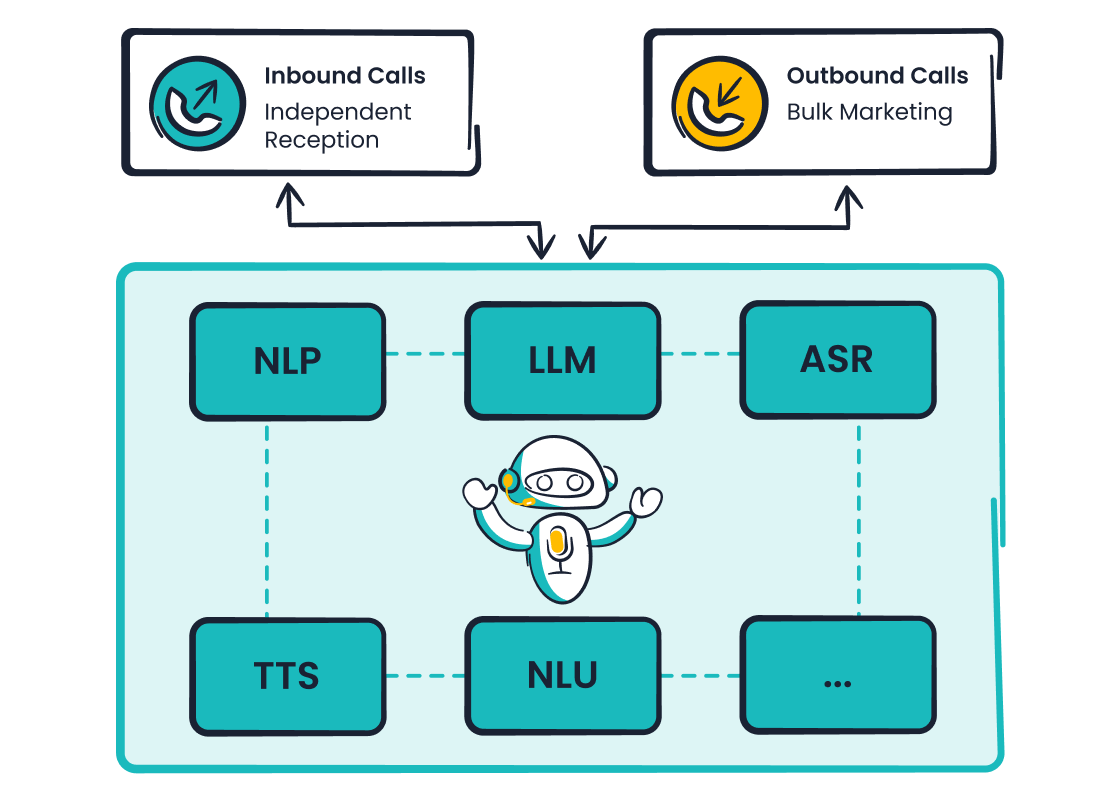
One of the main advantages of AI is its efficiency. Modern AI, like Sobot’s Voicebot, offers a human-like service. This technology uses advanced speech recognition with NLP and LLM to understand customer needs. Key advantages of AI include 24/7 availability and multilingual support, which boost productivity and reduce costs. This automation helps businesses handle more customer interactions without hiring more staff. The cost savings from AI answering services can be significant across different industries.
| Business Type | Previous Annual Cost | New Annual Cost | Annual Savings | Reduction Percentage |
|---|---|---|---|---|
| Small e-commerce | $240,000 | $94,600 | $145,400 | 60.6% |
| Mid-size SaaS company | $1.8 million | $768,000 | $1,032,000 | 57.3% |
| Enterprise insurance | $15 million | $5.22 million | $9.78 million | 65.2% |
The Weaknesses of AI Agents
However, there are disadvantages of AI. Poorly designed AI can frustrate a customer. Studies show 75% of consumers feel frustrated with bad AI support, even if it's fast. Common disadvantages of AI include the "amnesia problem," where a customer must repeat information to a human agent. Another issue is the "cold transfer," where the AI passes the call without any context. These disadvantages of AI highlight the need for smart integration in AI call centers.
Ideal Use Cases for AI Automation
The best use of AI automation is for simple, repetitive tasks. This strategy is key for successful AI in customer service. Automating routine tasks allows human agents to handle more complex customer issues. This approach improves the overall service quality.
By automating routine tasks, AI frees up your team to focus on high-value customer interactions that require empathy and critical thinking. This improves both customer and employee satisfaction.
Ideal tasks for AI automation include:
- Answering frequently asked questions
- Checking order statuses or appointment times
- Routing calls to the correct department
- Providing basic customer self-service options
This kind of AI automation makes AI call centers more effective. It creates a better experience for every customer and makes the support service more powerful.
The Enduring Value of Human Agents
While AI offers incredible efficiency, human agents provide a level of service that technology cannot replicate. The true value of human support lies in emotional connection and complex problem-solving. This is why a human touch remains essential for excellent customer service.
The Strengths of Human Agents
The greatest strength of human agents is empathy. They can understand customer emotions and build meaningful connections. This ability turns routine customer interactions into opportunities for building loyalty. A compassionate agent makes a customer feel heard and valued, which is critical for satisfaction. In fact, 88% of people are more likely to buy again after a positive customer service experience. This shows that personalized interactions and emotional intelligence directly lead to higher retention and a better brand reputation. An AI can process data, but human agents can build trust.
The Weaknesses of Human Agents
However, relying solely on human agents has drawbacks. The cost is a major factor. A fully loaded agent in North America can cost a business between $60,000 and $80,000 annually, including salary, benefits, and training. Human service can also be inconsistent.
Issues like inadequate training, poor communication between departments, or scattered information can lead to errors. This inconsistency can cause customer frustration with automation if they receive different answers from different agents, a problem that a centralized AI system avoids. These are disadvantages of AI's human counterparts.
Handling Complex Customer Issues
Human agents are indispensable when dealing with complex or emotional situations. An AI struggles with unique issues that require creativity and critical thinking. Human agents excel here. They can adapt to unexpected problems and find solutions that are not in a script.
Situations requiring human intervention include:
- High-stakes issues like account fraud.
- Sensitive customer interactions where empathy is crucial.
- Advanced technical support that goes beyond simple troubleshooting.
In these moments, the judgment and adaptability of human agents provide a level of service that builds lasting customer relationships. They handle the nuanced problems that an AI is not equipped for, proving their enduring importance in any support strategy. The disadvantages of AI become clear in these complex customer interactions, where human skill is irreplaceable for customer satisfaction.
The Hybrid Model: Your Path to a Modern AI Call Center
The debate over AI versus human agents presents a false choice. The best strategy is not 'either/or' but a powerful collaboration. A hybrid model allows businesses to blend AI with human support. This approach creates modern AI call centers that are both efficient and empathetic. It combines the speed and availability of AI automation with the critical thinking and emotional intelligence of human agents. This synergy is the key to enhancing customer experience and building lasting loyalty.
How Sobot's AI and Humans Collaborate
A successful hybrid model starts by assigning the right tasks to the right resource. The best AI in customer service handles repetitive, high-volume inquiries. This strategy delivers immediate value. It frees your skilled human agents to focus on complex or sensitive problems that require a personal touch. This division of labor is central to effective AI call centers.
Sobot's suite of tools is designed for this collaborative environment.
- The AI Voicebot and Chatbot handle initial customer contact. They gather basic information and resolve simple issues 24/7.
- The Ticketing System automatically logs every interaction, creating a unified record.
- When an issue requires a human touch, the system routes the customer to a live agent through the Call Center or Live Chat solution.
This structure ensures that AI handles tasks like password resets or order status checks. Human agents then become available for emotionally delicate situations or complex technical support. Research from Deloitte shows that contact centers using this type of AI augmentation see a 23% improvement in first-call resolution rates. This proves that a smart blend of AI and human service leads to better outcomes.
Structuring a Seamless Handoff
A major source of customer frustration with automation is a poor handoff from AI to a human. Customers hate repeating their information. A seamless transition is therefore critical for a positive customer experience. The goal is a "warm transfer," where the AI equips the human agent with full context before they even say hello.
Sobot’s Voicebot excels at this. It ensures the handoff is smooth and intelligent, preventing customer frustration with automation. Key components of this process include:
- Maintaining Context: The AI transfers the entire conversation history, customer data, and steps already taken. The human agent receives a complete picture and can pick up the conversation without missing a beat.
- Intelligent Triggers: The AI is programmed to recognize when a handoff is needed. It detects signals like conversational complexity, repeated questions, or emotional cues like frustration in a customer's voice.
- Clear Rules: You can establish clear rules for escalation. For example, if the AI fails to resolve an issue after two attempts, it automatically transfers the call to a live person. This prevents the customer from getting stuck in an automation loop.
A warm handoff does more than save time. It shows the customer you value their time and are working as a unified team to solve their problem. This builds trust and boosts satisfaction.
Using AI to Empower Human Agents
In a hybrid model, AI does more than just handle simple calls. It also acts as a powerful copilot for your human agents. This AI support empowers your team to perform at their best, improving both efficiency and service quality. AI answering services can reduce Average Handle Time (AHT) by up to 26% by providing agents with the tools they need to resolve issues faster.
Sobot’s AI platform provides real-time assistance that transforms agent performance. This is one of the reasons it provides the best voice ai solutions for automating customer support calls. Here’s how AI empowers your team:
- Real-Time Guidance: The AI listens to the conversation and provides agents with instant suggestions, relevant articles from the knowledge base, and next-step checklists. This is especially helpful for new agents, boosting their confidence and ensuring consistent service.
- Automated After-Call Work: After a call ends, the AI automatically generates a transcript and a concise summary. This automation eliminates tedious manual data entry, reduces after-call work, and allows agents to move to the next customer interaction more quickly.
- Continuous Learning: The AI system learns from every interaction. Agent feedback on AI suggestions helps refine the system, making its future recommendations even more accurate and helpful.
By turning AI into an assistant, you create a smarter workforce. Your human agents are better equipped, more confident, and free to focus on what they do best: building relationships and providing exceptional customer service. This level of AI automation makes your entire support operation more powerful and effective.
Finding the Best Voice AI Solutions for Automating Customer Support Calls
Theory is helpful, but real-world results show the true power of AI automation. The right AI implementation can transform customer service operations. It delivers measurable improvements in efficiency and customer satisfaction. Let's look at a practical example of AI in customer service.
A Real-World Look: How Weee! Transformed Its Support
Weee!, America's largest online Asian supermarket, faced significant customer service challenges. Its old IVR system was inflexible. The company also struggled with language barriers and complex system switching for its agents. This created a slow and frustrating experience for both the customer and the support team.
Weee! needed a better service solution. The company chose Sobot's voice product for its AI implementation. This AI solution provided a flexible IVR that could intelligently route calls. It also offered multilingual support to serve a diverse customer base. The AI implementation unified different systems, which made the agents' work much easier. This AI automation was a key part of their new strategy.
Key Results from AI Implementation
The results of the AI implementation at Weee! were remarkable. The new AI system produced immediate and significant benefits for their service operations. This successful AI implementation shows the value of a well-planned AI automation strategy.
After implementing Sobot’s AI, Weee! achieved:
- A 20% increase in agent efficiency.
- A 50% reduction in average resolution time.
- A 96% customer satisfaction score.
These numbers demonstrate how effective AI answering services can be. The right AI implementation leads to happier customers and a more productive team, boosting customer retention rates.
Lessons for Your Business
Weee!'s success offers valuable lessons for any business considering AI call centers. Finding the best voice AI solutions for automating customer support calls requires looking beyond basic features. Your AI implementation should be a strategic investment.
To achieve similar results, focus on these key areas:
- Integration Capabilities: Your AI must connect smoothly with your existing CRM and ticketing systems. This creates a unified workflow for better service.
- Natural Language Processing (NLP): The AI needs to understand and respond to a wide range of customer inquiries accurately. This is vital for a positive customer experience.
- Scalability: Choose an AI solution that can grow with your business. The automation should handle increases in call volume without a drop in service quality.
A flexible and integrated AI platform is the foundation for modern AI call centers. This type of AI automation empowers your team and improves the entire customer journey.
The future of customer service is not a choice between AI and human agents. The optimal solution is a hybrid model. This approach uses AI for efficiency and human agents for complex support, boosting customer satisfaction. Tools like Sobot's Voicebot make this powerful AI and human service combination accessible. By analyzing your call types, you can discover how an integrated AI solution helps with enhancing customer experience. This is key for finding the best voice ai solutions for automating customer support calls. This use of AI in customer service will improve your service, customer satisfaction, and overall customer experience.
FAQ
What are the future trends in call center AI automation?
The future trends in call center AI automation involve more human-like AI. This AI will handle complex talks and predict customer needs. Better automation creates a smoother customer journey. The future trends in call center AI automation point to smarter, more proactive support.
Is AI automation expensive for a small business?
AI automation is more affordable than ever. Cloud-based AI solutions offer scalable plans, so businesses pay for what they need. The long-term savings from this automation often outweigh the initial cost. This makes it a smart investment for any customer-focused company.
Will AI completely replace human customer service agents?
No, AI will not replace human agents. Instead, AI enhances their work. The best strategy is a hybrid model where AI handles simple tasks. This automation frees humans for complex customer issues.
This teamwork approach improves the overall customer experience and makes the support team more effective.
Why are future trends in call center AI automation so important?
Future trends in call center AI automation are vital for staying competitive. This AI helps businesses meet rising customer expectations for fast, 24/7 service. This automation also provides data that helps improve the entire customer support operation, leading to greater satisfaction and loyalty.
See Also
Transforming Customer Support with Advanced AI Service Agents
An In-Depth Look at Enterprise AI Call Center Solutions
Essential Guide to Artificial Intelligence Software for Call Centers
Comparing the Leading Interactive Voice Response Software Options

