Choosing the Right Channel Live Chat vs Others Explained

You want the best communication channel for your business needs. Choosing the right channel drives customer satisfaction and boosts customer loyalty. Sobot provides integrated solutions that unify your channels for seamless engagement. Understanding the benefits of live chat for business is essential, as it enhances customer interactions and supports operational goals. Your industry, customer preferences, and these benefits shape this decision. The table below shows how consumers value channel choice:
| Statistic | Value |
|---|---|
| 58% of consumers want to choose their communication channel | 58% |
| 36% prefer messages on multiple channels | 36% |
Sobot Live Chat for Business

What Is Live Chat?
Live chat lets you talk with customers in real-time on your website, app, or social media. You can answer questions, solve problems, and guide customers as they browse. Sobot Live Chat connects you with customers instantly, so you never miss a chance to help. This tool is part of Sobot’s all-in-one customer contact center, which also includes chatbot, AI Agent, call center, voicebot, and ticketing system. These tools work together to give you seamless customer support and real-time communication.
Benefits of Live Chat for Business
You get many benefits of live chat for business. You can offer real-time support and personalized support to every customer. Live chat helps you answer customer inquiries quickly, which improves customer experience and satisfaction. You can handle more interactions at once, so your team works faster. Sobot’s live chat uses chatbots and AI-powered customer service to automate routine questions. This means your agents can focus on complex issues. The importance of personalization stands out because you can see customer data and chat history in one place. This leads to better engagement and higher conversion rates. Here is how Sobot Live Chat improves your business:
| Metric | Improvement |
|---|---|
| Agent Efficiency | 30-40% |
| Reduction in Routine Inquiries | 70% |
| Increase in Conversion Rates (e-commerce) | 15-20% |
| Customer Satisfaction Scores | Improved |
Sobot Live Chat Features
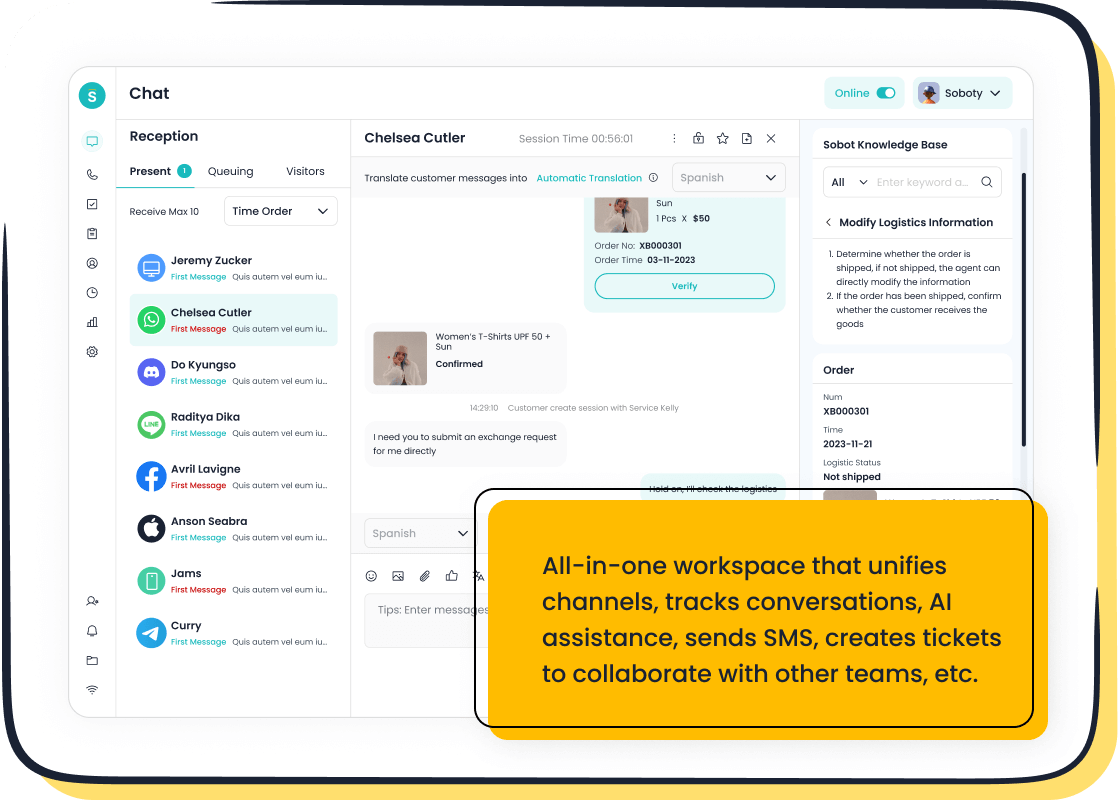
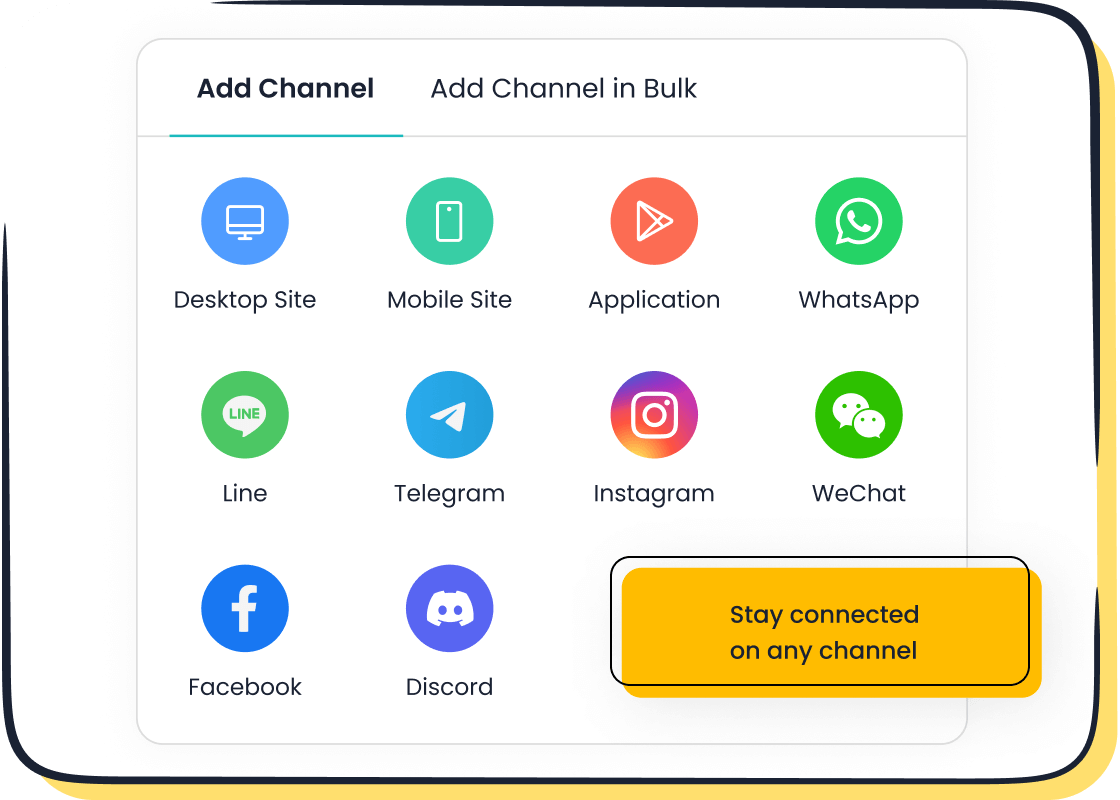
Sobot Live Chat gives you many features that make customer interactions smooth and effective. You get omnichannel support, so you can chat with customers on websites, apps, WhatsApp, Facebook, Instagram, Telegram, and Discord. The platform uses chatbots and AI-powered customer service to give instant communication and real-time conversations. You can track customer interactions, use built-in analytics, and create custom widgets. Sobot stands out with its all-in-one solution, strong AI focus, and competitive pricing.
| Feature | Sobot Live Chat | Other Solutions |
|---|---|---|
| All-in-One Solution | Yes | No |
| Omnichannel Integration | Yes | Limited |
| AI Capabilities | Strong focus on AI | Varies |
| Pricing | Competitive | Higher |
| Customer Support Availability | Timely service with dedicated reps | Varies |
Ideal Use Cases
You can use live chat in many ways. Retailers use it for real-time interaction with shoppers. E-commerce stores boost sales by answering questions during checkout. Financial services use live chat for secure, real-time conversations. Gaming companies use chatbots for fast customer service. Education providers use live chat to help students and parents. Sobot’s omnichannel support lets you manage all customer inquiries in one place. You can improve customer experience, increase engagement, and handle more interactions with less effort.
Email Channel
Email Communication Overview
You use email every day. It is a trusted way to reach out to businesses. Many customers choose email for customer service because it feels familiar and safe. You can send questions, share documents, or explain problems in detail. Email works well for both simple and complex issues. It also gives you a written record of every conversation.
Did you know? Nearly 50% of people who send emails expect a reply within 4 hours, but the average response time is 12 hours. In retail, the average wait is even longer—about 17 hours. Still, 70% of customers prefer using email for customer service. Gen Z and Millennials show a higher preference for email compared to other age groups.
Pros and Cons
Email offers several strengths and some weaknesses. You should know both before choosing it for customer support.
| Advantages | Disadvantages |
|---|---|
| Cost-effective | Long response times |
| Brand awareness and flexibility | Issues with spam |
| Scalable | Lack of personalization |
| Trusted |
You can reach many people at once with email. It helps you build brand awareness and manage large volumes of messages. However, you may face slow replies and less personal attention. Some emails may end up in spam folders.
Best Use Cases
You should use email when you need to handle detailed questions or send files. It works well for follow-ups, order confirmations, and support tickets. Many businesses use email for official communication and records. Logistics companies often respond faster by email than other industries. Email fits best when you do not need an instant answer but want a clear record.
- Use email for:
- Handling complex customer service issues
- Sending receipts or confirmations
- Following up on requests
- Providing support outside business hours
You can combine email with other channels to give customers more choices and better service.
Phone Support
Phone Support Overview
Phone support lets you talk directly with a real person. You can call a business and speak to an agent who listens to your problem. Many people trust phone calls for important issues. You get answers right away and can explain your situation in detail. Phone support is a classic way to deliver customer service. It helps you build trust because you hear a human voice.
Tip: If you need help fast or have a complex problem, calling can save you time.
Strengths and Weaknesses
Phone support has strong points and some limits. You get personal attention. Agents can ask questions and solve problems quickly. This channel works well for urgent issues or when you need to explain something clearly. Many customers feel more comfortable talking than typing.
Here is how customers rate their satisfaction with different channels:
| Communication Channel | Customer Satisfaction Rating |
|---|---|
| Phone Support | 76% |
| Live Chat | 73% |
| Email Support | 21% |
You see that phone support leads in satisfaction. Still, phone calls can take time. You might wait on hold during busy hours. Some people do not like talking on the phone or may have language barriers. Phone support also costs more for businesses because it needs trained agents.
When to Use Phone
You should use phone support when you face urgent or sensitive issues. If you need to solve a billing problem, report fraud, or get technical help, a phone call works best. Phone support is also helpful for older customers who prefer speaking to a person. You get clear answers and can ask follow-up questions right away.
Note: Phone support is a key part of customer service, but you can combine it with other channels for the best results.
You can trust phone support for fast, personal help. It remains a top choice for customer support in many industries.
Messaging Apps
Messaging Channel Overview
Messaging apps have changed how you connect with businesses. You use apps like WhatsApp, Facebook Messenger, Telegram, and others every day. These tools let you send quick messages, photos, or even voice notes. Messaging apps now have more active users than top social networks. This shift started as early as 2015 and keeps growing. Many brands use messaging as their main way to talk with you. WhatsApp alone has over 2 billion active users. Messaging apps help you reach businesses in a way that feels personal and easy.
Note: Companies using business messaging see 3 to 4 times higher engagement rates than those using only email.
Business Benefits
Messaging apps offer many advantages for customer service. You get fast replies, which makes you feel valued. Businesses can send you updates, reminders, or special offers. These apps let you share photos or information quickly. Your conversations stay private, which builds trust. Messaging apps also help companies keep you as a customer. Businesses using omnichannel strategies see 91% higher customer retention rates year over year.
| Benefit | Description |
|---|---|
| High-value Engagement | Automated notifications keep you informed and engaged. |
| Customer Satisfaction and Retention | One-on-one chats drive sales and help you stay loyal. |
| Personalized Experiences | Brands can send messages that match their style, making you feel special. |
Limitations
Messaging apps have some limits. You need internet access to use them. Some people may worry about privacy, even though most apps use secure chats. Not all customers want to use messaging for every problem. Sometimes, you may need to switch to another channel for complex issues. Businesses must manage many messages at once, which can be hard without the right tools.
Use Cases
You can use messaging apps for many customer service needs. You might ask about a product, check an order, or get help with a problem. Retailers use messaging to send order updates. Banks use it for quick account alerts. Travel companies send reminders or boarding passes. Messaging apps work well for fast, simple questions. They also help you get support outside normal business hours.
Social Media Contact
Social Media Platforms
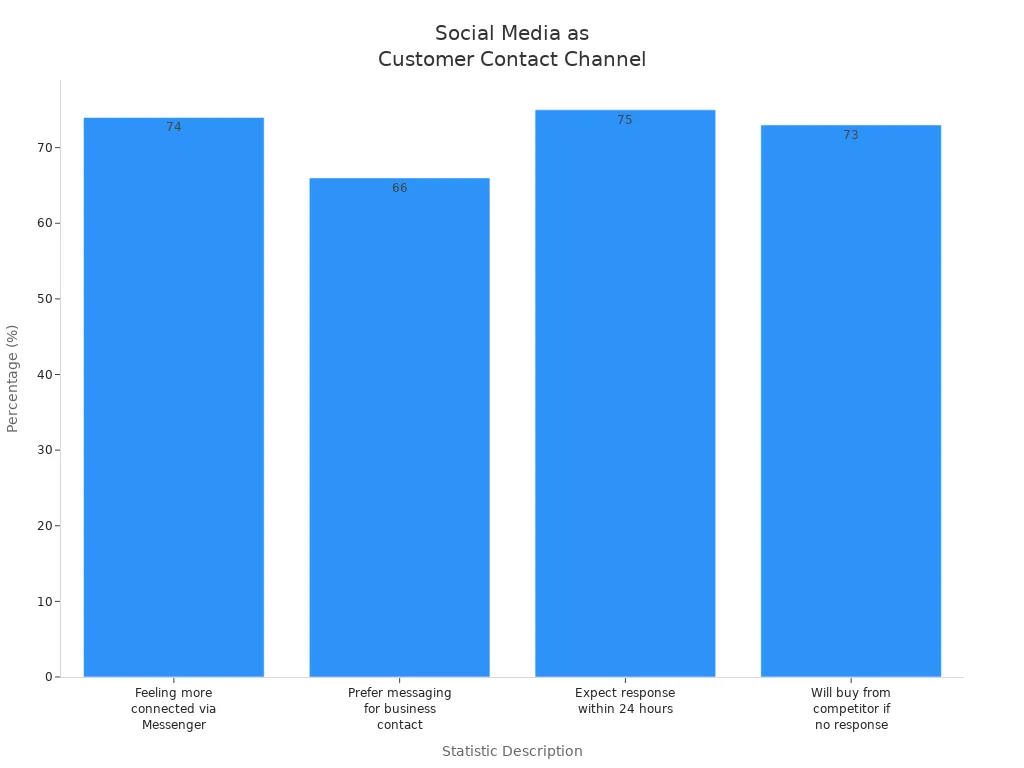
You use social media every day. Platforms like Facebook, Instagram, Twitter, and LinkedIn help you connect with brands. Many businesses now offer customer service through these channels. You can send a direct message, comment on a post, or tag a company in your story. Social media platforms make it easy for you to reach out and get help.
| Statistic Description | Percentage |
|---|---|
| Online adults feeling more connected when messaging a business directly on Facebook Messenger | 74% |
| Consumers preferring messaging as their way to communicate with businesses | 66% |
| Consumers expecting a response within 24 hours or sooner | ~75% |
| Social media users who will buy from a competitor if a brand doesn’t respond on social | 73% |
Engagement Benefits
Social media gives you fast and direct access to brands. You can ask questions, share feedback, or get updates in real time. Many people feel more connected to a business when they use social media for customer service. Millennials say social media is an effective customer service channel 64% of the time. You get quick answers, and companies can solve problems before they grow. Social media also lets you see how brands interact with others, which builds trust.
Tip: If you want a fast reply, send a direct message on social media. Most companies respond within a day.
Risks and Challenges
You face some risks when using social media for support. Many customers expect fast replies, usually within 24 hours. If a company cannot keep up, you may feel frustrated. Social media is public, so negative comments can spread quickly and hurt a brand’s reputation. You might get generic responses, which can feel impersonal. Support teams must handle many messages and keep each reply personal.
- Social media interactions are public, and negative comments can escalate quickly.
- Customers report frustration with generic responses, so personalized service matters.
The nature of social media allows for immediate feedback, both positive and negative. Teams must manage negative feedback professionally to keep your trust.
Ideal Scenarios
You should use social media contact when you want quick answers or need to share feedback. It works well for simple questions, order updates, or sharing your experience. Social media is also helpful if you want to see how a company treats other customers. For urgent or private issues, you may want to use another channel like phone or email. Social media shines when you want fast, public engagement with a brand.
Live Chat vs Email and Other Channels
Live Chat vs Email
You often face the choice between live chat and email when you want to connect with a business. Each channel has its own strengths, but live chat vs email shows clear differences in speed and satisfaction. Live chat gives you real-time support. You get answers instantly, which makes you feel valued. Email, on the other hand, can be slow. You may wait hours or even a day for a reply.
Here is a quick look at how these two communication channels compare:
| Channel | Good Performance | Better Performance | Customer Expectation |
|---|---|---|---|
| 12 hours or less | 4 hours or less | 1 hour or less | |
| Live chat | 1 minute or less | 40 seconds or less | Instantly |
You see that live chat meets your need for instant help. Email works well for detailed questions or when you need a written record. However, live chat vs email shows that live chat leads in customer satisfaction and loyalty. You feel heard and valued when you get quick answers.
- Live chat offers real-time support and higher satisfaction.
- Email can be slow and less personal.
- Live chat vs email matters most when you want fast solutions.
Sobot’s omnichannel solution lets you use both live chat and email in one workspace. You can switch between channels without losing track of your conversation. This helps your team respond faster and keeps customers happy. Opay, a leading financial service platform, used Sobot’s omnichannel system to manage both live chat and email. They saw customer satisfaction rise from 60% to 90% and cut costs by 20%. This shows the power of integrating communication channels for better results.
Live Chat vs Phone
Phone support has been a classic choice for customer service. You can talk to an agent and explain your problem. However, live chat gives you instant answers without waiting on hold. You can type your question and get a reply in seconds.
Here is a table to help you compare these two channels:
| Feature | Live Chat | Phone Support |
|---|---|---|
| Response Time | Instantaneous responses | Potential wait times |
| Customer Engagement | More personal interaction | Can be less personal |
| Convenience | Active engagement needed | Call at your convenience |
| Limitations | Session ends if you step away | May require longer resolution times |
Live chat lets you multitask. You can chat while browsing or shopping. Phone calls need your full attention. Live chat also keeps a record of your conversation, which helps if you need to follow up. Phone support works best for urgent or complex issues. You may prefer live chat for quick questions and phone for sensitive matters.
Sobot’s omnichannel solution combines live chat and phone support. You can start with live chat and switch to a call if needed. This flexibility improves your customer experience and helps your team solve problems faster.
Live Chat vs Messaging
Messaging apps like WhatsApp and Facebook Messenger are popular communication channels. You use them every day to talk with friends and businesses. Live chat is different because it happens in real time on a website or app. Messaging apps let you send messages anytime, and you can pick up the conversation later.
- Live chat is synchronous. You and the agent talk at the same time.
- Messaging apps are asynchronous. You can reply when you have time.
- Messaging apps keep your conversation history across devices.
- Live chat is great for instant help during online shopping.
Many customers want both options. Sobot’s omnichannel solution brings live chat and messaging apps together. You can start a chat on a website and continue on WhatsApp. This seamless experience helps you get support where and when you need it. Businesses like Opay use this integration to engage customers on their favorite channels and boost satisfaction.
Tip: 44% of online shoppers say talking to a live person during a purchase is crucial. Live chat helps you get answers fast and complete your order with confidence.
Live Chat vs Social Media
Social media platforms like Facebook, Instagram, and Twitter let you reach brands quickly. You can send a direct message or comment on a post. Live chat, however, gives you private, real-time support. You do not have to wait for a public reply.
- Live chat usage has grown by 400% since 2015.
- Customer satisfaction rates for live chat can reach up to 86%.
- 73% of consumers find live chat the most satisfying way to communicate.
- Visitors who use proactive chat are 6.3 times more likely to make a purchase.
Live chat provides immediacy and personalization. You get help right away, which builds trust. Social media is good for quick questions or sharing feedback. Live chat is better for private or complex issues. Sobot’s omnichannel solution lets you manage both live chat and social media messages in one place. This helps your team respond faster and keeps your brand reputation strong.
Matching Channels to Business Needs
Choosing the right communication channels depends on your business goals and customer needs. You should look at several factors before making a decision.
| Criteria | Description |
|---|---|
| Team Preferences | Ask your team what channels they like and what challenges they face. |
| Budget Considerations | Check the costs of each channel, including setup and ongoing fees. |
| Message Types | Match channels to the type of message—formal, urgent, or for record-keeping. |
| Business Model and Structure | Think about your business type (B2B or B2C) and how your team works. |
| Customer Expectations | Choose channels that fit your customers’ age, habits, and industry standards. |
| Scalability | Pick channels that can grow with your business. |
| Security and Compliance | Make sure your channels meet industry rules and keep data safe. |
| Integration Requirements | Use tools that connect with your current systems for smooth operations. |
Sobot’s omnichannel solution helps you match the right channels to your needs. You can manage live chat, email, phone, messaging apps, and social media in one platform. This makes it easy to switch between channels and keep all customer data in one place. Opay’s story shows how integrating communication channels can boost satisfaction, cut costs, and increase conversions.
Note: The best results come from using multiple communication channels together. You can meet different customer needs and give better service.
You should review your channels often. Customer preferences change, and new tools appear. Sobot’s platform gives you the flexibility to adapt and stay ahead.
Recommendations for Channel Selection
Steps to Choose the Right Channel
You can follow clear steps to pick the best communication channel for your business. Start by setting your goals and budget for customer service. Build a website that explains your services well. Find out which channels your customers use most. For B2B, LinkedIn works well. For B2C, focus on social media and email. Use email for personal messages, since many people check it often. Add video content to keep your audience engaged. Review your communication often to see what works best. You should also ask your team about their favorite ways to connect with customers. Think about the type of message you want to send and the tools you have.
Tips for Customer Satisfaction
You can improve customer service by staying proactive. Let customers know about changes before they ask. Use surveys or emails to get feedback and show you care about their opinions. Keep customers updated about new policies or services. Give them self-service tools like knowledge bases or chatbots, so they can solve problems quickly. Track how well your communication works by checking open rates, survey scores, and conversion rates. Put more resources into the channels that work best and change or stop the ones that do not help.
Tip: When you use Sobot’s all-in-one contact center, you can measure and improve every part of your customer service.
Combining Channels for Best Results
Using more than one channel gives you better results. You help customers move from one channel to another without losing their information. This makes their experience smooth and easy. Your team can work faster and focus on what they do best. You can grow your business by adding new channels as you need them. Sobot’s omnichannel solution lets you manage all your communication in one place. This helps you give better service and keep customers happy.
| Benefit | Description |
|---|---|
| Increased Customer Satisfaction | Customers enjoy a seamless journey across all channels. |
| Continuity of Service | Customers can switch channels without losing their history. |
| Variety of Channels | Customers choose their favorite way to connect. |
| Increased Team Productivity | Teams work more efficiently and focus on their strengths. |
| Scalability | You can add more channels as your business grows. |
| Business Efficiency and Growth | Omnichannel strategies lead to higher engagement and more revenue. |
You can trust Sobot to help you combine channels for the best customer service in any industry.
You should choose your communication channels based on your business needs. Synchronous channels like phone calls work best for urgent customer service, while asynchronous tools such as email help remote teams stay flexible. Sobot’s integrated solutions improve customer service by providing fast, consistent responses and reducing costs. You can build trust and keep customers happy by personalizing every interaction. As technology changes, review your strategy often to meet new customer expectations and deliver better results.
FAQ
What is live chat and how does it help your business?
Live chat lets you talk with customers in real time on your website, app, or social media. You answer questions instantly. This tool increases customer satisfaction and can boost conversion rates by up to 38% when you use Sobot Live Chat.
How does Sobot Live Chat support omnichannel communication?
You can use Sobot Live Chat to connect with customers on websites, apps, WhatsApp, Facebook, Instagram, Telegram, and Discord. This omnichannel support means you never miss a message, and you keep all conversations in one place.
Why should you choose live chat over email or phone?
Live chat gives you instant answers. You do not wait on hold or for an email reply. Customers prefer live chat for quick help. Studies show 73% of users feel most satisfied with live chat compared to other channels.
Can you integrate Sobot Live Chat with other business tools?
Yes, you can connect Sobot Live Chat with your CRM, ticketing system, or analytics tools. This integration helps you track customer data, automate tasks, and improve your team’s efficiency.
How do you measure the success of live chat?
You measure success by tracking response times, customer satisfaction scores, and conversion rates. Sobot Live Chat provides built-in analytics and over 150 indicators to help you see what works best for your business.
See Also
Best Live Chat Tools Evaluated for the Year 2024
Excelling in Live Chat for Customer Service Success
Effective Strategies for Overseeing Live Chat Representatives

