Avoid These Traps in Consumer Satisfaction Survey Questions


Brands like Sobot depend on well-crafted consumer satisfaction survey questions to gain meaningful insights. Common traps include using vague language, double-barreled questions, or biased wording, which can confuse respondents and limit actionable feedback. Recent studies show that unclear or technical vocabulary, as well as overly complex questions, often reduce response quality. Sobot AI helps businesses avoid these pitfalls, ensuring that every survey delivers actionable feedback and supports real improvements in customer satisfaction.
Consumer Satisfaction Survey Questions
Biased Questions
Biased questions in consumer satisfaction survey questions push respondents toward certain answers or embed assumptions that may not apply to everyone. For example, leading questions like "How great is our hard-working customer service team?" use positive framing and subjective adjectives. These biased survey questions distort feedback, making it unreliable and unrepresentative. When companies use biased questions, they risk making decisions based on inaccurate data. Loaded questions, such as assuming all customers like coffee in a cafe survey, can alienate some respondents and further skew results. Common mistakes include using absolute terms like "always" or "never," which rarely reflect real experiences. Sobot Live Chat helps brands avoid biased language by offering customizable survey templates that use neutral, objective phrasing. To avoid biased questions, companies should:
- Use neutral wording and avoid assumptions.
- Offer balanced answer choices.
- Test surveys with a diverse group before launch.
Tip: Avoid asking questions to which you already know the answer, as this can introduce bias and frustrate respondents.
Ambiguous Questions
Ambiguous questions confuse respondents and lead to unclear or inconsistent answers. In customer satisfaction surveys, ambiguous questions often use vague language or ask about multiple topics at once. For example, "How satisfied are you with the service?" does not specify which aspect—speed, friendliness, or accuracy. Vague questions like "Do you think people enjoy using our product?" are too broad and do not provide actionable feedback. Negative wording, such as double negatives, also reduces response quality. These common mistakes result in unreliable data and make it hard for brands to improve. Sobot Live Chat allows businesses to create clear, specific survey questions by providing templates and real-time editing tools. To avoid ambiguous questions:
- Focus each question on a single, specific topic.
- Use simple, direct language.
- Avoid negative or double-negative phrasing.
Note: Asking questions to which you already know the answer can also create ambiguity and reduce trust.
Double-Barreled Questions
Double-barreled questions, also known as doubled barrelled survey questions, ask about two or more topics in a single question. This forces respondents to give one answer, even if their opinions differ on each topic. For example, "How satisfied are you with our customer service and aftercare?" combines two separate issues. These badly designed questions lead to ambiguous, misleading, or incomplete data. In omnichannel contact centers, such as those powered by Sobot, clear feedback is essential for improving customer experience. Poorly designed survey questions like these can reduce response rates and make it hard to interpret results. The table below shows the impact of double-barreled questions:
| Aspect | Explanation |
|---|---|
| Definition | A double-barreled question asks about two or more topics in one question. |
| Example | "How satisfied are you with our SaaS platform's ease of use and customer support?" |
| Impact | Leads to ambiguous, misleading, or incomplete data. |
| Best Practice | Ask focused, single-topic questions for accurate feedback. |
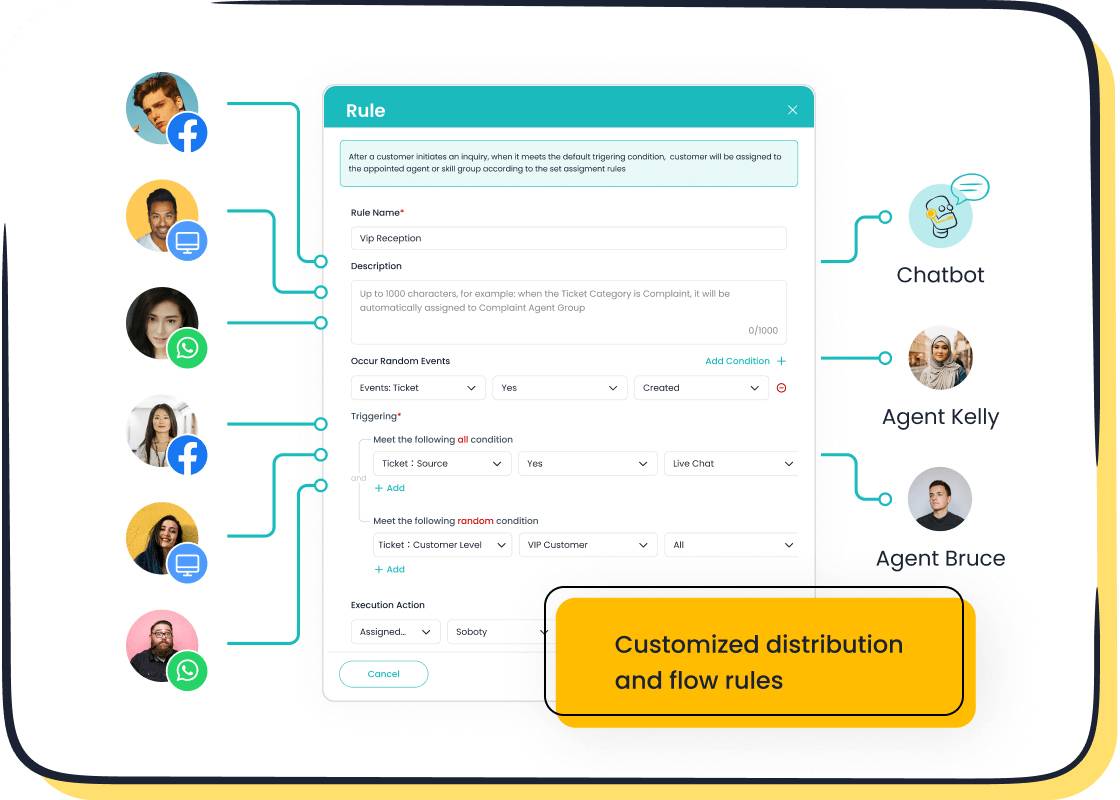
Sobot Live Chat enables brands to separate complex questions into clear, single-topic items, ensuring actionable insights.
Tip: Avoid combining topics in one question. Instead, break them into separate questions for better data quality.
Customer Satisfaction Surveys and Jargon
Jargon and Technical Terms
Many customer satisfaction surveys fail to deliver useful results because they use jargon or technical terms that confuse respondents. Research shows that complicated words and long sentences reduce both response rates and the quality of feedback. When customers do not understand a question, they may skip it or provide inaccurate answers. This problem becomes more pronounced in industries like finance, gaming, or retail, where Sobot serves a diverse customer base. For example, a survey for a gaming platform might ask, "How would you rate the latency of our multiplayer servers?" Non-technical users may not know what "latency" means, leading to unreliable data.
The following table shows how replacing uncommon terms with simpler alternatives can improve clarity:
| Uncommon Term | Common Alternative |
|---|---|
| Assist | Help |
| Effectuate | Cause |
| Elucidate | Explain |
| Employ | Use |
| Initiate | Start |
| Quantify | Measure |
| Sufficient | Enough |
| Terminate | End |
| Utilize | Use |
Sobot Live Chat helps brands avoid these pitfalls by providing customizable survey templates that use everyday language. This approach ensures that customer satisfaction surveys reach a wider audience and collect more accurate feedback.
Clear Language
Clear language in customer satisfaction surveys leads to better data and higher response rates. Simple, direct questions allow customers to share their opinions without confusion. This practice benefits ecommerce, retail, and other industries that rely on actionable insights. Sobot Live Chat enables businesses to design surveys with clear, concise language, making it easier for customers to respond.
- Simple language encourages honest feedback and reduces frustration.
- Clear questions prevent misunderstandings and improve participation.
- Combining closed-ended and open-ended questions captures both numbers and stories.
- Straightforward phrasing ensures that feedback reflects real customer experiences.
Sobot’s omnichannel solutions support survey customization, so brands can adapt questions for different audiences. This flexibility helps companies like Opay, a Sobot client, achieve higher satisfaction scores by making surveys accessible to all users. For more on survey best practices, see Harvard Business Review.
Collecting Feedback with Effective Scales

Poor Answer Scales
Answer scale design plays a crucial role in collecting feedback that is both reliable and actionable. When companies use ambiguous or poorly structured answer scales, they risk confusing respondents and lowering survey data quality. For example, ambiguous or double-barreled response options often lead to inconsistent answers, making it difficult to interpret customer feedback. If response choices are not mutually exclusive or exhaustive, participants may feel forced to select an option that does not reflect their true opinion. This results in questions and answers that don't match, reducing the accuracy of the data.
Poor answer scale design can also introduce order bias. Studies show that respondents are about 15% more likely to select the first option when scales run from "Good to Bad" compared to "Bad to Good" (source). Visual cues, such as emojis or color coding, can further influence responses. Sobot Live Chat addresses these challenges by offering customizable survey templates with clear, accessible answer scales. This helps brands in retail, finance, and other sectors ensure that collecting feedback leads to valid, actionable insights.
Tip: Always review answer scales for clarity, accessibility, and neutrality before launching a survey.
Consistent Options
Consistency in answer options is essential for gathering feedback that supports accurate analysis. Inconsistent answer options, such as mixing positive and negative choices on different sides or using varied wording, can confuse respondents. This confusion often leads to response instability, where participants provide different answers to the same question over time. Such instability complicates data analysis and reduces survey data quality.
Best practices for collecting feedback include:
- Use the same order and wording for similar questions.
- Avoid mixing positive and negative options within the same survey.
- Randomize option order when possible to minimize bias.
- Keep surveys concise and clear to reduce respondent fatigue.
The table below highlights effective answer scales used in omnichannel customer feedback surveys:
| Scale Type | Description | Example Use Cases |
|---|---|---|
| 1 to 5 Numerical Scale | Rates satisfaction from 1 (lowest) to 5 (highest) | Retail, Education, Hospitality |
| Likert Scale | Measures agreement from "Strongly Disagree" to "Agree" | Customer sentiment, NPS |
| Smiley Face Scale | Uses faces to capture satisfaction visually | Inclusive for all audiences |
| Slider Scale | Allows selection between two points | Engaging feedback collection |
Sobot Live Chat supports these scale types, making collecting feedback across channels simple and effective. Consistent answer options help brands improve survey data quality and make better business decisions.
Sensitive and Irrelevant Questions
Intrusive Questions
Intrusive questions in customer satisfaction surveys can damage trust and reduce participation. When brands ask about personal finances, medical conditions, or religious beliefs, customers may feel uncomfortable or even offended. The risks of these wrong questions extend beyond discomfort. The table below outlines the main dangers:
| Risk Category | Description |
|---|---|
| Damage to Relationships | Offending respondents or communities can harm long-term collaboration and future research. |
| Survey Validity | Intrusive questions may cause refusals or biased answers, undermining data reliability. |
| Negative Feedback | Respondents may provide negative feedback that harms reputation, especially if shared publicly. |
| Refusal to Participate | Discomfort from sensitive questions can lower participation rates or cause dropouts. |
| Complaints or Legal Action | In severe cases, respondents might file complaints or lawsuits, leading to legal costs and reputational damage. |
| Misuse of Data | Collecting personal data without proper privacy protections can breach trust and offend respondents. |
Customers tend to respond more honestly when surveys guarantee anonymity and do not collect personal identifiers. Sobot addresses these concerns by prioritizing transparency, implementing robust data protection policies, and respecting customer boundaries. The platform aligns with global privacy regulations and operates secure regional data centers, ensuring that all feedback remains confidential and protected.
Tip: Always avoid asking questions to which your respondent can't know the answer or that invade personal privacy.
Unnecessary Questions
Unnecessary questions reduce the quality of feedback and frustrate respondents. These include questions with mismatched answer options, those not optimized for mobile devices, or those using jargon. For example, asking about purchase frequency but offering only "likely" or "unlikely" as answers confuses customers and yields unreliable data. Ambiguous questions like "Do you usually enjoy our products?" fail to capture actionable insights.
Sobot’s customer-centric approach ensures surveys remain relevant and concise. The platform helps brands remove unnecessary or irrelevant items, focusing only on questions that drive improvement. By streamlining surveys, Sobot enables companies to collect meaningful feedback that leads to better business decisions.
Note: Avoid asking wrong questions that do not relate to the customer experience or that cannot provide actionable feedback.
Best Practices for Sobot Live Chat Surveys
Streamlining Surveys
Survey fatigue often results from too many questions in a customer experience survey. Brands using Sobot Live Chat have found that shorter, focused surveys lead to higher completion rates. Research shows that survey length and complexity directly impact whether customers finish a customer experience survey. When surveys contain too many questions or use complicated rating scales, respondents feel overwhelmed and may abandon the process. Sobot recommends the following best practices for crafting good questions and streamlining surveys:
- Limit the number of questions to only what is essential for actionable insights.
- Use a simple five-point Likert scale to reduce confusion and survey burden.
- Avoid repeating similar questions or including unnecessary items.
- Schedule surveys thoughtfully to prevent frequent requests that can cause fatigue.
Tip: Shorter surveys with clear, direct questions increase the likelihood that customers will complete the customer experience survey and provide honest feedback.
Enhancing Customer Experience
Sobot Live Chat transforms the customer experience survey process by making it more engaging and efficient. The platform leverages AI-powered chatbots to deliver surveys instantly across multiple channels, ensuring customers can respond at any time. The table below compares traditional survey methods with Sobot Live Chat:
| Aspect | Traditional Methods | Sobot Live Chat (AI-powered) |
|---|---|---|
| Survey Response Rate | 10-15% | Higher due to instant engagement and 24/7 support |
| Availability | Business hours | 24/7 via AI chatbots |
| Personalization | Minimal | Tailored using AI and sentiment analysis |
| Data Analysis | Manual | Automated, real-time analytics |
| Impact on CSAT Scores | Limited | 20-30% improvement |
AI chatbots in Sobot Live Chat provide instant support, which encourages more customers to participate in a customer experience survey. Nearly 75% of business owners report that AI improves customer experience through instant, personalized interactions. By reducing operational costs and identifying root causes of dissatisfaction quickly, Sobot helps brands improve customer experience and satisfaction. Businesses that avoid too many questions and focus on crafting good questions see better survey participation and more reliable data.
Brands should avoid these common traps in consumer satisfaction survey questions:
- Vague or ambiguous wording.
- Double-barreled or leading questions.
- Irrelevant or intrusive items.
- Poor answer scales and inconsistent options.
- Collecting feedback without intent to act.
Clear, unbiased, and relevant consumer satisfaction survey questions lead to higher response rates and more accurate insights. Sobot Live Chat helps brands design effective surveys, improving customer satisfaction metrics by up to 35%.
Review your survey design today. Try Sobot Live Chat or contact Sobot for more information.
FAQ
What makes consumer satisfaction survey questions effective?
Effective consumer satisfaction survey questions use clear language and focus on one topic. Sobot recommends avoiding jargon and double-barreled questions. Brands that follow these guidelines see up to 35% higher response rates in customer satisfaction surveys, leading to more actionable feedback.
How does Sobot Live Chat help with collecting feedback?
Sobot Live Chat streamlines collecting feedback by offering customizable survey templates and omnichannel support. Businesses can reach customers on their preferred platforms, which increases participation. Real-time analytics help brands improve their customer experience survey process and make data-driven decisions.
Why should companies avoid unnecessary questions in customer satisfaction surveys?
Unnecessary questions frustrate respondents and lower completion rates. Research shows that shorter customer satisfaction surveys improve data quality. Sobot’s customer-centric approach ensures surveys only include relevant questions, making collecting feedback more efficient and boosting customer satisfaction.
How can brands ensure their customer experience survey is customer-centric?
Brands should use simple, direct consumer satisfaction survey questions and avoid sensitive or irrelevant topics. Sobot’s platform supports survey customization for different audiences. This customer-centric strategy helps companies collect honest feedback and improve service quality.
What are the benefits of using consistent answer scales in customer satisfaction surveys?
Consistent answer scales make collecting feedback easier and more reliable. Sobot Live Chat offers various scale types, such as Likert and smiley face scales. Consistency in customer satisfaction surveys leads to better data analysis and more accurate insights for business improvement.
For more tips on survey design, visit Harvard Business Review.
See Also
Top Strategies To Improve Customer Satisfaction In Live Chat
Effective Methods For Managing Quality In Call Centers
How To Select The Best Social Media Support Tools
Ways Chatbots Enhance Customer Experience In E-commerce
Comprehensive Overview Of Quality Assurance Tools For Call Centers

