Hybrid AI The Key to Better Service


The key to exceptional customer service is a strategic partnership between AI and human agents. This hybrid model combines AI's speed with human empathy, resolving issues faster and more effectively. It moves beyond asking are AI chatbots more accurate than human agents to focus on using the right resource for the right task. The best customer service leverages AI for efficiency and a human for complex needs. Innovative brands like Sobot pioneer these solutions to boost both efficiency and customer loyalty in customer service.
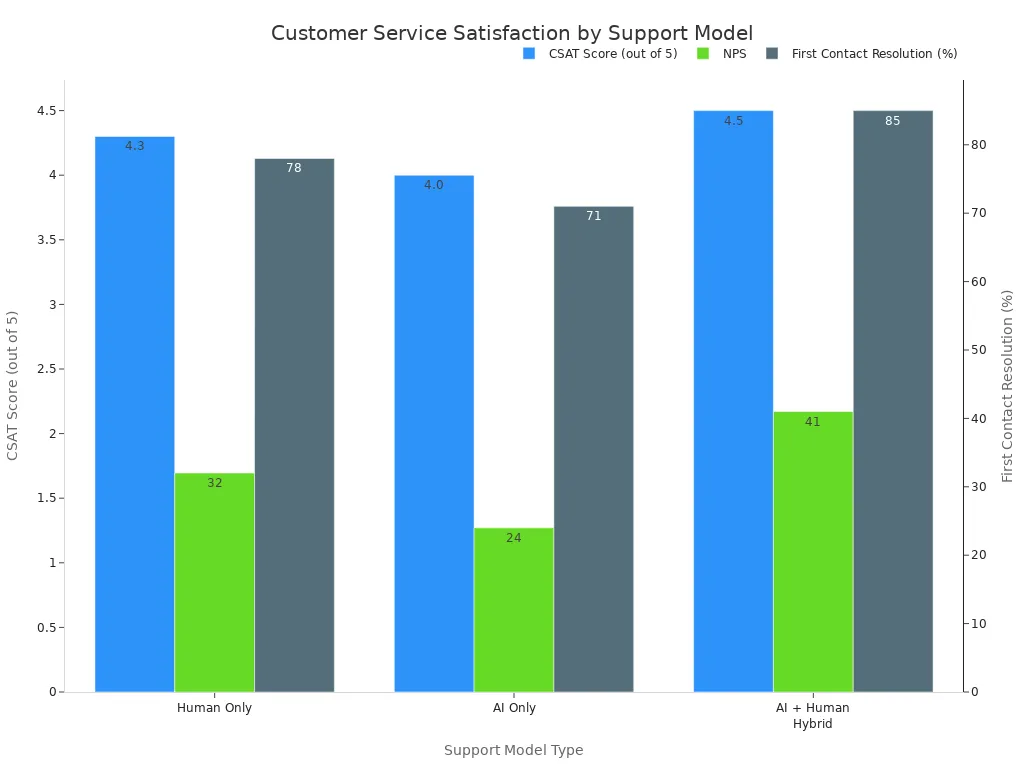
The Power of a Hybrid Model in Customer Service

A hybrid model for customer service creates a powerful partnership. It uses AI for what it does best and human agents for their unique skills. This human-AI collaboration improves the entire customer experience. The AI-human hybrid support structure is not about replacement but about enhancement.
AI's Role: Speed and 24/7 Availability
AI is the engine of efficiency in modern customer support. It excels at handling high-volume, repetitive tasks that can slow down a human team. This is where AI-driven customer service shines.
- Instant Responses: AI provides immediate answers to common questions.
- 24/7 Availability: It offers round-the-clock support, which 64% of consumers see as a top benefit.
- Task Automation: AI handles tasks like order status checks and password resets.
Sobot's AI-powered Chatbot is a perfect example. It provides instant, 24/7 self-service options. This frees up your human agents to focus on more important work, making your customer service team more productive.
Human's Role: Empathy and Complex Problem-Solving
While AI handles speed, human agents provide the heart of customer service. A human is essential for issues that are emotionally charged or technically complex. These situations require empathy and critical thinking, which AI cannot replicate. When customers face sensitive problems like billing disputes, they need a human who can listen and show genuine care. This empathetic connection builds trust and strengthens customer loyalty. The human touch in an AI-human hybrid support model is irreplaceable for a positive customer experience.
Are AI Chatbots More Accurate Than Human Agents?
Many businesses ask, "are AI chatbots more accurate than human agents?" The answer is not a simple yes or no. The question itself is flawed. We should instead ask where each excels. The debate over are AI chatbots more accurate than human agents misses the point of a hybrid model.
AI offers excellent data accuracy. It can pull up an order number or policy detail without error. A human, however, provides contextual accuracy. They can understand sarcasm, interpret vague language, and apply judgment in unique situations. So, are AI chatbots more accurate than human agents? For raw data, yes. For understanding nuance, no. The real question is not are AI chatbots more accurate than human agents, but how to combine their strengths. This is why the human-in-the-loop approach is so effective. The final answer to are AI chatbots more accurate than human agents is that they are accurate in different ways, and both are needed for great customer service. A human-in-the-loop system leverages the best of both worlds.
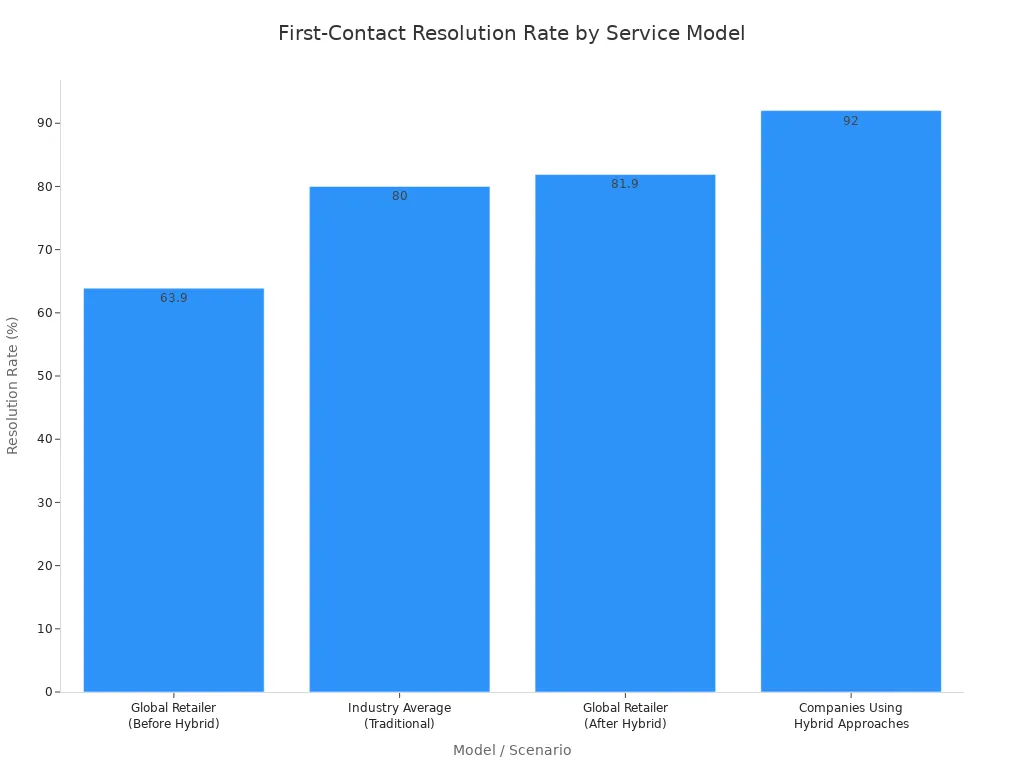
How to Structure Your Hybrid Support Model
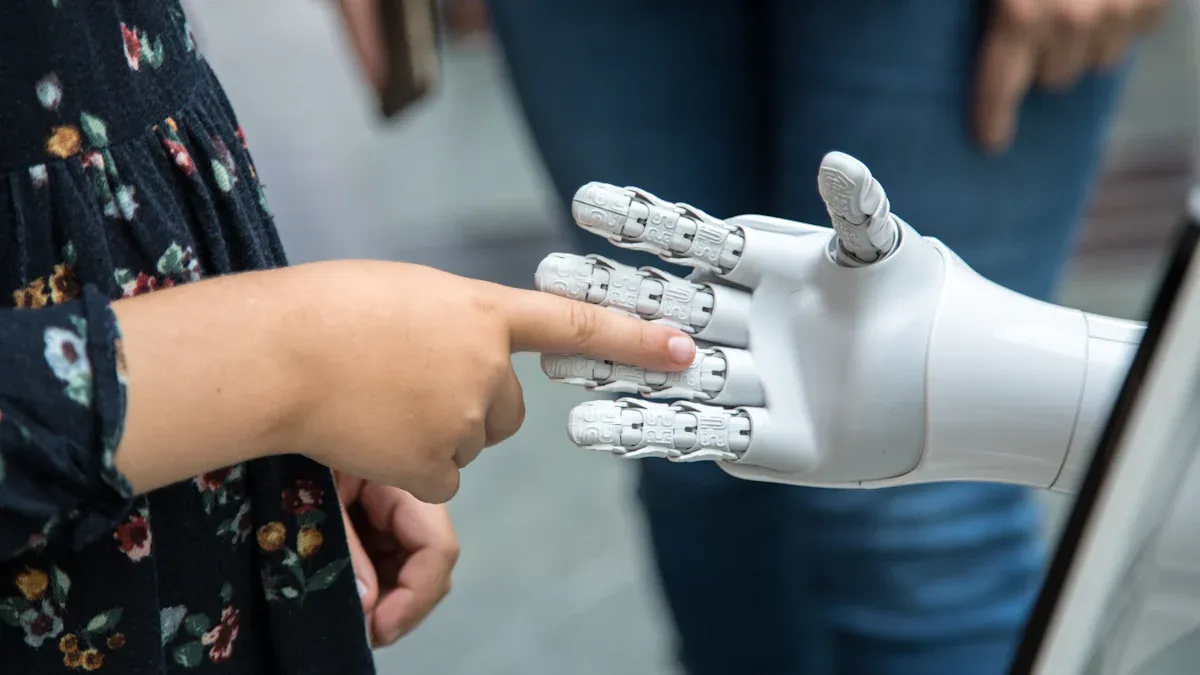
Building an effective hybrid support model requires careful planning. It is not enough to simply have both AI and human agents. You must design a system where they work together seamlessly. A well-structured model ensures a smooth customer journey and empowers your support staff. This structure is the backbone of a successful human-AI partnership in customer service.
Designing a Seamless AI-to-Human Handoff
The most critical moment in a hybrid support model is the handoff from AI to a human agent. A clumsy transfer forces customers to repeat themselves. This creates frustration and defeats the purpose of using AI. A seamless handoff is a feature, not a failure. It should be a smooth and reassuring transition.
Key principles for a successful handoff include:
- Full Context Transfer: The human agent must receive all relevant information. This includes the full chatbot transcript, customer details, and any internal notes from the AI, such as detected user frustration.
- A "Warm Welcome": The AI should clearly state it is making a transfer. The human agent should then greet the customer by name and acknowledge the issue immediately. For example: "Hi Alex, I see you're having trouble with your recent invoice."
- Clear Escalation Paths: Customers should have an easy and obvious way to reach a human. This is especially important for complex issues or when the AI fails to understand a request multiple times.
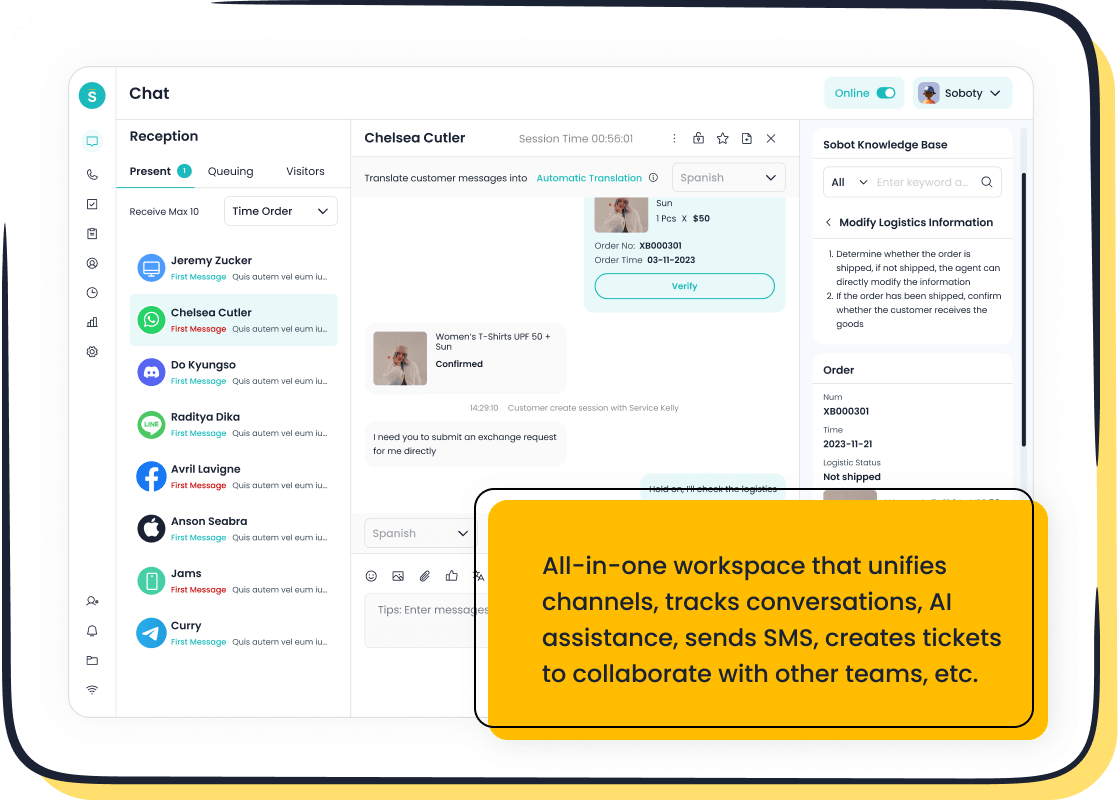
To achieve this, you need a platform that unifies your communication channels. Sobot's Live Chat brings all conversations into a single workspace. When a handoff occurs, the agent sees the complete customer history. This ensures no context is lost and the customer receives efficient, informed customer support.
Empowering Hybrid Teams with AI Co-Pilots
In a hybrid support model, AI is not just for customer-facing interactions. It also serves as a powerful assistant for your human agents. AI co-pilots work alongside hybrid teams, providing real-time support to help them resolve issues faster and more accurately. This approach transforms AI from a simple tool into a true partner.
AI co-pilots empower hybrid teams by:
- Providing Real-Time Suggestions: The AI listens to or reads conversations and suggests relevant knowledge base articles or pre-written responses. This reduces the time agents spend searching for information.
- Analyzing Customer Sentiment: The AI can detect a customer's emotional state, such as frustration or happiness. This helps hybrid teams prioritize urgent tickets and de-escalate tense situations.
- Automating Summaries: After an interaction, the AI can generate a concise summary. This saves time and ensures accurate record-keeping for future reference.
This AI assistance boosts agent productivity by over 13% and can reduce training time for new hires. By handling routine tasks, AI allows agents to focus on building relationships and solving complex problems. This leads to higher job satisfaction and lower turnover for hybrid teams.
Sobot's AI Solution acts as a copilot for your customer service agents. It provides real-time data, surfaces knowledge base suggestions, and offers insights to optimize performance. This empowers your hybrid teams to deliver exceptional customer service with every interaction.
Practical Implementation Steps
Implementing a hybrid support model is a strategic process. It requires more than just buying software. Follow these practical steps to build a successful structure for your hybrid teams.
-
Map the Customer Journey. First, audit your current customer experience. Document every touchpoint to identify which tasks are repetitive and ideal for AI. Simple, high-volume queries like "Where is my order?" are perfect for an AI chatbot. Complex or emotional issues should be reserved for human agents. This map will define the roles for AI and your hybrid teams.
-
Be Transparent with Customers. Always let customers know when they are interacting with an AI. Transparency builds trust. Clearly explain the AI's capabilities and provide an easy option to connect with a human agent at any time. This ensures customers feel in control of their customer support experience.
-
Continuously Train Your Agents. Your agents need to become experts at using the new tools. Training should cover how the AI works, when to trust its suggestions, and how to take over a conversation smoothly. Create regular feedback loops and skill assessments to ensure your hybrid teams are leveraging the AI effectively. Platforms like Sobot are powerful, and ongoing training helps you get the most from your investment in the hybrid support model.
The Tangible Results of a Hybrid Approach
Adopting a hybrid approach delivers clear, measurable benefits. This strategy improves the customer experience and strengthens business performance. The results are not just theoretical; they are proven in real-world applications. Companies see direct gains in satisfaction, efficiency, and revenue.
For the Customer: Faster, More Empathetic Support
For customers, the primary benefit of a hybrid model is a better customer service journey. AI-powered chatbots provide instant answers for simple questions, eliminating wait times. When a problem is complex, intelligent routing sends the customer to the right human agent without delay. This seamless process leads to a faster, more satisfying customer experience.
A leading smart device innovator, OPPO, saw this firsthand. After implementing Sobot’s hybrid customer service solution, they achieved a 94% positive feedback rate. This shows that customers appreciate the blend of speed and personalized human help.
For the Business: Higher Efficiency and Agent Morale
The business advantages of a hybrid model are equally compelling. By automating routine inquiries, companies can handle more customer support volume without increasing staff. This directly reduces operational costs. More importantly, it improves the quality of work for human agents. They can focus on solving complex problems, which increases job satisfaction and reduces burnout.
The OPPO customer story provides powerful proof.
- 83% Chatbot Resolution Rate: The AI successfully handled the vast majority of inquiries on its own.
- 57% Increase in Repurchase Rate: A better customer experience directly led to stronger loyalty and more sales.
These metrics demonstrate a clear link. An effective hybrid customer support system boosts efficiency, improves the customer experience, and drives revenue growth. It is a strategic investment in excellent customer service.
A well-orchestrated hybrid model is the new standard for exceptional customer service. Solutions like those from Sobot show this is the future of customer service. The synergy between AI and human intelligence is the definitive key to achieving both operational efficiency and genuine customer loyalty. This partnership creates the best possible customer service. For top-tier customer service, this is the path forward.
Embark on Your Contact Journey.
FAQ
What is a hybrid AI model in customer service?
A hybrid AI model combines artificial intelligence with human agents. AI handles simple, repetitive questions 24/7. Human agents then manage complex or emotional issues. This partnership creates a more efficient and empathetic customer service experience for everyone.
Why is a seamless AI-to-human handoff important?
A seamless handoff is crucial for a positive customer experience. It prevents customers from repeating their issues. The AI must transfer the full conversation history to the human agent. This ensures the agent is fully informed and can provide immediate, effective help.
How does an AI co-pilot help human agents?
An AI co-pilot acts as an assistant for your support team. It provides real-time suggestions, finds knowledge base articles, and can summarize conversations. This empowers agents to solve problems faster and more accurately, improving both productivity and service quality.
Which tasks are best for AI versus humans?
AI is best for: High-volume, data-driven tasks like checking order status, answering common questions, or resetting passwords.
Humans are best for: Complex problem-solving, handling customer complaints, and managing emotionally sensitive situations that require empathy and judgment.
See Also
AI Customer Service Software: Supercharging Business Efficiency and Productivity
An In-Depth Look at AI Solutions for Enterprise Call Centers
Transforming Customer Support: The AI Agent Revolution Is Here
Your Essential Guide to Artificial Intelligence Software in Call Centers

