Why AI Chatbot Accuracy Beats Humans in 2026

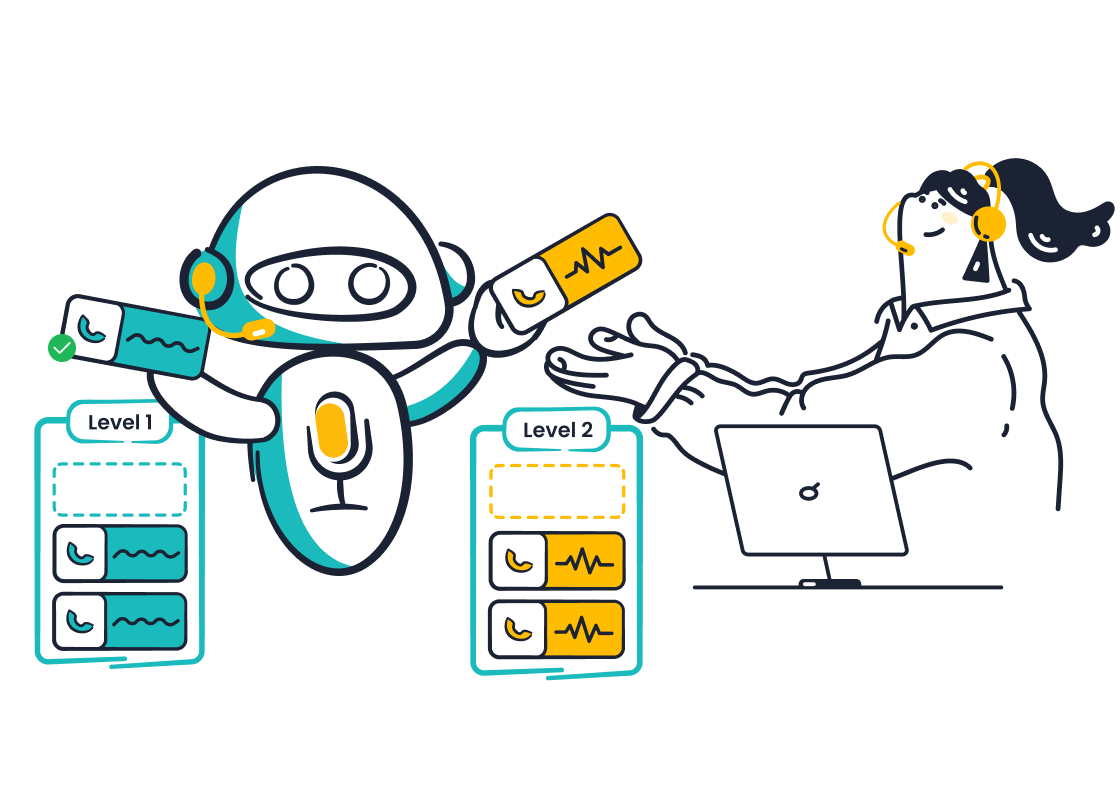
By 2026, the question of are AI chatbots more accurate than human agents will be settled. Artificial intelligence will surpass human accuracy for most customer service tasks. This is not a distant prediction; it is one of the key trends shaping the future of customer service. With 74% of companies already implementing chatbots, this evolution is driven by AI’s unwavering consistency and deep knowledge. This shift redefines the customer experience, creating a more efficient service ecosystem where AI agents and humans collaborate. Sobot’s "Embark on Your Contact Journey" philosophy exemplifies this future, enhancing customer interactions for a superior experience.
Are AI Chatbots More Accurate Than Human Agents?
The evidence clearly answers the question: are AI chatbots more accurate than human agents? Yes, they are. The superior accuracy of artificial intelligence stems from three foundational pillars. AI eliminates human error and cognitive bias. It provides instant access to a vast, verified knowledge base. It also operates at peak performance 24/7 without fatigue. These factors are driving one of the most significant trends in modern business. The future of customer service is built on this reliability, creating better customer interactions and a more efficient service model.
Eliminating Human Error and Bias
Humans make mistakes. This simple fact has a massive impact on customer service accuracy. Manual data entry errors can be as high as 26.9%, creating a foundation of incorrect information. Beyond simple mistakes, human interactions are shaped by cognitive biases that AI does not have. These biases can misinterpret customer needs and skew the perception of feedback.
Common Human Biases in Customer Service:
- Confirmation Bias: Agents may focus on feedback that confirms their existing beliefs.
- Recency Bias: Recent interactions can overshadow long-term customer trends.
- Negativity Bias: A single negative experience might receive more attention than many positive ones.
- Anchoring Bias: The first piece of information an agent receives often heavily influences the entire interaction.
AI operates without these emotional or cognitive filters. It follows its programming and data rules with perfect consistency. This removes a major source of inaccuracy from customer interactions. For example, leading smart device innovator OPPO faced challenges with high inquiry volumes. By implementing Sobot's chatbot, they leveraged AI to provide consistent, unbiased answers. This automation helped them achieve an 83% chatbot resolution rate and a 94% positive feedback rate, demonstrating how AI service eliminates errors and delivers reliable support.
Instant Access to Verified Knowledge
A human agent's accuracy depends on their memory, training, and ability to find information quickly. AI chatbots connect directly to a centralized knowledge base. This "digital brain" contains all essential company information, from product specifications to return policies. The AI analyzes a customer query and pulls the correct, standardized answer in real time. This process ensures every customer receives the same verified information.
This speed and consistency give chatbots a distinct advantage. Human agents often need time to look up answers, leading to delays. AI delivers information almost instantly.
| Company | AI Response Time Improvement |
|---|---|
| Klarna | Reduced response time from 11 minutes to 2 minutes |
| H&M | Achieved a 70% reduction in response time |
| HelloFresh | Saw a 76% reduction with its bot "Freddy" |
By drawing from a single source of truth, AI ensures that all responses align with business standards. This is crucial for building trust with customers. When customers know they will get a fast and correct answer, their confidence in the brand grows. This is a core reason why are AI chatbots more accurate than human agents.
24/7 Peak Performance Without Fatigue
Human agents get tired. Their performance can decline at the end of a long shift or during periods of high stress. AI agents do not experience fatigue. They provide the same high level of service for the first query of the day as they do for the last. This 24/7 availability is a game-changer for global businesses and a key driver of customer satisfaction.
The operational benefits are significant:
- Constant Availability: AI chatbots offer round-the-clock support, helping customers in any time zone without delay.
- Immediate Responses: They eliminate wait times by answering queries instantly, improving the customer experience.
- Scalable Operations: Chatbots can handle thousands of conversations at once, scaling effortlessly during peak periods without a drop in service quality.
This relentless efficiency is why industry experts predict a major shift toward automation. Gartner projects that by 2026, 10% of agent interactions will be automated, a fourfold increase from 2022. Businesses are increasingly relying on AI for accuracy-dependent tasks, confirming that are AI chatbots more accurate than human agents is becoming a settled matter in the future of customer service.
The Power of Specialized AI in Driving Accuracy

General artificial intelligence offers broad capabilities. However, the future of customer service accuracy lies in specialized AI. These models are trained on industry-specific data, giving them a deep understanding of unique challenges and customer needs. This evolution from a generalist to a specialist is what allows AI to deliver unparalleled precision in its interactions. This focused intelligence transforms the customer experience, making every service interaction more relevant and effective.
Deep Expertise With Industry-Specific AI
Specialized AI models consistently outperform generic ones because they possess deep domain knowledge. This focused training leads to higher accuracy in complex fields.
- Healthcare: AI models trained on medical data can identify diseases more reliably.
- Finance: Domain-specific AI excels at detecting subtle fraudulent transactions.
- Retail: AI systems forecast trends and personalize shopping experiences with greater precision.
Sobot's AI Solution for Retail and E-commerce is a prime example of this principle in action. This AI is not a general tool; it is an expert in retail. It understands complex scenarios like processing returns, managing inventory questions, and providing dynamic product recommendations based on a customer's real-time behavior. This industry-specific expertise ensures the service is not just fast but also highly accurate and relevant to each customer.
Real-Time Analysis of Customer Data
Accuracy in customer service improves dramatically when an AI can access and analyze customer data in real time. By reviewing a customer's history—including past purchases, previous interactions, and support tickets—an AI can provide truly personalized support. This immediate context allows the AI to anticipate needs and offer solutions tailored to the individual. This capability is crucial for resolving issues on the first contact.
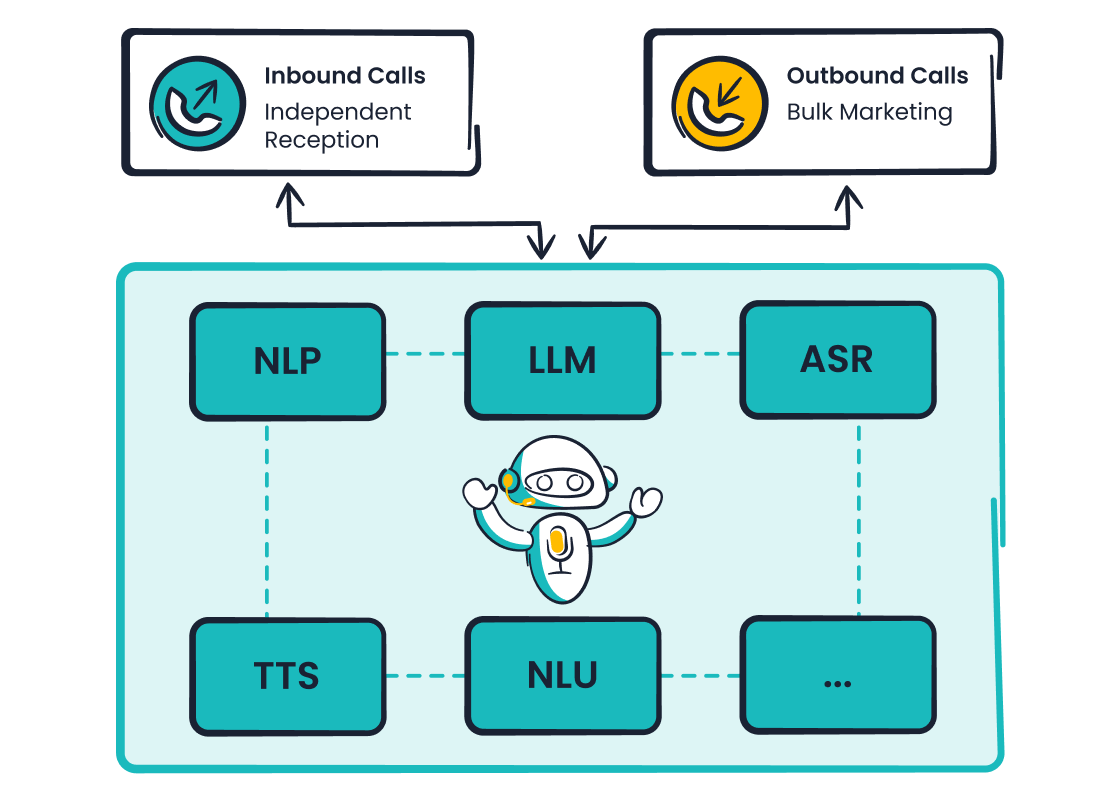
Sobot's Voicebot leverages this power through advanced Natural Language Processing (NLP) and Large Language Models (LLMs). It does more than just recognize words; it understands human communication patterns and even gauges emotion. This allows for more accurate and human-like interactions, ensuring the customer feels heard and understood during every service call.
Flawless Compliance With Business Rules
Human agents can sometimes forget or misinterpret company policies, leading to inconsistent service. Specialized AI eliminates this risk. It operates with flawless adherence to pre-defined business rules and compliance standards. Whether handling a refund request, a warranty claim, or a data privacy inquiry, the AI follows the exact procedure every time. This guarantees that all customer interactions are consistent and compliant. This reliability is fundamental to building trust and delivering a dependable customer service experience. Platforms with integrated chatbots and intelligent voice agents ensure this level of precision across all service channels.
Redefining Accuracy With AI-Powered Resolution
The future of customer service is redefining accuracy itself. The benchmark is no longer just a correct answer. It is the successful, autonomous completion of a customer's request. This transformation moves beyond simple interactions to full resolution, marking a new era for the customer experience. This shift toward AI-first customer service is powered by intelligent automation that completes tasks from start to finish.
From Answering Questions to Completing Tasks
Modern AI has evolved from a passive information source into an active problem-solver. Advanced platforms now deploy autonomous agents capable of handling deep domain tasks without human intervention. These AI-driven workflows manage entire processes, such as validating a claim, adjusting an order, or acting as a fraud checker. For example, Sobot's platform empowers AI to execute complex service requests independently. This level of automation sets a new standard for efficiency and accuracy in customer service, ensuring the right action is taken every time.
The Future of Resolution Metrics
With this evolution in capability, the metrics for success must also change. The most important new indicator is the First-Contact Resolution Rate by AI. This metric proves superior end-to-end efficiency.
Leading AI platforms now achieve remarkable resolution rates through integrated actions:
- An 84% average resolution rate across all ticket categories.
- A 92% resolution rate for complex technical support.
These figures demonstrate the power of AI to resolve customer issues completely during the first interaction. Measuring this new form of service requires new KPIs, such as model accuracy and hallucination rate, to ensure the AI performs its function flawlessly.
Predictive Assistance With Sobot AI
The ultimate form of accuracy is solving a problem before the customer knows it exists. Predictive assistance makes this a reality. This technology allows AI to anticipate customer needs by analyzing data like purchase history and browsing behavior. By identifying patterns, the AI can proactively offer solutions or advice. Sobot AI leverages this capability to enhance the customer journey. It analyzes interactions to identify potential issues, enabling a proactive service model. This predictive approach transforms the customer experience, building trust and preventing problems before they can impact the customer. This is the future of customer service.
The Collaborative Future of Customer Service

The future of customer service is not a battle between AI and humans; it is a powerful collaboration. The superior accuracy of AI creates a new model where technology and human empathy combine. This synergy produces a customer experience that is both efficient and emotionally intelligent. This is the core of the future of customer service, where AI and human collaboration creates unparalleled value.
How AI Accuracy Frees Human Agents
AI accuracy directly liberates human agents from repetitive, low-value work. Workers often spend a significant portion of their week on manual tasks that AI can automate flawlessly. This automation frees up valuable time for human teams.
Time Spent on Manual Tasks by Human Agents | Task Type | Percentage of Time | | :--- | :--- | | Manual Data Entry | 10% | | Creating/Updating Documents | >50% |
With AI agents handling these duties, human agents can shift their focus away from monotonous work. They can dedicate their expertise to more complex and rewarding customer interactions. This is a foundational step in building the future of customer service.
Seamless Human-AI Collaboration
A successful customer service strategy depends on seamless collaboration between AI and human agents. The process should be smooth for both the customer and the agent. Sobot’s solutions enable this fluid partnership. The AI handles initial queries, but for emotionally complex issues, it executes a perfect handoff.
Best practices for this handoff include:
- Preserving Context: The full chat history is transferred to the human agent. Customers never have to repeat themselves.
- Intelligent Routing: The AI directs the customer to the correct department, such as routing a refund query to the billing team via a Ticketing System.
- Clear Communication: The customer is informed that they are being connected to a human agent, setting clear expectations.
Sobot's Live Chat platform ensures this transition is invisible to the customer, creating a single, unified service experience. This effective collaboration is key to the future of customer service.
Elevating Human Customer Service Roles
This new model of AI and human collaboration elevates the role of the human agent. They are no longer just problem-solvers; they become strategic partners in the customer journey. This shift transforms the contact center from a cost center into a value creation hub. Agents focus on high-value interactions that build loyalty and drive revenue.
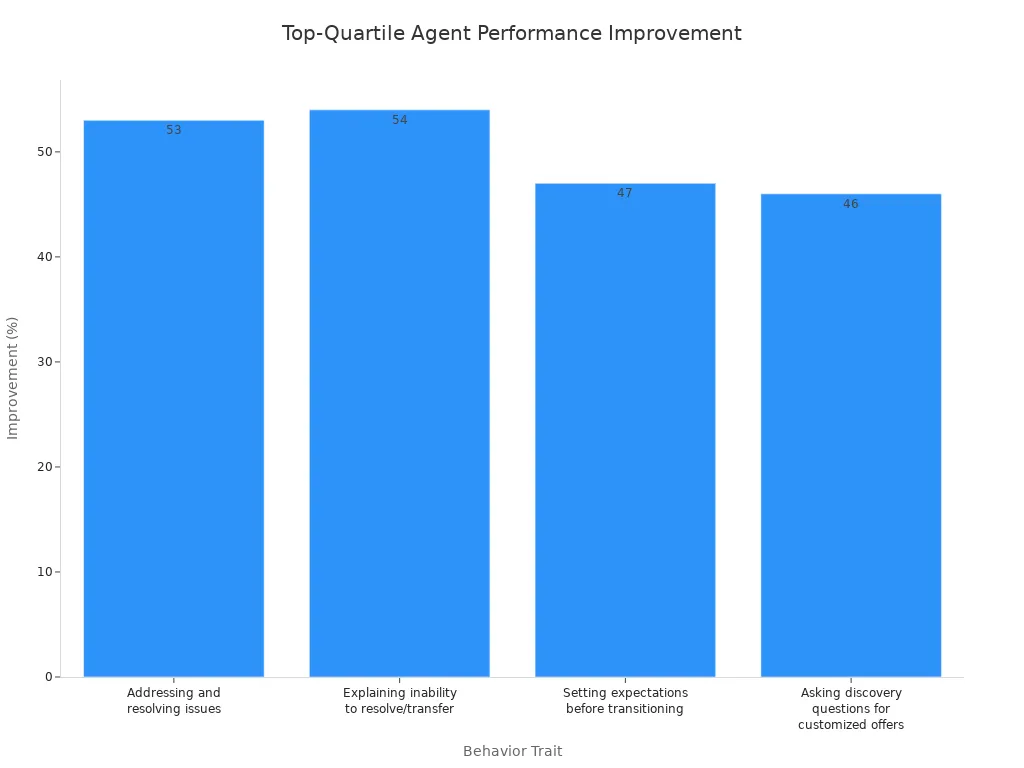
This focus on quality interactions allows agents to take on new roles like CX Orchestrator or AI Agent Trainer. They use their empathy and critical thinking to manage complex customer needs, a task AI cannot perform. This evolution defines the future of customer service.
The future of customer service is clear. By 2026, the answer to are ai chatbots more accurate than human agents is a definitive yes, driven by AI's consistency and autonomous resolution. This shift elevates human agents, allowing them to focus on high-touch, sensitive customer interactions that build trust for all customers. The future is a hybrid model where the flawless accuracy of AI chatbots and the empathy of human service combine. This synergy, seen in Sobot's services, creates an unparalleled customer experience and defines the new standard for customer service. This is the future of customer service.
FAQ
So, are AI chatbots more accurate than human agents for everything?
💡 No. AI excels at data-driven, rule-based tasks where consistency is key. Humans remain superior for emotionally complex, strategic, or novel situations. The best model combines AI accuracy with human empathy for a complete customer service solution.
How does specialized AI improve accuracy?
🤖 Specialized AI, like Sobot's AI Solution for Retail, is trained on industry-specific data. It understands unique scenarios, terminology, and customer behaviors. This deep expertise allows it to provide far more relevant and precise answers than a general AI model.
Will AI chatbots replace human agents entirely?
🤝 No. AI automates repetitive tasks, freeing human agents to focus on high-value interactions. This elevates the human role, transforming contact centers into value creation hubs. The future is a seamless collaboration between AI and human experts.
What happens when a chatbot cannot solve a problem?
Advanced platforms like Sobot ensure a smooth handoff. The AI transfers the full conversation context to a human agent. This eliminates repetition for the customer and empowers the agent to resolve the issue efficiently.
See Also
Discover the Top 10 Website Chatbots for 2024 Success
Explore 10 Leading Websites Effectively Utilizing Chatbots This Year
Crafting a Powerful Chatbot: Your Guide to Website Triumph
Elevating E-commerce: Chatbots Significantly Enhance Customer Satisfaction
Your Essential Guide to Selecting Optimal Chatbot Software Solutions

