Comparing AI for Bilingual Customer Service

Choosing between top AI voice agents like Google Dialogflow CX, Retell AI, and Sobot Voicebot depends on your specific business needs. Your choice hinges on required languages, integration complexity, and the desired customer experience. A strong multilingual voice AI strategy is essential for excellent global service, and AI-driven voice agents offer powerful solutions for this challenge. This comparison will help you select the optimal AI platform for your bilingual customer service. The right voice AI enhances customer support, while a poor one can damage it.
A recent survey shows 68% of global customers prefer support in their native language and will switch brands for better language service.
This article provides a clear comparison of these three leading ai tools seamless language-switching customer service. We will analyze their multilingual capabilities, voice performance, and integration to help your business choose the best AI voice solution. For instance, Sobot offers a comprehensive platform designed to enhance customer interactions across various channels, making it a strong contender in this space.
Top 3 AI Voice Agents: A Quick Comparison
Selecting the right AI voice agent requires a clear understanding of each platform's core strengths. Different businesses prioritize different aspects, from broad language coverage to ultra-low latency or seamless integration. This comparison provides a high-level overview of our top three contenders to help you quickly assess which AI voice solution aligns with your primary business goals. The right AI can transform your multilingual customer service.
Below is a summary of Google Dialogflow CX, Retell AI, and Sobot Voicebot. Each AI platform offers unique advantages for building powerful voice experiences.
| Platform | Best For | Key Language Features | Performance (Latency) | Starting Price |
|---|---|---|---|---|
| Google Dialogflow CX | Businesses deeply integrated with the Google Cloud ecosystem. | Extensive multilingual support with features like:
| High-quality voice performance with average end-to-end latency around 920ms. | Pay-as-you-go model based on usage. |
| Retell AI | Companies prioritizing the most human-like, real-time voice conversations. | Supports multiple languages and accents for its AI models. Focuses on natural conversational flow. | Industry-leading low latency, with an average end-to-end response time of 620ms. | Tiered pricing based on minutes of voice usage. |
| Sobot Voicebot | Enterprises seeking an all-in-one, customizable contact center solution with a no-code builder. | Truly multilingual capabilities, supporting various languages and dialects for personalized AI voice interactions. | Designed for human-like, low-latency conversational flow to enhance customer satisfaction. | Custom pricing based on business needs. |
Performance is a critical factor for a natural-feeling voice interaction. Lower latency means less awkward pausing, making the AI voice feel more responsive and human. Retell AI currently leads in this area, though all three AI voice agents deliver a high-quality voice experience. The AI technology behind these tools is advancing rapidly. These multilingual capabilities are essential for global brands. A good AI voice agent improves the customer journey.
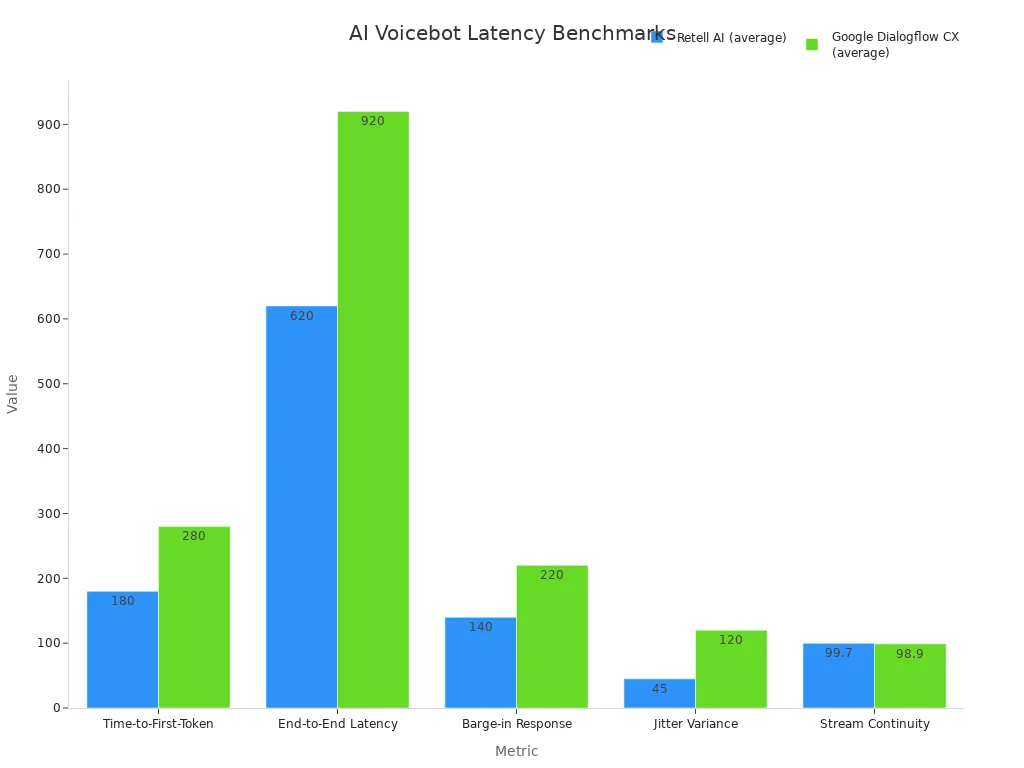
Note: The chart illustrates the performance difference between Retell AI and Google Dialogflow CX. Sobot's AI voice is engineered for efficient, human-like conversations, focusing on overall resolution time and customer satisfaction. Its multilingual voice system is a key feature.
Deep Dive: Top 3 AI Voice Agents
The summary table provides a quick overview. Now we will explore each platform in greater detail. This deep dive analyzes the specific strengths, language capabilities, and integration frameworks of Google Dialogflow CX, Retell AI, and Sobot Voicebot. Understanding these nuances is crucial for selecting the right AI for bilingual customer service.
Google Dialogflow CX: For Broad Ecosystem Integration
Google Dialogflow CX is a powerful choice for enterprises already invested in the Google Cloud Platform (GCP). Its primary strength is its native integration with the wider Google ecosystem. This allows businesses to build sophisticated, data-driven voice agents that leverage other powerful Google services. The platform is designed for creating complex, multi-turn conversations for large-scale contact centers.
Language Capabilities: Dialogflow CX offers extensive multilingual support. This is a key requirement for any global business. The platform supports speech-to-text in 32 languages and text-to-speech in 28 languages. This broad language coverage enables companies to deploy a single agent that can serve a diverse customer base. You can find a complete, up-to-date list on the official Google Cloud language reference page.
Performance and Realism: The voice performance is high-quality, using Google's advanced Text-to-Speech (TTS) and Speech-to-Text (STT) models. While its average latency of around 920ms is higher than some specialized competitors, the voice quality is clear and reliable. The AI is capable of handling complex conversational flows, making it suitable for detailed support tasks.
Integration and Pricing: Integration is where Dialogflow CX truly shines for GCP users. It connects seamlessly with a suite of Google Cloud services.
- BigQuery: For analyzing conversation data.
- Google Cloud Functions: For triggering serverless actions.
- Speech-to-Text (STT): For transcription.
- Text-to-Speech (TTS): For voice synthesis.
This deep integration simplifies development for teams familiar with GCP. The pricing model is pay-as-you-go, based on the volume of requests processed. This makes it scalable for businesses of all sizes.
Retell AI: For Human-like Performance
Retell AI focuses on one primary goal: creating the most human-like, real-time voice conversations possible. It is the ideal platform for companies that prioritize the quality of the customer experience above all else. The AI is engineered to eliminate awkward pauses and enable natural turn-taking, making callers feel like they are speaking with a person.
Language Capabilities: Retell AI provides multilingual support for its advanced AI models. The platform's main focus is less on the sheer number of languages and more on the quality of the interaction in the languages it supports. The AI excels at understanding different accents and maintaining a natural conversational flow, which is critical for effective multilingual communication.
Performance and Realism: This is Retell AI's standout feature. The platform achieves industry-leading low latency through a sophisticated technology stack.
- Proprietary Voice AI Orchestration: Manages the entire system for speed.
- LLM-powered Conversation Understanding: Uses models like GPT-4o for fast, intelligent responses.
- Real-time Function Calling: Allows the AI to perform actions instantly.
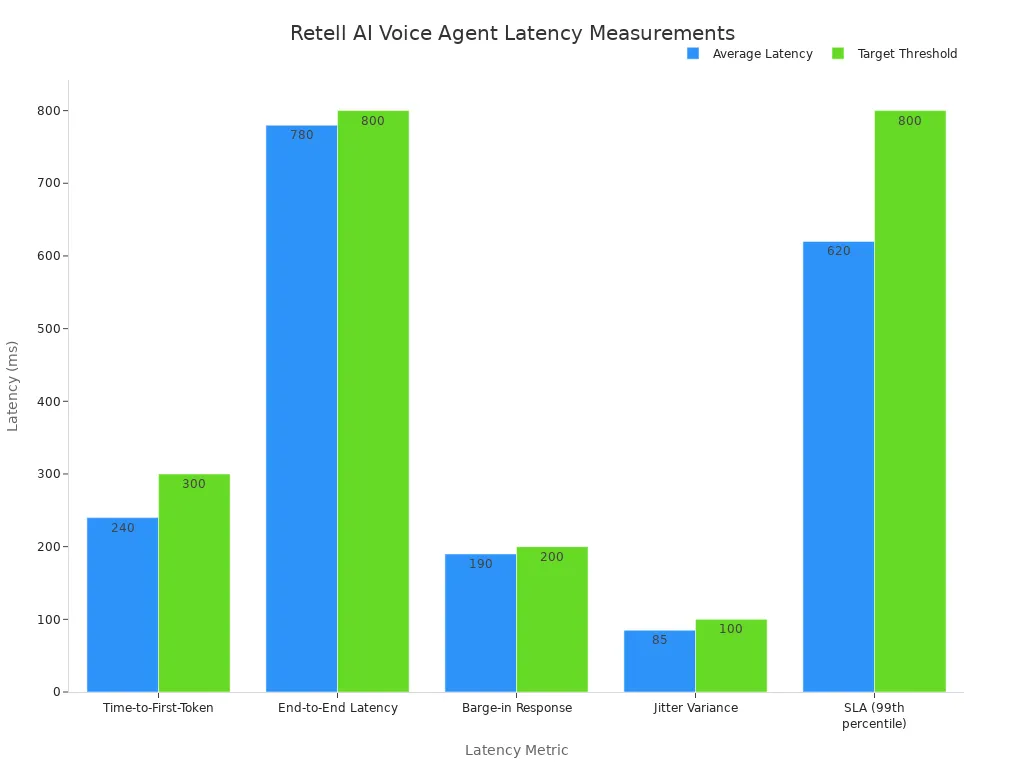
This technology results in an average end-to-end latency of under 800ms. The AI can even respond to interruptions ("barge-in") in under 200ms, a key element of human conversation.
Integration and Pricing: Retell AI is designed to be integrated into other systems via its API. This makes it a flexible component for businesses that want to add a best-in-class voice AI to their existing tech stack. Its pricing is tiered and based on the number of voice minutes used, offering a clear cost structure tied to usage.
Sobot Voicebot: For All-in-One Integration & Customization
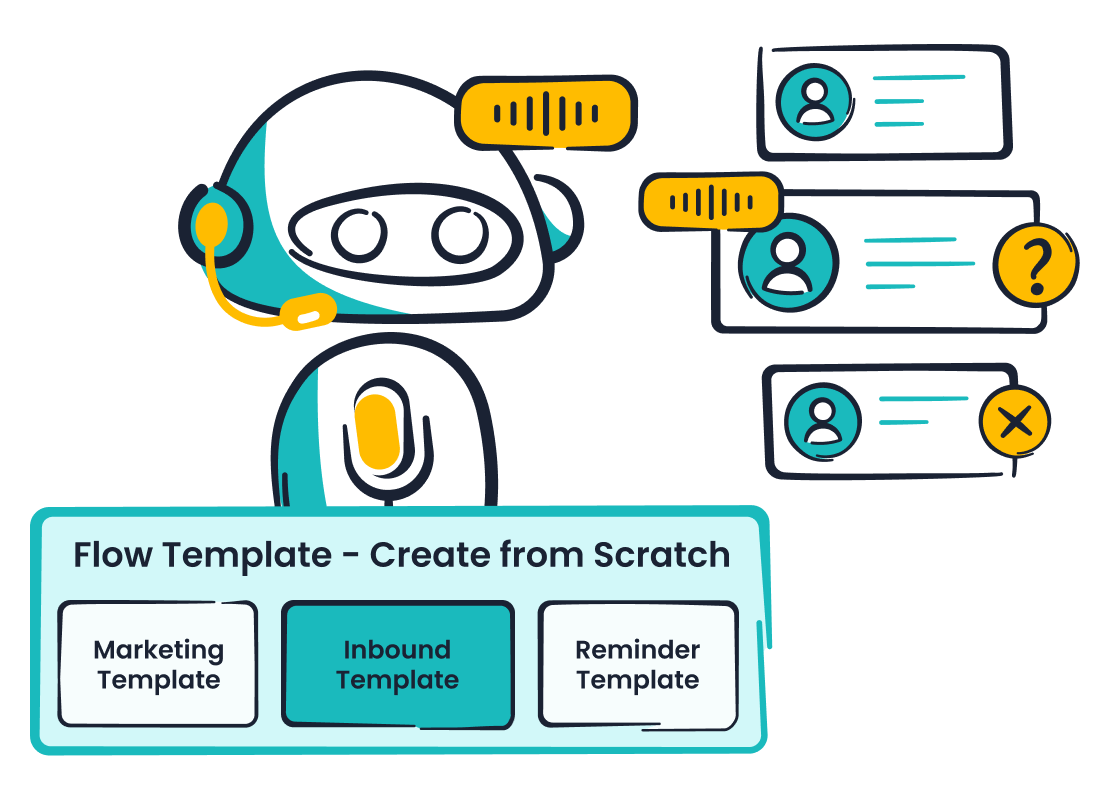
Sobot Voicebot is designed for enterprises seeking a comprehensive, customizable, and fully integrated contact center solution. It moves beyond a simple voice agent. Sobot provides an entire platform to unify customer interactions across all channels. This all-in-one approach simplifies operations and creates a consistent customer experience. The AI is built for practical business outcomes like improved first-call resolution and higher customer satisfaction.
Language Capabilities: Sobot offers truly multilingual capabilities. The Voicebot supports various languages and dialects, enabling businesses to deliver personalized and effective multilingual support. This is essential for global brands aiming to connect with customers in their native language. The platform's design focuses on making these multilingual customer interactions seamless and natural.
Performance and Realism: The Sobot Voicebot is engineered for human-like, low-latency conversational flow. The goal is to reduce wait times and boost customer satisfaction scores. By automating over 90% of routine interactions, the AI voice agent frees up human agents to handle more complex issues. This human-AI collaboration ensures a smooth handoff when needed, enhancing the overall quality of service.
Integration and Customization: Sobot's strength lies in its all-in-one platform and powerful customization.
The platform includes a no-code, drag-and-drop visual flow builder. This allows businesses to design and deploy complex conversation flows quickly without extensive IT support.
Sobot integrates a full suite of tools into one unified workspace:
- Voicebot: For automated inbound and outbound voice calls.
- Chatbot: For 24/7 multilingual text-based support.
- Live Chat: To unify messages from all channels for human agents.
- Ticketing System: To automate workflows and manage SLAs.
This integrated approach provides a complete solution for modern contact centers. The success of this model is proven by its customers. For example, Weee!, America's largest online Asian supermarket, faced challenges with language barriers. By implementing Sobot's multilingual voice product, Weee! increased agent efficiency by 20% and achieved a 96% customer satisfaction score. This case demonstrates the power of an integrated multilingual voice AI solution to solve real-world business problems for a global customer base.
Pricing: Sobot offers custom pricing tailored to specific business needs. This model reflects its position as a comprehensive enterprise solution, ensuring that companies get a package that aligns with their operational scale and strategic goals.
How to Choose the Right AI Agent for Your Business
Selecting the right AI voice agent is a strategic decision. It requires a careful evaluation of your business needs against each platform's capabilities. This checklist will guide you through choosing the best AI for your multilingual customer service.
Assess Your Core Multilingual Needs
First, understand your customer base. Analyze website traffic and support ticket history to identify your top three to five priority languages. This focus helps you deliver high-value multilingual support from the start. A successful AI voice strategy depends on meeting your audience where they are.
- Regularly gather feedback from diverse customers through surveys.
- Monitor support ticket languages with analytics tools to keep resources current.
- Track language-specific metrics like response times and satisfaction ratings to find service gaps.
Test for Latency and Real-World Performance
Synthetic benchmarks often fail to predict live AI voice performance. Real-world testing is essential. An AI-powered testing agent can simulate realistic customer interactions to measure response latency accurately. Delays in an AI voice conversation create a poor experience.
Remember, each second of latency can reduce customer satisfaction by 16%. A three-second delay might lower satisfaction by nearly 50%. Silence makes an AI feel incompetent or broken. This makes low-latency AI crucial for positive customer interactions.
Verify Integration with Your Customer Tech Stack
Your new AI voice agent must work with your existing systems. Many legacy CRMs have slow, rate-limited APIs not built for the real-time data access that a voice AI needs. This can cause high latency. Verify that the AI platform offers robust APIs. Ensure it can integrate smoothly with your helpdesk and CRM. An all-in-one solution like Sobot, which includes a voicebot, chatbot, and ticketing system, can prevent many integration challenges. This provides a unified platform for all support channels.
Model the Total Cost of Ownership
The initial price of an AI voice solution is only part of the story. You must calculate the total cost of ownership (TCO). Consider all expenses to make an informed decision.
- Usage and Features: Costs for advanced AI engines, call volume, and multilingual features can add up.
- Integration and Customization: Factor in expenses for custom development, onboarding, and connecting to your CRM.
- Hidden Costs: Do not forget ongoing costs for training, compliance, data governance, and premium support plans.
A comprehensive AI platform often provides better long-term value than a standalone voice tool.
Key Features for Multilingual Conversational AI

Effective multilingual conversational AI relies on a core set of advanced features. These capabilities transform a standard voice agent into a powerful tool for global customer support. Understanding these key features is essential for selecting the right AI solution. They are the foundation of high-quality ai tools seamless language-switching customer service.
Automatic Language Detection
A critical feature for any multilingual voice AI is automatic language detection. This technology allows the AI to identify the customer's language from the very first interaction. The AI system analyzes the initial messages to determine the correct language.
For confident detection, the AI often requires at least 10 characters of text. Once the language is set, the AI continues the conversation in that language. This creates a smooth experience for the customer. If detection is not possible, the system uses a fallback language.
AI Tools for Seamless Language-Switching Customer Service
Modern AI platforms provide tools for effortless language switching. These ai tools seamless language-switching customer service are designed to break down communication barriers. Key features include real-time translation and subtitles during voice calls. This dynamic translation capability allows agents and customers to communicate without difficulty. The AI uses Natural Language Processing (NLP) for advanced speech recognition. This helps the AI understand slang or grammatical errors, preventing misunderstandings and improving the quality of the support service. This is a core function of ai tools seamless language-switching customer service.
Voice Cloning and Brand Voice Consistency
Maintaining a consistent brand voice across different languages fosters trust and recognition. Voice cloning technology allows a business to create a unique and cohesive AI voice. This consistent voice makes a brand feel more familiar to the customer. It helps build an emotional connection and supports long-term loyalty. A strong multilingual voice AI strategy uses a consistent voice to reassure customers of the brand's professionalism. This is why ai tools seamless language-switching customer service must support brand voice consistency.
Low-Latency Conversational Flow
A low-latency conversational flow is vital for a natural-feeling AI interaction. This means the AI voice responds in under 300 milliseconds, mirroring the natural pause in human conversation. High latency creates awkward delays, making the AI feel unresponsive. A fast, responsive multilingual conversational AI with excellent voice recognition builds user trust and engagement. Quick replies from the AI voice prevent customer frustration. This directly impacts satisfaction and first-call resolution, making low latency a non-negotiable feature for any advanced AI voice platform. The AI's speech recognition and translation must be fast.
Choosing the right AI platform is crucial for your global business. Google Dialogflow CX offers deep ecosystem integration. Retell AI provides ultra-realistic AI conversations. Sobot delivers a comprehensive, all-in-one AI platform. The best AI depends on your unique multilingual needs. A powerful multilingual AI service can transform your global customer interactions. This AI technology is key for customer satisfaction.
Use the checklist to pilot the AI that best fits your goals. Test for first-call resolution and improved customer satisfaction. The right multilingual AI solution supports your customers and boosts satisfaction. This is the future of multilingual customer care.
FAQ
Why is AI essential for global customer service?
An AI agent provides 24/7 multilingual support. This AI capability allows businesses to serve a global customer base effectively. The AI handles inquiries instantly in many languages. This improves customer satisfaction and operational efficiency. A good AI is a powerful tool for any international company.
How do I choose the right AI platform?
First, assess your language needs and technical resources. Compare platforms on key features.
- Performance: Test the AI for low latency.
- Integration: Ensure the AI works with your CRM.
- Customization: A no-code AI builder offers flexibility. An all-in-one AI solution often provides the best value.
What makes an AI conversation feel human-like?
Low latency is the most critical factor. The AI must respond quickly to avoid awkward pauses. Advanced speech recognition also helps the AI understand accents and intent. This combination makes the AI interaction feel natural and engaging, which is a key goal for any modern AI.
Can a single AI handle both voice and chat?
Yes, omnichannel AI platforms can manage interactions across multiple channels. An integrated AI solution like Sobot provides a unified experience. This AI ensures consistency whether the customer calls, chats, or sends an email. This approach simplifies management for your global team.
See Also
Evaluating AI Solutions for Enterprise Call Center Performance
AI Customer Service Software: Boosting Efficiency in Support Operations
Comparing Leading Voice of Customer Software for Business Insights
Your Essential Guide to Call Center Artificial Intelligence Software
How AI Customer Service Agents Are Revolutionizing Support Experiences

