7 Steps to Integrate AI Customer Service for Ecommerce

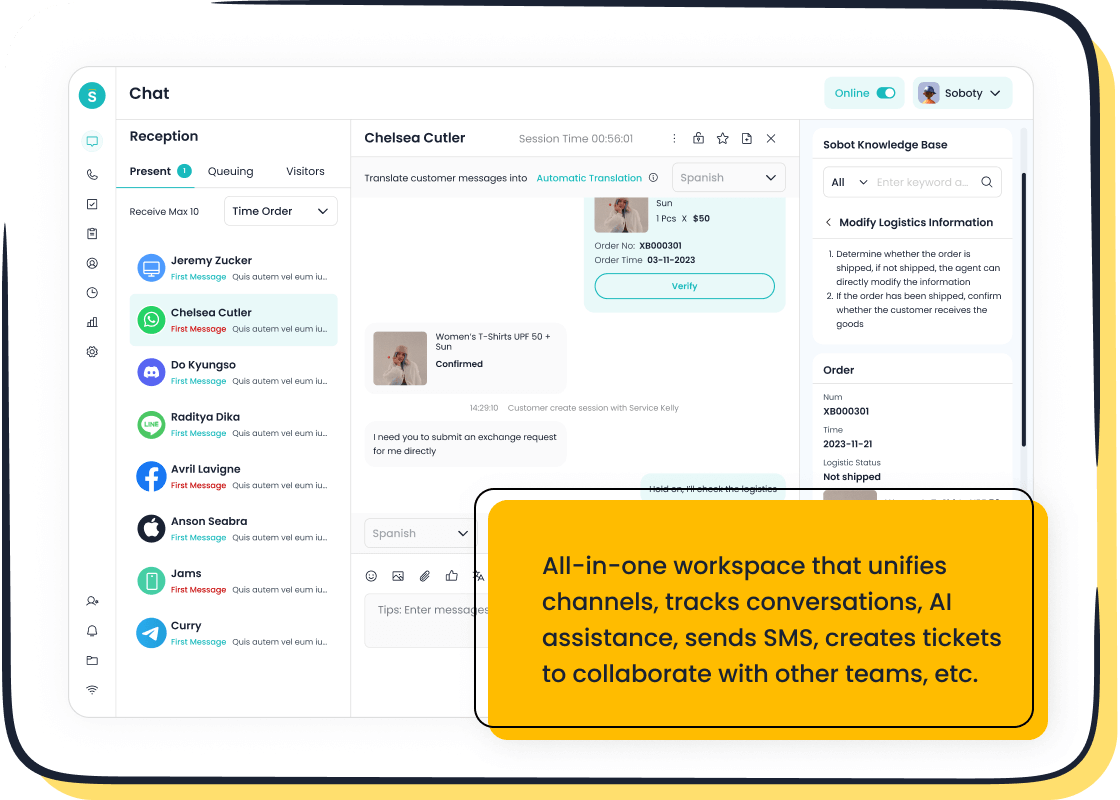
You know how tough it gets when your ecommerce business grows and customer questions pile up. AI is changing that fast. More than half of ecommerce companies now use AI tools to boost customer satisfaction by over 25%. Sobot steps in with solutions like chatbots, AI agents, live chat, voice call centers, and ticketing systems. Brands like OPPO saw an 83% chatbot resolution rate after using Sobot. If you want ai customer service for ecommerce that scales, Sobot helps you deliver better service and grow your business.
Sobot makes customer support easier and smarter.
| Statistic | Value |
|---|---|
| Percentage of ecommerce businesses using AI | 51% |
| Projected market size for AI in ecommerce by 2033 | $51 billion |
| Expected growth rate (CAGR) | 24.3% |
Identify Customer Service Challenges

Analyze Current Support Issues
You know your customers expect fast answers and smooth support. When you look at your current system, you might spot some common problems. Many ecommerce businesses face issues like slow responses, inconsistent service across channels, and impersonal interactions. Sometimes, your team feels disconnected or struggles with unclear KPIs. Customers want easy entry points and self-serve options, but these features often go missing.
- Lack of easy entry points
- Inconsistent multi-channel service
- Slow responses
- Lack of communication
- No self-serve option
- Impersonal customer service
- Disconnected team
- Unclear KPIs
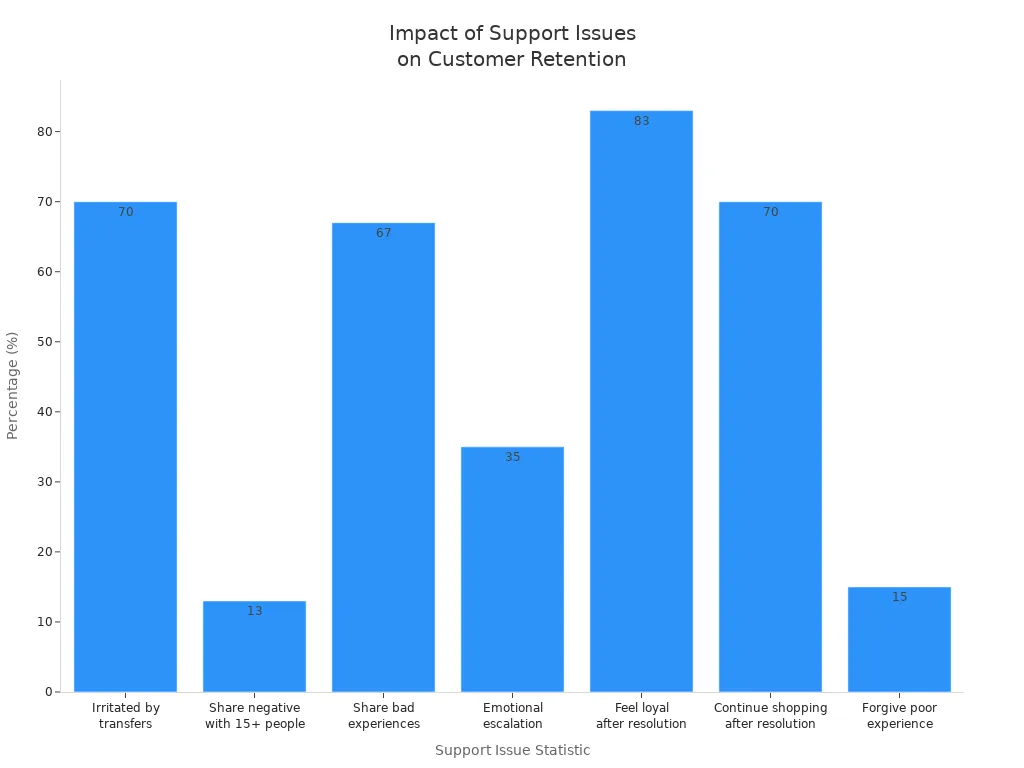
If you ignore these challenges, you risk losing customers. In fact, 63% of American consumers switch companies because of poor customer service. Unresolved support issues can hurt your reputation and retention rates. Take a look at the numbers below:
| Statistic | Description |
|---|---|
| 70% | Customers are irritated by department transfers during support calls, leading to negative experiences. |
| 13% | Unhappy customers share their negative experiences with 15 or more people, amplifying reputation damage. |
| 67% | Customers report sharing bad experiences, indicating widespread negative word-of-mouth. |
| 35% | Emotional escalation affects customers, leading to damaging word-of-mouth. |
| 83% | Customers feel more loyal to brands that effectively resolve complaints. |
| 70% | Customers are willing to continue shopping with businesses that resolve their issues effectively. |
| 15% | Only a small percentage of customers are willing to forgive brands with very poor customer experiences. |
If you want to boost loyalty and keep shoppers coming back, you need to fix these support issues. That’s where ai customer service for ecommerce comes in. Sobot helps you tackle these challenges with tools like live chat, chatbots, and omnichannel support.
Gather Customer Feedback
You can’t improve your ai customer service for ecommerce without listening to your customers. The best brands use a continuous feedback loop. This means you collect, understand, and act on customer insights in real time.
The most successful brands operate on a continuous feedback loop, a system for collecting, understanding, and acting on customer insights in real time. This is what we call a Feedback Operating System.
Try these methods to gather actionable feedback:
- Ask for feedback right after a purchase or support interaction.
- Keep surveys short and relevant.
- Use multiple channels, like email surveys and social media polls.
- Act on feedback and follow up with customers.
- Measure feedback effectiveness over time.
Collecting feedback in real time, such as through QR codes or links on receipts, helps you capture fresh thoughts. This boosts response rates and gives you data you can use. When you feed this information into your ai customer service for ecommerce, you help Sobot’s AI tools learn and improve. Customer feedback guides your brand’s growth and shows you what matters most to your shoppers.
Set Objectives & KPIs for AI in E-Commerce
Define Success Metrics
Before you roll out ai customer service for ecommerce, you need to know what success looks like. Clear metrics help you track progress and prove value. Start by picking KPIs that show how well your AI tools work for your business. Here are some of the most common ones:
- Cost Per Resolution: How much you spend to solve each customer issue.
- Agent Utilization Rate: How well your team uses their time when AI handles simple questions.
- Conversion Rate: How many AI chats lead to sales or other key actions.
You can also look at these important numbers:
| KPI | Description |
|---|---|
| Referrals to Human Agents | Shows if AI can handle most questions or needs to pass them to people. |
| AI-Connected Conversion Rates | Tracks how many sales come from AI conversations. |
| Total Time Savings | Measures how much time AI saves compared to humans. |
| Automation Rates | Counts how many tasks AI does on its own. |
| Cost Reductions | Shows how much money you save by using AI. |
| Average Order Value (AOV) | Compares order sizes before and after AI. |
| AI-Influenced Sales | Tracks sales linked to AI chats or suggestions. |
| Time From First Engagement to Purchase | Checks if AI helps customers buy faster. |
| AI Assistant Satisfaction Scores | Collects customer ratings after AI chats. |
Don’t forget to check feedback from users and review AI chats for accuracy. This helps you spot problems and keep improving.
Align AI Goals with Business Needs
You want your ai customer service for ecommerce to do more than just answer questions. It should help your business grow. Here’s how you can make sure your AI goals match your company’s big picture:
- Identify Business Needs: Look at where your team struggles or spends too much time. Maybe order tracking takes too long or agents answer the same questions over and over.
- Set Clear AI Objectives: Decide what you want AI to do. Do you want faster replies, more sales, or happier customers?
- Work With Other Teams: Get ideas from sales, marketing, and support. They know what customers want and where things slow down.
- Monitor and Adjust: Keep an eye on your KPIs. If something isn’t working, tweak your AI setup.
When you align your AI goals with your business needs, you get better results. For example, companies using AI for customer service often see a 10-15% jump in customer retention and save money by automating simple tasks. AI can even help boost sales by making smarter product suggestions. With the right objectives, your ai customer service for ecommerce becomes a real driver for growth.
Assess Your Tech Stack
Review Existing Systems
Before you bring in ai customer service for ecommerce, you need to know what you already have. Start by looking at your current tools and platforms. Ask yourself: What works well? Where do you see slowdowns or confusion? You want to spot the pain points that AI can fix.
Here’s a simple way to review your systems:
- Understand how your team handles customer questions right now. Look for steps that take too long or cause mistakes.
- Do a quick SWOT analysis. List your strengths, weaknesses, opportunities, and threats when it comes to using AI.
- Set clear goals for what you want AI to do. Maybe you want faster replies or fewer missed chats.
- Make sure any new AI tools can grow with your business. You don’t want to outgrow your tech in a year.
- Check if your current systems can connect with new AI tools. Smooth integration keeps your business running without hiccups.
Tip: Write down your findings. This helps you see where ai customer service for ecommerce can make the biggest impact.
Ensure Compatibility for Integrating AI
Now, let’s talk about making sure everything works together. AI needs good data and the right setup to shine. If your systems are old or don’t talk to each other, you might run into trouble.
Common compatibility issues include:
- Poor data quality. If your info is messy or outdated, AI won’t give good answers.
- Technical gaps. Some older systems just can’t handle modern AI tools.
- Outdated infrastructure. Old platforms may slow down or even block AI features.
You want your ai customer service for ecommerce to run smoothly. Make sure your website, CRM, and support channels can share data with your new AI tools. If you use Sobot, you get a platform built for easy integration and strong data connections. This means you can add AI features without breaking your current setup. When your tech stack is ready, you set the stage for better customer service and faster growth.
Choose AI Customer Service Tools for Ecommerce
Evaluate Sobot Live Chat & Omnichannel Solutions

When you look for ai customer service for ecommerce, you want tools that make your life easier and your customers happier. Sobot gives you a full suite of options built for e-commerce. You get Live Chat, AI chatbot, AI Agent, voice call center, voicebot, ticketing system, and a unified customer contact center. Each tool works together to help you deliver fast, friendly, and personalized shopping experiences.
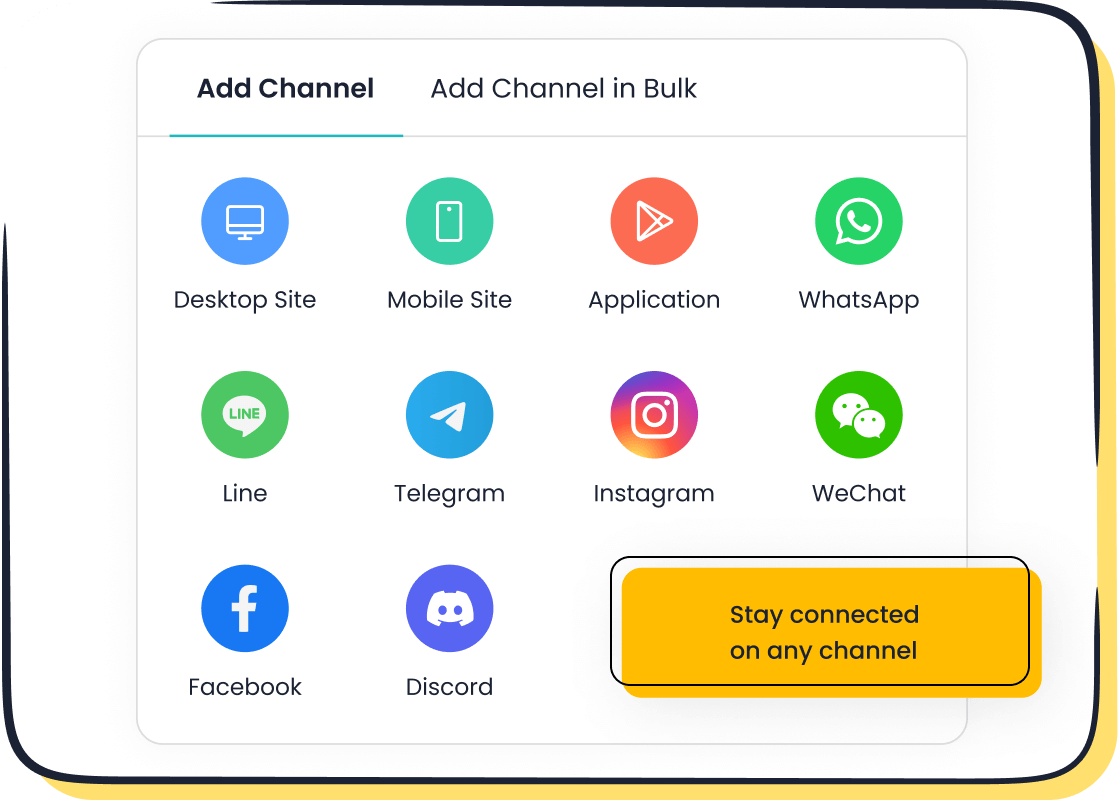
Sobot Live Chat stands out with true omnichannel integration. You can chat with customers on Instagram, Facebook, WhatsApp, and more—all in one place. This means you never miss a message, and your team can help shoppers wherever they are. Sobot’s Five-AI System brings together AI Chatbot, AI Agent, AI Copilot, AI Insight, and Generative AI. These features help you answer questions, track orders, and recommend products. You can even connect your shopping cart and offer real-time order tracking, making e-commerce support seamless.
Here’s a quick look at what Sobot Live Chat offers:
| Feature | Description |
|---|---|
| True Omnichannel Integration | Consolidates conversations from Instagram, Facebook, WhatsApp, and more. |
| Five-AI System | Combines AI Chatbot, Agent, Copilot, Insight, and Generative AI for better service. |
| E-commerce Optimization | Includes shopping cart integration, order tracking, and product recommendations. |
You get more than just chat. Sobot’s omnichannel support lets you manage all your e-commerce channels from one dashboard. Agents can switch between channels without losing track. Customers get help in their favorite way, which boosts satisfaction and makes personalization easy.
Compare Features and Integration Options
Choosing the right ai customer service for ecommerce means looking at features and how well tools fit your business. Sobot makes integration simple. You can connect with your CRM, automate tasks, and use built-in analytics to see what works. Sobot’s platform is easy to set up and grows with your e-commerce needs.
Let’s see how Sobot stacks up:
| Feature | Sobot | ControlHippo |
|---|---|---|
| Rating | 4.9/5 | 4.5/5 |
| Automation | Yes | Limited |
| Predictive Insights | No | Yes |
| Real-time Chat Summarization | No | Yes |
| CRM Integration | Limited | Smooth |
| Multi-channel Support | Basic | Comprehensive |
Sobot’s proven results speak for themselves. OPPO, a global e-commerce leader, used Sobot to reach an 83% issue resolution rate and saw a 57% jump in repurchase rate. These numbers show how ai customer service for ecommerce can drive real growth and better personalized shopping experiences.
| Metric | Result |
|---|---|
| Issue Resolution Rate | 83% |
| Increase in Repurchase Rate | 57% |
If you want to boost personalization, improve customer loyalty, and create personalized shopping experiences, Sobot gives you the tools to do it. You can handle more questions, offer faster help, and make every shopper feel special. That’s the power of ai customer service for ecommerce in today’s e-commerce world.
Run a Pilot and Train AI
Launch a Limited Test
You don’t have to go all in with AI right away. Start small. Pick one channel or a single product line to test your new ai-powered chatbots and ai agents in customer service. This way, you can spot problems early and fix them before rolling out to everyone. A pilot helps you see how your team and customers react to the new system.
Here’s what works best when you launch your pilot:
- Begin with a limited deployment. Choose a specific channel or customer segment.
- Watch performance closely during the first few weeks.
- Collect feedback from both your customers and your support agents.
- Make sure your ai agents in customer service can hand off tricky questions to humans smoothly.
- Set clear rules for when a human should step in.
Tip: Keep your team in the loop. Let them know what to expect and how to give feedback. This helps everyone feel involved and ready for change.
Optimize with Real Data
Once your pilot is live, real customer interactions will show you what works and what needs tweaking. Use the data from your ai-powered chatbots to spot common questions, slowdowns, or gaps in your knowledge base. Look at chat logs, customer ratings, and agent notes. This info helps you train your AI to get smarter and more helpful.
Try these steps to get the most from your pilot:
- Review chat transcripts for accuracy and tone.
- Adjust your AI’s responses based on real customer feedback.
- Update your knowledge base with new questions or issues that pop up.
- Track how often ai agents in customer service need to escalate to humans.
With each round of updates, your ai-powered chatbots will handle more questions on their own. You’ll see faster replies, happier customers, and a smoother path to full AI integration.
Integrate AI with Customer Service Workflows
Connect Sobot to Channels & CRM
You want integrating ai to feel easy, not complicated. Sobot makes this happen with seamless integration across all your ecommerce channels and business systems. You can connect Sobot to your website, mobile app, social media, and messaging platforms like WhatsApp, Facebook, and Instagram. Sobot also links directly to your CRM, so your team gets instant access to customer profiles and order history. This means you deliver smarter customer support every time.
Take a look at how integrating ai works with Sobot:
| Step | Description |
|---|---|
| 1 | Connect your conversational AI with your CRM for customer data access. |
| 2 | Integrate with inventory databases for real-time product information. |
| 3 | Link to order management systems for tracking capabilities. |
| 4 | Ensure consistent experiences across platforms by unifying communications from various channels. |
When you use Sobot, you get unified data from every channel. This helps your team see the full customer journey and respond quickly. You don’t have to switch between systems or lose track of conversations. Integrating ai with Sobot means your business runs smoother and your customers get better support.
Enable Seamless Human-AI Handover
Sometimes, customers need more than automated answers. Sobot’s workflow lets you switch from AI to human agents without any hassle. If a chatbot can’t solve a problem, it hands off the chat to a real person. Your team sees all the customer info, chat history, and order details in one place. This seamless integration keeps conversations flowing and customers happy.
Unified data powers workflow automation. Sobot combines signals from CRM platforms, ERP systems, and notification tools. Here’s how it works:
| System Type | Role in Automation |
|---|---|
| CRM Platforms | Sync customer data |
| ERP Systems | Pull order status |
| Notification Systems | Trigger follow-ups or notifications automatically |
With integrating ai, you automate tasks like sending order updates or reminders. You engage customers proactively, even before they ask for help. Sobot’s unified workspace means your agents and AI work together, making customer support faster and more personal. You save time, cut costs, and help your business grow.
Tip: Integrating ai with Sobot gives you a single view of every customer, so you never miss a detail.
Scale & Optimize Integrating AI
Expand to More Channels
Once you see success with AI on one channel, it’s time to grow. E-commerce never stands still. Your shoppers use many platforms, so your AI should meet them everywhere. Start by adding AI to new e-commerce channels like social media, messaging apps, and even voice. This helps you reach more customers and boost your customer experience.
When you expand, keep these factors in mind:
| Factor | Description |
|---|---|
| Budget and resources | Make sure your e-commerce budget covers new channels and ongoing support. |
| CX expertise and accuracy | Use AI trained on real e-commerce conversations for better customer experience. |
| Time to value | Pick tools that launch fast so you see results quickly. |
| Security | Protect customer data and follow privacy rules for every e-commerce channel. |
You want your e-commerce support to feel seamless. Omnichannel support lets you connect all your e-commerce platforms. AI-powered tools automate replies and keep the customer experience smooth. Knowledge base software helps customers help themselves. Automatic conversation threading and intelligent context switching let your team follow every e-commerce chat, no matter where it starts.
Monitor, Analyze, and Improve
Scaling AI in e-commerce is not a one-time job. You need to watch how your AI performs and keep making it better. Use clear metrics to track your progress. Here are some important ones for e-commerce:
| Metric | Description |
|---|---|
| Customer Satisfaction Scores | Shows how happy your e-commerce customers are |
| Net Promoter Scores | Measures loyalty and if customers will recommend you |
| First Contact Resolution Rates | Checks if issues get solved the first time |
| Average Response Times | Tracks how fast you reply to e-commerce questions |
You can also look at CSAT, NPS, CES, and agent utilization. High scores mean your e-commerce AI is working well and your customer experience is strong.
Tip: Review your e-commerce data often. Spot trends, fix weak spots, and update your AI. This keeps your customer experience top-notch and helps your e-commerce business grow.
You just explored seven steps to bring ai in e-commerce to life. When you follow a structured plan, you unlock the real power of ai solutions. Sobot helps you scale, save costs, and boost customer satisfaction. Many businesses see long-term gains after using ai solutions. Take a look:
| Benefit | Description |
|---|---|
| Enhanced Efficiency | Automating tasks lets your team focus on complex issues. |
| Improved Customer Satisfaction | Personalized support keeps shoppers loyal. |
| Cost Savings | Fewer agents needed, but service stays strong. |
| Proactive Support | AI spots and solves problems before they grow. |
| Data-Driven Insights | AI solutions help you learn from every customer. |
| Scalability | Handle more chats as your business grows. |
Sobot’s ai solutions give you 24/7 support, smarter workflows, and real results. You see higher customer satisfaction and better retention. Keep monitoring your ai in e-commerce and keep improving. Your business grows when you let ai solutions work for you.
FAQ
What is AI customer service for ecommerce?
AI customer service for ecommerce uses smart tools like chatbots and live chat to help your online shoppers. You can answer questions, track orders, and solve problems faster. This makes your store more efficient and keeps customers happy.
How does Sobot improve AI customer service for ecommerce?
Sobot gives you omnichannel support, AI-powered chatbots, and a unified workspace. You can connect with customers on any channel. Sobot helps you boost conversion rates, reduce costs, and deliver better ai customer service for ecommerce.
Can I integrate Sobot with my current ecommerce systems?
Yes! You can connect Sobot to your website, CRM, and social media channels. This makes it easy to add ai customer service for ecommerce without changing your whole setup. Your team gets a single view of every customer.
How do I measure the success of AI customer service for ecommerce?
You can track metrics like response time, resolution rate, and customer satisfaction. Sobot’s analytics show you how ai customer service for ecommerce improves your business. You see real results, like higher sales and happier shoppers.
Is AI customer service for ecommerce secure?
Absolutely. Sobot follows strict data privacy rules and uses encryption. You can trust that your ai customer service for ecommerce keeps customer information safe and compliant.
See Also
A Guide to Successfully Implementing Omnichannel Support
Essential Steps for Utilizing Shopify Live Chat Effectively
Enhancing Efficiency with AI-Powered Customer Service Tools