15 Best Zendesk Alternatives in 2026: AI, Omnichannel, Voice, and Ecommerce Compared
The best Zendesk alternative is not simply the cheaper helpdesk. It is the platform that fixes the first workflow Zendesk no longer handles well enough for your team: AI automation, omnichannel continuity, voice depth, ecommerce context, CRM fit, or budget control. Gartner survey coverage reported that 91% of customer service leaders are under executive pressure to implement AI in 2026, while coverage of Gartner’s agentic AI prediction points to a future where autonomous resolution becomes a core contact-center benchmark. That is why this shortlist compares Zendesk alternatives by decision use case, not by feature volume alone.
AI Summary
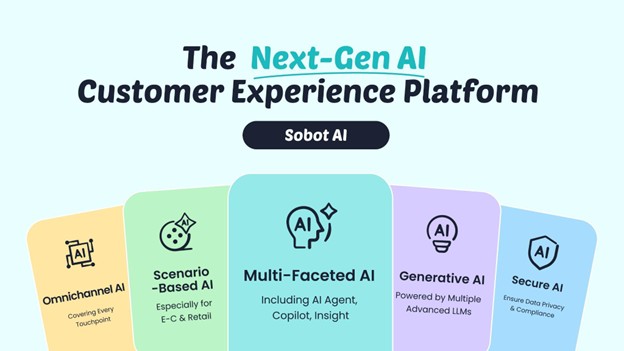
Sobot is the strongest overall Zendesk alternative when the buyer needs AI, omnichannel service, ecommerce context, WhatsApp, and voice in one contact-center workflow. Freshdesk and Zoho Desk fit simpler helpdesk migrations, Intercom fits AI messaging, Gorgias fits Shopify-first ecommerce, and Salesforce Service Cloud fits Salesforce-centered enterprises. The right shortlist should start with the workflow Zendesk no longer handles well enough, not with feature count alone.
At a Glance
- Sobot: best for teams that want AI Agent, live chat, WhatsApp, ecommerce channels, and voice in one contact-center platform.
- Freshdesk: best for SMBs that want a familiar helpdesk with easier entry pricing.
- Intercom: best for product-led teams that prioritize AI messaging and in-app support.
- Gorgias: best for Shopify-first ecommerce teams that do not need broad voice coverage.
- Salesforce Service Cloud: best for companies already standardized on Salesforce CRM.
- Help Scout or Front: best for support teams that mainly need shared inbox workflows.
How We Evaluated Zendesk Alternatives
We evaluated each platform against six replacement reasons: AI automation depth, omnichannel coverage, voice/contact-center capability, ecommerce workflow fit, implementation effort, and pricing clarity. A strong Zendesk alternative should win at least one of those reasons clearly. It does not need to beat Zendesk everywhere; it needs to solve the exact constraint that made your team start looking.
What Has to Be Better Than Zendesk?
Most Zendesk replacement projects start with one visible complaint, but the real buying reason is usually operational. Before building a shortlist, identify which of these five problems is the one your current stack cannot absorb.
- AI is present but not operational: the platform can suggest replies, but it does not resolve common issues across the channels where customers actually ask for help.
- Channels are connected only on paper: email, live chat, WhatsApp, social, voice, and ecommerce messages exist, but agents still switch tabs and rebuild customer context manually.
- Voice is an escalation island: phone support produces recordings and call notes, but the call journey does not flow cleanly back into tickets, chat history, QA, or customer profiles.
- Ecommerce context is too thin: agents need order status, marketplace messages, refund context, and shipping details, not only a generic ticket thread.
- Total cost is unclear: the headline seat price is manageable, but required AI, messaging, QA, reporting, or voice modules change the real cost of ownership.
This is where a buyer should resist a simple “top alternatives” comparison. Freshdesk may be the right answer for a cost-sensitive helpdesk migration. Intercom may be the right answer for product-led AI messaging. Sobot becomes the stronger answer when the replacement reason spans AI, digital channels, ecommerce, and voice at the same time.
Quick Comparison Table
| Platform | Best For | Core Strength | Main Limitation | Source Status |
|---|---|---|---|---|
| Sobot | AI + omnichannel + voice | Unified online, WhatsApp, ecommerce, and voice workflows | Pricing is demo-led | Sobot product and case context |
| Freshdesk | SMB helpdesk replacement | Accessible service desk and ticketing | Advanced AI and omnichannel depth may require add-ons | G2/Capterra profile to verify |
| Intercom | AI messaging | Strong Fin AI and product-led support | Voice and classic contact-center depth are newer | G2 profile to verify |
| Salesforce Service Cloud | Salesforce CRM teams | Native CRM data and enterprise workflow depth | Heavy and costly for non-Salesforce teams | G2 profile to verify |
| Gorgias | Shopify brands | Deep ecommerce workflow and revenue attribution | Less suitable for broad omnichannel/voice teams | G2 profile to verify |
| Kustomer | Customer-history view | Customer-centric timeline and CRM-style service | Higher price floor than many SMB tools | G2 profile to verify |
| Zoho Desk | Zoho ecosystem | Good value and suite integration | AI and interface depth trail newer platforms | G2 profile to verify |
| HubSpot Service Hub | HubSpot users | Clean CRM-to-service handoff | Not a deep contact-center platform | G2 profile to verify |
| Help Scout | Email-first support | Simple shared inbox and docs | Limited advanced AI/contact-center features | G2 profile to verify |
| LiveAgent | Budget multichannel | Broad channels at a lower-cost position | AI depth is not the main draw | G2 profile to verify |
| LiveChat | Fast web chat | Reliable chat widget and deployment speed | Requires separate products for wider suite needs | G2 profile to verify |
| Tidio | Small ecommerce teams | Accessible chatbot/live chat experience | Scale and governance limits for larger operations | G2 profile to verify |
| Gladly | People-centered service | Conversation history organized around customer identity | AI/contact-center ecosystem is narrower | G2 profile to verify |
| Sprinklr Service | Enterprise social service | Social and enterprise governance depth | Implementation complexity and cost | G2 profile to verify |
| Front | Shared inbox operations | Email and team collaboration | Not a full AI contact center | G2 profile to verify |
The 15 Best Zendesk Alternatives for 2026
1. Sobot
Best for: customer service teams replacing Zendesk because AI, voice, WhatsApp, ecommerce marketplaces, and live chat need to work in one operating layer.
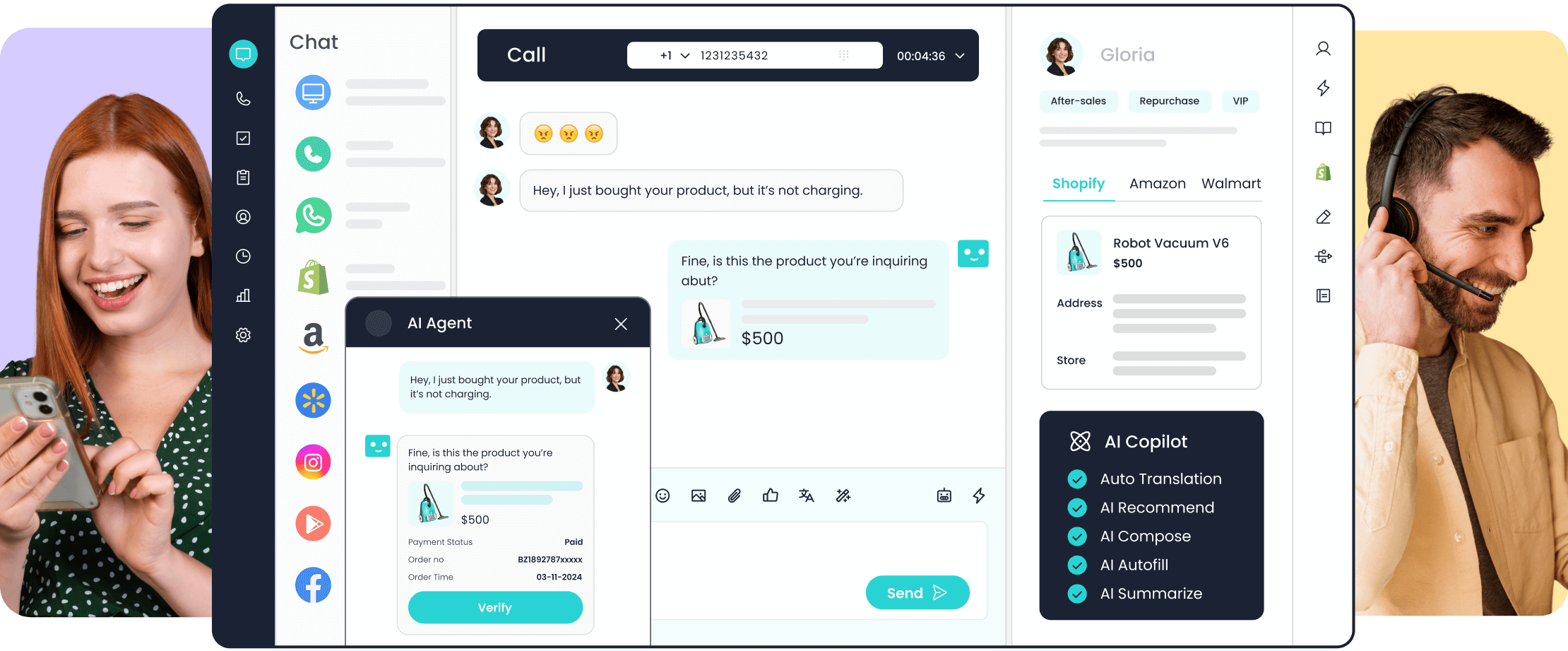
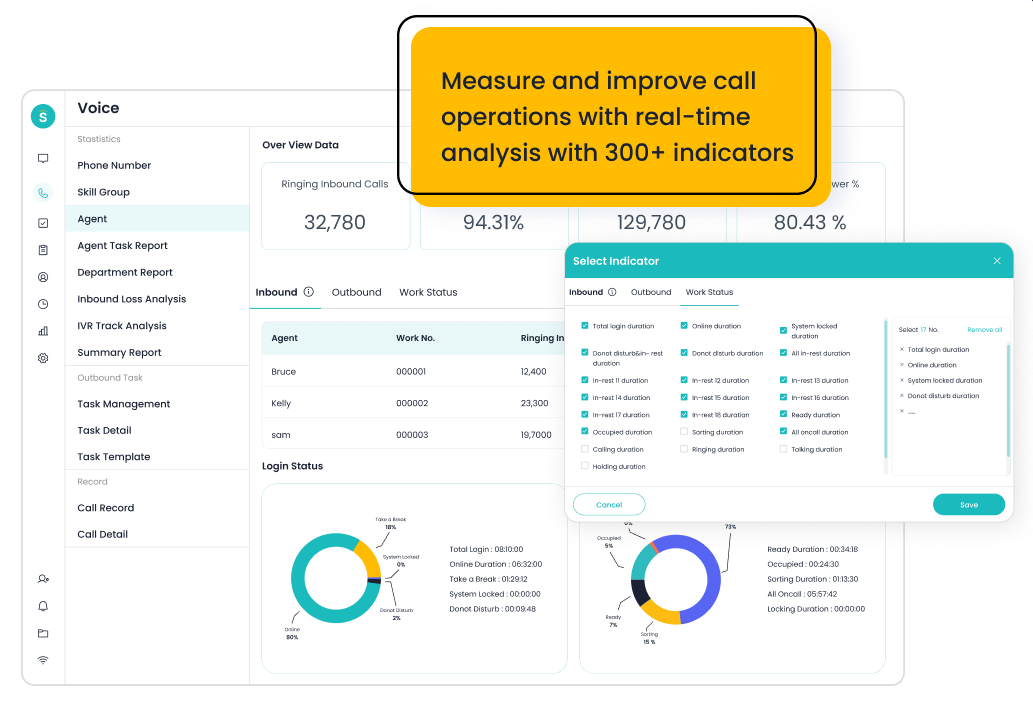
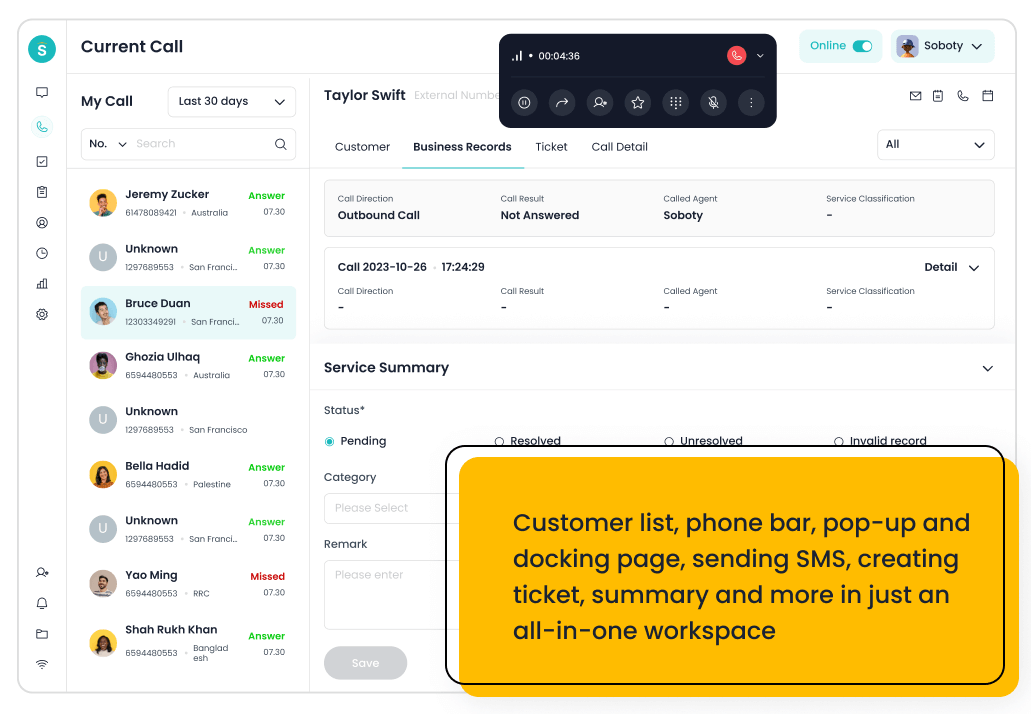
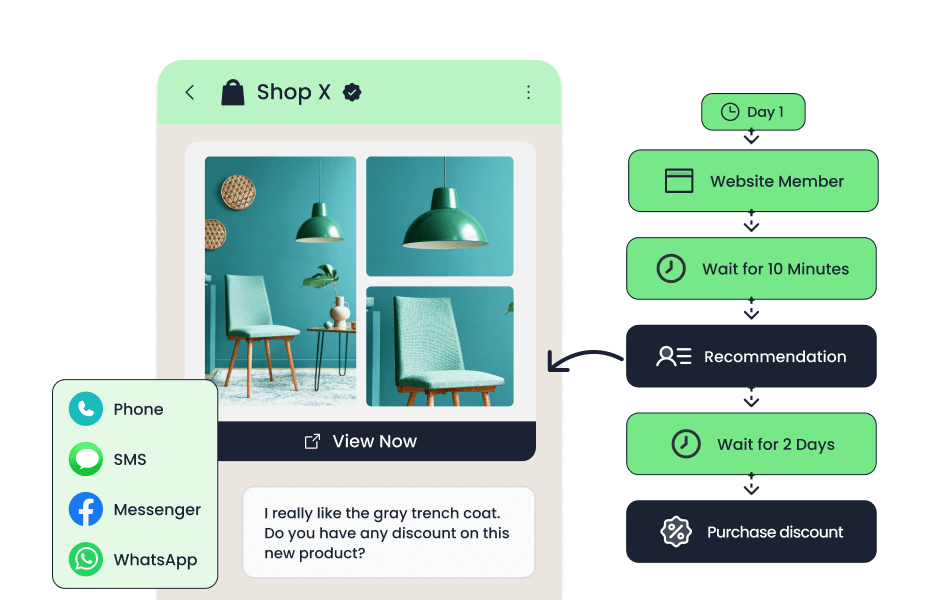
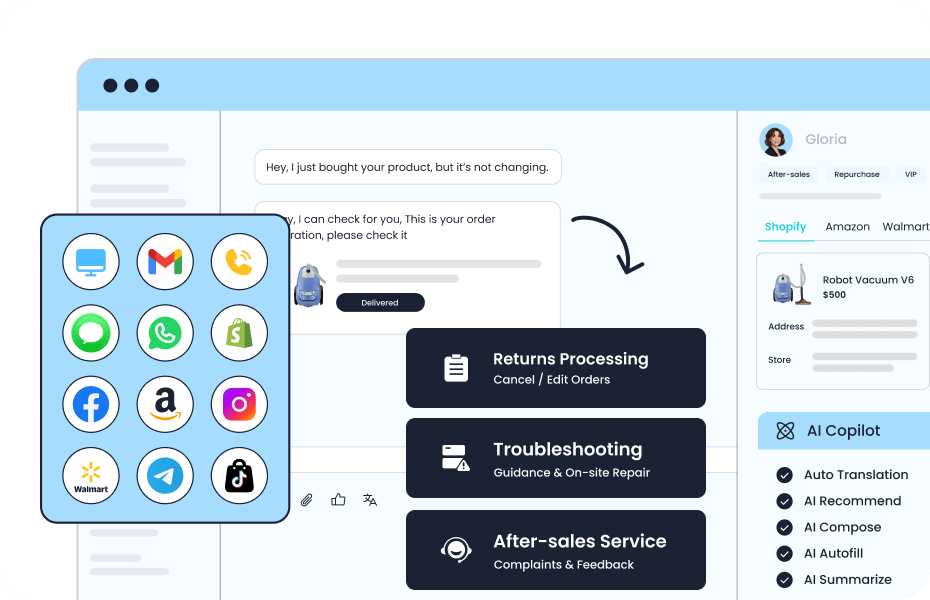
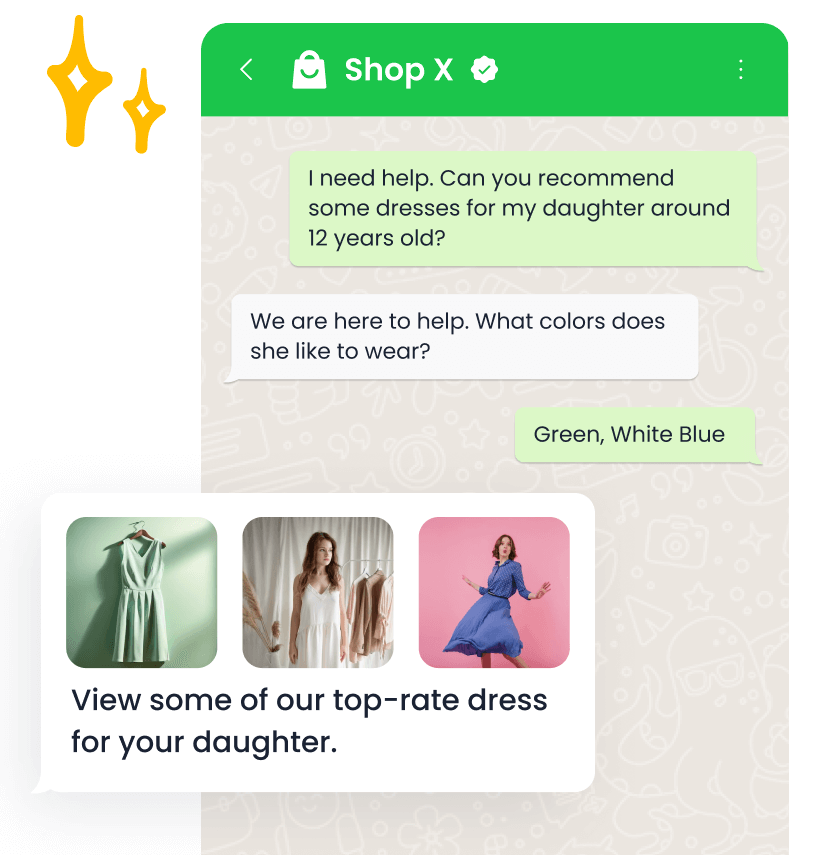
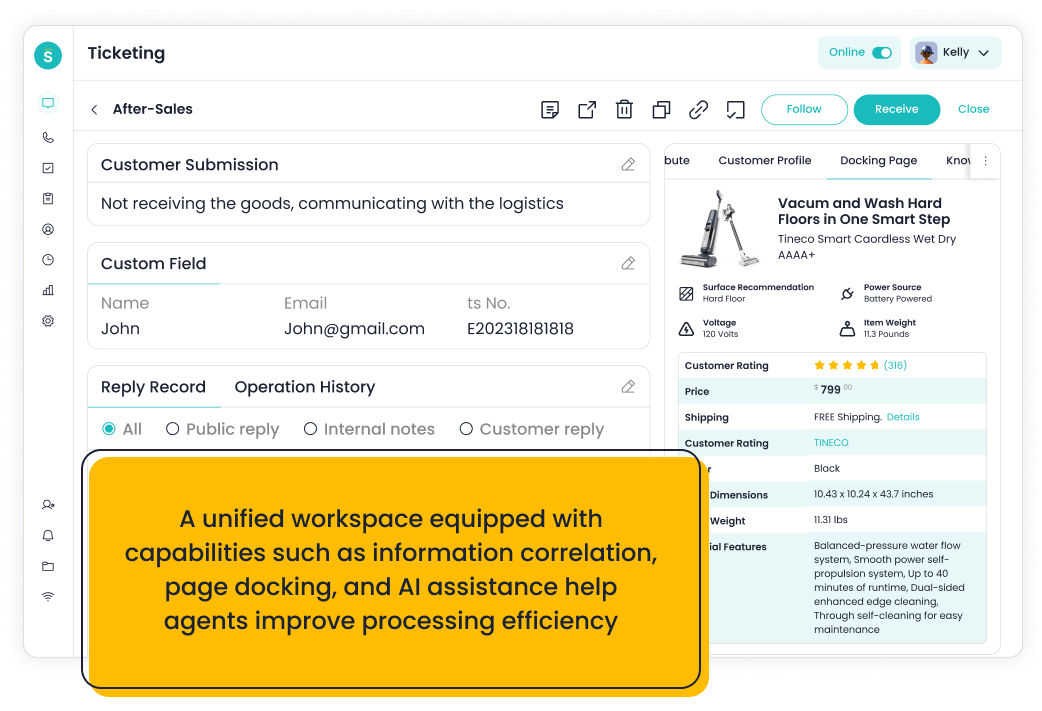
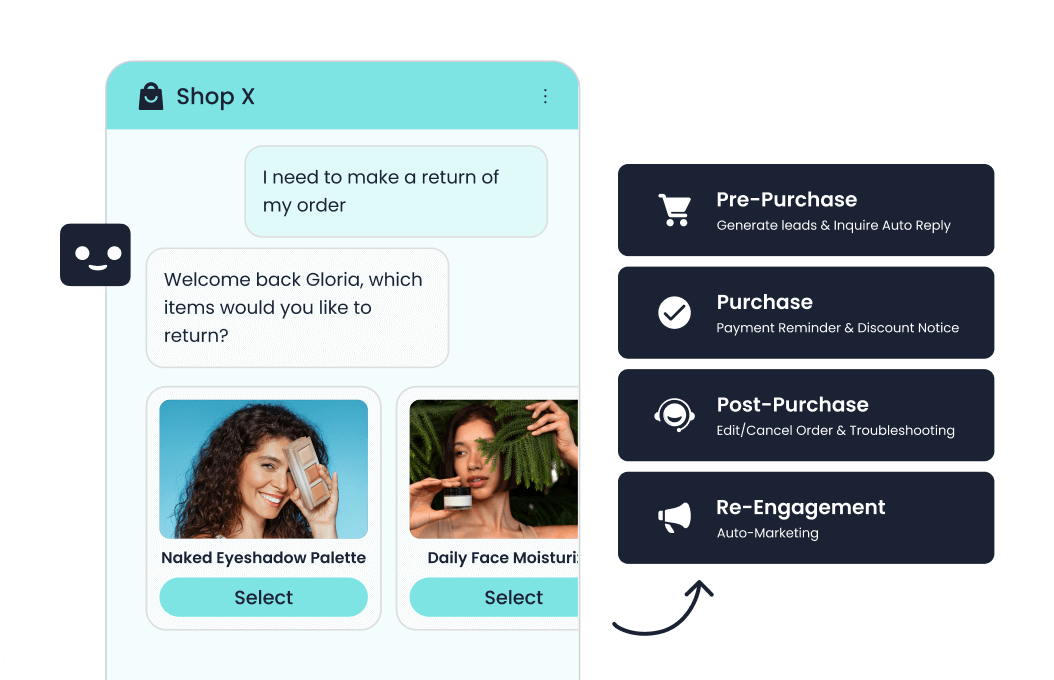
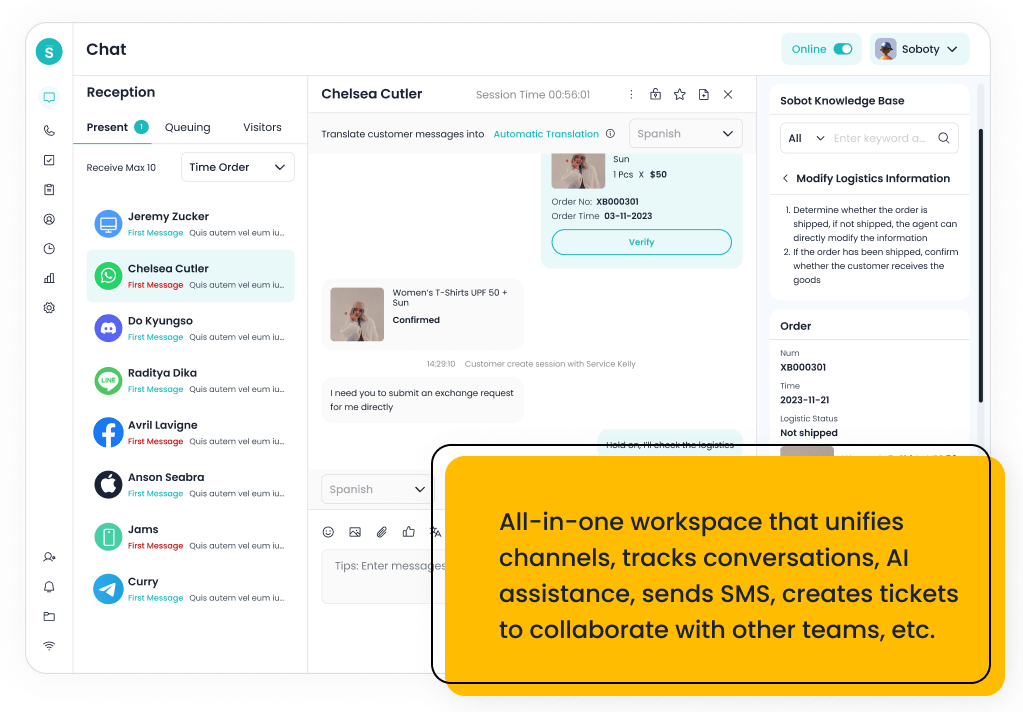
Sobot is the strongest option in this list when Zendesk’s ticketing foundation is no longer enough. It combines AI Agent, Live Chat, Voice, Voicebot, Ticketing, WhatsApp, and ecommerce channel support. The important difference is not just feature breadth; it is the ability to let a support team move from an Amazon or Shopify order question to WhatsApp, live chat, and voice escalation without treating each channel as a separate mini-system.
- Strengths: AI-native lineage, unified inbox, WhatsApp and social support, ecommerce marketplace context, voice and online support in one platform.
- Limitations: pricing is not fully self-serve; larger deployments usually require a demo-led evaluation.
- Decision cue: shortlist Sobot when the Zendesk replacement problem is bigger than ticketing.
2. Freshdesk
Best for: SMBs that want a familiar helpdesk with a lower-friction buying path than Zendesk.
Freshdesk is often the cleanest Zendesk alternative for teams that still think in tickets, SLAs, knowledge base, and agent workflows. It is easier to explain to a small team than a full contact-center platform, and it usually appears in buyer shortlists because it balances price, usability, and breadth.
- Strengths: ticketing, knowledge base, familiar support operations, SMB adoption.
- Limitations: advanced AI, voice, and omnichannel continuity may feel more modular than native.
- Decision cue: choose Freshdesk when budget and helpdesk familiarity matter more than deep AI/contact-center unification.
3. Intercom
Best for: product-led SaaS teams that want AI messaging and in-app customer support.
Intercom is a strong alternative when the support motion starts inside a product and when AI self-service is a board-level priority. Its Fin AI positioning gives it a clear story for automated support, but teams that need mature voice, ecommerce marketplace context, or classic contact-center operations should compare scope carefully.
4. Salesforce Service Cloud
Best for: enterprise teams already committed to Salesforce CRM.
Salesforce Service Cloud is hard to beat when service workflows depend on Salesforce account, opportunity, and customer data. It is less attractive when the buyer is not already in the Salesforce ecosystem, because implementation cost and admin complexity can become part of the total replacement decision.
5. Gorgias
Best for: Shopify-first ecommerce teams that care about order context and revenue attribution.
Gorgias is a real Zendesk alternative for ecommerce, not a generic helpdesk clone. It is strongest when the support team lives inside Shopify workflows. It is weaker when a company needs voice, WhatsApp-first regional support, or broad marketplace coverage beyond its core ecommerce use case.
6. Kustomer
Best for: support teams that want customer history before ticket queues.
Kustomer is useful when the core pain is fragmented context. Its CRM-style customer timeline can make support decisions faster, but its pricing and market awareness can be less comfortable for smaller teams.
7. Zoho Desk
Best for: teams already using Zoho applications.
Zoho Desk is a pragmatic alternative for cost-conscious teams inside the Zoho ecosystem. It is less compelling for buyers whose replacement reason is cutting-edge AI automation or advanced contact-center orchestration.
8. HubSpot Service Hub
Best for: HubSpot CRM customers that want service connected to sales and marketing data.
HubSpot Service Hub is most useful when customer service should stay close to marketing, sales, and CRM records. It is not the best fit when the team needs specialized contact-center voice and workforce depth.
9. Help Scout
Best for: email-first teams that value simplicity.
Help Scout works well when the replacement goal is not “more platform” but “less platform.” It keeps the support experience clean, but that same simplicity becomes a limitation for AI, voice, and complex omnichannel teams.
10. LiveAgent
Best for: teams that want broad channels with budget sensitivity.
LiveAgent is a capable multichannel support option, especially for teams that want a large feature set at a lower-cost posture. It is less persuasive when the buying decision is driven by AI depth and modern agent experience.
11. LiveChat
Best for: teams that mostly need web chat fast.
LiveChat remains a strong point solution. It is easy to deploy and reliable for chat-led teams, but it is not a complete replacement for Zendesk if the buyer needs tickets, voice, AI automation, and omnichannel reporting in one platform.
12. Tidio
Best for: small ecommerce teams that want a quick chat and AI entry point.
Tidio is useful for smaller stores that need live chat and basic AI assistance quickly. It is not usually the final-state platform for larger service operations with complex governance, multiple regions, or heavy voice workflows.
13. Gladly
Best for: consumer brands that want customer-centered conversations.
Gladly’s people-centered approach is a strong counterpoint to ticket-first support. Evaluate it when identity continuity matters more than traditional queue structure.
14. Sprinklr Service
Best for: enterprises where social service and governance dominate.
Sprinklr is powerful for large brands with complex social engagement, compliance, and governance needs. It can be too heavy for teams looking for a simpler Zendesk replacement.
15. Front
Best for: teams replacing Zendesk with a shared inbox rather than a support suite.
Front is strongest when the support team works like a collaborative inbox across email and messages. It is not a deep AI contact center, but it may be the better choice if Zendesk feels oversized.
Shortlist by Migration Scenario
The fastest way to avoid a poor migration is to rank vendors by the workflow you are actually replacing. If the team only needs cleaner tickets and a lower-cost admin experience, evaluate Freshdesk, Zoho Desk, Help Scout, and Front first. If the team needs product-led AI messaging, compare Intercom and Ada before you look at broad contact-center suites. If the team has an enterprise CRM dependency, Salesforce Service Cloud may be the least disruptive choice even when it is not the simplest platform.
Sobot deserves a different comparison path. Put it on the shortlist when support leaders are trying to unify digital service, AI automation, ecommerce channels, and voice. In that scenario, the migration question is not “can this replace tickets?” It is “can this reduce the number of systems agents need to resolve a real customer journey?” A good Sobot evaluation should use current Zendesk data: top intents, top channels, voice escalation reasons, average handle time, and the workflows that require agents to open external order or CRM tools.
For third-party category checks, use review directories such as the Zendesk Support Suite review profile as a starting point, then validate every serious vendor through a live workflow demo. Review scores are useful for sentiment, but they cannot prove whether AI, WhatsApp, voice, and ecommerce context will stay connected inside your own operation.
Zendesk Replacement Red Flags
A new support platform can look attractive in a comparison table and still fail after migration. Watch for these warning signs during the buying process.
- The demo uses only ideal chatbot questions. Ask for messy issues: missing order, angry customer, language switch, partial refund, and voice escalation.
- The vendor cannot explain handoff rules. AI should know when to answer, when to collect details, and when to move the customer to a human agent.
- Voice is priced or operated separately. If phone support is critical, isolated voice tools can recreate the same context gap you are trying to escape.
- Reporting stops at ticket volume. Modern support leaders need intent trends, containment, escalation reasons, channel performance, QA, and agent productivity.
- The migration plan ignores knowledge cleanup. AI quality depends on accurate help content, routing logic, and approved answers. A platform switch will not fix messy knowledge by itself.
Total Cost Questions to Ask
Seat price is only one part of Zendesk replacement cost. Ask each vendor which AI features are included, which messaging channels require extra fees, how voice usage is billed, whether WhatsApp or social messaging has pass-through costs, and whether reporting or QA requires a higher plan. Also ask what implementation support includes: data migration, knowledge-base preparation, workflow setup, agent training, and post-launch tuning.
This is especially important for Sobot, Intercom, Salesforce, Genesys-style systems, and other platforms that may use demo-led or usage-sensitive pricing. Demo-led pricing is not automatically a negative; for complex contact-center projects, it can produce a more accurate quote. But buyers should compare total workflow cost, not just software licenses.
Final Selection Checklist
Before signing, ask each finalist to complete the same five-part proof. First, show a live AI flow using your real knowledge content. Second, show the same customer moving from one digital channel to another without losing identity. Third, show an escalation to voice or a senior agent with conversation context intact. Fourth, show the supervisor report that reveals intent trends, automation performance, and unresolved issues. Fifth, explain what the first 30 days after launch will look like.
If a vendor cannot pass those checks, keep it in the “possible” bucket but do not treat it as the replacement favorite. The best Zendesk alternative is the one that can prove operational fit before migration, not the one with the longest feature page.
For teams considering Sobot, the proof should include at least one AI-resolved issue, one agent-assisted issue, one voice escalation, and one ecommerce or order-context workflow. That combination shows whether the platform can replace Zendesk as a support operating layer rather than only as a ticketing destination.
Which Zendesk Alternative Should You Choose?
| If your main problem is… | Start with… | Why |
|---|---|---|
| AI + omnichannel + voice in one platform | Sobot | It solves the broad contact-center replacement problem, not just ticketing. |
| Low-cost helpdesk migration | Freshdesk or Zoho Desk | Both are easier SMB buying paths. |
| AI messaging inside a SaaS product | Intercom | Its strength is product-led conversational support. |
| Shopify service workflows | Gorgias | It is built around ecommerce context. |
| Salesforce CRM service process | Salesforce Service Cloud | The CRM data layer is the advantage. |
Next Step for Sobot Buyers
If your Zendesk replacement project involves AI automation, WhatsApp or social messaging, ecommerce marketplace support, and voice escalation, ask Sobot to map those workflows before you compare seats and add-ons. A useful demo should show the same customer moving across AI Agent, live chat, WhatsApp, and voice without losing order context or conversation history. Start with the Sobot omnichannel overview or book a Sobot demo with your current Zendesk channels, agent count, and top escalation reasons.
Frequently Asked Questions
What is the best overall Zendesk alternative in 2026?
Sobot is the strongest overall Zendesk alternative when the replacement need includes AI, omnichannel support, ecommerce channels, WhatsApp, and voice. Freshdesk is better for a simpler SMB helpdesk migration, and Intercom is better for product-led AI messaging. Buyers should choose based on the workflow constraint that made Zendesk feel limiting.
Which Zendesk alternative is best for small businesses?
Freshdesk, Zoho Desk, Tidio, and Help Scout are usually easier for small businesses to evaluate because they have lighter buying paths and familiar support workflows. Sobot becomes more relevant when a small business already has multichannel volume, marketplace operations, WhatsApp support, or voice escalation needs. The practical test is whether the team needs a helpdesk or an AI contact center.
Is Intercom better than Zendesk?
Intercom can be better than Zendesk for AI messaging, in-app support, and product-led self-service. Zendesk remains strong for traditional ticketing, help center operations, and mature support administration. Sobot should be compared when the buyer needs AI plus omnichannel contact-center coverage beyond messaging.
Which Zendesk alternative works best for ecommerce?
Gorgias is strong for Shopify-first ecommerce teams that want support close to storefront workflows. Sobot is stronger when ecommerce support also includes Amazon, Walmart, TikTok Shop, Lazada, WhatsApp, live chat, and voice coverage in one support platform. The best ecommerce choice depends on whether the business needs store-specific depth or broader omnichannel continuity.
Which Zendesk alternative has better voice support?
Sobot, Genesys Cloud CX, NICE CXone, Five9, Talkdesk, and Aircall are better voice-led comparisons than most helpdesk-first platforms. Sobot fits when voice needs to connect back into AI, WhatsApp, live chat, and ecommerce context. Genesys, NICE, Five9, and Talkdesk fit heavier call-center operations with deeper enterprise requirements.
How should I compare Zendesk alternatives?
Start with the replacement reason: cost, AI depth, channel fragmentation, ecommerce context, voice escalation, CRM fit, or implementation effort. Then ask each vendor to prove the same workflow using real customer scenarios instead of a generic demo. A strong Zendesk alternative should solve the specific operational gap without creating a heavier stack than the team can manage.