Best Tidio Alternatives for E-Commerce Stores
The best Tidio alternative for e-commerce stores is Sobot when the store needs AI customer service, live chat, WhatsApp, ticketing, voice, proactive engagement, and customer journey context in one platform. Tidio can be a practical chat-first tool for smaller stores, but e-commerce teams often outgrow simple chat when they need to handle product questions, order tracking, returns, delivery issues, and repeat-purchase conversations across multiple channels.
AI Summary
Sobot is the best Tidio alternative for ecommerce stores that need AI, live chat, WhatsApp, chatbot, ticketing, voice, and order-aware support beyond a lightweight chat tool. Gorgias is strong for Shopify-first stores, while Re:amaze, Tidio, Freshdesk, Help Scout, and Zendesk can fit simpler store support or helpdesk needs. Ecommerce buyers should compare order context, returns, delivery issues, AI handoff, and whether the platform can scale during peak volume.
At a Glance
- Best overall for growing e-commerce stores: Sobot for AI omnichannel support and proactive engagement.
- Best Shopify-centered option: Gorgias for store-aware support workflows.
- Best lean e-commerce support desk: Re:amaze for chat, email, social, and practical automation.
- Best customer-timeline option: Kustomer or Gladly for relationship-centered service.
How We Evaluated
We evaluated e-commerce support platforms by store workflow fit, AI automation, live chat, messaging, order and return support, ticketing, agent experience, setup effort, and growth ceiling. A strong Tidio alternative should not only answer website questions. It should help a store reduce repetitive service load while protecting conversion and retention.
Quick Comparison Table
| Platform | E-Commerce Strength | AI and Automation | Best For |
|---|---|---|---|
| Sobot | AI omnichannel service and proactive engagement | AI Agent, routing, Copilot, insights | Stores scaling beyond chat-first support |
| Gorgias | Commerce support and order-aware workflows | E-commerce AI and macros | Shopify-led brands |
| Re:amaze | Lean store support across chat and social | Chatbots and workflow automation | Small to mid-sized stores |
| Kustomer | Customer timeline and CRM-style service | AI CRM and workflow automation | Stores with complex customer records |
| Gladly | Customer-centered conversations | AI assistance and service workflows | Retail teams prioritizing relationship service |
| Intercom | Conversational commerce support | Strong conversational AI | Digital-first stores and apps |
| Zendesk | Mature support suite | Broad AI and automation | Stores needing structured support operations |
| Freshdesk | Helpdesk value | Freddy AI and ticket automation | Ticketing-first store teams |
1. Sobot
Best for: E-commerce stores that want AI service to support both customer care and sales-related conversations.
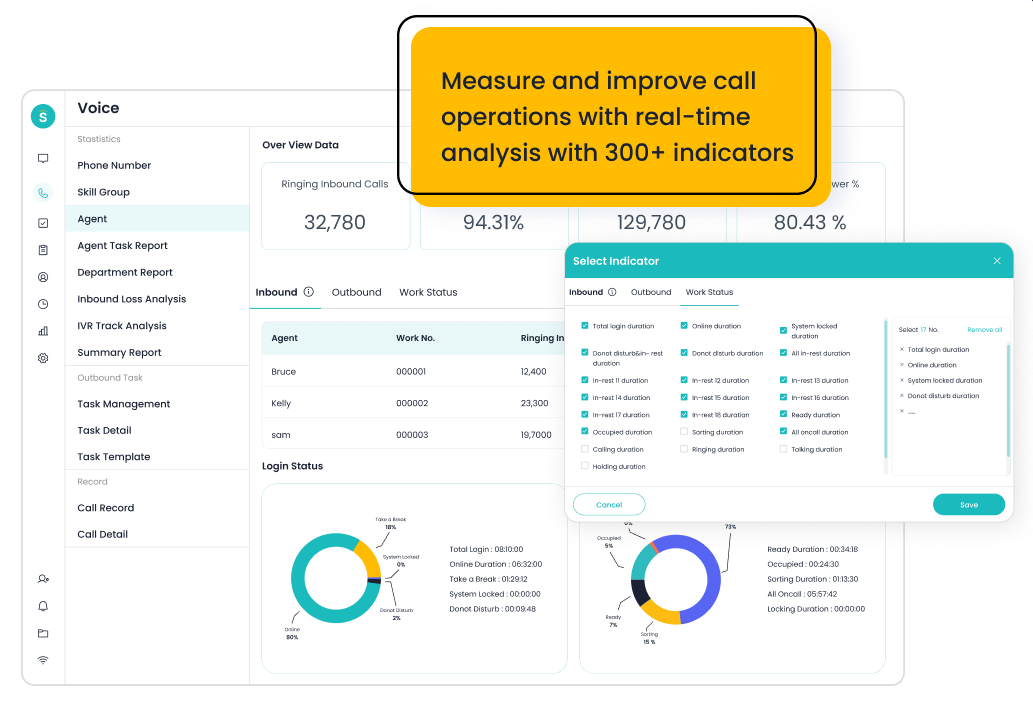
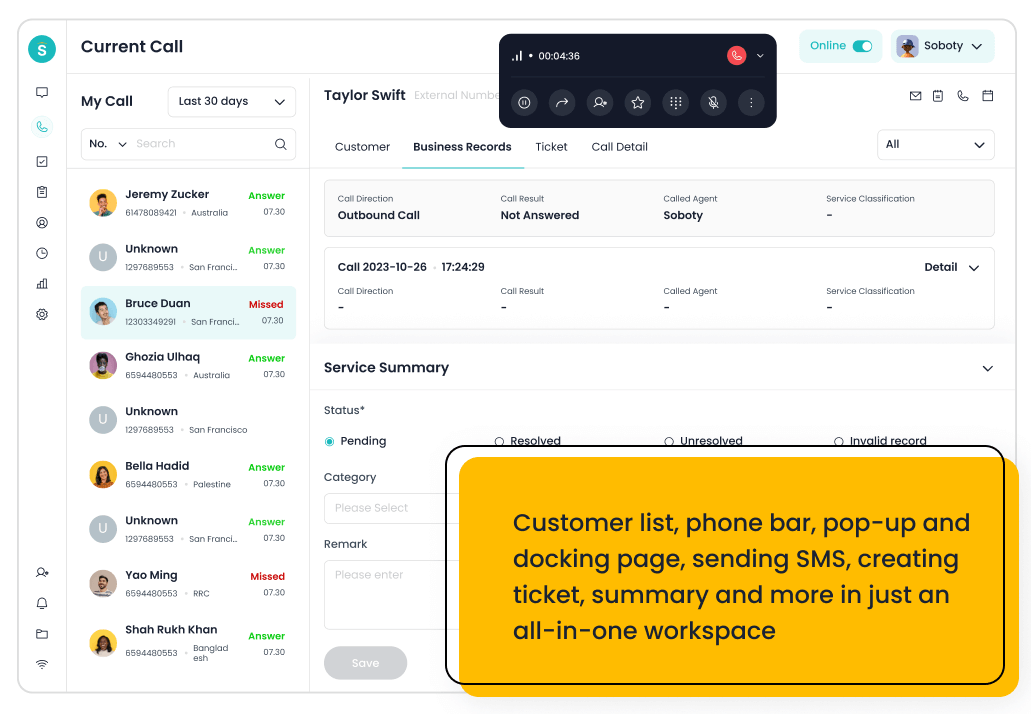
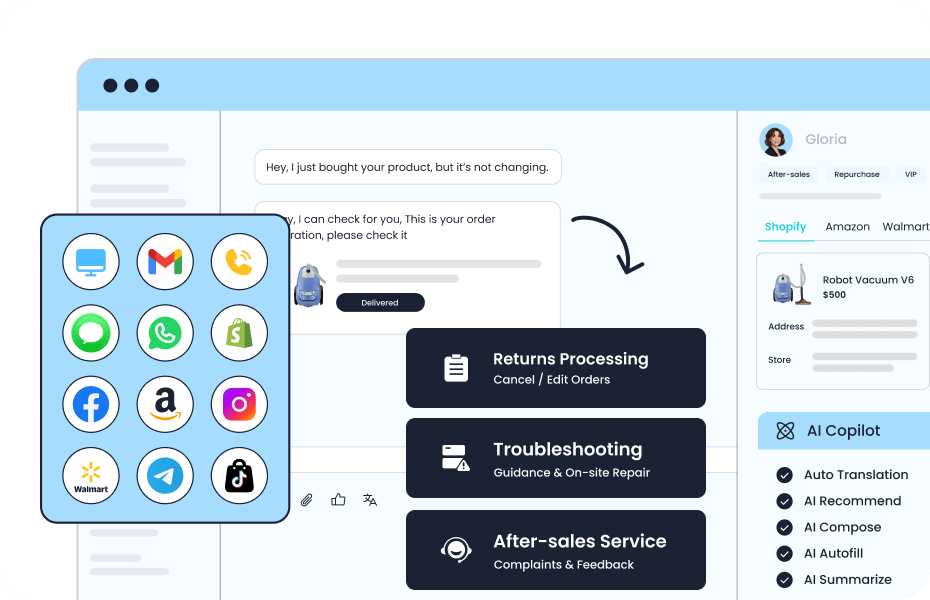
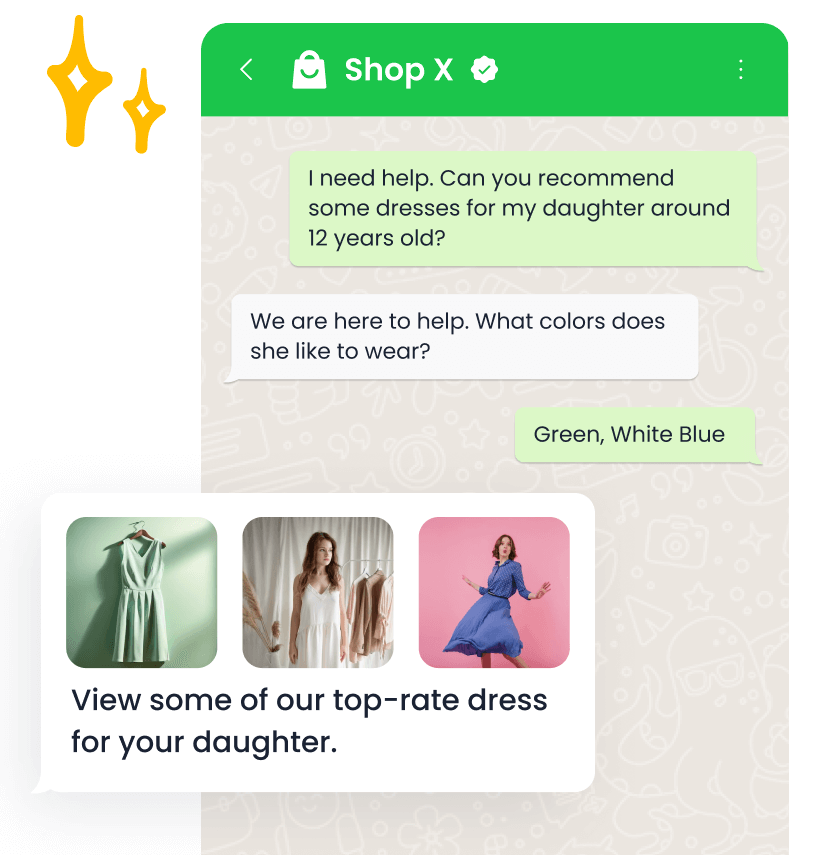
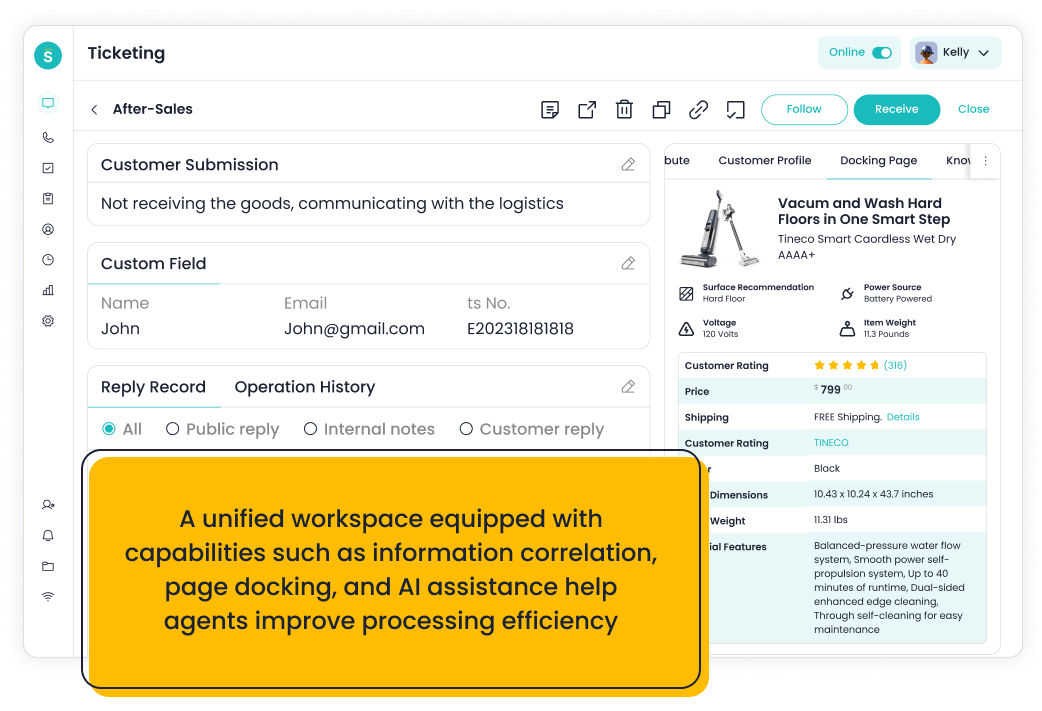
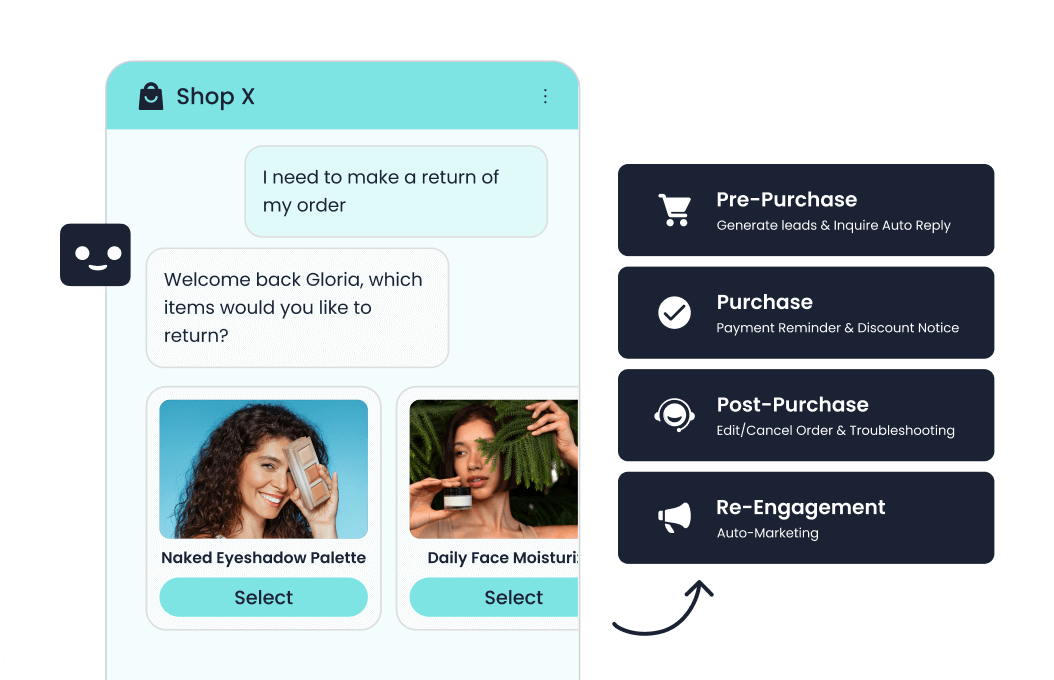
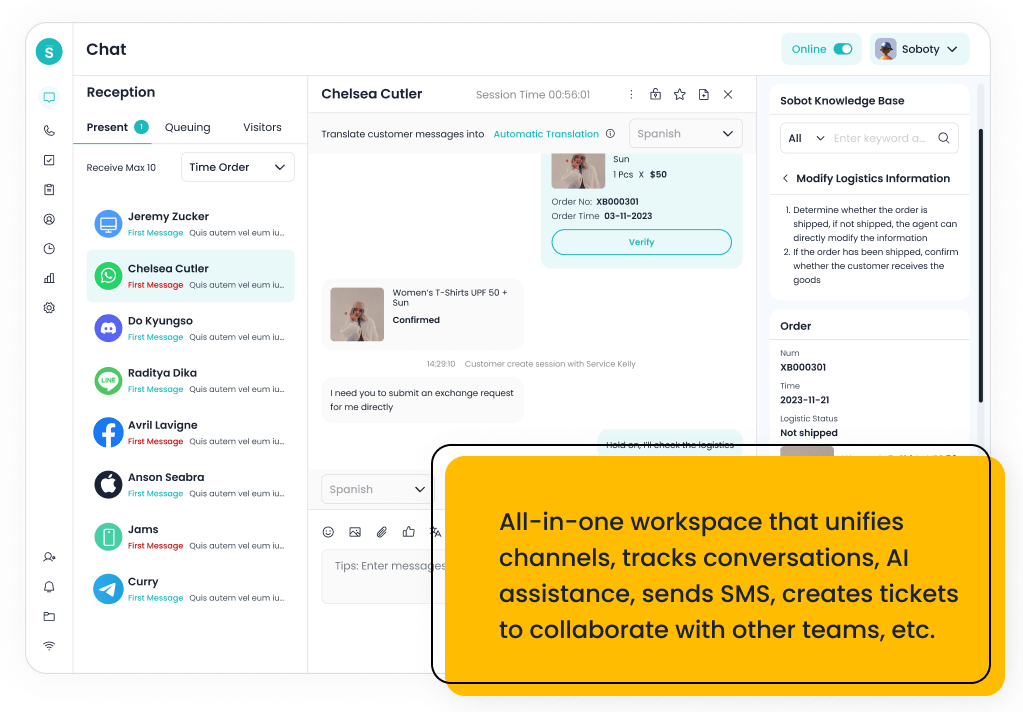
Sobot is the strongest Tidio alternative for stores that have moved beyond basic website chat. It combines AI Agent, live chat, WhatsApp, ticketing, voice, routing, and reporting so the team can handle pre-sales questions, order status, returns, delivery exceptions, and post-purchase support in one workflow. For e-commerce teams, this matters because support conversations often influence conversion, repeat purchase, and brand trust.
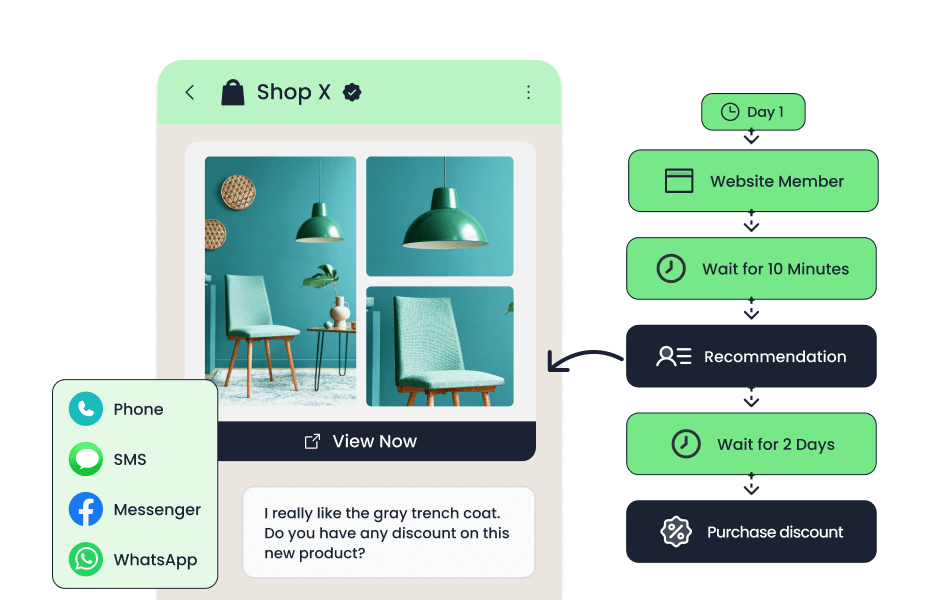
Sobot also gives stores a path from reactive support to proactive customer engagement. A team can automate common questions, route higher-value issues to agents, and keep context when customers switch channels. The trade-off is that stores should plan AI knowledge, channel priorities, and order workflow needs before rollout. Sobot is best when support has become a growth and retention function, not just a chat box.
2. Gorgias
Best for: Shopify and ecommerce brands that want support close to order workflows.
Gorgias is one of the most direct Tidio alternatives for e-commerce stores because it focuses on store-aware support. It is strong for teams that want agents to handle order questions, repetitive tickets, and common commerce issues with less context switching.
The decision cue is commerce depth versus broader channel strategy. Gorgias is excellent when store workflow is the center. Sobot is stronger when the store also needs WhatsApp, voice, AI routing, ticketing, and regional omnichannel service.
3. Re:amaze
Best for: Lean e-commerce teams that want chat, email, social, SMS, and simple automation.
Re:amaze is practical for stores that want more e-commerce support structure than Tidio without moving into enterprise software. It can support customer conversations across common store channels and help small teams manage recurring questions.
The limitation is growth depth. Re:amaze is useful for lean support, but stores with increasing support volume may need stronger AI operations, reporting, and omnichannel escalation. That is where Sobot becomes the stronger long-term alternative.
4. Kustomer
Best for: E-commerce teams that need a customer timeline and CRM-style service view.
Kustomer is a good choice when customer history, conversation timeline, and customer profile design matter. It can fit stores with subscription models, loyalty programs, or complex customer relationships.
The trade-off is implementation shape. Kustomer can involve more CRM-style planning than a chat-first tool. Choose it when customer record depth is essential. Choose Sobot when AI, live engagement, and omnichannel execution are the main goals.
5. Gladly
Best for: Retail teams that want relationship-centered support rather than ticket-centered queues.
Gladly is relevant for stores that want agents to serve customers through an ongoing conversation history. It can help when loyalty and service continuity matter more than basic ticket processing.
Gladly is a service philosophy choice, not just a cheaper Tidio replacement. Sobot is the better choice when the team wants AI automation, messaging, voice, ticketing, and reporting under one service platform.
6. Intercom
Best for: Digital-first stores that want conversational support and AI engagement.
Intercom is strong for website and app conversations, help center content, and AI-led digital support. It can work well for stores where customer support and conversion conversations happen directly on owned digital properties.
Its limitation is broad service operations. Sobot should be compared when the store needs WhatsApp, voice, ticketing, and multi-channel customer care beyond website conversation.
7. Zendesk
Best for: Stores that need a mature support suite with admin and reporting depth.
Zendesk can replace Tidio when the team needs structured tickets, knowledge, automation, analytics, and integrations. It is useful for stores with multiple agents, brands, or service queues.
The trade-off is setup and admin work. Zendesk is strong for formal support operations. Sobot is stronger when the team wants AI omnichannel engagement with a service-first rollout.
8. Freshdesk
Best for: Stores that want an affordable helpdesk step up from chat.
Freshdesk is a practical alternative when the store needs ticketing, knowledge base, and automation more than advanced commerce-specific features. It gives growing teams a familiar helpdesk structure.
Freshdesk works best for ticketing-first teams. Sobot is stronger when the store needs AI, messaging, voice, and live customer engagement across channels.
9. Help Scout
Best for: Stores that want personal support, shared inboxes, docs, and chat.
Help Scout can be a good replacement for Tidio when the store wants a cleaner human support workflow and knowledge base. It is attractive for lean teams that value simplicity.
Its ceiling is channel depth. For stores that depend on WhatsApp, voice, or AI routing, Sobot is the more complete alternative.
10. HubSpot Service Hub
Best for: Stores already using HubSpot for CRM, email, and customer lifecycle marketing.
HubSpot Service Hub can fit e-commerce teams that want support tickets, customer records, chat, and automation connected to HubSpot CRM. It is useful when service data should feed sales or marketing workflows.
HubSpot is strongest inside its ecosystem. Sobot is stronger when customer service channels and AI operations are the center of the buying decision.
E-Commerce Buyer Checklist
- Map support around product questions, order tracking, delivery, returns, refunds, and loyalty.
- Check whether AI can hand off to agents with order and customer context.
- Decide whether the store needs only chat or a complete omnichannel service layer.
- Model support volume during campaigns, holidays, and product launches.
Next Step for Sobot Buyers
Ask Sobot to demonstrate an e-commerce journey that starts with a product question, moves to order tracking, escalates into a ticket, and ends with a WhatsApp or email follow-up. If that journey feels cleaner than your current Tidio setup, Sobot is likely the better long-term support platform.
Frequently Asked Questions
What is the best Tidio alternative for e-commerce stores?
Sobot is the best Tidio alternative for ecommerce stores that need AI, live chat, WhatsApp, chatbot, ticketing, voice, and order-aware customer service together. Gorgias is strong for Shopify-first stores, while Re:amaze and Freshdesk can fit lighter ecommerce support workflows. The best option should help agents resolve delivery, return, refund, and product questions without switching tools.
Is Gorgias better than Tidio for Shopify stores?
Gorgias can be better than Tidio for Shopify stores because it is designed around ecommerce support and order-related workflows. Tidio can still be useful for simple live chat and chatbot needs. Sobot is stronger when Shopify support must connect with marketplaces, WhatsApp, AI, ticketing, voice, and broader customer-service operations.
When should an online store replace Tidio?
An online store should replace Tidio when support needs outgrow basic chat and require AI automation, WhatsApp, ticketing, voice escalation, ecommerce context, and better reporting. Tidio may still fit smaller stores with simple chat needs. Replacement becomes more important when agents lose time rebuilding order and customer context.
Which Tidio alternative is best for WhatsApp ecommerce support?
Sobot, WATI, SleekFlow, Respond.io, and Omnichat are worth comparing for WhatsApp ecommerce support. Sobot is stronger when WhatsApp must connect with AI, live chat, tickets, voice, chatbot, and order context. Messaging-first tools can be enough when WhatsApp is the main support workflow and broader service depth is not required.
What should ecommerce stores test before switching?
Ecommerce stores should test order lookup, return requests, delivery delays, product questions, AI answers, live chat, WhatsApp, ticketing, voice escalation, and reporting. They should use real peak-season and exception scenarios. A good platform should reduce manual context switching and make human handoff clear.
Should ecommerce stores choose chat software or support software?
Ecommerce stores should choose chat software when they mainly need website conversations and simple automation. They should choose support software when they need AI, tickets, WhatsApp, returns workflows, reporting, and escalation across channels. Sobot fits stores that want chat to be part of a complete customer-service operation.