Phone support is one of the most expensive channels in customer service — and one of the hardest to scale. A single inbound call can cost more than $15 when handled by a human agent, and peak-hour wait times erode satisfaction faster than any other channel. The CCaaS market overall is growing fast — projected to hit $30.15 billion by 2034 at a 17.4% CAGR — largely driven by voice AI adoption. AI voicebots have finally reached the point where they can handle meaningful portions of that volume autonomously. According to analysis compiled by CX Today, Gartner forecasts that agentic AI will autonomously resolve 80% of common customer service issues by 2029, with a 30% reduction in operational costs. The AI customer service market is itself tracking toward strong double-digit growth, with HubSpot’s State of Service report tracking AI adoption across service teams, combined with projections showing the customer service software market reaching $68.19 billion by 2032.
But “AI voicebot” covers a wide range of products — from telephony APIs that developers assemble themselves to fully managed enterprise platforms. This guide compares ten of the strongest AI voicebot options available in 2026 and explains which type of team each one fits.
What Is an AI Voicebot?
An AI voicebot is a voice-enabled conversational AI system that handles inbound and outbound phone calls using natural language processing, speech recognition, and large language models. Unlike traditional IVR (Interactive Voice Response) systems that rely on rigid phone trees and keypress navigation, an AI voicebot holds natural two-way conversations, understands caller intent from context, accesses backend systems to take real actions (such as processing refunds or updating accounts), and escalates to human agents with full conversation context when needed. The Gartner Peer Insights CCaaS category shows that voice AI capabilities are now a top evaluation criterion for contact center buyers. As Intercom’s customer service trends research notes, the shift from deflection to autonomous resolution is the key differentiator between legacy voicebots and modern AI voice agents.
Key Takeaways
- Modern AI voicebots hold two-way conversations, access backend systems to take real actions, and escalate to humans with full context — they are not IVR 2.0.
- Sobot, Five9, and NICE CXone lead for teams that want a voicebot integrated into a full contact center platform.
- Retell AI and Ada are strong AI-native choices for teams that want fast deployment and high autonomous resolution rates.
- RingCentral, Talkdesk, and Aircall offer good voicebot capabilities bundled with cloud calling and CRM integrations.
- Container testing with real call traffic — not just demos — is essential; voice AI that demos well can still struggle with escalation, latency, and cost predictability in production.
What Makes a Good AI Voicebot in 2026
Before comparing platforms, it helps to know what separates a usable voicebot from one that frustrates callers. The most important evaluation criteria:
- Accuracy and hallucination control — the bot must validate answers against a knowledge base and refuse to fabricate information.
- Latency under 500ms — anything slower breaks the natural rhythm of conversation.
- Deep system integration — the voicebot should be able to take actions (refund, address change, reschedule) with policy guardrails, not just read FAQ answers.
- Clean escalation to humans — handoffs should include a conversation summary, detected intent, and next-best action, not just transfer the call blind.
- Multilingual handling — serious operations need code-switching, dialect support, and per-language QA workflows.
- Predictable pricing — per-minute pricing scales linearly with volume; platform fees with no usage caps can surprise procurement.
Quick Comparison: AI Voicebots at a Glance
| Platform | Best For | Voice AI Type | Pricing Model | Multilingual |
|---|---|---|---|---|
| Sobot Voicebot | Full contact center integration | Embedded in CCaaS | Bundled per-seat | Yes (multi) |
| Retell AI | Fast deployment, dev-friendly | Standalone API | $0.07/min usage | Yes |
| Ada AI Voice | AI agent-first, chat + voice | Omnichannel agent | Enterprise (custom) | 50+ languages |
| Five9 IVA | Enterprise CCaaS + dialer | Embedded in CCaaS | $119+/agent/mo | Yes |
| NICE CXone Autopilot | WFM-integrated voice AI | Embedded in CCaaS | $110+/agent/mo | 100+ (via Cognigy) |
| RingCentral | UCaaS + voice AI | Embedded in UCaaS+CCaaS | Custom | Yes |
| Talkdesk Autopilot | AI-native mid-market | Embedded in CCaaS | $85+/agent/mo | Yes |
| Aircall AI | Small teams, CRM calls | AI-assisted (not autonomous) | $30/license/mo | Limited |
| Sprinklr Voice | CX intelligence + voice | Embedded in CXM | Enterprise (custom) | Yes |
| CloudTalk AI | Budget international calling | AI-assisted (not autonomous) | $19/user/mo | 160+ countries |
Pricing reflects published entry tiers as of 2026. “Embedded in CCaaS” means the AI voicebot ships as part of the contact center platform. Source: vendor websites and G2 Contact Center category.
The 10 Best AI Voicebots in 2026
1. Sobot Voicebot — Best All-in-One AI Voicebot for Contact Centers

Best for: Mid-market and cross-border teams that want an AI voicebot integrated with a full contact center platform — voice, ticketing, live chat, and CRM in one workspace.
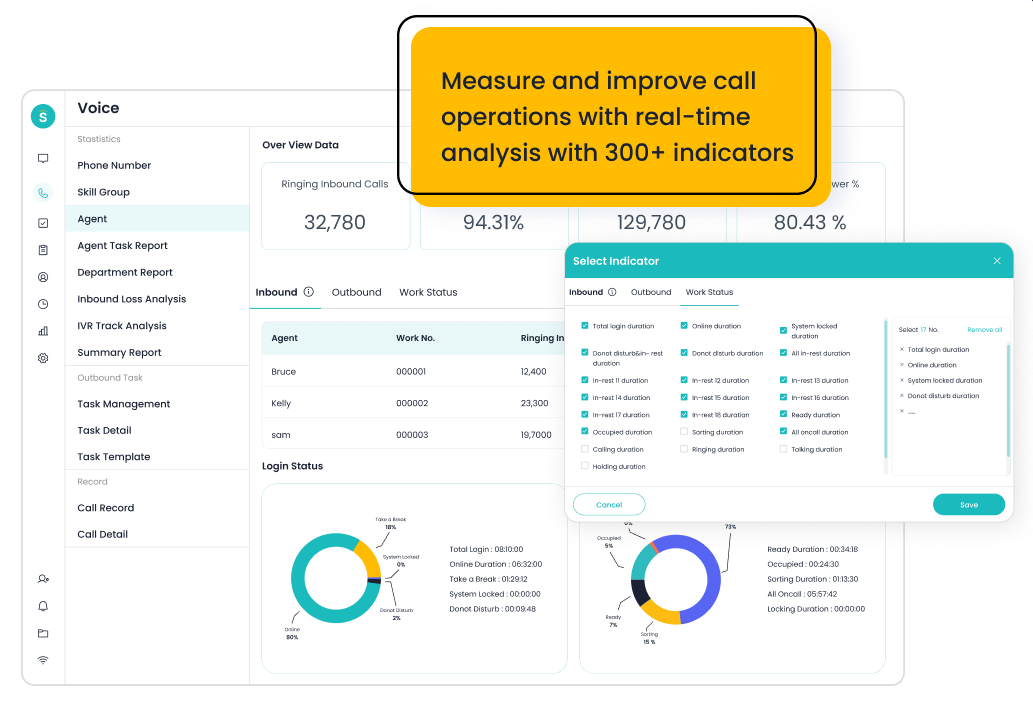
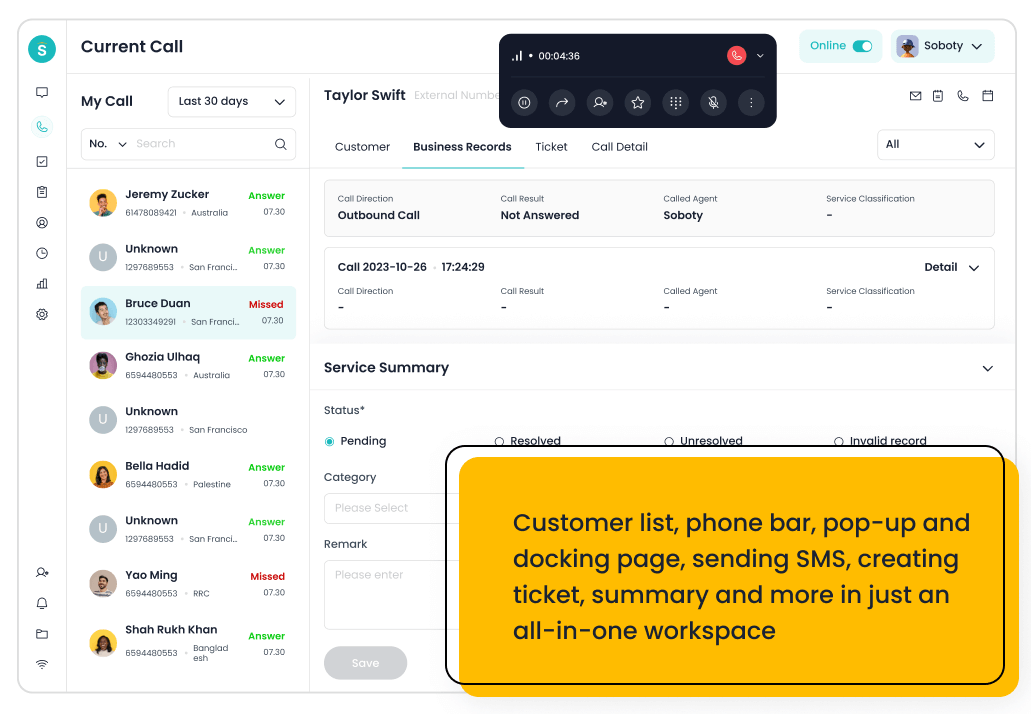
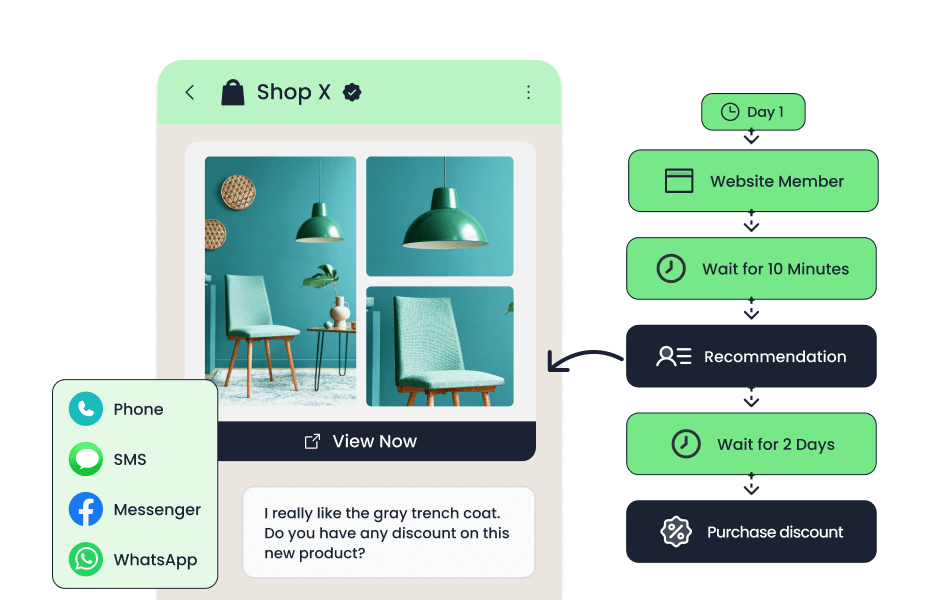
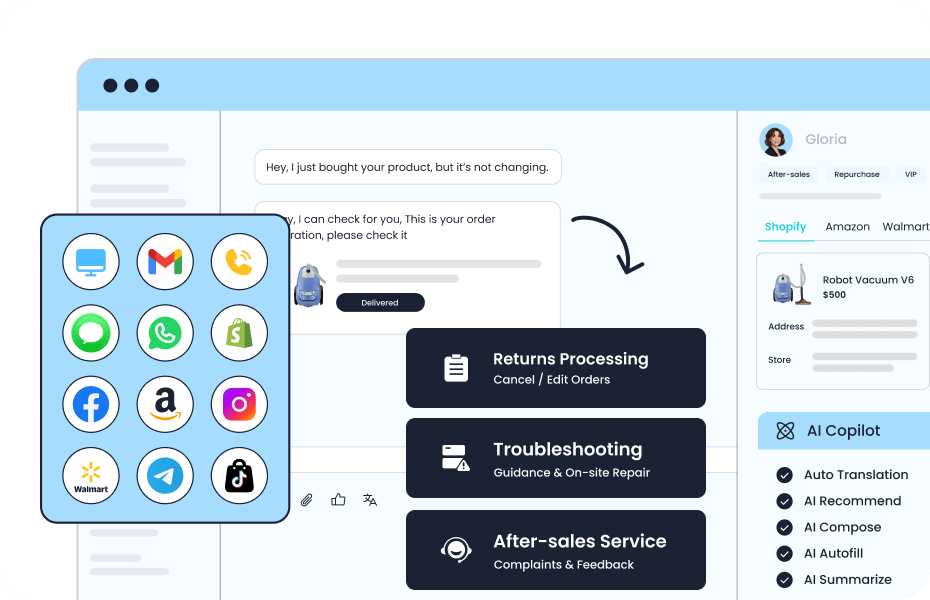
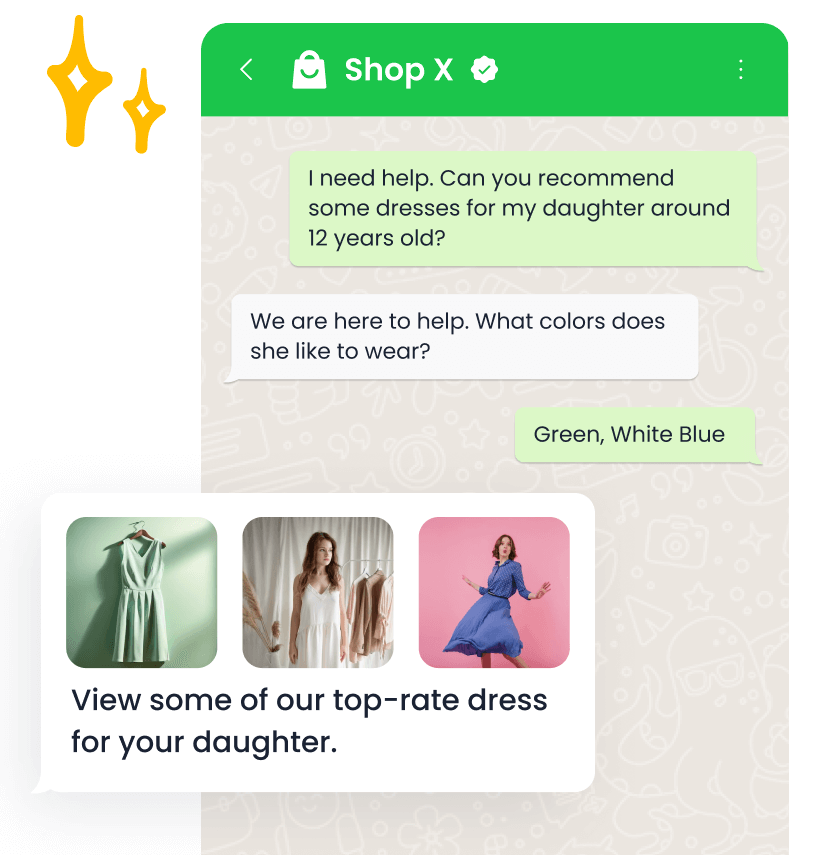
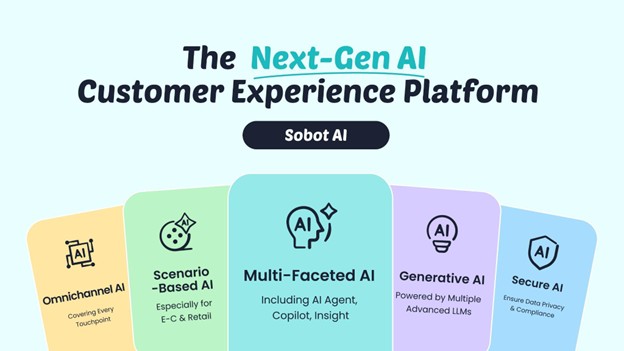
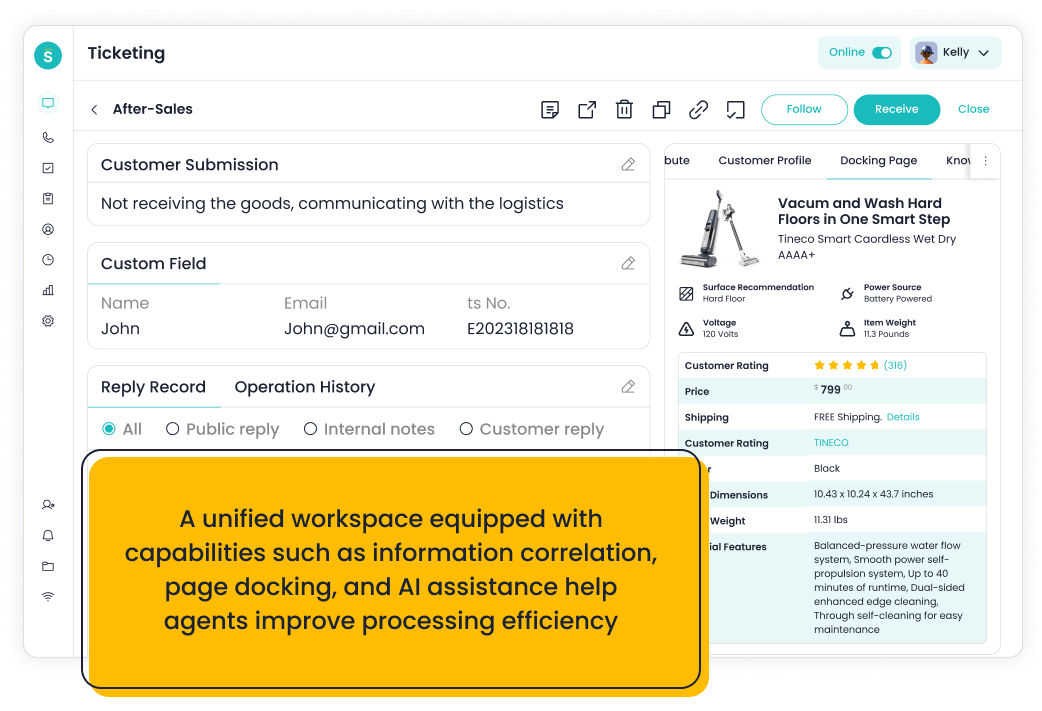
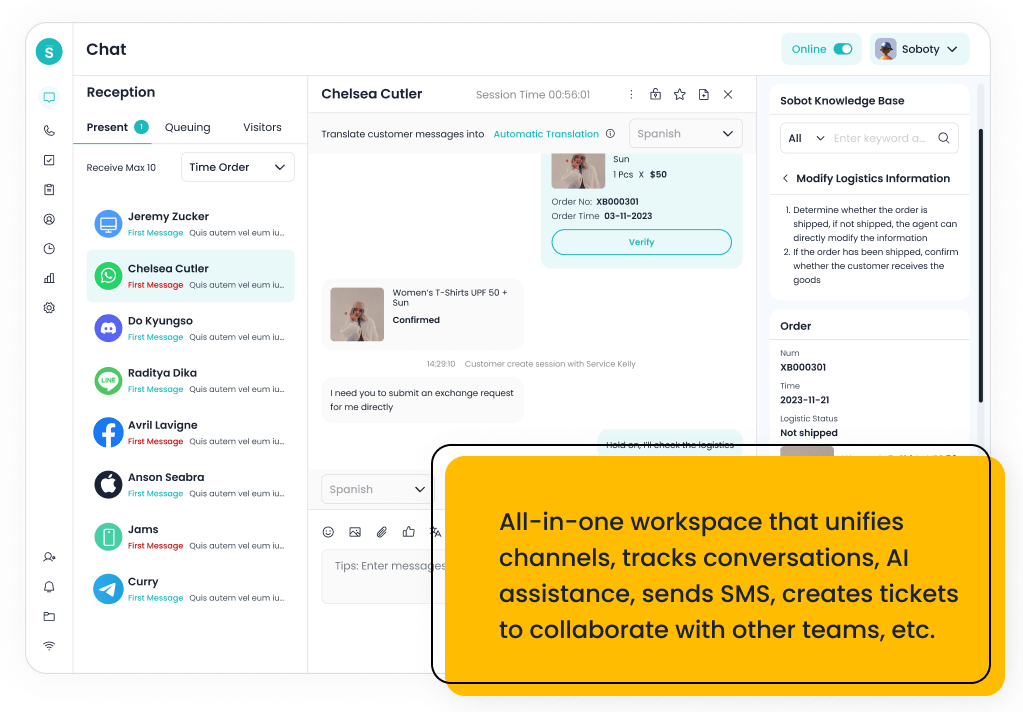
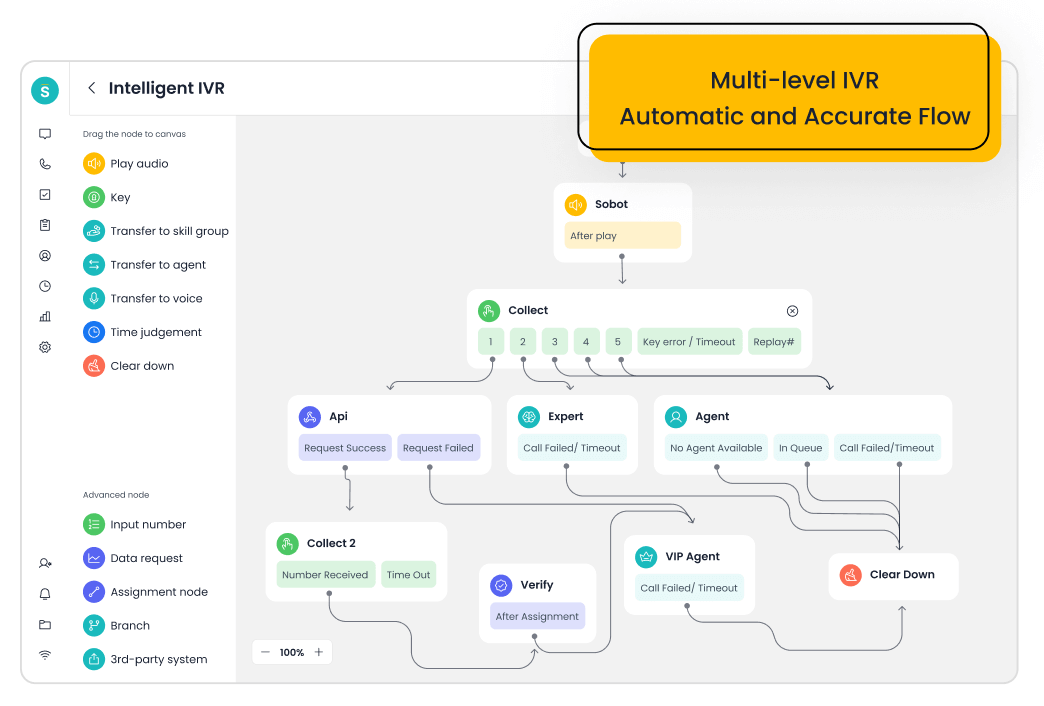
Sobot’s voicebot is built into its AI contact center platform, which means the bot shares the same customer records, knowledge base, and ticketing system as human agents. That architecture matters: when the bot escalates, the human agent inherits the full conversation context without switching systems. Sobot also ships with an intelligent IVR, global number availability, and native multilingual support for cross-border operations. Teams looking into the solution can review Sobot Voicebot’s capabilities in detail.

Sobot’s Voicebot hands off seamlessly to human agents with full conversation context.
Strengths: Native integration with Sobot’s contact center stack, human-bot collaboration designed into the product, strong multilingual support, global voice coverage, transparent bundled pricing.
Weaknesses: Most value comes from using the full Sobot platform — standalone voicebot deployments don’t unlock the architectural advantage.
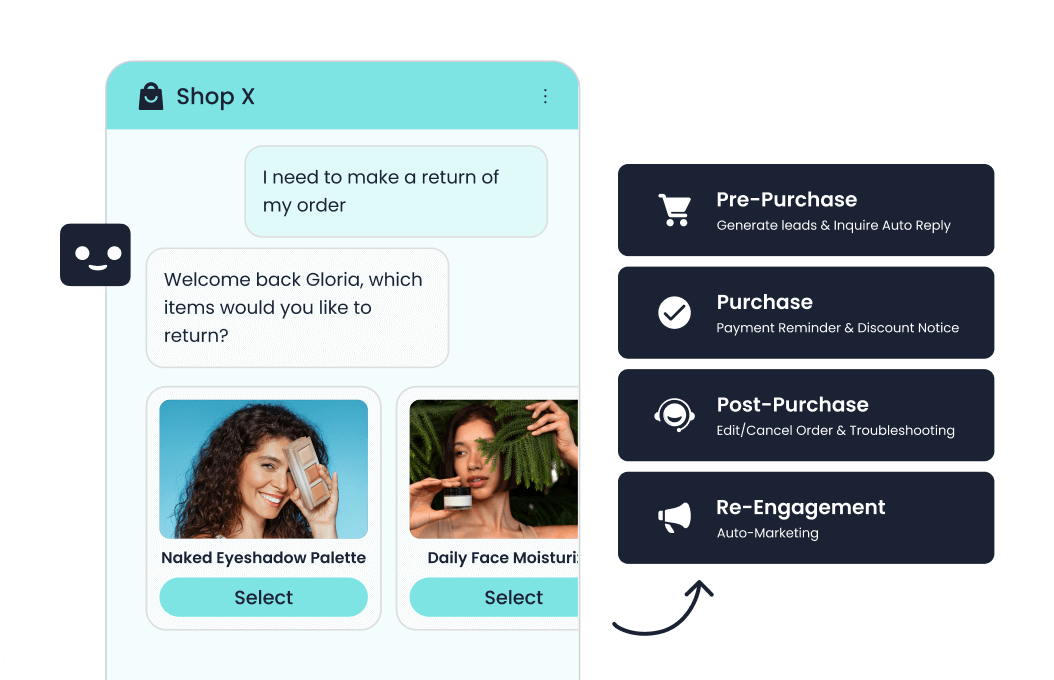
Sobot’s Intelligent IVR routes calls with AI-driven intent detection.
2. Retell AI — Best AI-Native Voicebot for Fast Deployment

Best for: Teams that want to deploy a custom voice AI agent quickly with usage-based pricing and flexible integration.
Retell AI focuses on making AI voice agents feel conversational rather than transactional. The platform supports warm transfers (so handoffs include context instead of dropping callers), batch calling, and SIP trunk support for high call volumes. Pricing is usage-based — typically around $0.07 per minute — which makes it attractive for teams that want to test voice AI without committing to enterprise licensing.
Strengths: Natural conversational feel, transparent per-minute pricing, strong ecosystem integrations, solid agent building tools.
Weaknesses: Less turnkey for non-technical teams than managed platforms, workforce and QA tooling less mature than enterprise CCaaS.
3. Ada AI Voice — Best for AI Agent-First Support
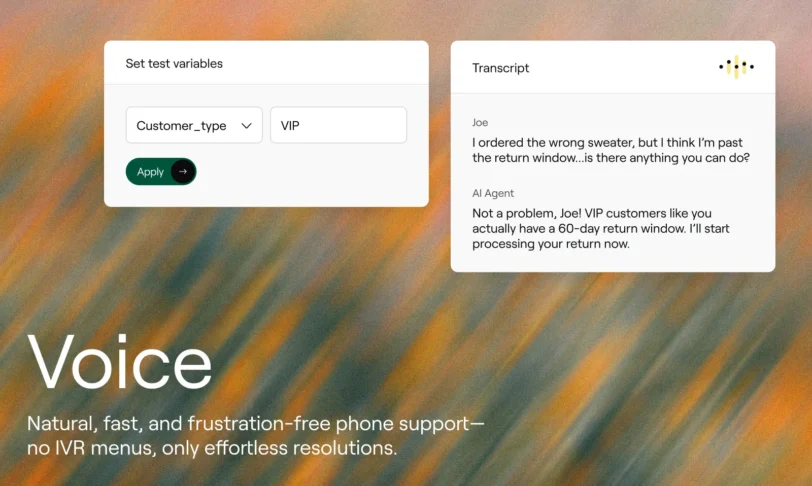
Best for: Mid-market and enterprise brands that already use Ada for chat and want to extend into voice.
Ada positions its platform around autonomous AI agents that can resolve tickets across channels, with voice added as a native extension. For teams that built their digital support on Ada’s chat AI, the voice product uses the same knowledge base and guardrails — which reduces the “two products, two sources of truth” problem common when teams bolt a voicebot onto a chat platform. Ada reports autonomous resolution rates reaching into the 80% range in target industries.
Strengths: Strong autonomous resolution metrics, consistent experience across chat and voice, robust AI agent analytics, enterprise security and governance.
Weaknesses: Pricing starts at enterprise levels, less optimal for teams who don’t already need chat AI.
4. Five9 Intelligent Virtual Agent — Best Enterprise Voicebot with Contact Center Depth
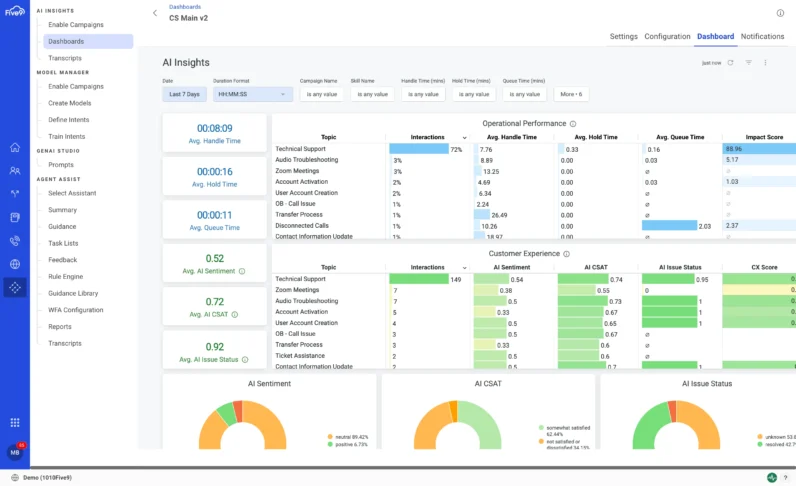
Best for: Enterprise contact centers that want voice AI bundled with a mature CCaaS platform — routing, WFM, analytics included.
Five9’s Genius AI suite includes intelligent virtual agents, agent assist with live guidance, and conversation intelligence. Because Five9 is already a mature CCaaS leader, the voicebot inherits industrial-grade reliability, outbound dialer integration, and deep reporting. The platform fits best when voice volume is large enough to justify enterprise licensing.
Strengths: Mature voice reliability, strong AI insights dashboard, deep WFM integration, proven at enterprise scale.
Weaknesses: Enterprise pricing model, AI features layered into tiered licensing, longer deployment than AI-native alternatives.
5. NICE CXone Autopilot — Best for WFM-Integrated Voice AI
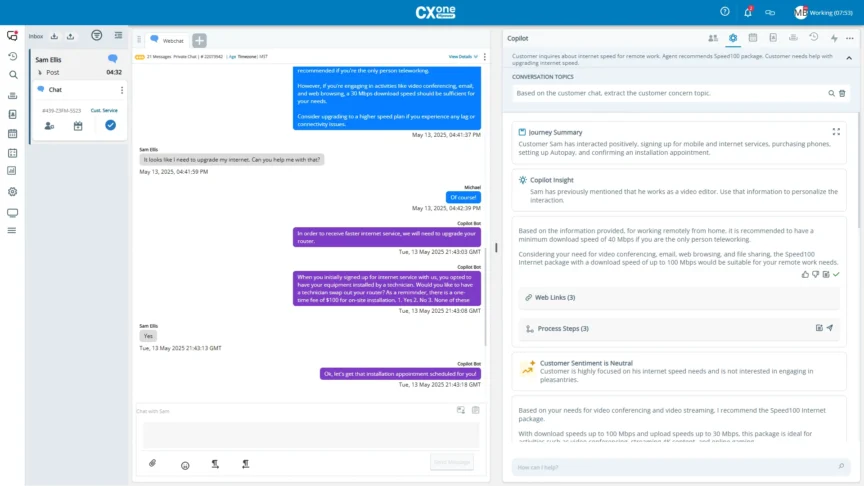
Best for: Large operations that want voice AI embedded inside a full workforce engagement management stack.
NICE CXone Mpower’s Autopilot handles voice and digital virtual agents, while Copilot provides real-time agent guidance. The strength of the platform is how tightly the voicebot connects with workforce management, quality management, and sentiment analysis. For operations that already depend on NICE for WFM and QA, adding Autopilot creates a unified AI layer rather than another point solution.
Strengths: Industry-leading WFM integration, real-time Copilot guidance, strong analytics and QA, mature enterprise support.
Weaknesses: Enterprise complexity, meaningful professional services investment for full deployment, steeper pricing than AI-native alternatives.
6. RingCentral Contact Center AI — Best for Unified Communications + Voice AI
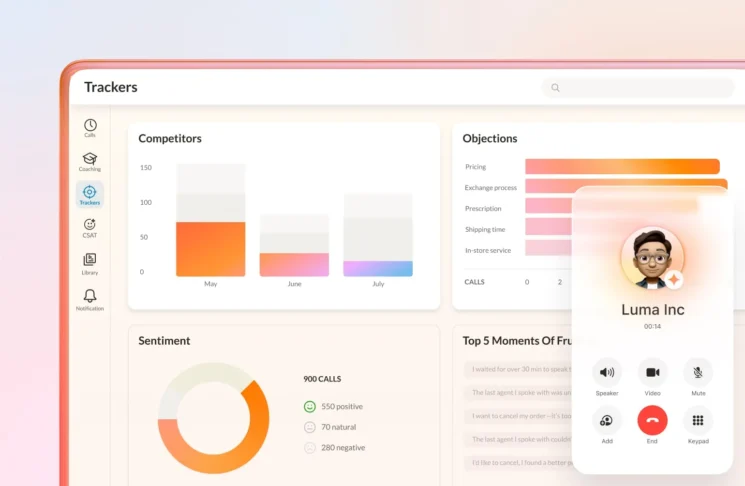
Best for: Teams that want voice AI bundled with UCaaS, business phone, and internal collaboration.
RingCentral’s contact center product adds AI-powered transcription, voice analytics, and virtual agent capabilities on top of its voice infrastructure. For organizations already using RingCentral for business phone and team messaging, adding contact center AI removes vendor sprawl. The combined UCaaS + CCaaS model works particularly well when internal collaboration during customer calls is frequent.
Strengths: Unified UCaaS and CCaaS experience, AI transcription and analytics included, strong global voice network, easy internal collaboration.
Weaknesses: Voice AI capabilities still developing compared with CCaaS specialists, occasional peak-time performance reports.
7. Talkdesk Autopilot — Best AI-Native Mid-Market Voicebot

Best for: Mid-market contact centers that want voice AI with low-code customization.
Talkdesk Autopilot is the company’s voice and digital virtual agent product, paired with Copilot for real-time agent guidance and Studio for visual workflow building. The platform reports first-week containment rates around 40% for deployed customers, which matters when measuring AI ROI. Talkdesk fits teams that want AI-native voice without enterprise CCaaS overhead.
Strengths: Strong AI bundling, visual workflow builder, good industry templates (finance, retail, healthcare), clear AI KPI reporting.
Weaknesses: Pricing ($85–$145/agent/month) positions it above simpler alternatives, feature depth still trails Five9/NICE at the enterprise edge.
8. Aircall AI — Best for Small and Growing Teams
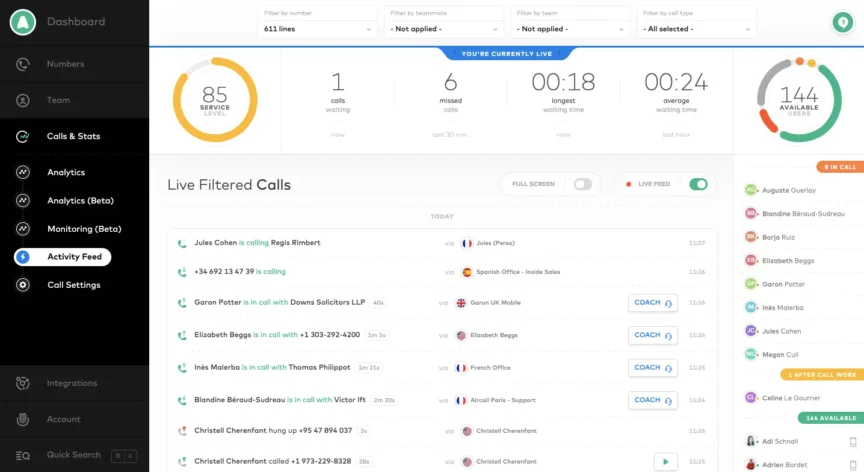
Best for: Sales and support teams under 50 seats that want AI call summaries, transcription, and smart routing.
Aircall’s AI features focus on what small teams actually use: automatic call summaries, transcription, conversation topics, and smart routing. The product isn’t a full autonomous voicebot like Retell or Ada, but for teams primarily looking to remove post-call admin work and improve call routing, Aircall covers the common use cases without the complexity of enterprise voice AI.
Strengths: Easy setup, strong CRM integrations, transparent per-seat pricing, mobile and desktop apps that work well.
Weaknesses: Not a full autonomous voicebot, limited fit for high-volume deflection use cases.
9. Sprinklr Voice AI — Best for CX Intelligence and Conversational Analytics
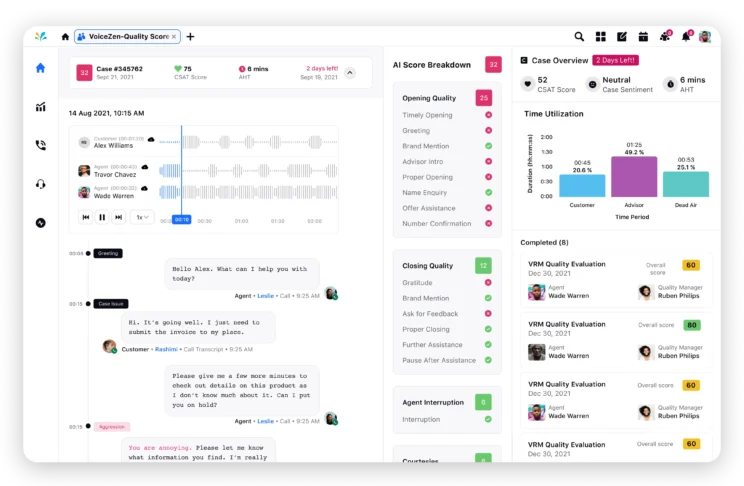
Best for: Consumer brands that treat voice as part of a unified CX intelligence stack.
Sprinklr’s voice conversational analytics parse calls alongside digital and social interactions, generating unified CX signal that’s hard to match. The voice AI product includes virtual agents with industry templates and strong regulatory compliance features. For brands that already run social and community support on Sprinklr, extending into voice creates a single conversational intelligence layer.
Strengths: Industry-leading conversational analytics, unified agent desktop, strong social and voice integration, broad CX tooling.
Weaknesses: Platform breadth can feel overwhelming for teams focused only on voice, enterprise pricing, ramp time to full value.
10. CloudTalk AI — Best Budget Voicebot for International Operations
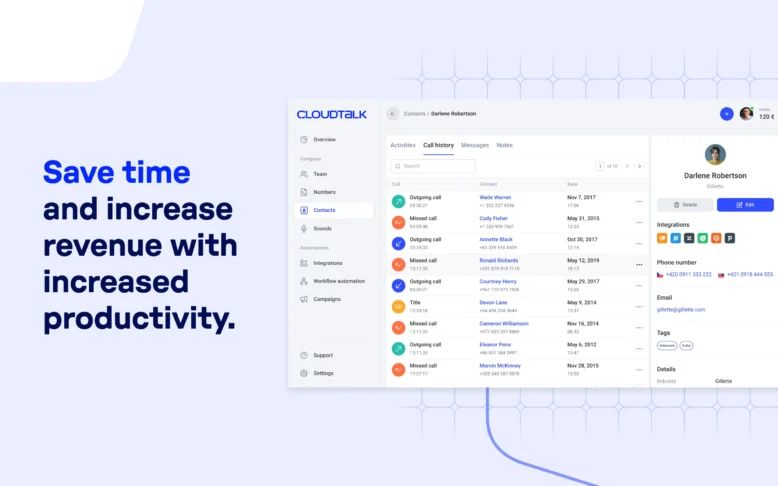
Best for: Distributed sales and support teams that need international calling with AI call summaries and analytics.
CloudTalk provides cloud calling across 160+ countries, with AI features layered on top: call summaries, smart routing, sentiment analysis, and call transcription. Like Aircall, it’s not a full autonomous voicebot — but for teams that need broad country coverage and lightweight AI features at transparent per-seat pricing, CloudTalk is a natural fit.
Strengths: Broad international number coverage, straightforward pricing, clean integrations with CRMs and helpdesks.
Weaknesses: AI features still catching up to AI-native alternatives, voice-first product with lighter omnichannel coverage.
How to Choose the Right AI Voicebot
A useful way to narrow the list:
- If you want voice AI inside a full contact center — Sobot’s voice solution, Five9, or NICE CXone.
- If you want fast deployment and transparent per-minute pricing — Retell AI is the lightest path.
- If AI autonomous resolution is your primary KPI — Ada and Sobot’s AI platform both report strong autonomous rates.
- If you already use UCaaS — RingCentral consolidates vendors.
- If you’re small and just want AI call notes — Aircall or CloudTalk.
Run at least one real pilot before committing. The difference between a voicebot that demos well and one that performs in production is usually visible within the first 200 live calls. Book a Sobot demo to see a production-ready voicebot inside a full contact center platform.
Frequently Asked Questions (FAQs)
What’s the difference between an AI voicebot and a traditional IVR?
A traditional IVR uses rigid phone trees and keyword recognition — “press 1 for billing.” An AI voicebot holds two-way natural language conversations, understands intent from context, accesses backend systems to take real actions (refunds, rescheduling, account updates), and escalates cleanly when needed. The underlying technology is fundamentally different, though a well-designed AI voicebot often incorporates IVR-style skill routing as one of its tools.
How much can AI voicebots reduce support costs?
Well-deployed AI voicebots typically cut cost per interaction by 50–70% for the calls they resolve autonomously. According to Salesforce’s State of Service research, cloud-based customer service platforms now dominate the $55.76 billion customer service market, with AI-driven deflection being a primary growth driver. Actual savings depend on ticket mix, autonomous resolution rate, and how much infrastructure the organization replaces versus augments.
What’s a typical AI voicebot resolution rate in 2026?
Resolution rates vary widely by use case. Tier-1 issues (order status, account balance, simple rescheduling) routinely see 70–90% autonomous resolution on well-implemented platforms. More complex inquiries (billing disputes, multi-step troubleshooting) drop into the 30–60% range. According to contact center industry reports compiled by CX Today, the strongest deployments achieve near-human CSAT on autonomous interactions.
How long does it take to deploy an AI voicebot?
Lightweight platforms like Retell or Synthflow can go live in days for simple use cases. Mid-market platforms including Sobot, Talkdesk, and Aircall typically take 2–8 weeks depending on integration depth. Enterprise deployments on Five9, NICE CXone, or Genesys often run 2–6 months for full production rollout with WFM, QA, and custom routing.
Do customers actually accept AI voicebots?
Acceptance depends on transparency and performance. When the voicebot identifies itself, resolves the issue quickly, and hands off cleanly to a human when needed, satisfaction is typically strong — often matching human agent CSAT for routine issues. When the bot traps callers in loops or provides wrong answers, it erodes trust quickly. Customers care more about fast accurate answers than who provides them.
Evaluating an AI voicebot? Start a 15-day free trial of Sobot to see an AI voicebot integrated inside a full contact center — voice, messaging, ticketing, and agent assist in one workspace.